Facial Cupping: What Patients Need to Know

Facial cupping uses gentle suction and moving cups; it is different from the stronger stationary body cupping that often leaves circular marks. Evidence for long-term effects on wrinkles, facial contour, lymphatic drainage or chronic skin conditions remains limited.
Key Takeaways
- Facial cupping uses gentle suction and moving cups; it is different from the stronger stationary body cupping that often leaves circular marks.
- Evidence for long-term effects on wrinkles, facial contour, lymphatic drainage or chronic skin conditions remains limited.
- Temporary redness, tenderness and small broken blood vessels can occur, especially when suction is strong or cups remain in one place.
- People with active acne, rosacea, eczema flares, skin infections, bleeding disorders or recent facial procedures should seek professional advice before trying it.
- Persistent facial swelling, pain, rash or skin changes need medical assessment rather than cosmetic treatment.
Facial cupping is a massage-style technique that uses small suction cups on the skin of the face and neck. Some people use it for relaxation, temporary puffiness or a refreshed appearance, but research does not confirm lasting cosmetic or medical benefits, and it may not be suitable for every skin type or health condition.
Overview: What Is Facial Cupping?
Facial cupping is a technique in which small silicone, glass or plastic cups create gentle suction on the skin of the face, jawline and neck. The cup is usually moved continuously over moisturized skin rather than left in one position. It is often presented as a form of facial massage intended to create a temporary sensation of relaxation, warmth or reduced puffiness.
Unlike traditional body cupping, facial cupping generally uses lighter pressure because facial skin and blood vessels are more delicate. Strong, prolonged or stationary suction on the face can cause visible circular marks, bruising or broken capillaries. Some practitioners use facial cupping within spa or complementary therapy settings, while others promote self-use with silicone cups.
It is important to distinguish facial cupping from medical treatment. It has not been shown to treat facial swelling caused by infection, allergy, dental disease, thyroid problems, kidney disease or other health conditions. It also should not replace evidence-based care for skin concerns such as acne, pigment changes or persistent redness.
What Benefits Can Be Expected?

Many people report that facial cupping feels soothing and that their face appears temporarily brighter or less puffy afterward. These short-term changes may be related to massage, mild increased surface blood flow, movement of fluid in superficial tissues and the use of a moisturizer or facial oil during the session. Relaxation and the routine of self-care may also be meaningful benefits for some individuals.
Claims that facial cupping permanently lifts the face, removes toxins, reshapes the jawline, increases collagen production or erases wrinkles are not supported by strong clinical evidence. The body already removes waste products through organs such as the liver and kidneys; a facial device does not “detox” the body. Any visible improvement in puffiness or skin glow is generally expected to be modest and temporary.
Research on cupping therapy has mainly involved body pain and other non-facial uses, and study quality varies. Findings from body cupping cannot automatically be applied to facial use or cosmetic outcomes. People considering facial cupping can view it as an optional wellness practice, rather than a proven treatment for aging or a medical skin concern.
How Facial Cupping May Affect the Skin
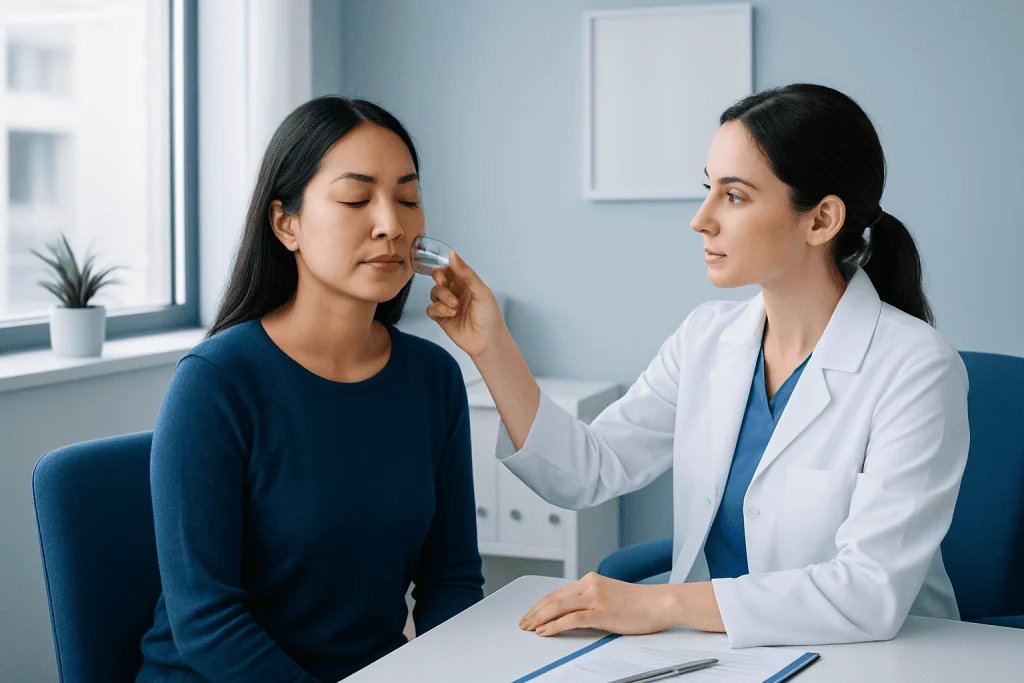
Suction gently pulls the skin and superficial tissue upward into the cup. When the cup is moved, it can produce a massage-like stretching effect. This may briefly increase local circulation and can leave the skin flushed, particularly in people with fair or sensitive skin. Mild redness that settles within a short time is common after gentle use.
The face contains many small, visible blood vessels, especially around the cheeks and nose. Excessive suction can damage tiny vessels and lead to petechiae, purpura or telangiectasia, which may appear as pinpoint red-purple spots, bruises or persistent thread veins. These effects are more likely when cups are held still, pressure is too high, or treatment is repeated frequently over the same area.
There is no reliable evidence that facial cupping directly drains the lymphatic system in a medically meaningful way. Gentle manual massage may temporarily redistribute superficial fluid, but unexplained or ongoing swelling should be assessed by a clinician. Facial swelling can sometimes be associated with allergy, sinus or dental infection, medication effects, injury or systemic illness.
Risks, Side Effects and Who Should Avoid It
Possible side effects of facial cupping include temporary redness, warmth, tenderness, bruising, irritation, acne flares and small broken blood vessels. Applying cups over inflamed or damaged skin may worsen discomfort and delay healing. Oils and creams used during the technique can also trigger contact dermatitis or clog pores in people who are prone to acne.
Facial cupping is best avoided on open wounds, sunburn, cold sores, active skin infections, severe acne lesions, unexplained rashes or areas with recent scarring. It may be unsuitable for people with rosacea, eczema, fragile skin, a history of easy bruising, bleeding or platelet disorders, or those using medicines that affect blood clotting. A dermatologist or treating clinician can give individualized advice.
People should also speak with their surgeon or aesthetic clinician before using facial cupping after injectable treatments, laser procedures, chemical peels, microneedling, facial surgery or thread lifting. The recovery period varies by procedure, and suction or massage too soon may irritate healing tissue or affect results. For persistent redness or recurrent flushing, medical evaluation for conditions such as rosacea may be more helpful than repeated cosmetic treatments.
Safer Use for People Who Choose to Try It
For adults who decide to use facial cupping, a cautious approach is important. The cups should be clean, intact and used only by one person. A bland, fragrance-free lubricant can reduce friction, but it should be selected with the person’s skin type in mind. The cup should glide smoothly and should not be held in place or used with painful suction.
A small patch test on a less visible area may help identify irritation from a skincare product or the suction itself. The technique should stop immediately if there is pain, burning, marked redness, bruising, dizziness or skin damage. Cups should not be used near the eyes, directly over the eyelids, over prominent moles or lesions that have not been checked by a clinician, or over areas of active inflammation.
Wet cupping, which involves puncturing the skin and drawing blood, should never be attempted as facial cupping at home. It carries additional risks, including infection, scarring and bloodborne disease transmission if hygiene is inadequate. If a person has questions about persistent acne, sensitivity or cosmetic skin changes, a consultation about dermatology care can help identify safer, evidence-based options.
When to Seek Medical Care
Medical advice is appropriate when facial swelling is sudden, one-sided, painful, recurrent or accompanied by fever, trouble breathing, trouble swallowing, dental pain, eye symptoms or a severe headache. These symptoms may have causes that need prompt assessment and should not be managed with facial massage or cupping. Emergency care is needed for swelling of the lips, tongue or throat, breathing difficulty, or signs of a severe allergic reaction.
A doctor or dermatologist should assess a rash that spreads, blisters, oozes, becomes infected or does not improve, as well as bruising that is extensive or occurs very easily. New or changing pigmented spots, non-healing sores and unexplained bleeding from the skin also require professional evaluation. Cupping should not be used to cover up or repeatedly treat an undiagnosed skin change.
People who develop persistent redness, visible blood vessels, dark marks, pain or scars after facial cupping should stop the practice and seek advice. Acibadem International’s multidisciplinary specialists and JCI-accredited hospitals can assess skin and facial health concerns for international patients when medical evaluation is needed.
A Balanced Approach to Facial Wellness
For most people, basic skin care practices are more likely to support skin health than frequent facial cupping. These include using gentle cleansers, applying moisturizer suited to the skin type, using broad-spectrum sun protection, avoiding smoking and seeking care for treatable skin conditions. Adequate sleep, balanced nutrition and stress management can also support overall wellbeing, although they do not eliminate all skin changes.
Anyone seeking a change in wrinkles, acne scarring, pigmentation, persistent puffiness or facial redness should first clarify the underlying concern. A qualified clinician can explain whether it is likely to be a normal variation, a skin condition or a sign of another health issue. Treatment choices should be based on an accurate diagnosis, expected benefits, possible side effects and the individual’s preferences.
Facial cupping may be used cautiously as a personal relaxation practice by people without contraindications, but it should not cause pain or visible injury. Keeping expectations realistic, avoiding aggressive suction and stopping when the skin reacts are sensible ways to reduce avoidable harm.
Frequently asked questions
Does facial cupping really work?
Facial cupping may create a temporary feeling of relaxation and may briefly reduce the appearance of mild puffiness in some people. However, there is not strong evidence that it produces lasting lifting, wrinkle reduction, detoxification or facial reshaping. It should be considered a complementary wellness practice rather than a medical or proven cosmetic treatment.
How often is facial cupping safe?
There is no evidence-based schedule that is safe or effective for everyone. Repeated or forceful use can irritate the skin and increase the chance of bruising or broken capillaries. People who choose to try it should use very gentle suction, avoid daily aggressive treatment and stop if redness or tenderness lasts.
Can facial cupping cause broken capillaries?
Yes. Strong suction, keeping a cup in one place or using cups repeatedly over delicate facial areas can damage tiny blood vessels. This can result in red-purple spots, bruising or visible thread veins, which may take time to fade and can occasionally persist.
Is facial cupping safe for rosacea or sensitive skin?
Facial cupping may aggravate rosacea and sensitive skin because suction and friction can trigger redness, burning and visible blood vessels. People with these concerns should consult a dermatologist before trying it. Gentle, fragrance-free skin care is usually a safer starting point.
Can facial cupping reduce a double chin or change face shape?
There is no good evidence that facial cupping reduces fat beneath the chin or permanently changes facial structure. It may temporarily alter the appearance of fluid-related puffiness, but this is not the same as fat reduction or contouring. Persistent changes in facial shape or swelling should be discussed with a clinician.
Should facial cupping leave marks?
No. Gentle moving facial cupping should not leave prominent circular marks or bruises. Marks indicate that the suction was too strong, the cup stayed in one spot too long, or the skin was especially vulnerable. Treatment should be stopped until the skin has fully recovered.
References
- American Academy of Dermatology Association
- National Center for Complementary and Integrative Health
- NHS
- World Health Organization
This article is for general information only and is not a substitute for professional medical advice. Please consult a qualified doctor about your individual situation.
Explore treatments in Turkey — costs, top hospitals & a free quote
JCI-accredited · board-certified surgeons · reply within 24h
Add us as a Preferred Source to see more of our trusted health content across Google Search, AI Overviews and Discover.