When Can Babies Sit Up on Their Own? Causes, Explanations, and Next Steps
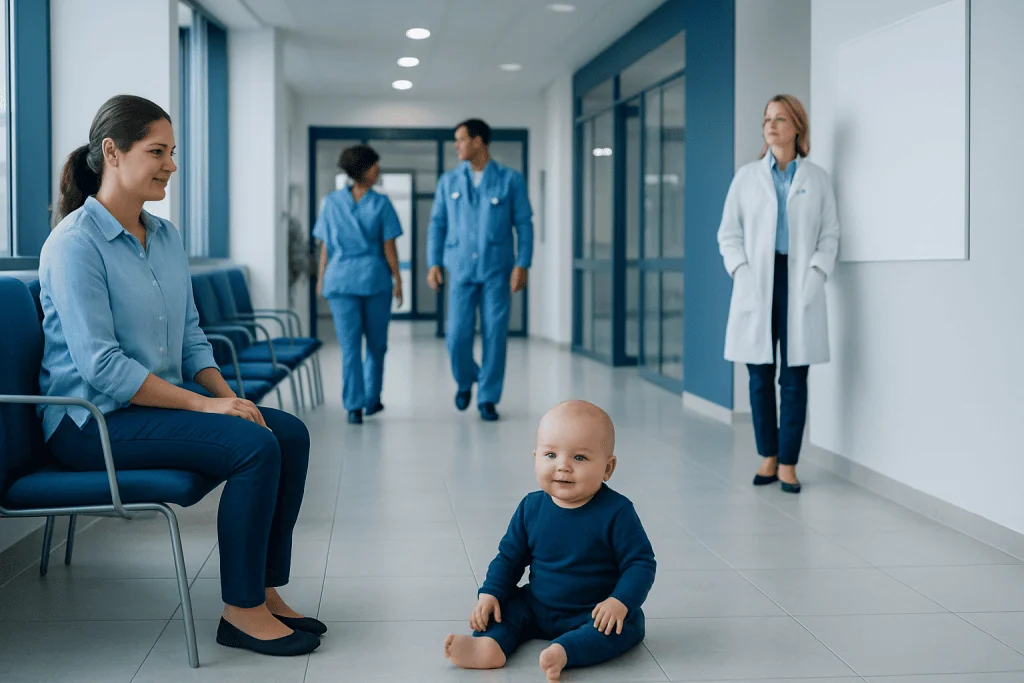
Many babies sit with minimal support at around 6 months and sit independently by about 9 months. Sitting develops through head control, trunk strength, balance, and practice rather than appearing suddenly.
Key Takeaways
- Many babies sit with minimal support at around 6 months and sit independently by about 9 months.
- Sitting develops through head control, trunk strength, balance, and practice rather than appearing suddenly.
- Babies born prematurely should generally be assessed using their corrected age during the first two years.
- A baby who is very floppy, unusually stiff, loses skills, uses one side much more than the other, or is not sitting independently by 9 months should be medically reviewed.
- Daily supervised floor play is usually the best way to support healthy motor development; sitting devices do not replace it.
Most babies develop sitting skills gradually, usually sitting with support first and then independently during the second half of their first year. A later timeline is often harmless, particularly for babies born early, but certain signs should be assessed by a pediatrician.
Overview: When Can Babies Sit Up on Their Own?
Many babies can sit with some support at around 6 months and sit up independently at around 9 months. There is a healthy range of development: some babies sit steadily earlier, while others need more time to build the balance and trunk control needed for this skill. In most cases, a baby who is progressing in other ways and gradually becoming stronger does not have a serious problem.
Sitting is not a single milestone that happens overnight. A baby first develops head control, then learns to push up during tummy time, roll, bear weight through the arms, and balance while supported. They may briefly sit leaning forward on their hands before they can sit upright without using their arms for balance.
Parents and caregivers may understandably compare milestones with other children, but development is individual. The most useful question is whether the baby is gaining skills over time. A pediatrician can help interpret a baby’s development in the context of their age, medical history, growth, and overall movement pattern.
How Sitting Skills Usually Develop
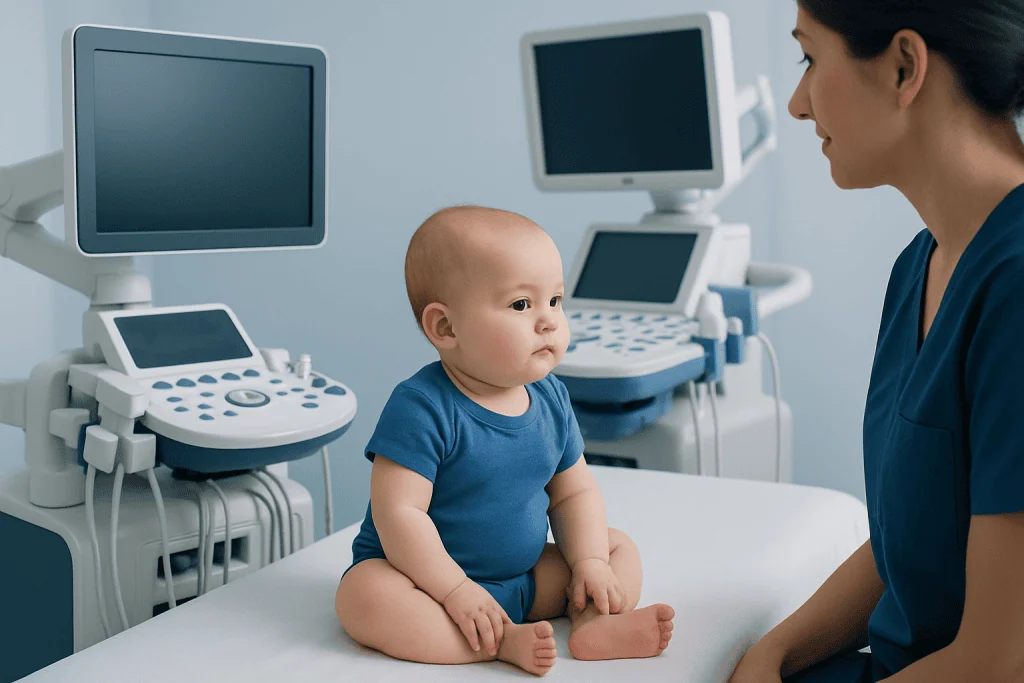
During the first months of life, babies are still developing the neck and upper-body strength required to hold themselves upright. By around 4 months, many have improved head control when held in a supported sitting position. Around 6 months, many babies can sit with support or sit briefly while leaning forward on their hands, sometimes called tripod sitting.
Between approximately 6 and 9 months, babies often become better at adjusting their posture when they begin to tip. They learn to use their hands, abdominal muscles, back muscles, hips, and visual balance systems together. By around 9 months, many can sit without support and use both hands to play with a toy while sitting.
Some babies learn to move into a sitting position independently after they are already able to sit when placed there. Others may roll, pivot, crawl, or bottom-shuffle before sitting confidently. The sequence can vary, and not every baby crawls in the same way or at all. What matters most is steady progress, good use of both sides of the body, and the development of age-appropriate strength and control.
- About 4 months: improved head control with support.
- About 6 months: sits with support or briefly using hands for balance.
- About 9 months: sits without support in many cases.
- Later infancy: moves in and out of sitting more independently as mobility develops.
Why Some Babies Sit Later Than Others

A later sitting milestone is often explained by normal developmental variation. Babies have different body proportions, temperaments, opportunities for floor play, and rates of muscle development. A baby who is focused on other skills, such as rolling or reaching, may spend less time practicing sitting for a period.
Premature birth is another common reason for a different timeline. For babies born before 37 weeks of pregnancy, clinicians often use corrected age when assessing early development. Corrected age is calculated from the expected due date rather than the birth date. This adjustment is commonly used during the first two years, although each child’s follow-up plan may differ.
Limited opportunities to move freely on a safe floor surface can also reduce practice time. Long periods in car seats, bouncers, swings, or other seated equipment may be necessary at times, such as during travel, but these devices do not help a baby learn independent sitting. Supervised play on the floor gives babies opportunities to strengthen their neck, back, shoulders, and core muscles.
Less commonly, delayed sitting can be related to low muscle tone, increased muscle stiffness, vision or hearing concerns, nutritional problems, a neuromuscular condition, or a broader developmental difference. These possibilities cannot be determined from sitting alone. A clinician considers the full developmental picture and the baby’s physical examination.
Signs That May Suggest a Developmental Concern
It is helpful to focus on patterns rather than on one date alone. A baby who is a little later to sit but is alert, moving both sides equally, gaining new skills, feeding well, and showing good head control may simply need more time. Nonetheless, discussing developmental milestones at routine child health visits is important.
Parents or caregivers should arrange a pediatric assessment if a baby is not sitting without support by around 9 months, especially if there has been little progress in balance or trunk control. An earlier review is sensible if the baby has poor head control, seems unusually floppy or stiff, consistently favors one side, keeps one hand tightly fisted, has difficulty bringing hands to the middle of the body, or does not bear weight through the arms during supervised play.
Loss of a skill that a baby previously had should always be assessed promptly. For example, a baby who previously sat steadily and then becomes unable to do so needs medical review. Developmental concerns are not a parent’s fault, and early assessment can provide reassurance, identify a cause when present, and connect families with appropriate support.
How a Doctor Assesses Delayed Sitting
A doctor will usually begin by asking about pregnancy, birth history, prematurity, feeding, growth, medical conditions, and the timing of other developmental skills. They may ask whether the baby can roll, reach for objects, bear weight on the arms or legs, respond to sounds, make eye contact, and use both sides of the body similarly. Videos recorded at home can sometimes help show a movement pattern that is difficult to observe during a short appointment.
The physical examination typically includes observation of posture, head control, symmetry, muscle tone, strength, reflexes, joint movement, vision, and growth. The clinician will watch how the baby moves on a safe surface and may assess whether the child can maintain a supported sitting position or protect themselves when beginning to lose balance.
Most babies do not need extensive testing. If the examination or developmental history suggests a specific concern, the doctor may recommend developmental screening, hearing or vision assessment, blood tests, imaging, or referral to a pediatric neurologist, developmental pediatrician, physiotherapist, occupational therapist, or other specialist. The choice of tests depends on the individual findings rather than on a delayed sitting milestone alone.
When support is needed, early-intervention services can help families encourage development through play, positioning, and individualized therapy. Starting support early can be beneficial, but it is equally important to avoid assuming that a delay means a particular diagnosis before the baby has been properly assessed.
Supporting Sitting Development Safely at Home
The best support for motor development is regular, supervised play on a firm, safe floor surface. Tummy time while awake helps build the neck, shoulder, arm, and trunk strength used for sitting. It can begin in short periods and gradually increase as the baby becomes more comfortable. A caregiver can stay nearby, get down to the baby’s level, use toys, or place the baby on their chest to make the activity more engaging.
Supported sitting can be practiced on the floor with a caregiver close by. Placing toys slightly in front of the baby can encourage reaching and balance, but the baby should not be propped in a position they cannot control for long periods. Sitting on a caregiver’s lap may also offer gentle support while allowing the baby to practice holding the head and trunk upright.
Walkers are not recommended because they can cause injuries and do not teach a baby to sit, stand, or walk safely. Other containers, including seats and swings, may be useful for short, supervised periods but should not replace active floor play. Babies should always be placed to sleep on their backs on a firm, flat sleep surface; sitting practice should happen only while they are awake and closely supervised.
Caregivers do not need to perform exercises or force a baby into a particular position. Following the baby’s cues, offering frequent chances to move, and attending routine health visits are usually the most effective approaches. If a baby appears frustrated or uncomfortable, it is reasonable to pause and try again later.
When to Seek Medical Care
Contact a pediatrician or child health professional if there is concern about a baby’s movement or development, even if the child is younger than 9 months. A timely appointment is particularly important for poor head control, marked floppiness or stiffness, persistent asymmetry, difficulty feeding alongside weakness, little improvement over time, or not sitting independently by around 9 months. For a premature baby, ask the clinician whether corrected age should be used when reviewing milestones.
Seek urgent medical care if a baby suddenly becomes weak, has trouble breathing or swallowing, is difficult to wake, has a seizure, or loses previously acquired movement skills. These symptoms may have causes unrelated to normal developmental variation and should not be managed by waiting for the next routine visit.
For families seeking coordinated evaluation, Acibadem International’s multidisciplinary specialists and JCI-accredited hospitals provide pediatric assessment and treatment planning for international patients. A clinician can explain whether a baby’s sitting pattern falls within expected variation and whether follow-up or developmental support would be helpful.
Frequently asked questions
Is it normal for a 7-month-old baby not to sit up alone?
It can be normal for a 7-month-old not to sit fully independently yet. Many babies are still sitting with support or leaning on their hands at this age. The key is whether the baby is developing better head and trunk control and continuing to gain other skills.
What age is considered late for a baby to sit up?
Many babies can sit without support by about 9 months. A baby who is not sitting independently by then should be discussed with a pediatrician, particularly if there are other concerns such as poor head control, stiffness, floppiness, or uneven movement. This does not necessarily mean there is a serious condition.
Should premature babies sit up later?
Babies born prematurely may reach early developmental milestones later when measured by calendar age. Clinicians commonly use corrected age, based on the original due date, during the first two years. A pediatrician can advise how corrected age applies to an individual child.
Can too much time in a baby seat delay sitting?
Time in a baby seat does not automatically cause a developmental delay, and such equipment can be useful for short periods. However, babies need regular supervised floor time to practice movement, balance, and strength. Extended time in seats, swings, or similar devices should not replace active play.
What are concerning signs when a baby is learning to sit?
Concerning signs include very poor head control, unusually floppy or stiff muscles, clear preference for one side, inability to use both hands similarly, or loss of skills already gained. A baby who is not sitting without support by around 9 months should also be assessed. Parents should trust their observations and discuss concerns with a qualified clinician.
Does a baby need to crawl before sitting up independently?
No. Babies develop movement skills in different orders, and some sit before crawling while others may roll or crawl first. Some children do not crawl in a typical hands-and-knees pattern but still develop normally. Consistent progress and safe, symmetrical movement are more important than following one exact sequence.
References
- American Academy of Pediatrics
- Centers for Disease Control and Prevention
- World Health Organization
- HealthyChildren.org
- National Institute of Neurological Disorders and Stroke
This article is for general information only and is not a substitute for professional medical advice. Please consult a qualified doctor about your individual situation.
Explore treatments in Turkey — costs, top hospitals & a free quote
JCI-accredited · board-certified surgeons · reply within 24h
Add us as a Preferred Source to see more of our trusted health content across Google Search, AI Overviews and Discover.
Check your numbers in seconds
BMI, calories, due date, blood pressure and 30+ more clinical calculators — free, instant, doctor-reviewed ranges.

More from the Health Library



Related Specialists

Dr. Demet Matben
Pediatrics
Dr. Sırrı Baştürk
Orthopedic Surgery & Traumatology
Fzt. Ali Furkan Gürler
Physical Medicine & Rehabilitation
Asst. Prof. Dr. Berkhan Yılmaz
Aesthetic Plastic & Reconstructive Surgery