Pseudoarthrosis: Diagnosis, Outlook, and Modern Treatment Approaches

Pseudoarthrosis is failed bone healing after a fracture or fusion. Learn how it is diagnosed, treated, and supported during recovery.
Key Takeaways
- Pseudoarthrosis means that bone healing has not progressed enough to create a stable union after a fracture or fusion procedure.
- Persistent pain, motion or instability at the healing site, and delayed return of function can be warning signs, although symptoms vary.
- Diagnosis combines clinical examination with X-rays and, when needed, CT, MRI, laboratory tests, or assessment for infection.
- Treatment may include improving health factors, bone stimulation, medication review, immobilization, or surgery with stable fixation and bone grafting.
- Stopping tobacco and nicotine use, following rehabilitation guidance, and attending follow-up appointments can support bone healing.
Pseudoarthrosis, also called nonunion, occurs when a broken bone or surgical fusion does not heal firmly within the expected period. It can cause ongoing pain, reduced function, or implant problems, but careful evaluation and modern treatment can often support successful healing.
Overview: What Is Pseudoarthrosis?
Pseudoarthrosis is a medical term for incomplete bone healing. It is often used interchangeably with nonunion, meaning that a broken bone has not joined together strongly enough to become stable. The word literally means “false joint,” because the unhealed area may allow abnormal movement that resembles a joint.
The condition can develop after a fracture, after surgery to repair a fracture, or after a spinal fusion. It does not always mean that healing has stopped permanently; bone healing can be slow, and clinicians consider the injury type, time since treatment, imaging findings, and symptoms before confirming a nonunion. A delayed union describes slower-than-expected healing, while pseudoarthrosis generally indicates that further healing is unlikely without a change in treatment.
Pseudoarthrosis can affect many bones, but it is more likely in areas with limited blood supply, substantial movement, or severe injury. It may also occur at a spinal fusion level when the intended bony bridge between vertebrae does not form. A personalized assessment is important because the cause and best treatment can differ greatly from one person to another.
Symptoms and Everyday Effects
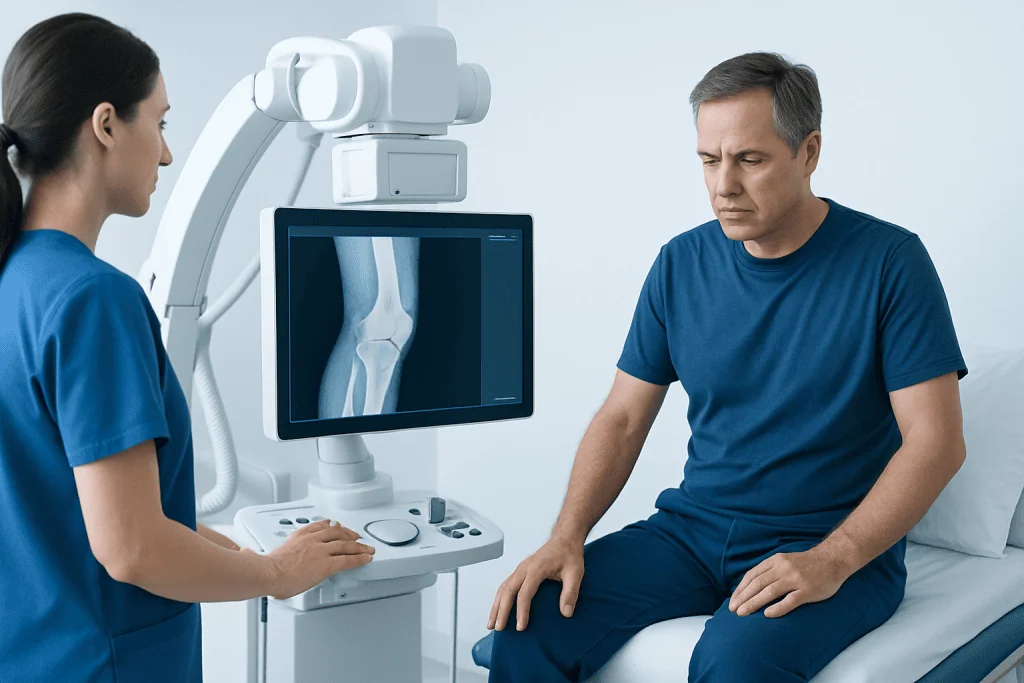
The most common symptom is pain that continues or returns after the period when healing would normally be expected. Pain may occur with weight-bearing, lifting, walking, or movement of the affected limb or spine. Some people notice tenderness directly over the fracture or surgical site, swelling, or a feeling that the area is unstable.
When pseudoarthrosis involves a limb, there may be reduced strength, difficulty using the limb, or an inability to return to usual activities. In some cases, movement can be felt or heard at the old fracture site. If internal plates, screws, rods, or nails were used, ongoing stress from an unhealed bone may eventually contribute to loosening or breakage of the implant.
After spinal fusion, symptoms can include persistent back or neck pain, pain with certain movements, or a decline after an initial period of improvement. However, pain after spine surgery does not always mean pseudoarthrosis. Nerve irritation, muscle pain, adjacent-level changes, and other conditions can produce similar symptoms, so medical evaluation is needed to identify the cause.
Why Pseudoarthrosis Develops

Bone healing requires good blood supply, stable alignment, healthy bone-forming cells, and an appropriate biological environment. Pseudoarthrosis may occur when a fracture is severe, fragmented, open to the outside environment, or associated with substantial soft-tissue damage. Gaps between bone ends, inadequate stability, or repeated motion at the healing site can also interfere with union.
Health and lifestyle factors may affect healing. Tobacco and nicotine exposure can reduce blood flow and impair bone repair. Poorly controlled diabetes, poor nutrition, anemia, vitamin deficiencies, kidney disease, osteoporosis, and conditions that affect circulation or immunity may also contribute. Certain medicines can influence bone metabolism, so a clinician should review all prescription medicines, non-prescription products, and supplements.
Infection is an important possible cause, especially after an open fracture or orthopedic surgery. Infection may sometimes be subtle and cause no fever or obvious wound drainage. In spinal fusion, risk can be influenced by the number of levels fused, the reason for surgery, bone quality, nicotine exposure, and mechanical stresses on the fusion area. Often, more than one factor contributes rather than there being a single clear cause.
How Pseudoarthrosis Is Diagnosed
Diagnosis begins with a detailed history and physical examination. The clinician will ask about the original injury or operation, healing progress, pain pattern, mobility, previous infections, tobacco or nicotine use, nutrition, and medical conditions. Examination may identify tenderness, abnormal motion, alignment changes, reduced function, or signs that an implant is under stress.
Standard X-rays are usually the first imaging test. They can show whether bridging bone has formed, whether the fracture line remains visible, and whether implants have shifted or failed. Comparing images taken over time is particularly useful. A CT scan may provide more detailed information about bone bridging and is commonly helpful when X-rays are unclear or when spinal fusion nonunion is suspected.
Additional tests are selected according to the situation. MRI may help assess nearby soft tissues or possible infection, although metal implants can limit image quality. Blood tests may be used to look for inflammation, infection, anemia, metabolic concerns, or nutritional issues. If infection is suspected, the care team may obtain tissue or fluid samples during a procedure so that treatment can be directed appropriately.
Modern Treatment Approaches
Treatment is based on the location of the nonunion, its cause, bone quality, symptoms, the presence of infection, and a person’s overall health and goals. Some delayed-healing fractures can be managed without an operation by improving protection of the bone, adjusting immobilization or weight-bearing, addressing nutrition and nicotine use, and monitoring closely with repeat imaging.
Bone-stimulation technologies may be considered in selected cases. These devices use electrical, electromagnetic, or ultrasound-based signals intended to support the healing process. Their suitability depends on the type and location of the nonunion, the stability of the fracture, and the treatment plan. They are not appropriate for every person and should be used under the direction of an orthopedic or spine specialist.
Surgery may be recommended when there is mechanical instability, a large bone gap, implant failure, infection, or a well-established nonunion. Procedures may involve improving alignment, replacing or strengthening fixation with plates, screws, rods, or external fixation, and adding bone graft. Graft material may come from the patient’s own bone, donor tissue, or specialized bone-graft substitutes. Infected nonunion usually requires a planned approach that addresses both infection control and stable reconstruction.
For spinal pseudoarthrosis, revision surgery may involve renewed preparation of the fusion surfaces, additional bone grafting, and changes to the fixation approach when appropriate. Revision decisions are individualized, since imaging findings alone do not always explain a person’s symptoms. The goal is to improve stability and support bone fusion while considering the potential benefits and risks of further surgery.
Recovery, Rehabilitation, and Supporting Bone Healing
Recovery from pseudoarthrosis treatment depends on the bone involved, the procedure performed, and whether infection or other health conditions are present. A clinician may recommend a period of bracing, casting, limited weight-bearing, or activity modification to protect healing. It is important not to increase activity sooner than advised, even if pain begins to improve.
Physical therapy may be introduced gradually to preserve motion in nearby joints, rebuild strength, improve balance, and support a safe return to daily activities. The timing and intensity of rehabilitation should match the stability of the repair. Exercises that place excessive force through an unhealed site can delay recovery, so an individualized plan is safer than self-directed progression.
Adequate protein and an overall balanced diet support recovery. Clinicians may assess calcium, vitamin D, and other nutritional factors when indicated, but supplements should not replace a comprehensive treatment plan or be started in high doses without professional advice. Avoiding smoking, vaping, and other nicotine products is one of the most meaningful steps a person can take to support bone healing.
Follow-up appointments and repeat imaging allow the care team to check bone progress, alignment, and implant position. Acibadem International’s multidisciplinary specialists and JCI-accredited hospitals evaluate and treat bone and spinal healing problems for international patients, coordinating orthopedic, spine, rehabilitation, imaging, and infection-related care when needed.
When to Seek Medical Care
A person should contact their treating clinician if pain at a fracture or fusion site remains significant, gets worse after improving, or limits daily activities beyond the expected recovery period. New instability, a change in limb alignment, difficulty bearing weight, or a sensation of movement around a previously repaired bone should also be assessed promptly.
Urgent medical evaluation is appropriate for fever, chills, increasing redness or warmth around an incision, wound drainage, rapidly worsening swelling, or severe unrelenting pain. These symptoms can occur with infection or other complications and should not be managed by waiting at home. New numbness, weakness, loss of bladder or bowel control, or severe neck or back symptoms after spine surgery require urgent assessment.
People who have risk factors for slower healing, including nicotine use, diabetes, poor circulation, prior infection, or osteoporosis, may benefit from early discussion with their orthopedic or spine team. Early review does not mean that pseudoarthrosis is present; it gives the clinician an opportunity to identify treatable factors and guide safe recovery.
Frequently asked questions
Is pseudoarthrosis the same as a nonunion?
In many clinical settings, pseudoarthrosis and nonunion are used to mean the same thing: a bone has not healed into a stable union. Pseudoarthrosis emphasizes that abnormal movement may exist at the unhealed area, creating a “false joint.” A specialist will use imaging, symptoms, and the healing timeline to determine whether a true nonunion is present.
Can pseudoarthrosis heal without surgery?
Some cases of delayed bone healing can improve with non-surgical measures such as protection from excessive load, treatment of health factors, and, in selected cases, bone stimulation. Established pseudoarthrosis with instability, a large gap, implant failure, or infection is more likely to require surgery. The most appropriate approach depends on the individual cause and location.
How long does it take to diagnose pseudoarthrosis?
There is no single time point that applies to every fracture or spinal fusion. Healing expectations vary by bone, injury severity, treatment method, age, and health status. Clinicians look for a lack of healing progress over time, along with persistent symptoms and imaging findings, rather than relying on a calendar alone.
Does pseudoarthrosis always cause pain?
No. Some people have little or no pain and the nonunion is found on follow-up imaging. Others have persistent pain, tenderness, instability, or reduced function. In the spine, a nonunion seen on imaging may not always be the main source of symptoms, which is why clinical assessment is essential.
Can smoking affect pseudoarthrosis?
Yes. Smoking and other nicotine exposure can impair blood flow and interfere with the biological processes involved in bone repair. Stopping all nicotine products before and after orthopedic or spinal treatment can meaningfully support healing. A healthcare professional can recommend practical cessation support.
What happens if pseudoarthrosis is caused by infection?
Infected pseudoarthrosis needs specialized care because both infection and bone stability must be addressed. Treatment may include laboratory testing, tissue sampling, antibiotics directed by results, removal or revision of hardware when necessary, and reconstructive surgery. The treatment plan is usually coordinated by orthopedic surgeons and infection specialists.
This article is for general information only and is not a substitute for professional medical advice. Please consult a qualified doctor about your individual situation.
Joint and spine care in Turkey — expert assessment & treatment
JCI-accredited · board-certified surgeons · reply within 24h
Add us as a Preferred Source to see more of our trusted health content across Google Search, AI Overviews and Discover.

More from the Health Library

Pyogenic Granuloma: Early Signs, Risk Factors, and How It Is Treated
Gum Disease: Diagnosis, Outlook, and Modern Treatment Approaches

Small Cell Chemotherapy: How It Works, Results and What to Expect

Gardner’s Disease: Diagnosis, Outlook, and Modern Treatment Approaches

Understanding Anisocytosis Disease: A Complete Patient Guide