Bones of the Hand and Wrist: A Complete Medical Overview

Each hand contains 8 carpal bones, 5 metacarpal bones and 14 phalanges. The wrist is made up of small carpal bones that connect the hand to the radius and ulna in the forearm.
Key Takeaways
- Each hand contains 8 carpal bones, 5 metacarpal bones and 14 phalanges.
- The wrist is made up of small carpal bones that connect the hand to the radius and ulna in the forearm.
- Hand and wrist pain after an injury may result from a fracture, sprain, tendon injury or joint problem and may need assessment.
- Some wrist fractures, especially scaphoid fractures, can be difficult to see immediately on standard X-rays.
- Protective equipment, gradual training and early care for injuries can help preserve hand and wrist function.
The bones of the hand and wrist are a coordinated framework of 27 bones in each hand, supported by joints, ligaments, tendons and muscles. Their arrangement allows the hand to combine strength for gripping with the fine control needed for writing, typing and handling small objects.
Overview: How Many Bones Are in the Hand and Wrist?
The bones of the hand and wrist consist of 27 bones in each hand: 8 carpal bones at the wrist, 5 metacarpal bones in the palm and 14 phalanges in the fingers and thumb. Together, these small bones form a flexible structure that supports everyday tasks ranging from carrying objects to fastening buttons.
The wrist is the transition area between the forearm and hand. Its carpal bones connect with the radius and ulna, the two long bones of the forearm, through a complex set of joints. This arrangement lets the wrist bend, straighten and move from side to side while also helping the hand rotate as the forearm turns.
Bone structure alone does not explain hand function. Cartilage provides smooth joint surfaces, ligaments hold bones in their correct relationship, and tendons transfer muscle force to the fingers and thumb. Nerves and blood vessels also travel through narrow spaces in the wrist and palm, which is why swelling or injury in this area can affect sensation and movement.
The Main Bone Groups and Their Locations
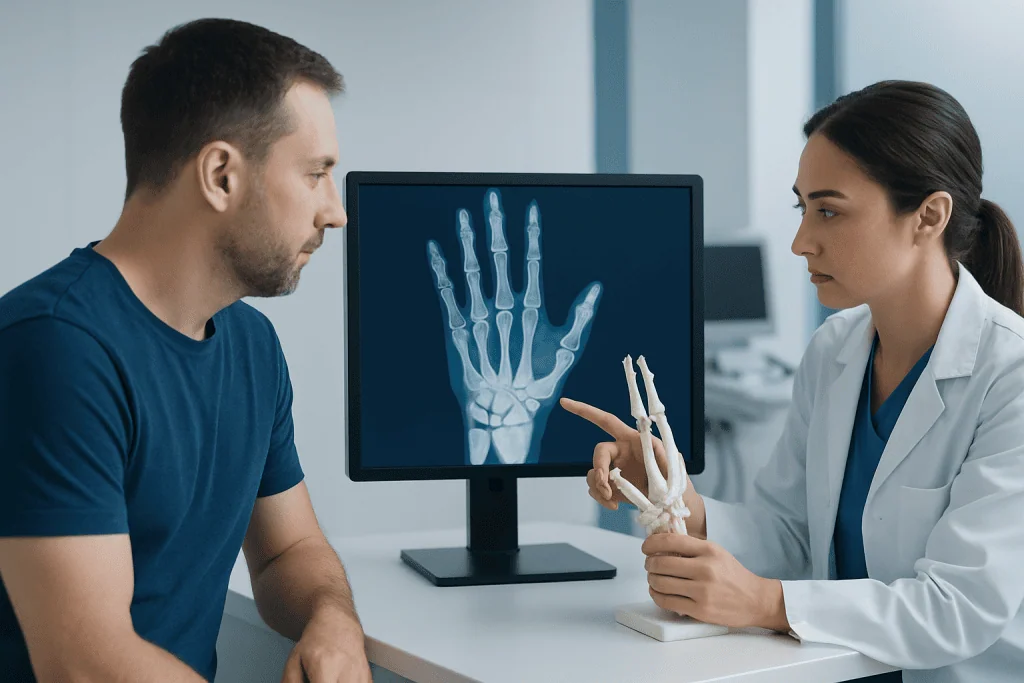
The eight carpal bones are arranged in two rows at the base of the hand. The row closer to the forearm includes the scaphoid, lunate, triquetrum and pisiform. The row closer to the palm includes the trapezium, trapezoid, capitate and hamate. Although each is small, their precisely shaped surfaces help the wrist move while maintaining stability.
The scaphoid sits on the thumb side of the wrist and is one of the most commonly injured carpal bones. The lunate is near the center of the wrist and helps transmit force from the forearm to the hand. The pisiform is a small rounded bone located within a tendon on the little-finger side of the wrist. The capitate is the largest carpal bone and lies centrally in the second row.
Beyond the wrist are the five metacarpals, which form the palm. Each metacarpal corresponds with a digit: thumb, index finger, middle finger, ring finger or little finger. The metacarpal nearest the thumb is especially mobile, allowing the thumb to oppose the fingertips for pinching and grasping.
The fingers contain phalanges. The index, middle, ring and little fingers each have three phalanges: proximal, middle and distal. The thumb has two phalanges, proximal and distal. The distal phalanges support the fingertips and nails, helping the hand sense and manipulate objects accurately.
Joints, Movement and Hand Function
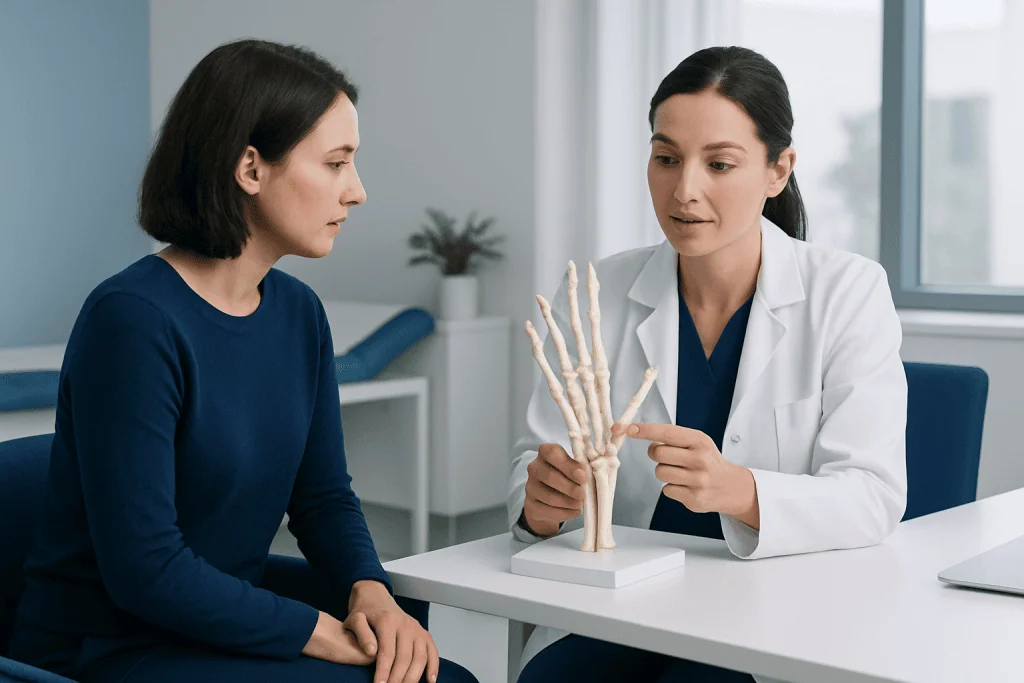
The hand and wrist contain numerous joints, each contributing a small amount of movement. Combined, these movements allow the hand to make a fist, spread the fingers, point, pinch and adapt to objects of different shapes. The wrist itself can flex, extend, move toward the thumb or little-finger side, and participate in forearm rotation.
The radiocarpal joint connects the radius to part of the carpal bone row. Additional movement occurs between the carpal bones and where the carpal bones meet the metacarpals. Finger movement takes place at the knuckles, called metacarpophalangeal joints, and at the interphalangeal joints farther along each finger.
Ligaments are strong bands of connective tissue that prevent excessive motion between these bones. Important wrist ligaments help stabilize the scaphoid and lunate, among other carpal bones. Damage to a ligament may lead to pain, swelling, weakness or a feeling that the wrist is unstable, even if no bone is broken.
The hand also depends on tendons from muscles in the forearm and smaller muscles within the hand. Flexor tendons bend the fingers and thumb, while extensor tendons straighten them. Because many structures pass through a limited space, persistent swelling, repetitive strain or joint changes can sometimes irritate nearby nerves, including the median nerve in the carpal tunnel.
Common Injuries and Conditions Affecting These Bones
Falls, sports injuries, workplace accidents and direct blows can injure the bones of the hand and wrist. A fall onto an outstretched hand may cause a wrist sprain, a fracture of the radius, or a fracture of a carpal bone such as the scaphoid. Punching an object or falling on the hand can also fracture a metacarpal, often the one leading to the little finger.
A fracture may cause pain, swelling, bruising, tenderness, reduced movement or a visible change in shape. However, symptoms are not always dramatic. Scaphoid fractures may cause pain in the hollow at the base of the thumb and can initially appear similar to a simple sprain. Because the scaphoid has a limited blood supply in part of the bone, prompt assessment and appropriate follow-up are important when this injury is suspected.
Not all hand and wrist symptoms are caused by a fracture. Sprains involve ligaments, while tendon injuries can affect finger movement. Osteoarthritis may develop with age, following an old injury, or because of joint wear; it often affects the base of the thumb and finger joints. Inflammatory arthritis can cause swelling and stiffness in several joints and should be medically evaluated.
Some conditions affect the tissues around the bones rather than the bones themselves. For example, carpal tunnel syndrome involves pressure on the median nerve at the wrist and may cause tingling, numbness or weakness in the thumb, index, middle and part of the ring finger. A proper diagnosis helps distinguish among these overlapping causes of hand discomfort.
How Hand and Wrist Problems Are Diagnosed
A clinician begins with a history of the symptoms and any injury. Details such as how a fall occurred, where the pain is located, whether there is numbness, and which movements are difficult can provide useful clues. The examination may include checking swelling, tenderness, alignment, range of motion, grip, circulation and sensation.
Plain X-rays are commonly used to look for fractures, joint alignment and signs of arthritis. Some fractures are not visible immediately after injury, particularly small carpal fractures. If symptoms and examination findings suggest a fracture despite normal initial X-rays, a clinician may recommend immobilization and repeat imaging or request advanced imaging.
Computed tomography, known as CT, can show complex bone fractures in greater detail and is useful for surgical planning in selected cases. Magnetic resonance imaging, or MRI, can identify occult fractures and also assess ligaments, cartilage, tendons and other soft tissues. Ultrasound may be helpful for some tendon, fluid-filled or soft-tissue concerns.
Early diagnosis is particularly helpful when there is marked pain, deformity, loss of motion or possible nerve involvement. It can prevent an unstable fracture or ligament injury from being overlooked and supports a treatment plan tailored to the individual’s activity needs and overall health.
Treatment and Recovery Principles
Treatment depends on the specific bone or tissue involved, the pattern of injury and whether the joint remains stable and aligned. Minor sprains and some stable fractures may be managed with rest from aggravating activities, a splint or cast, elevation and clinician-guided pain relief. A healthcare professional should advise on the type and duration of immobilization, as unnecessary or prolonged splinting can contribute to stiffness.
Fractures that are displaced, unstable, open, involve a joint surface or do not remain in a good position may require reduction, meaning the bones are realigned. In selected cases, surgery may be recommended to stabilize the bones with pins, screws, plates or other devices. The aim is to restore alignment while allowing safe healing and future movement.
Hand therapy or rehabilitation is often an important part of recovery after an injury, surgery or prolonged immobilization. A therapist may guide exercises for motion, swelling control, strength, scar care and return to daily activities. Exercises should be introduced at the right stage of healing, since doing too much too soon can delay recovery.
Recovery times vary considerably. Bone healing commonly takes weeks, but return of strength, comfort and fine hand control can take longer, especially after complex injuries. Follow-up appointments help confirm that healing is progressing and allow the care team to address stiffness, pain or functional concerns.
Protecting Hand and Wrist Health
Many hand and wrist injuries cannot be fully prevented, but practical habits can reduce risk. Wearing appropriate gloves or wrist protection for certain sports and using correctly fitted equipment may help protect the hands. At work, using safe lifting techniques and tools designed for the task can reduce forceful gripping and awkward wrist positions.
For repetitive activities such as typing, gaming, crafts or manual work, it can be helpful to keep the wrist in a neutral position when possible, vary tasks and take regular brief breaks. Gradually increasing activity levels is generally safer than suddenly increasing training volume, gripping force or impact-based exercise.
A balanced diet that includes adequate protein, calcium and vitamin D supports overall bone health. Weight-bearing and resistance exercise also contribute to bone strength throughout the body, while smoking cessation and moderation of alcohol intake may support bone healing and long-term skeletal health. Individuals with osteoporosis risk factors can discuss bone health assessment with a clinician.
If an injury has already occurred, avoiding a return to contact sports, heavy lifting or demanding hand work until medically cleared is important. Acibadem International’s multidisciplinary specialists and JCI-accredited hospitals evaluate hand and wrist conditions for international patients, with care plans based on imaging findings, function and individual recovery goals.
When to Seek Medical Care
Medical assessment is advisable after a fall, impact or twisting injury that causes persistent wrist or hand pain, swelling, bruising, weakness or limited movement. It is especially important to seek care when there is tenderness near the base of the thumb, because a scaphoid fracture may not be obvious without examination and imaging.
Urgent medical care is needed for a visibly deformed hand or wrist, an open wound over a possible fracture, uncontrolled bleeding, severe swelling, blue or pale fingers, numbness, inability to move the fingers, or severe pain after an injury. Rings should be removed promptly if swelling is developing, provided they can be removed without forcing them.
A person should also arrange a clinical review for gradual or recurring pain, morning stiffness, clicking, reduced grip, numbness or symptoms that interfere with work, sleep or daily tasks. Early evaluation can clarify whether the problem relates to bone, joint, tendon, ligament or nerve structures and guide appropriate care.
Frequently asked questions
How many bones are in one hand and wrist?
Each hand contains 27 bones. These include 8 carpal bones in the wrist, 5 metacarpal bones in the palm and 14 phalanges in the fingers and thumb. The radius and ulna are forearm bones that connect with the wrist but are not included in this count.
What are the eight carpal bones of the wrist?
The carpal bones are the scaphoid, lunate, triquetrum, pisiform, trapezium, trapezoid, capitate and hamate. They sit in two rows and work together to provide wrist mobility and stability. Their small size and close arrangement can make some injuries challenging to identify without imaging.
Which bone is most commonly broken in the wrist?
The distal radius, the end of the radius near the wrist, is commonly fractured after a fall onto an outstretched hand. Among the carpal bones, the scaphoid is the most commonly fractured. A clinician can determine the injury type using an examination and appropriate imaging.
Can a wrist fracture be missed on an X-ray?
Yes, certain fractures may not be visible on initial X-rays, particularly some scaphoid fractures. If pain and examination findings still suggest a fracture, a clinician may use a splint and arrange repeat X-rays, CT or MRI. Follow-up is important rather than assuming ongoing pain is only a sprain.
Why does the thumb have fewer bones than the fingers?
The thumb has two phalanges, while each of the other four fingers has three. This structure, together with the thumb’s mobile base joint and supporting muscles, allows opposition to the fingertips. Opposition is essential for pinching, grasping and many precise hand movements.
What is the difference between a wrist sprain and a fracture?
A sprain involves stretching or tearing of ligaments, while a fracture is a break in a bone. Both can cause pain, swelling and reduced movement, so symptoms alone cannot always distinguish them. A medical assessment, often including X-rays, is the safest way to identify the cause after an injury.
References
- American Academy of Orthopaedic Surgeons
- American Society for Surgery of the Hand
- National Institute of Arthritis and Musculoskeletal and Skin Diseases
- Mayo Clinic
- NHS
This article is for general information only and is not a substitute for professional medical advice. Please consult a qualified doctor about your individual situation.
Joint and spine care in Turkey — expert assessment & treatment
JCI-accredited · board-certified surgeons · reply within 24h
Add us as a Preferred Source to see more of our trusted health content across Google Search, AI Overviews and Discover.

More from the Health Library

Benzonatate: An Evidence-Based Guide for Patients

Folliculite Jacuzzi — Explained by Medical Evidence, Not Myths

Best Workout Routines for Beginners — Explained by Medical Evidence, Not Myths

Herpes Discharge: What Patients Need to Know

Albumin — Explained by Medical Evidence, Not Myths

Both Elbows Hurt — Explained by Medical Evidence, Not Myths
Orthopedic Surgery & Traumatology Specialists at Acibadem

Prof. Dr. Aziz Kaya Alturfan
Orthopedic Surgery & Traumatology
Dr. Baran Şen
Orthopedic Surgery & Traumatology
Prof. Dr. Barış Kocaoğlu
Orthopedic Surgery & Traumatology
Dr. Bengü Kasım
Physical Medicine & Rehabilitation