IV Port: A Complete Medical Overview

An IV port is implanted under the skin, most often in the upper chest, and connects to a large central vein. It may be recommended when a person needs repeated intravenous medicines, chemotherapy, transfusions, nutrition support or blood tests.
Key Takeaways
- An IV port is implanted under the skin, most often in the upper chest, and connects to a large central vein.
- It may be recommended when a person needs repeated intravenous medicines, chemotherapy, transfusions, nutrition support or blood tests.
- A trained healthcare professional accesses the port using a special non-coring needle and sterile technique.
- Ports require regular flushing when not in use and should be checked promptly for signs of infection, blockage or skin changes.
- The decision to place or remove a port is individualized according to the expected treatment plan, vein health and personal needs.
An IV port, also called an implantable port or port catheter, is a small device placed beneath the skin to provide dependable access to a large vein. It can make repeated intravenous treatments, blood draws and some long-term therapies more comfortable and practical than frequent needle insertion into arm veins.
What Is an IV Port?
An IV port is a small medical device implanted beneath the skin that gives healthcare teams repeated access to the bloodstream. It consists of a raised chamber, called a reservoir or port, connected to a thin flexible tube called a catheter. The catheter is threaded into a large central vein, usually with its tip positioned near the heart.
Most ports are placed beneath the skin of the upper chest, although other locations may be suitable for some people. Once the incision has healed, the port creates a small bump under the skin. It does not have external tubing when it is not being used, which is one feature that distinguishes it from some other central venous catheters.
When treatment is needed, a nurse or other trained clinician cleans the skin and inserts a specialized non-coring needle through the skin into the port reservoir. Medicines, fluids, blood products or nutrition can then travel through the catheter into a large vein. The same access may sometimes be used for blood sampling, depending on the clinical setting and local practice.
Why an IV Port May Be Recommended
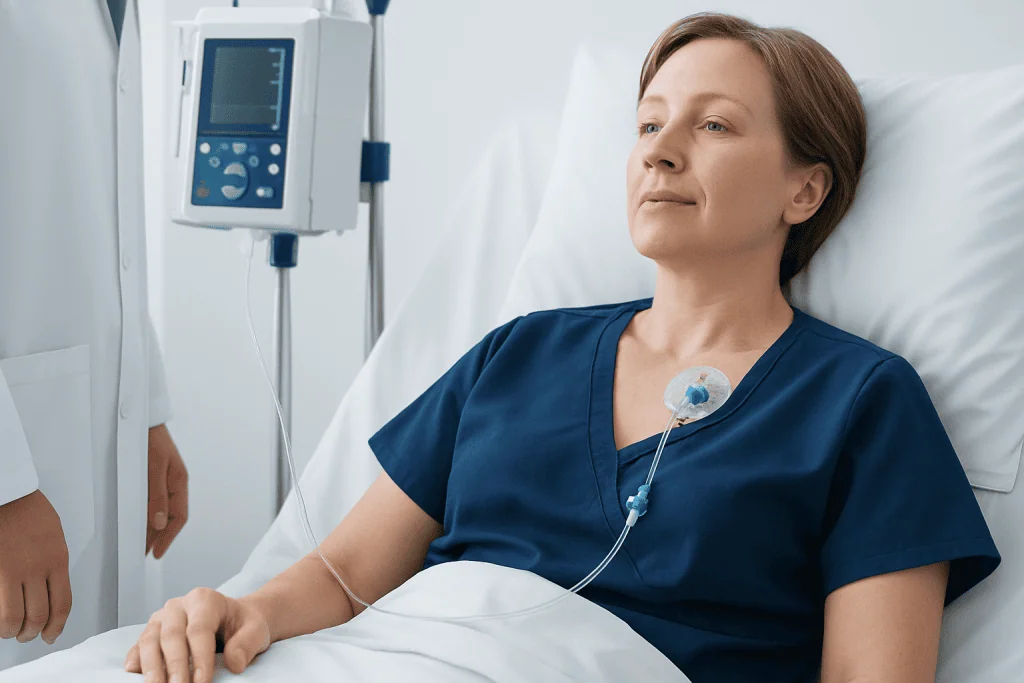
An IV port may be considered when a person is expected to need intravenous treatment repeatedly or over many months. Frequent use of small arm veins can be uncomfortable and may become difficult if those veins are fragile, scarred or easily irritated. A port provides a more durable route that can reduce the need for repeated peripheral IV placements.
Ports are commonly used for chemotherapy and other cancer treatments, including supportive medications given before or after treatment. They may also be useful for people receiving long-term antibiotics, regular blood transfusions, certain biologic medicines, intravenous nutrition, or treatments for chronic blood disorders. Whether a port is appropriate depends on the type of treatment, how long it is likely to continue and the condition of the person’s veins.
A port is not necessary for every IV treatment. For a short course of therapy, a standard peripheral IV or another type of vascular access device may be more appropriate. The treating team considers expected treatment duration, medication characteristics, infection risk, bleeding risk, lifestyle needs and the person’s preferences before recommending a device.
- Peripheral IV: a short catheter placed in a vein of the hand or arm for temporary use.
- PICC line: a longer catheter inserted through an arm vein, with part of the line remaining outside the body.
- IV port: a fully implanted device with no external line between treatments.
How IV Port Placement Is Performed

IV port placement is usually a planned outpatient procedure performed by an interventional radiologist, surgeon or another clinician trained in vascular access. Before the procedure, the team reviews medical history, current medicines, allergies and conditions that may affect bleeding, healing or infection risk. Blood tests or imaging may be arranged when clinically needed.
The procedure is commonly done with local anesthetic to numb the area, often with sedation to promote comfort. Using ultrasound and X-ray guidance or other imaging, the clinician enters a suitable vein, advances the catheter into position and creates a small pocket under the skin for the port reservoir. The device is secured, the incision is closed, and a dressing is applied.
Placement generally takes less than a few hours, including preparation and recovery, though individual timing varies. Some ports can be used soon after placement if treatment is urgent and the clinician confirms that the device is ready. In other situations, the team may prefer the incision to begin healing before the first use.
Mild soreness, bruising, swelling or tightness around the placement area can occur in the first days after the procedure. The care team provides instructions about wound care, bathing, activity and pain relief. People should follow those instructions closely, especially regarding when to remove or change any dressing.
Using and Caring for an IV Port
Only trained healthcare professionals should access an IV port. They use sterile supplies and a special needle designed to enter the reservoir without damaging its silicone center. During an infusion, the needle and surrounding area are covered with a sterile dressing. The needle is removed after treatment if continuous access is no longer needed.
When the port is not being used regularly, it still needs maintenance. The device is usually flushed at intervals set by the treating team to help keep it open and reduce the chance of a clot or blockage. The exact schedule varies by the port type, treatment plan and hospital protocol, so it is important not to miss scheduled maintenance appointments.
Once the incision has healed and the port is not accessed, many people can shower, wear usual clothing and continue ordinary daily activities. A port typically does not prevent most exercise, but contact sports or activities that could cause a direct blow to the port area may require discussion with a clinician. Seat belts can sometimes feel uncomfortable over a chest port; a soft pad may help if approved by the care team.
People should avoid trying to flush, access or troubleshoot the port at home unless they have been specifically trained and instructed to do so. Any difficulty with infusion, pain during flushing, resistance, swelling or fluid leakage should be assessed by a healthcare professional rather than forced.
Benefits, Limitations and Possible Complications
A principal benefit of an IV port is reliable long-term vein access. Because the catheter ends in a large vein with high blood flow, it can be suitable for treatments that may irritate smaller veins. For many people, this means fewer repeated needle sticks in the arms and hands and greater convenience during an extended treatment plan.
However, port placement is an invasive procedure, and no vascular access device is completely risk-free. Possible complications include bleeding, bruising, discomfort, infection, catheter blockage, blood clot formation, device movement, skin breakdown over the port, or damage to the catheter. Rare procedure-related complications can include injury to nearby structures or an abnormal heart rhythm while the catheter is being positioned.
Infections may affect the skin over the port, the port pocket or the bloodstream. Careful sterile technique during access and appropriate skin care are important safeguards. A blocked port may not draw blood or may be difficult to flush; clinicians can assess the cause and may use approved methods to restore function when appropriate.
A port can remain in place for as long as it is medically needed and functioning well. When treatment has ended and there is no foreseeable need for central venous access, the care team may recommend removal. Removal is generally a minor procedure, but timing should be decided with the clinician responsible for the person’s ongoing care.
Living With an IV Port and Preparing for Treatment
Having a port can take an adjustment period. Before an infusion or blood draw, it may help to wear clothing that allows easy access to the upper chest or the port location. Asking the care team to explain each step, particularly during the first access, can make the experience more predictable and comfortable.
People should keep an updated list of medicines and tell clinicians about blood thinners, immune-suppressing medicines, diabetes, known allergies and any previous clotting or line-related infections. These details help the team plan safe placement, access and follow-up. They should also carry information about the port if advised by their hospital, especially when receiving care at more than one facility.
It is useful to check the skin around the port routinely after it has healed. The area should not become increasingly red, hot, swollen, tender or open. A small scar is expected after placement, but a new change in the port’s shape, position or surrounding skin deserves clinical advice.
Acibadem International’s multidisciplinary specialists and JCI-accredited hospitals evaluate and manage vascular access needs, including implantable ports, for international patients as part of an individualized treatment plan.
When to Seek Medical Care
Contact the treating team promptly if there is increasing redness, warmth, swelling, pain, drainage or an unpleasant odor around the port site. A fever, chills, unexplained feeling of illness, or new tenderness along the neck, chest or arm may also need urgent assessment, particularly in a person receiving chemotherapy or medicines that affect the immune system.
Seek medical advice without delay if the arm, neck or chest on the port side becomes swollen, painful or discolored; if there is shortness of breath, chest pain, dizziness or fainting; or if fluid leaks around the port during an infusion. These symptoms do not always mean a serious complication, but they should be evaluated quickly.
During an infusion, the person should tell the nurse immediately about burning, pressure, pain, swelling, moisture under the dressing or a new unusual sensation. The infusion should not be continued through a painful or visibly swollen port site until a trained clinician has assessed it. In an emergency, local emergency services should be contacted.
Frequently asked questions
Is an IV port the same as a central line?
An IV port is one type of central venous access device, often referred to broadly as a central line. Its catheter reaches a large central vein, but the port itself sits completely beneath the skin. Other central lines, such as PICC lines and tunneled catheters, may have external tubing.
Does IV port placement hurt?
The placement area is numbed with local anesthetic, and many people also receive sedation. Pressure or brief discomfort may be felt during the procedure, followed by soreness or bruising for several days. The healthcare team can advise on suitable pain relief and expected recovery.
Can a person shower or swim with an IV port?
After the incision has healed and the port is not accessed, showering is generally possible. Swimming or soaking should wait until the wound is fully healed and the treating team confirms it is safe. When a port needle is in place, the dressing must remain clean, dry and secure.
How often does an unused IV port need flushing?
The flushing interval depends on the device, the manufacturer’s guidance and the hospital’s clinical protocol. Many ports require periodic flushing even when no treatment is being given. The person should follow the schedule provided by their own care team.
Can blood be drawn from an IV port?
In many settings, blood can be drawn through a functioning IV port. This can reduce the need for a separate needle stick, but it may not be suitable for every test or every clinical situation. The nurse or clinician will decide whether the port can be used safely.
When is an IV port removed?
A port is usually removed when it is no longer needed for treatment or monitoring, or if a complication makes removal necessary. The timing is individualized and should be discussed with the specialist overseeing care. Removal is typically performed using local anesthetic, sometimes with sedation.
References
- National Cancer Institute
- Centers for Disease Control and Prevention
- American Cancer Society
- Society of Interventional Radiology
- Infusion Nurses Society
This article is for general information only and is not a substitute for professional medical advice. Please consult a qualified doctor about your individual situation.
Explore treatments in Turkey — costs, top hospitals & a free quote
JCI-accredited · board-certified surgeons · reply within 24h
Add us as a Preferred Source to see more of our trusted health content across Google Search, AI Overviews and Discover.