How to Floss With Braces and Clean Under Wires

Floss once a day while wearing braces, ideally before brushing at night. A floss threader or orthodontic floss makes it easier to pass floss under the main wire.
Key Takeaways
- Floss once a day while wearing braces, ideally before brushing at night.
- A floss threader or orthodontic floss makes it easier to pass floss under the main wire.
- Gums may bleed mildly when flossing is newly started or restarted, often because plaque has caused gum inflammation.
- Persistent bleeding, swelling, pain, bad breath, or loose brackets should be assessed by a dental professional.
- Water flossers can be helpful additions but do not always replace cleaning between teeth with floss or interdental brushes.
To floss with braces, guide floss beneath the orthodontic wire using a floss threader, stiff-ended orthodontic floss, or a similar aid, then clean gently between each pair of teeth. Daily cleaning around brackets and along the gumline helps remove plaque that a toothbrush may miss.
How to floss with braces
Flossing with braces can take extra time at first, but it becomes easier with practice. The key step is passing the floss beneath the main orthodontic wire before cleaning the space between two teeth. A floss threader, stiff-ended orthodontic floss, or a reusable flossing aid can make this process more manageable.
For most people, mild gum bleeding during the first days of regular flossing is common and is usually linked to plaque-related gum inflammation rather than damage from floss. The bleeding should gradually lessen as daily cleaning improves. However, heavy bleeding, significant swelling, increasing pain, pus, fever, or a loose appliance should be reviewed by a dentist or orthodontist.
Flossing does not need to be forceful to be effective. Gentle, consistent cleaning removes food debris and plaque from areas around brackets, wires, and the gumline that may be difficult to reach with brushing alone.
A simple step-by-step flossing method
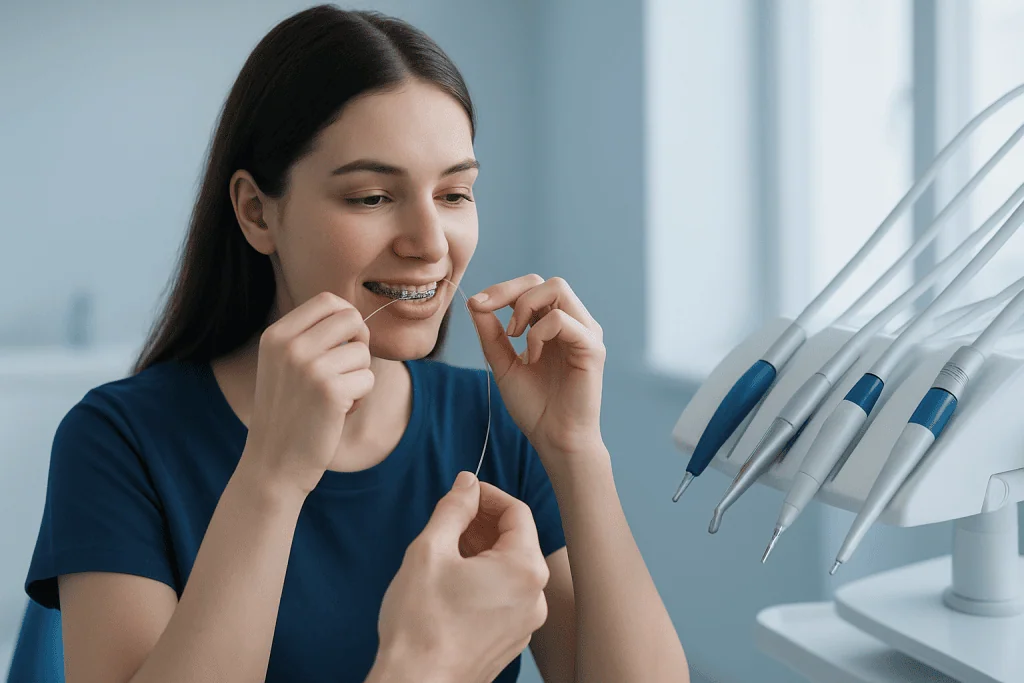
Start with about 40 to 45 centimetres of dental floss. If using a floss threader, place one end of the floss through the loop of the threader. Gently guide the pointed end of the threader under the orthodontic wire, usually near the space between two teeth, and pull the floss through. Stiff-ended orthodontic floss is designed to pass under the wire without a separate threader.
Once the floss is beneath the wire, hold it between the fingers and slide it carefully into the space between the teeth. Curve the floss into a C-shape against one tooth and move it up and down a few times, including just below the gumline. Then curve it around the neighboring tooth and repeat. Avoid snapping the floss down onto the gums.
Pull the floss out, move to the next space, and thread it beneath the wire again. Use a clean section of floss as the person moves around the mouth. Cleaning both sides of every tooth is important, including the back teeth, where food and plaque can collect unnoticed.
Many people find it easiest to floss in front of a mirror with good lighting. Allowing a few extra minutes at the beginning can help establish an effective routine without rushing or pulling on brackets and wires.
Choosing tools that work with braces

Traditional string floss remains an effective option when it can be guided beneath the wire. Disposable floss threaders are inexpensive, widely available, and useful for people who prefer standard floss. Orthodontic floss often has a firmer end for threading and a spongy section that may help clean around wider spaces or appliances.
Interdental brushes are small cone-shaped or cylindrical brushes that can clean around brackets, under wires, and between teeth where space allows. They should fit gently; forcing a brush into a tight space can irritate the gums or damage the brush. An orthodontist or dental hygienist can recommend an appropriate size.
A water flosser directs a stream of water around the teeth and braces and can help remove loose food particles. It may be especially useful for people with limited hand mobility or complex orthodontic appliances. However, it is generally best viewed as an addition to careful brushing and cleaning between teeth, rather than a reason to stop using floss or interdental brushes.
- Use a soft manual or electric toothbrush with fluoride toothpaste twice daily.
- Clean around the top, bottom, and sides of every bracket.
- Use an interdental brush for hard-to-reach areas if advised by a dental professional.
- Replace worn toothbrushes and interdental brushes regularly.
Why flossing matters during orthodontic treatment
Brackets, bands, wires, and elastic attachments create more places where plaque and food can remain. Plaque is a soft bacterial film that forms naturally on teeth. If it is not removed consistently, it can irritate the gums and increase the risk of tooth decay, staining around brackets, and gum disease.
Brushing cleans the visible surfaces of teeth well when done carefully, but toothbrush bristles may not fully clean the contact areas between teeth. Flossing and interdental cleaning target these spaces. This is particularly important during orthodontic treatment because dietary habits and cleaning routines can affect the health of teeth and gums while they are moving.
Red, puffy, tender, or bleeding gums may be signs of gingivitis, an early and often reversible form of gum inflammation. Improving plaque removal can help, but persistent symptoms should be assessed. Good daily care also supports a healthier smile once braces are removed.
How often to floss and how to make it a habit
Most people with braces should floss or otherwise clean between their teeth once daily. Evening is often practical because it removes food debris and plaque that has accumulated during the day. Brushing twice daily with fluoride toothpaste remains essential, and some people prefer to floss before brushing so fluoride toothpaste can reach freshly cleaned areas.
At first, flossing with braces may take 10 to 15 minutes. With familiarity and the right tools, it often becomes faster. Keeping floss threaders or orthodontic floss near the toothbrush, using a travel kit, or setting a reminder can make the routine easier to maintain.
Diet also affects oral hygiene during orthodontic treatment. Limiting frequent sugary snacks and drinks helps reduce acid exposure to teeth. Sticky, hard, or very crunchy foods may become trapped around braces or damage the appliance, so patients should follow the food guidance provided by their orthodontic team.
Bleeding gums, soreness, and other common concerns
A small amount of bleeding when a person first begins flossing regularly, or returns to flossing after a break, is often caused by inflamed gums. Gentle daily cleaning is usually preferable to avoiding the area. With better plaque control, mild bleeding commonly improves over the following days to weeks.
Floss should not cause cuts when used gently, but overly forceful movements can traumatize the gums. If floss repeatedly catches, frays, or cannot pass around a particular area, there may be a rough edge on a filling, an orthodontic attachment, or another dental issue. The person should mention this at their orthodontic appointment rather than trying to force the floss through.
It is also common for braces to cause temporary cheek or lip irritation, especially after adjustments. Orthodontic wax may help cover a rubbing bracket or wire, but a poking wire, broken bracket, or detached band should be reported to the orthodontic office. Keeping the appliance intact makes oral hygiene safer and more effective.
When to seek medical care
Routine dental or orthodontic advice is appropriate if gums bleed lightly but the bleeding does not improve after one to two weeks of careful daily cleaning. A dental professional can check whether plaque buildup, gum inflammation, an ineffective cleaning technique, or an appliance issue is contributing. They may examine the gums, assess plaque and tartar, check the fit of braces, and recommend a professional cleaning or tailored hygiene tools.
Prompt dental assessment is advisable for spontaneous or heavy bleeding, persistent gum swelling, severe tooth or gum pain, pus, a bad taste with swelling, fever, facial swelling, or a tooth that feels loose. These signs can indicate infection or another problem that needs timely evaluation. Facial swelling that affects breathing or swallowing requires urgent emergency care.
Patients should also contact their orthodontist if a wire is poking, a bracket has come loose, or there is an injury to the mouth. Acibadem International’s multidisciplinary dental specialists and JCI-accredited hospitals can assess orthodontic and oral health concerns for international patients.
Frequently asked questions
Do people need to floss every day with braces?
Yes. Cleaning between the teeth once daily is generally recommended during orthodontic treatment because brackets and wires can trap plaque and food debris. It should be combined with thorough brushing twice daily using fluoride toothpaste.
Is it normal for gums to bleed when flossing with braces?
Mild bleeding can be common when regular flossing is new or has recently resumed. It often reflects gum inflammation from plaque buildup and may improve with gentle daily cleaning. Bleeding that is heavy, persistent, or accompanied by swelling or pain should be checked by a dentist.
Can a water flosser replace regular floss with braces?
A water flosser can be a useful tool for washing away loose food and cleaning around braces. However, many dental professionals still recommend floss or appropriately sized interdental brushes to clean directly between teeth, where plaque can remain attached.
What is the easiest floss to use with braces?
Stiff-ended orthodontic floss and floss threaders are common choices because they help guide floss beneath the orthodontic wire. The best option depends on the person's dexterity, tooth spacing, and type of appliance. A dental hygienist or orthodontist can demonstrate the most suitable method.
What should a person do if floss gets stuck in braces?
The floss should be eased out gently rather than pulled hard, which could irritate the gums or loosen part of the appliance. If floss repeatedly catches or shreds at the same location, the person should tell their orthodontist or dentist so the area can be examined.
Should a person floss before or after brushing with braces?
Either order can work if both steps are done thoroughly. Some people prefer to floss first to remove debris between teeth, then brush with fluoride toothpaste. The most important factor is maintaining a consistent daily routine.
This article is for general information only and is not a substitute for professional medical advice. Please consult a qualified doctor about your individual situation.
Explore treatments in Turkey — costs, top hospitals & a free quote
JCI-accredited · board-certified surgeons · reply within 24h
Add us as a Preferred Source to see more of our trusted health content across Google Search, AI Overviews and Discover.

More from the Health Library

How Do You Get Sober Fast? A Doctor-Reviewed Answer

Does Shingles Make You Tired? A Doctor-Reviewed Answer

STD Symptoms Explained: Common Triggers and Red Flags

Why Does Coffee Make Me Sleepy? Here Is What the Evidence Says

Can Zoloft Cause Diarrhea? Causes, Explanations, and Next Steps