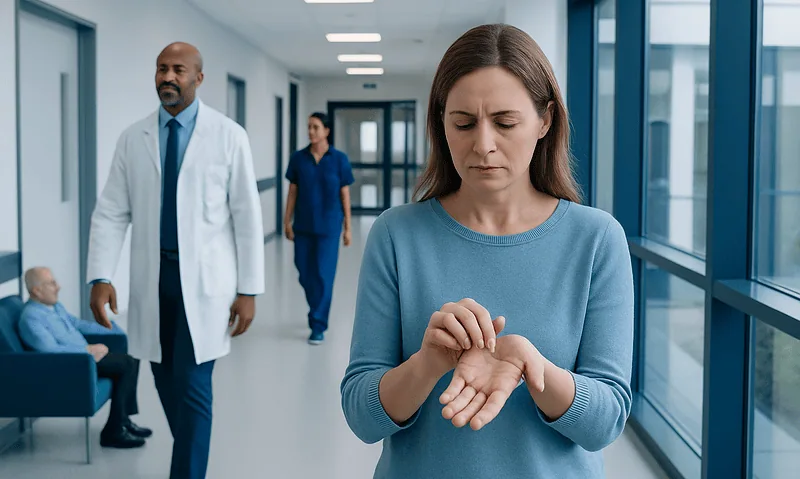
Both Elbows Hurt — Explained by Medical Evidence, Not Myths

Pain in both elbows is commonly linked to repetitive work, exercise, posture, or an inflammatory joint condition. Pain on the outer or inner elbow may reflect tendon overload, while tingling in the ring and little fingers can suggest ulnar nerve irritation.
Key Takeaways
- Pain in both elbows is commonly linked to repetitive work, exercise, posture, or an inflammatory joint condition.
- Pain on the outer or inner elbow may reflect tendon overload, while tingling in the ring and little fingers can suggest ulnar nerve irritation.
- Rest from aggravating activities, gradual return to movement, and ergonomic adjustments can help many mild cases.
- Sudden severe pain after an injury, marked swelling, fever, joint redness, or new weakness should be assessed promptly.
- Persistent or recurrent bilateral elbow pain deserves a medical evaluation, particularly when it affects sleep, work, or daily activities.
When both elbows hurt, the cause is often repeated loading of the arms, joint wear, inflammation, or irritation of nerves near the elbow. The pattern of pain, associated symptoms, daily activities, and medical history help a clinician identify the cause and recommend appropriate care.
What It Means When Both Elbows Hurt
When both elbows hurt, the explanation is often related to how the arms are used repeatedly during work, sport, lifting, computer use, or household tasks. The elbow is a complex hinge joint where bones, cartilage, tendons, muscles, ligaments, and nerves meet. Pain can arise from any of these structures, and discomfort on both sides may reflect the same stressor affecting each arm.
Not all bilateral elbow pain has the same significance. Pain that develops gradually and is clearly linked with gripping, lifting, or leaning on the elbows is commonly mechanical or overuse-related. In contrast, pain accompanied by prolonged morning stiffness, swelling in several joints, fatigue, skin changes, or symptoms elsewhere in the body may point to a broader inflammatory or medical condition.
The location and quality of the pain provide useful clues. Outer-elbow pain can occur with tendon overload, inner-elbow pain may be related to the flexor tendons or ulnar nerve, and pain directly at the tip of the elbow may involve the bursa, a small fluid-filled cushion. A qualified clinician can distinguish among these possibilities through an examination and, when needed, tests.
Recognizing Patterns in Bilateral Elbow Pain
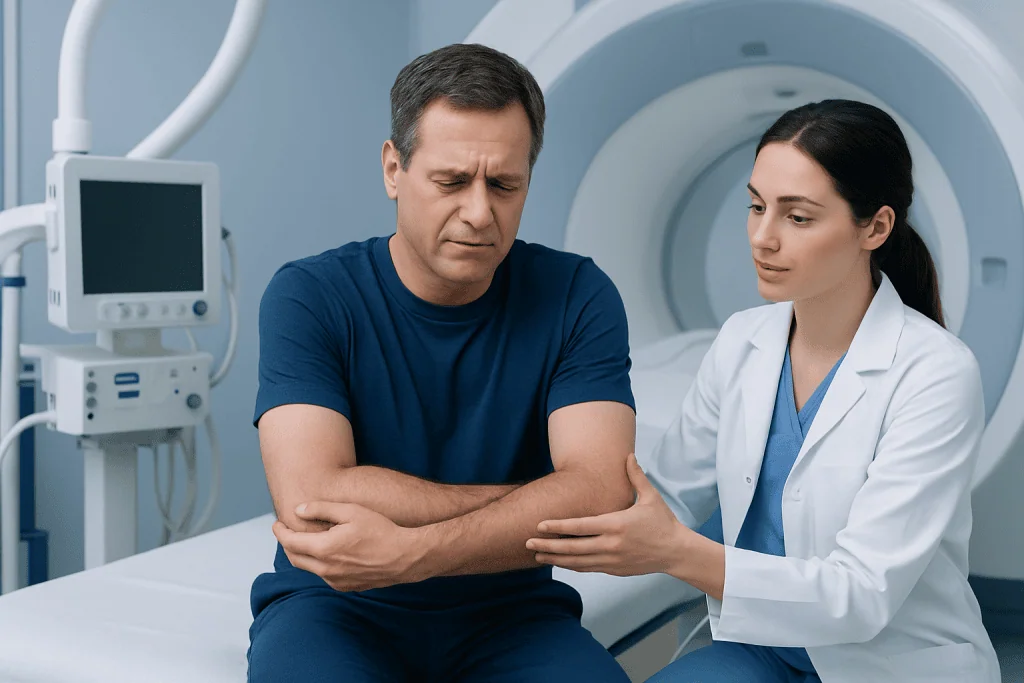
People often describe elbow pain as aching, burning, sharp with movement, or tender to touch. The timing matters: discomfort that appears during gripping, turning a doorknob, carrying bags, using tools, or playing racquet sports can suggest a tendon-related problem. Pain after long periods of bent elbows, particularly with tingling in the hand, may suggest pressure or irritation of the ulnar nerve.
Associated symptoms can help narrow the possibilities. Stiffness after inactivity may occur with osteoarthritis, inflammatory arthritis, or joint irritation. Swelling, warmth, or redness can occur after injury or with inflammation, although a hot, markedly swollen joint should be assessed without delay. Numbness, pins and needles, reduced grip strength, or clumsiness are important symptoms to mention to a doctor.
- Outer elbow pain, often worsened by gripping or wrist movements
- Inner elbow pain, sometimes related to throwing, lifting, or wrist flexion
- Pain at the elbow tip, especially when leaning on a hard surface
- Stiffness or aching in multiple joints, especially after waking
- Tingling in the ring and little fingers, particularly at night or with the elbow bent
Symptoms on both sides do not necessarily mean there is a serious systemic illness. However, a symmetrical pattern, particularly when paired with swelling in the hands, wrists, knees, or feet, is a reason to arrange a medical review.
Common Causes and Contributing Factors

Repetitive strain is a frequent reason both elbows hurt. Activities that require frequent gripping, lifting, pushing, pulling, typing, use of hand tools, or repetitive wrist movement can overload tendons around the elbows. Lateral epicondylitis, often called tennis elbow, affects tendons on the outside of the elbow; medial epicondylitis affects tendons on the inside. Despite their names, these conditions can occur without playing sport.
Joint conditions can also affect both elbows. Osteoarthritis may cause activity-related pain, stiffness, and reduced range of movement, especially after previous injury or with age-related joint changes. Inflammatory conditions, including rheumatoid arthritis, may cause persistent stiffness, swelling, and pain in more than one joint. Rheumatoid arthritis is one example of a condition that requires medical assessment and ongoing care rather than self-treatment alone.
Other possible contributors include ulnar nerve compression at the elbow, bursitis from repeated pressure on the elbow tips, neck or shoulder problems that refer pain into the arm, and less commonly gout, infection, or an injury. Risk can increase with sudden changes in training, poor workstation setup, repetitive forceful tasks, limited recovery time, smoking, diabetes, and certain inflammatory health conditions.
How Doctors Assess Elbow Pain
Assessment usually begins with a discussion about when the pain started, whether it followed an injury or change in activity, where it is felt, and what makes it better or worse. A clinician may ask about occupation, hobbies, exercise, hand dominance, other joint symptoms, medical conditions, medications, and family history of inflammatory disease.
During the physical examination, the doctor checks for tenderness, swelling, warmth, skin changes, muscle strength, joint movement, and signs of nerve involvement. Specific movements and gentle resistance tests may help identify which tendons or muscles are irritated. The neck, shoulder, wrist, and hand may also be examined because symptoms can originate away from the elbow.
Imaging is not always necessary for recent, uncomplicated overuse pain. An X-ray may be useful when a fracture, arthritis, bone change, or longstanding loss of movement is suspected. Ultrasound or magnetic resonance imaging may be considered for persistent tendon, ligament, bursa, or nerve concerns. Blood tests may be appropriate if inflammatory arthritis, infection, gout, or another systemic condition is suspected.
Treatment Options: Matching Care to the Cause
Treatment depends on the underlying cause, symptom severity, and how much the pain interferes with daily life. For many overuse problems, the first step is relative rest: reducing or modifying activities that clearly provoke pain while avoiding complete immobility for long periods. A clinician or physiotherapist can advise on gentle mobility and progressive strengthening to restore tendon and muscle capacity.
Practical measures may include adjusting work techniques, using better tool grip or weight distribution, improving desk and keyboard position, taking regular breaks, and avoiding prolonged leaning on the elbows. Cold or heat may provide temporary comfort for some people, depending on the pattern of symptoms. Over-the-counter pain-relief options may be suitable for certain individuals, but a pharmacist or doctor should advise people with kidney disease, stomach ulcers, heart disease, bleeding risk, pregnancy, or medication interactions.
Rehabilitation is often central to recovery from tendon and movement-related elbow pain. Physical therapy and rehabilitation may include individualized exercises, guidance on activity progression, and ergonomic strategies. Bracing, injections, or procedures are considered selectively and only after a clinical assessment; their role differs according to the diagnosis.
When arthritis or a nerve problem is confirmed, treatment may include condition-specific medication, rehabilitation, splinting, or referral to an orthopedic, rheumatology, or neurology specialist. Surgery is not needed for most elbow pain, but may be discussed when there is a significant injury, persistent nerve compression, advanced joint damage, or symptoms that do not improve with appropriate non-surgical care.
Self-Care and Prevention in Daily Life
For mild elbow pain that has developed gradually and is not associated with warning signs, it can help to identify the activity pattern behind it. Rather than stopping all arm use, people can temporarily reduce the force, duration, frequency, or range of the movements that trigger pain. Returning to activity gradually is generally safer than abruptly resuming a demanding routine after symptoms settle.
Small ergonomic changes can reduce repeated strain. At a desk, the forearms should be supported where possible, wrists kept in a neutral position, and elbows not held in a deeply bent position for long periods. During manual work, alternating tasks, using appropriately sized tools, keeping loads close to the body, and sharing heavy lifting can lessen stress on the elbows.
General conditioning also matters. Strengthening the shoulders, forearms, wrists, and upper back under professional guidance can improve how forces are distributed through the arms. Warm-up before repetitive sport or heavy tasks, allow recovery between sessions, and increase training load gradually. If pain persists despite these adjustments, it is better to seek assessment than to continue working through worsening symptoms.
When to Seek Medical Care
Medical care should be sought urgently after a significant fall, direct blow, or sudden injury that causes severe pain, visible deformity, inability to move the elbow, or loss of feeling in the hand. Prompt assessment is also important if an elbow becomes hot, very swollen, red, or painful with fever or feeling generally unwell, as these signs can occasionally indicate infection or significant inflammation.
A routine appointment is appropriate when pain in both elbows lasts more than a few weeks, repeatedly returns, disturbs sleep, limits work or self-care, or is associated with weakness, progressive numbness, reduced grip, or loss of movement. People should also seek evaluation for persistent morning stiffness, swelling in other joints, unexplained fatigue, or a personal history of inflammatory disease.
Acibadem International’s multidisciplinary specialists and JCI-accredited hospitals assess and treat elbow conditions for international patients, coordinating care when orthopedic, rehabilitation, rheumatology, or neurology input is needed. An accurate diagnosis helps ensure that treatment addresses the cause of the pain rather than only temporarily masking symptoms.
Frequently asked questions
Why do both elbows hurt at the same time?
Both elbows may hurt because the same repeated activity affects each arm, such as computer work, lifting, gripping tools, exercise, or household tasks. Bilateral pain can also occur with arthritis, nerve irritation, or an inflammatory condition. The pattern of symptoms and an examination help identify the cause.
Can poor posture cause pain in both elbows?
Poor posture can contribute indirectly by placing the shoulders, neck, wrists, and elbows in strained positions for long periods. For example, unsupported forearms, prolonged bent elbows, or awkward keyboard and mouse use may increase muscle and tendon load. Adjusting the workstation and taking movement breaks may help.
Does pain in both elbows mean rheumatoid arthritis?
No. Repetitive strain and tendon problems are common explanations for pain in both elbows. Rheumatoid arthritis is more likely when pain is accompanied by prolonged morning stiffness, joint swelling, symptoms in other joints, or general symptoms such as fatigue, but only a medical assessment can confirm the cause.
How can a person tell if elbow pain is related to a nerve?
Nerve-related symptoms may include tingling, numbness, burning pain, weakness, or hand clumsiness. Ulnar nerve irritation often affects the ring and little fingers and may worsen when the elbow stays bent. These symptoms should be discussed with a clinician, especially if they are persistent or progressing.
Should exercise be avoided when both elbows hurt?
Activities that clearly worsen pain should usually be reduced or modified temporarily, especially forceful gripping, repetitive lifting, or high-impact movements. Complete rest for an extended period is not usually necessary and may lead to stiffness or weakness. A clinician or physiotherapist can recommend a safe return-to-exercise plan.
When is bilateral elbow pain an emergency?
Emergency or urgent care is needed after a major injury with deformity, severe pain, inability to move the arm, or loss of sensation. A hot, red, rapidly swollen elbow with fever or feeling unwell also needs prompt medical assessment. These symptoms may indicate a condition that should not be managed at home.
References
- American Academy of Orthopaedic Surgeons
- National Institute of Arthritis and Musculoskeletal and Skin Diseases
- American College of Rheumatology
- National Health Service
- Mayo Clinic
This article is for general information only and is not a substitute for professional medical advice. Please consult a qualified doctor about your individual situation.
Joint and spine care in Turkey — expert assessment & treatment
JCI-accredited · board-certified surgeons · reply within 24h
Add us as a Preferred Source to see more of our trusted health content across Google Search, AI Overviews and Discover.

More from the Health Library

How a Satin Pillowcase for Hair May Help

Beano Gas — Explained by Medical Evidence, Not Myths

Intravenous: What Patients Need to Know

High Testosterone in Women: What Patients Need to Know

Muehrcke’s Lines: An Evidence-Based Guide for Patients