Can Shingles Come Back? Causes, Explanations, and Next Steps

Shingles can recur because the varicella-zoster virus remains inactive in the body after chickenpox. A second episode may occur years after the first and does not always mean there is a serious immune problem.
Key Takeaways
- Shingles can recur because the varicella-zoster virus remains inactive in the body after chickenpox.
- A second episode may occur years after the first and does not always mean there is a serious immune problem.
- Prompt medical assessment is important, especially for rash near the eye, severe pain, widespread blisters, pregnancy, or weakened immunity.
- Antiviral medicines work best when started early after a shingles rash appears.
- Vaccination can lower the chance of shingles and its complications, including in people who have had shingles before.
Yes, shingles can come back after a previous episode. A recurrence is often manageable, but a new painful blistering rash should be assessed promptly because early treatment can reduce complications and a clinician can confirm the diagnosis.
Can shingles come back after it has healed?
Yes, shingles can come back. After an episode resolves, the virus that causes shingles remains dormant in nerve tissue and may reactivate again later. For many people, a recurrence is not a sign of an emergency or a serious underlying condition, particularly when it happens years after the first episode.
Still, a new one-sided painful or tingling rash with grouped fluid-filled blisters deserves medical review. Several conditions can resemble shingles, and antiviral treatment is most helpful when it is started early. A clinician can also consider whether any health condition or medicine may be affecting the immune system.
Shingles is also called herpes zoster. It is different from herpes simplex, which more commonly causes cold sores or genital herpes. A past episode of shingles does not provide complete lifelong protection against another episode.
Why shingles may recur

Shingles develops when varicella-zoster virus reactivates. This is the same virus that causes chickenpox. After chickenpox, usually in childhood, the virus does not leave the body completely. Instead, it becomes inactive in nerve cells and can reactivate later, travelling along a nerve to cause pain and a rash on the skin.
The exact reason for reactivation is not always clear. Immune protection against the virus can naturally decline with age. Physical illness, significant stress, poor sleep, injury, and some medical treatments may also coincide with reactivation, although they do not explain every episode.
People with a weakened immune system can have a higher chance of shingles or recurrent shingles. This may include people taking immune-suppressing medicines, receiving cancer treatment, living with certain blood disorders, or having conditions that affect immunity. However, a recurrence alone does not diagnose an immune disorder; it simply gives the doctor a reason to review the person’s overall health and medical history.
What recurrent shingles can feel and look like
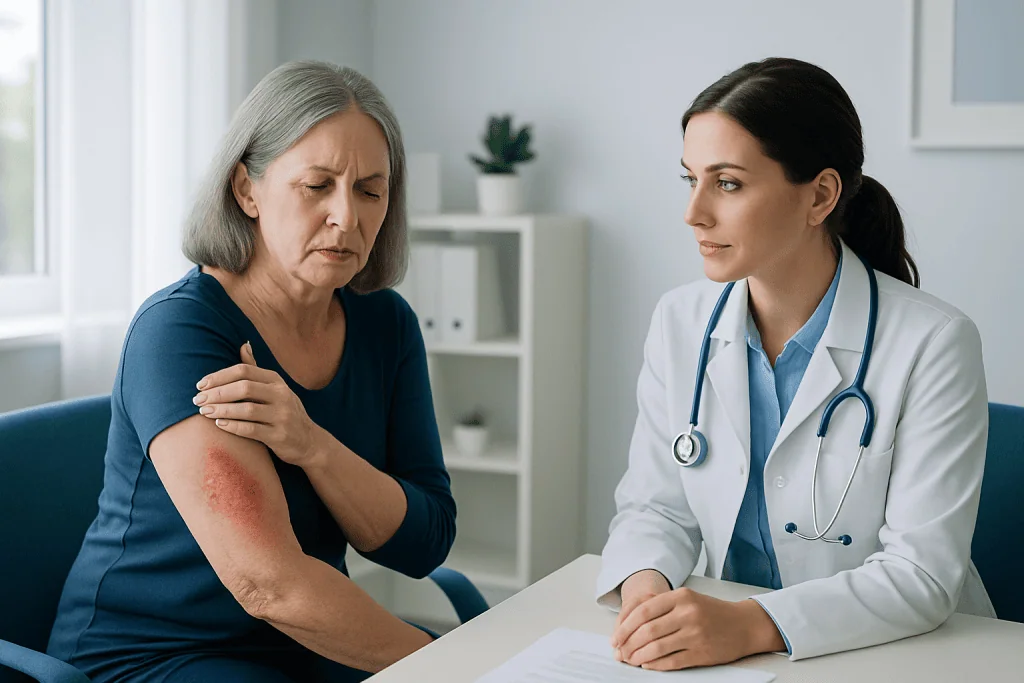
Symptoms of a repeat episode are generally similar to a first episode. Burning, stinging, itching, sensitivity to touch, or deep aching pain may begin before visible skin changes. Within a few days, a rash often appears as clusters of small blisters on a red base, usually affecting one side of the body or face.
The rash commonly follows a narrow band supplied by a nerve, called a dermatome. It may occur on the chest, back, abdomen, neck, or face. The location can differ from a prior outbreak, although some people notice symptoms in a similar area.
Not every painful or blistering rash is shingles. Contact dermatitis, insect bites, bacterial skin infections, herpes simplex, and other conditions can look similar. Rarely, people may have shingles-like nerve pain without a visible rash, which requires careful clinical assessment rather than self-diagnosis.
- New pain, tingling, or burning on one side of the body
- A localized rash that develops into grouped blisters
- Itching or marked skin sensitivity
- Fatigue, headache, or feeling generally unwell in some cases
When to seek medical care
Anyone who thinks shingles may be returning should contact a doctor promptly, ideally as soon as the rash or early nerve pain begins. Antiviral medicines are commonly considered early in the course of illness and may shorten the episode, reduce new blister formation, and lower the chance of some complications.
Urgent same-day assessment is important if the rash is on the face, forehead, nose, eyelid, or near the eye. Shingles involving the eye can threaten vision and needs specialist evaluation. Medical care should also be sought urgently for widespread rash, severe headache, confusion, weakness, fever with significant illness, or a rash in someone who is pregnant, immunocompromised, or caring for a newborn.
Persistent pain after the rash heals may be postherpetic neuralgia, a nerve-pain complication that becomes more common with age. It can be treated, so ongoing pain, sleep disruption, or difficulty with usual activities should be discussed with a healthcare professional.
How doctors diagnose a possible recurrence
Doctors can often diagnose shingles by asking about symptoms and examining the rash. They may ask when pain started, whether blisters are appearing on only one side of the body, whether the person has had chickenpox or shingles before, and whether they take medicines that affect immunity.
If the appearance is unusual, if blisters are widespread, or if confirmation would affect treatment decisions, a sample from a fresh blister may be tested for varicella-zoster virus. This can help distinguish shingles from herpes simplex and other skin conditions. Blood tests are not usually needed to diagnose a straightforward case of shingles.
For repeated, severe, or atypical episodes, the clinician may review medical conditions, medicines, recent treatments, and symptoms that could suggest reduced immune function. Further tests are individualized; they are not required for every person who has shingles more than once.
Treatment and recovery after a repeat episode
Treatment is guided by the person’s age, symptoms, rash location, general health, and time since symptoms began. Prescription antiviral medicines may be recommended, especially when started early. They are particularly important for people with facial or eye involvement, more extensive symptoms, or immune suppression.
Comfort measures can include keeping the rash clean and dry, wearing loose clothing, using cool wet compresses, resting, and choosing appropriate pain relief with a clinician or pharmacist’s guidance. Blisters should not be scratched or intentionally opened, as this can irritate the skin and raise the risk of secondary infection.
Until all blisters have crusted over, a person with shingles can transmit varicella-zoster virus to someone who has never had chickenpox or received chickenpox vaccination. That person would develop chickenpox, not shingles. Covering the rash and avoiding direct contact with pregnant people without immunity, newborns, and people with weakened immune systems is sensible.
Most outbreaks improve over a few weeks, although nerve discomfort can last longer in some people. If pain remains troublesome, clinicians can discuss options for managing nerve pain and support recovery.
Reducing the chance of shingles returning
Vaccination is the most effective preventive step for eligible adults. Recombinant zoster vaccine is recommended in many countries for older adults and for some younger adults with weakened immune systems. People who have already had shingles can still benefit, because a prior episode does not reliably prevent recurrence.
The right timing of vaccination after shingles varies according to local guidance and individual circumstances. In general, it is given after the acute illness and rash have resolved. A doctor can advise on eligibility, timing, and whether any medicines or health conditions affect the plan.
There is no guaranteed lifestyle method to prevent shingles, but supporting general health may be helpful. This includes regular sleep, balanced nutrition, physical activity suited to the person’s abilities, stress management, and keeping long-term conditions well managed. These measures complement, rather than replace, medical care and vaccination.
For international patients, Acibadem International’s multidisciplinary specialists and JCI-accredited hospitals can assess recurrent shingles, investigate unusual presentations, and coordinate treatment when needed.
Frequently asked questions
Can you get shingles twice?
Yes. A person can have shingles more than once because the varicella-zoster virus remains dormant in the body after chickenpox. A second episode may occur years later, and it is still worth seeking prompt medical advice for a new rash or nerve pain.
Does recurrent shingles mean the immune system is weak?
Not necessarily. Immune function changes with age, and some people have a recurrence without an identifiable immune problem. However, frequent, severe, widespread, or unusual episodes may lead a doctor to review medications, medical history, and possible factors affecting immunity.
How soon can shingles come back?
There is no single pattern. Some people never have another episode, while others may experience recurrence months or years later. A clinician should assess any new symptoms rather than assuming they are shingles based on a previous episode.
Can stress cause shingles to return?
Stress may be associated with changes in immune function and can coincide with shingles reactivation, but it is rarely possible to identify one definite cause. Rest, stress support, and management of other health conditions can support overall wellbeing, but they cannot guarantee prevention.
Should a person get the shingles vaccine after having shingles?
In many settings, eligible adults are advised to receive shingles vaccination even after a prior episode. Vaccination can reduce the risk of future shingles and complications. The best timing depends on recovery, age, immune status, and local recommendations, so it should be discussed with a healthcare professional.
What if shingles returns near the eye?
A rash or pain around the eye, forehead, nose, or eyelid needs urgent medical assessment on the same day. Shingles can affect eye structures and may lead to complications without timely treatment. Vision changes, eye redness, or light sensitivity should be treated as urgent symptoms.
This article is for general information only and is not a substitute for professional medical advice. Please consult a qualified doctor about your individual situation.
Shingles in Turkey — costs, top hospitals & a free quote
JCI-accredited · board-certified surgeons · reply within 24h
Add us as a Preferred Source to see more of our trusted health content across Google Search, AI Overviews and Discover.

More from the Health Library

Overexplaining Symptoms: Could Stress, Anxiety, or Another Condition Be Involved?

How Many Calories in a Margarita? A Doctor-Reviewed Answer

Does Lemon Water Help with Bloating? Here Is What the Evidence Says

Pain on the Left Side of the Ribs Explained: Common Triggers and Red Flags

Why Is My Period Lasting So Long? A Doctor-Reviewed Answer