GERD with Esophagitis: Early Signs, Risk Factors, and How It Is Treated

GERD with esophagitis develops when refluxed stomach contents repeatedly irritate the esophageal lining. Heartburn and regurgitation are common, but some people mainly notice swallowing discomfort, chest pain or a persistent cough.
Key Takeaways
- GERD with esophagitis develops when refluxed stomach contents repeatedly irritate the esophageal lining.
- Heartburn and regurgitation are common, but some people mainly notice swallowing discomfort, chest pain or a persistent cough.
- A clinician may diagnose the condition from symptoms or recommend endoscopy and other tests when symptoms are persistent, severe or concerning.
- Treatment often includes lifestyle measures and medicines that reduce stomach acid; some people need further testing or anti-reflux procedures.
- Trouble swallowing, food sticking, vomiting blood, black stools, unexplained weight loss or chest pain require prompt medical assessment.
GERD with esophagitis means gastroesophageal reflux disease has caused inflammation or injury to the lining of the esophagus, the tube connecting the mouth to the stomach. It is usually treatable, and early evaluation can help relieve symptoms, allow healing and reduce the chance of complications.
Overview: What Is GERD with Esophagitis?
GERD with esophagitis is a form of gastroesophageal reflux disease (GERD) in which repeated reflux causes inflammation of the esophagus. Normally, a ring-like muscle at the lower end of the esophagus, called the lower esophageal sphincter, helps keep stomach contents from moving upward. When this barrier relaxes inappropriately or is weakened, acidic stomach contents can travel back into the esophagus.
Occasional reflux is common. GERD is considered when reflux happens regularly, causes troublesome symptoms or leads to complications. Esophagitis may range from mild surface irritation to erosions or ulcers that can be seen during an upper endoscopy. Symptoms do not always match the degree of inflammation: some people have significant discomfort without visible injury, while others have inflammation with relatively mild symptoms.
The esophagus is not designed to tolerate frequent contact with stomach acid and digestive enzymes. With appropriate care, inflammation often heals. However, ongoing untreated reflux can contribute to narrowing of the esophagus, bleeding, or changes in the cells lining the lower esophagus, so persistent symptoms deserve medical attention.
Early Signs and Symptoms

The most familiar symptoms are heartburn, a burning feeling behind the breastbone, and regurgitation, in which sour or bitter fluid comes back into the throat or mouth. Symptoms may be more noticeable after large meals, when bending over, or when lying down. They can occur during the day or disturb sleep at night.
Esophagitis can also cause pain or discomfort when swallowing, a sensation that food moves slowly or becomes stuck, or pain in the center of the chest. Some people experience nausea, frequent belching, a sore throat, hoarseness, chronic throat clearing or a dry cough. These symptoms can have causes other than reflux, so they should not be assumed to be GERD without appropriate clinical review.
Chest pain should always be assessed carefully because heart-related conditions can cause similar symptoms. A person should seek urgent medical care for new, severe or persistent chest pressure or pain, particularly if it occurs with shortness of breath, sweating, fainting, or pain spreading to the jaw, arm or back.
- Burning in the chest or upper abdomen
- Sour-tasting regurgitation
- Discomfort or pain with swallowing
- Food sticking in the chest or throat
- Nighttime cough, hoarseness or disturbed sleep
Why It Develops: Causes and Risk Factors
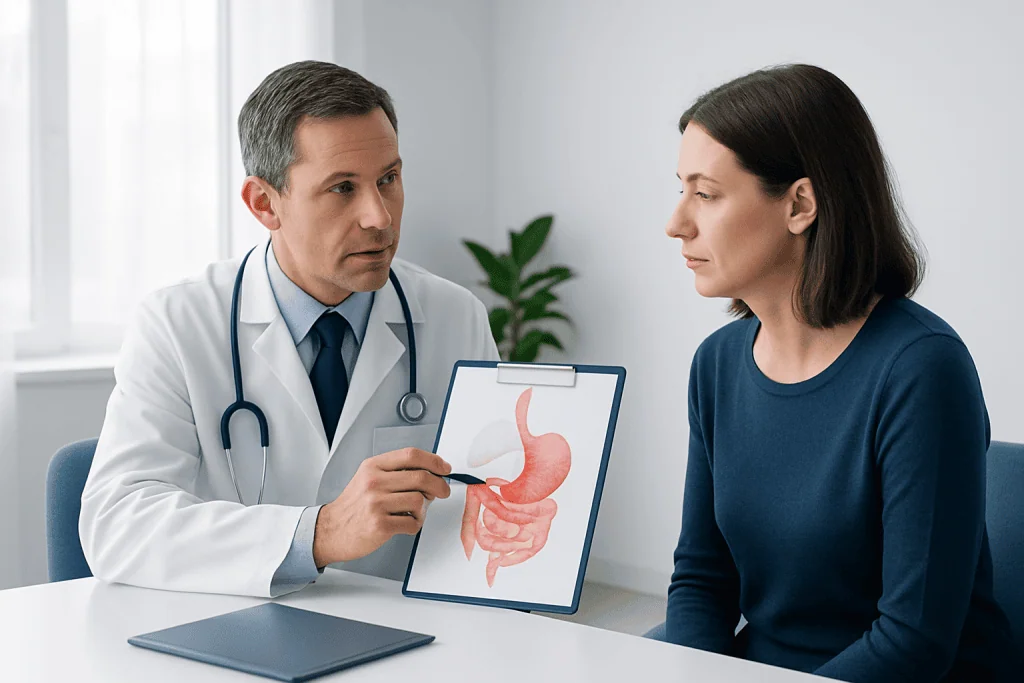
GERD with esophagitis usually results from frequent exposure of the esophagus to stomach contents. A weak or frequently relaxing lower esophageal sphincter is a central factor. A hiatal hernia, in which part of the stomach moves upward through the diaphragm, may also make reflux more likely in some people.
Excess body weight, pregnancy, smoking and certain dietary patterns can increase reflux symptoms. Large meals, eating close to bedtime, alcohol, and individual trigger foods may worsen symptoms for some people, although triggers differ from person to person. Coffee, chocolate, mint, high-fat foods, spicy foods and acidic foods are not universal causes, but reducing them may help if a clear personal pattern is present.
Some medicines can irritate the esophagus directly or affect reflux. Examples include certain anti-inflammatory pain medicines, some osteoporosis medicines, potassium supplements and particular antibiotics. It is important not to stop prescribed medicines without speaking to the clinician who prescribed them. Difficulty swallowing pills with little water or lying down immediately afterward may also increase the risk of pill-related esophageal irritation.
Other conditions can resemble or coexist with reflux esophagitis, including eosinophilic esophagitis, infections in people with weakened immunity, and motility disorders that affect how the esophagus moves food. This is one reason a tailored medical assessment is useful when symptoms continue despite initial treatment.
How Doctors Diagnose It
A clinician usually begins by discussing the pattern of symptoms, medical history, medicines and possible warning signs. In people with typical heartburn or regurgitation and no alarm symptoms, a time-limited trial of acid-reducing treatment may be appropriate. The response can support the diagnosis, although it does not by itself prove that reflux is the only cause.
Upper endoscopy is commonly recommended when there is trouble swallowing, bleeding, anemia, unexplained weight loss, recurrent vomiting, persistent symptoms, or symptoms that do not improve as expected. During the procedure, a flexible camera examines the esophagus, stomach and upper small intestine. It can identify erosive esophagitis, ulcers, narrowing and other causes of symptoms. Small tissue samples may be taken when needed; this is generally painless.
When endoscopy does not explain ongoing symptoms, ambulatory reflux monitoring may measure acid or non-acid reflux over a period of time. Esophageal manometry evaluates muscle movement and may be used before anti-reflux surgery or when a motility disorder is suspected. These tests help clinicians select the most suitable treatment rather than relying on symptoms alone.
Treatment Options and Follow-Up
Treatment aims to relieve symptoms, heal inflammation and prevent recurrence. Lifestyle measures are often combined with medicines that reduce stomach acid. Proton pump inhibitors are commonly used for erosive esophagitis because they provide strong acid suppression and are generally taken as directed before a meal. H2-receptor blockers and antacids may have a role for selected people, especially for occasional or breakthrough symptoms, but should be used according to clinical advice.
Many people improve within weeks, but the duration of treatment depends on the severity of esophagitis, symptom pattern and individual risk factors. A clinician may later recommend reducing to the lowest effective treatment plan, continuing maintenance therapy, or reassessing the diagnosis. Stopping acid-suppressing medication suddenly can lead to a temporary increase in symptoms for some people, so changes should be discussed with a healthcare professional.
If symptoms persist despite correctly used medication, further evaluation is important. The clinician may check adherence and timing, consider another diagnosis, or arrange reflux testing. For carefully selected people with proven reflux, a significant hiatal hernia, or a preference to avoid long-term medicine after proper assessment, anti-reflux procedures may be considered. Options can include GERD treatment approaches, including surgical or endoscopic strategies where appropriate.
Follow-up endoscopy may be advised in selected cases, such as severe esophagitis, to confirm healing and assess for complications. Treatment choices should be personalized, particularly for people who are pregnant, older adults, or those with chronic conditions and multiple medicines.
Daily Habits That Can Reduce Reflux
Simple adjustments can reduce the frequency and intensity of reflux for many people. Eating smaller meals, avoiding lying down for at least two to three hours after eating, and limiting late-evening meals are practical starting points. If symptoms occur at night, elevating the head of the bed by using blocks or a wedge may help; extra pillows alone often do not provide consistent elevation.
Weight reduction can improve reflux symptoms for people who are overweight or living with obesity. Avoiding tobacco is also beneficial for overall health and may reduce reflux. Alcohol should be limited or avoided if it clearly triggers symptoms. Keeping a brief symptom and food diary can help identify personal patterns without unnecessarily restricting a broad range of foods.
Comfortable, nonrestrictive clothing around the abdomen and regular physical activity may also be helpful. People should continue to eat a balanced diet and maintain hydration. Any dietary change that leads to poor intake, unintentional weight loss or nutritional concern should be discussed with a qualified clinician or dietitian.
When to Seek Medical Care
A medical appointment is appropriate when heartburn or regurgitation occurs repeatedly, disrupts sleep, affects daily activities, or continues despite over-the-counter measures. Assessment is also important before relying on long-term self-treatment, because persistent symptoms may require a different approach or investigation.
Prompt medical review is needed for difficulty swallowing, painful swallowing, a feeling of food getting stuck, vomiting that continues, vomiting blood, black or tar-like stools, unexplained weight loss, anemia, or severe persistent symptoms. These signs do not always mean a serious condition, but they need timely evaluation.
Emergency assessment is needed for severe chest pain or pressure, especially when it is new or associated with breathlessness, sweating, dizziness, fainting, or pain spreading to the arm, jaw or back. At Acibadem International, multidisciplinary specialists in JCI-accredited hospitals assess and treat reflux-related disorders for international patients, with testing and care plans guided by individual clinical needs.
Frequently asked questions
Can GERD with esophagitis heal?
Yes. In many people, inflammation of the esophagus heals with effective acid reduction, lifestyle measures and treatment of contributing factors. Healing and symptom improvement may take several weeks, and follow-up depends on the severity of esophagitis and the person’s symptoms.
What is the difference between GERD and esophagitis?
GERD is a condition in which stomach contents repeatedly reflux into the esophagus and cause troublesome symptoms or complications. Esophagitis is inflammation of the esophageal lining. GERD can cause esophagitis, but not everyone with GERD has visible inflammation.
Can GERD with esophagitis cause trouble swallowing?
It can. Inflammation may make swallowing painful or uncomfortable, and long-standing injury can sometimes lead to narrowing of the esophagus. Any sensation that food is sticking or difficulty swallowing should be assessed by a doctor.
Are proton pump inhibitors safe for GERD with esophagitis?
Proton pump inhibitors are widely used and effective medicines for healing erosive esophagitis when prescribed appropriately. The right medicine, dose and duration vary between individuals, so patients should discuss benefits, possible side effects and follow-up with their clinician.
Can diet alone treat reflux esophagitis?
Dietary and lifestyle changes can reduce reflux symptoms, especially when personal triggers are identified. However, people with confirmed esophagitis often need acid-reducing medication to allow the lining to heal. A clinician can advise on the most appropriate plan.
Does GERD with esophagitis increase cancer risk?
Most people with GERD do not develop cancer. Persistent reflux can be associated with Barrett’s esophagus in some individuals, a change in the esophageal lining that may require monitoring. Doctors recommend endoscopy based on symptoms, risk factors and clinical findings rather than reflux symptoms alone.
References
- American College of Gastroenterology
- National Institute of Diabetes and Digestive and Kidney Diseases
- Mayo Clinic
- National Health Service
- World Gastroenterology Organisation
This article is for general information only and is not a substitute for professional medical advice. Please consult a qualified doctor about your individual situation.
Persistent digestive symptoms? Get evaluated in Turkey
JCI-accredited · board-certified surgeons · reply within 24h
Add us as a Preferred Source to see more of our trusted health content across Google Search, AI Overviews and Discover.