Dhi hair transplant Recovery: Week-by-Week Timeline

The first 7 to 10 days focus on protecting grafts, gentle washing and avoiding friction or sweating. Many people can return to desk-based work after several days, depending on swelling, comfort and their clinician’s advice.
Key Takeaways
- The first 7 to 10 days focus on protecting grafts, gentle washing and avoiding friction or sweating.
- Many people can return to desk-based work after several days, depending on swelling, comfort and their clinician’s advice.
- Temporary shedding of transplanted hairs during the first 2 to 8 weeks is expected and does not usually mean the grafts have failed.
- New hair growth often becomes noticeable between 3 and 6 months, with continued improvement through 12 to 18 months.
- Follow-up care and the surgeon’s instructions are important for healing, infection prevention and the best possible cosmetic outcome.
DHI hair transplant recovery involves short-term redness, swelling and scab formation, followed by temporary shedding of transplanted hairs before new growth begins. Most people return to non-strenuous work within a few days, while final results commonly take 12 months or longer to mature.
DHI Hair Transplant Recovery: What to Expect
DHI hair transplant recovery is usually most demanding during the first 7 to 10 days, when the scalp needs protection while transplanted grafts settle into place. Many people feel well enough for desk-based work after a few days, but redness, mild swelling and visible scabs can make some prefer more time at home. Strenuous exercise generally needs to wait until the treating team confirms that it is safe.
A key part of recovery is understanding that the newly transplanted hair shafts often shed in the first weeks. This is a common, temporary response sometimes called shock shedding. The follicles remain under the skin and usually enter a resting phase before producing new hair over the following months.
Recovery varies with the number of grafts, scalp sensitivity, hair characteristics, medical history and adherence to aftercare instructions. The treating clinician’s advice should always take priority over a general timeline.
How DHI Works and Who May Be a Candidate
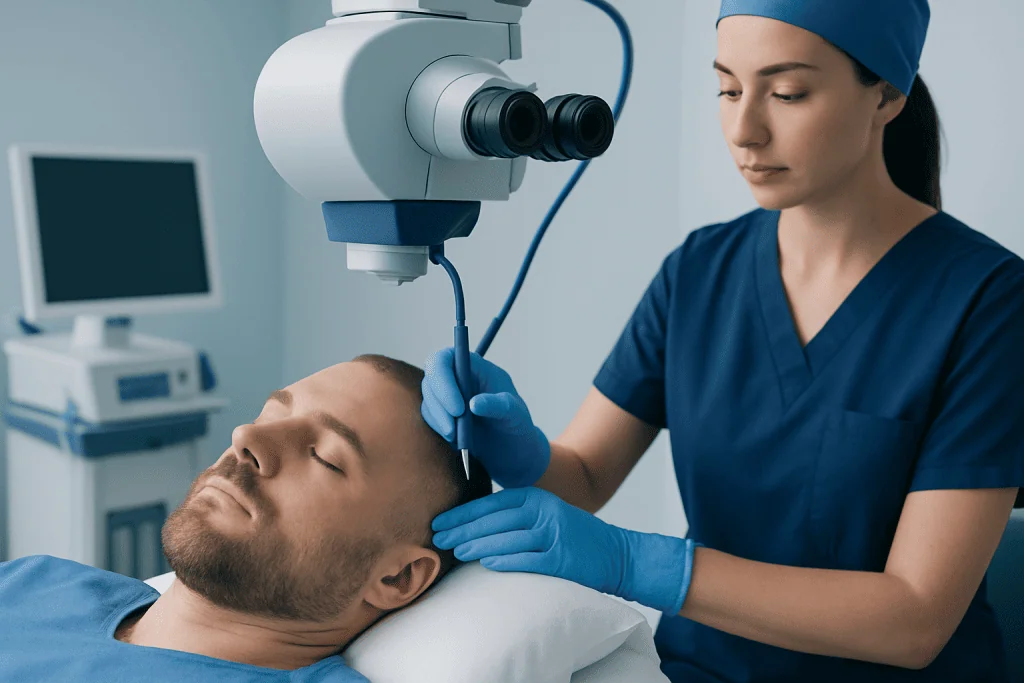
Direct Hair Implantation, or DHI, is a hair restoration technique in which follicular units are typically removed from a donor area, commonly the back or sides of the scalp. The collected grafts are then implanted individually into areas of thinning or hair loss using a specialised implantation device. This may allow the clinician to control the angle, direction and depth of placement, which are important for a natural-looking pattern.
DHI is related to follicular unit extraction (FUE), because grafts are generally harvested individually rather than as a strip of scalp. The appropriate technique depends on the individual’s hair loss pattern, donor hair availability, scalp features, goals and the experience of the clinical team. For an overview of the procedure itself, see DHI hair transplant.
Potential candidates often have stable or slowly progressing pattern hair loss and sufficient healthy donor hair. A consultation should assess the cause of hair loss, including whether there may be a medical, hormonal, nutritional, autoimmune or inflammatory scalp condition that needs separate care. People with unrealistic expectations, uncontrolled health conditions or active scalp infection may need treatment, further assessment or a different approach before surgery.
What Happens During the Procedure

Before the procedure, the clinician reviews medical history, medications, allergies, smoking or nicotine use, scalp health and the planned hairline or coverage area. Photographs and hair-density assessment may be used for planning. The donor and recipient areas are usually trimmed or shaved to the degree required for the individual treatment plan.
Local anaesthesia is commonly used to numb the scalp. Individual follicular grafts are carefully extracted from the donor area, checked and prepared for implantation. They are then placed into the thinning area one by one, with attention to the natural direction of existing hair. The procedure can take several hours, depending on the planned number of grafts and treatment area.
Afterwards, the scalp may feel tender or tight, and tiny crusts are expected around implanted grafts. The clinical team provides tailored instructions about sleeping position, washing, medicines if prescribed, sun protection and follow-up visits. These instructions help reduce avoidable irritation during early healing.
DHI Hair Transplant Recovery Timeline: Week by Week
Day 0 to day 3: Mild soreness, scalp tightness, redness and pinpoint scabbing are common in both donor and recipient areas. Some people develop forehead or eyelid swelling, often peaking during the first few days. Sleeping with the head elevated, avoiding pressure on the grafts and following the clinic’s washing instructions can help support comfort and healing.
Days 4 to 10: Crusts gradually dry and begin to lift with the approved gentle washing routine. It is important not to scratch, rub, pick or scrub the scalp. Many patients can return to desk work during this period if they feel comfortable, but roles involving heavy physical work, dust, heat, helmets or a high risk of scalp injury may require more time away.
Weeks 2 to 8: Most scabs have resolved, while residual pinkness or altered sensation can persist for longer in some people. Transplanted hairs may shed during this stage, which is usually expected. The donor area also continues to recover, and short haircuts may still reveal temporary changes in appearance.
Months 3 to 6 and beyond: Early new growth may begin around month 3, often appearing fine, uneven or slower than expected at first. Hair typically thickens and becomes more noticeable between 6 and 9 months. Maturation continues over 12 months or more, particularly in areas such as the crown, where growth can appear later.
Returning to Work, Exercise and Daily Activities
Return-to-work timing depends on the nature of the job and the person’s comfort. A desk-based role may be possible after several days, provided the person can avoid bumping, rubbing or contaminating the scalp. Those whose work involves hard hats, close-contact activity, heavy lifting, heat exposure or outdoor sun may need a longer recovery period and specific advice from the surgeon.
Walking is often encouraged early, provided it is gentle and does not cause significant sweating. Strenuous exercise, weight training, swimming, sauna use and contact sports are commonly postponed during the initial healing period because sweat, friction, increased blood pressure, impact and contaminated water may irritate healing areas. The exact time to resume sport varies, so clearance from the treating team is important.
Hair washing should follow the individual aftercare plan. Clinics often recommend gentle rinsing and a mild approved shampoo after the first days, with no rubbing of the recipient area. Hair dye, styling products, hairdryers on high heat and close-fitting hats should only be resumed when advised. Sun exposure should also be limited, as a healing scalp can be especially sensitive.
- Do not scratch, pick scabs or massage the grafted area unless instructed.
- Avoid smoking or nicotine products, as these may impair blood flow and wound healing.
- Take only medicines and supplements approved by the clinician, including pain relief or anti-inflammatory medicines.
- Attend planned follow-up appointments so healing and hair growth can be assessed.
Benefits, Limits and Possible Risks
DHI can restore hair to selected thinning areas using a person’s own donor follicles. When grafts grow successfully and placement is well planned, the result may blend with existing hair. The technique can be particularly useful when detailed control over placement is needed, although no hair transplantation method can stop future loss of non-transplanted hair.
Results depend on donor supply, the extent and cause of hair loss, graft survival, scalp healing and the natural progression of hair thinning. More than one procedure may be considered for some individuals, especially when hair loss is extensive or continues over time. Medical treatment for pattern hair loss may also be discussed when appropriate to help preserve existing hair.
Possible risks include temporary pain, swelling, bleeding, itching, numbness, folliculitis, infection, scarring, poor growth of some grafts and an uneven cosmetic result. Shock loss can affect transplanted or nearby existing hairs, especially in areas with miniaturised hair. Serious complications are uncommon when the procedure is performed by qualified professionals, but every surgical treatment should be considered carefully.
When to Seek Medical Care
Contact the treating clinic promptly if there is increasing rather than improving pain, spreading redness, warmth, pus-like drainage, fever, persistent bleeding, marked swelling, a rash or signs of an allergic reaction. These symptoms do not always indicate a serious problem, but they should be assessed without delay.
Medical advice is also appropriate if grafts are accidentally knocked or scraped, if scabs remain firmly attached beyond the expected healing period, or if there is concern about wound healing. People should avoid trying to remove crusts or treat possible infection with non-prescribed products.
For sudden or patchy hair loss, scalp scaling, itching, pain or inflammation before considering transplantation, a medical assessment is important because the underlying cause may require different treatment. Acibadem International’s multidisciplinary specialists and JCI-accredited hospitals assess and treat hair loss concerns for international patients, with care plans based on individual clinical needs.
Frequently asked questions
How long does DHI hair transplant recovery take?
The scalp’s surface usually heals enough for many daily activities within about 7 to 10 days, although redness or sensitivity may last longer. Hair growth takes substantially longer: early growth may appear from around 3 months, with results continuing to mature for 12 months or more.
When can someone return to work after a DHI hair transplant?
Many people with desk-based jobs return after several days, depending on their comfort and how visible early redness or swelling is. Physical jobs, outdoor work, helmet use or work involving sweat and dust may require a longer break and individual clearance from the treating clinician.
When can someone exercise after DHI hair transplantation?
Gentle walking may be suitable early in recovery if it does not lead to heavy sweating or discomfort. More demanding exercise, swimming, sauna use, weight training and contact sports should be postponed until the clinical team advises that the grafts and scalp have healed sufficiently.
Is it normal for transplanted hair to fall out after DHI?
Yes. The transplanted hair shafts commonly shed during the first several weeks after surgery as follicles enter a temporary resting phase. This does not usually mean the follicles are lost, and new growth commonly starts to appear after several months.
How should the scalp be washed after DHI?
The treating clinic provides the safest schedule and technique, as instructions can differ between procedures and patients. In general, washing begins gently after the early post-procedure period, using approved products and avoiding rubbing, scratching or direct force on the grafted area.
What are warning signs after a DHI hair transplant?
Increasing pain, spreading redness, warmth, fever, pus-like drainage, persistent bleeding or rapidly worsening swelling should be reported to the clinic promptly. A person should also seek advice after significant trauma to the grafted area or if they are concerned that healing is not progressing as expected.
References
- American Academy of Dermatology Association
- International Society of Hair Restoration Surgery
- Mayo Clinic
- National Health Service
This article is for general information only and is not a substitute for professional medical advice. Please consult a qualified doctor about your individual situation.
DHI Hair Transplant in Turkey — costs, top hospitals & a free quote
JCI-accredited · board-certified surgeons · reply within 24h
Add us as a Preferred Source to see more of our trusted health content across Google Search, AI Overviews and Discover.

Hair Transplant
Modern FUE and DHI hair restoration with natural, lasting results.