Brown Eyelid: Causes, Diagnosis and Treatment

Brown eyelid discoloration is often due to pigmentation, irritation, allergies or bruising, but new or changing patches should be assessed by a clinician.
Key Takeaways
- Brown eyelid discoloration commonly results from increased pigment, irritation, eczema, allergies, sun exposure, or a resolving bruise.
- Rubbing the eyes and using irritating cosmetics or skin products can worsen darkening around the eyelids.
- A new, irregular, enlarging, bleeding, painful, or one-sided brown spot needs timely medical assessment.
- Treatment depends on the cause and may include avoiding triggers, treating inflammation or allergy, sun protection, and specialist-directed skin care.
- Eye symptoms such as vision changes, severe pain, swelling, or inability to open the eye require urgent medical attention.
A brown eyelid may reflect harmless skin pigmentation, rubbing, inflammation, allergy, or a healing bruise. Because the eyelid skin is thin and changes can occasionally signal a skin or eye condition, persistent, new, one-sided, or changing discoloration should be evaluated by a qualified clinician.
Overview: What Does a Brown Eyelid Mean?
A brown eyelid describes darkened skin, a brown patch, or a change in color affecting the upper or lower eyelid. It is a symptom rather than a diagnosis. In many people, it is related to normal variation in skin pigment or to factors that stimulate pigment production, such as sun exposure, repeated rubbing, inflammation, or irritation.
The skin around the eyes is especially thin and sensitive. As a result, changes in pigment, blood vessels, swelling, and skin texture can be more visible there than elsewhere on the face. A brown appearance may also be caused by a resolving bruise, which can change from red-purple to green, yellow, and brown as it heals.
Most cases are not dangerous, but it is important not to assume that every new spot is cosmetic. A clinician can examine the eyelid skin, eye surface, and surrounding area to identify the likely cause and decide whether treatment or monitoring is appropriate.
Common Symptoms and Associated Changes
The appearance of a brown eyelid varies widely. Some people have diffuse, symmetrical darkening on both upper lids or around the eyes. Others notice a small flat spot, a raised lesion, a darker crease, or a patch that developed after an episode of redness or rash.
Associated symptoms can provide useful clues. Itching, dryness, flaking, burning, or redness may suggest eyelid dermatitis, eczema, or an allergic reaction. Puffiness and frequent rubbing may occur with allergies. Tenderness, a recent injury, or color changes over several days can be consistent with bruising.
A pigment change may occur without discomfort. Even so, a spot that is new, changing, uneven in color, irregular in shape, raised, crusted, bleeding, or associated with loss of eyelashes should be assessed. These features do not necessarily mean a serious condition, but they merit professional examination.
- Diffuse darkening may be linked with pigmentation, irritation, or lifestyle factors.
- Itching and scaling can point to inflammatory skin conditions.
- Sudden discoloration after trauma may be a bruise.
- A distinct or changing lesion requires careful evaluation.
Causes and Risk Factors

Post-inflammatory hyperpigmentation is a frequent cause of brown discoloration around the eyes. It can develop after eczema, contact dermatitis, acne-like irritation, insect bites, or another inflammatory process. People with more melanin-rich skin may be more likely to develop lingering dark marks after inflammation, although it can affect any skin tone.
Allergic eye disease may contribute indirectly. Seasonal allergies, sensitivity to cosmetics, hair dyes, fragrances, nail products, eye drops, or facial skin-care ingredients can cause itching and rubbing. Repeated rubbing or scratching can injure the delicate skin barrier and promote darkening over time. Chronic eyelid inflammation, including blepharitis, can also irritate the eyelid margins.
Sun exposure may deepen existing pigmentation or make a previously subtle patch more noticeable. Natural hereditary pigmentation, hormonal influences, fatigue-related shadows, and visible blood vessels may also contribute to darker-appearing eyelids. A bruise, including one caused by minor trauma or a medical procedure, may briefly look brown during healing.
Less commonly, a brown eyelid lesion may be a mole or another growth that needs assessment by an ophthalmologist or dermatologist. Certain medicines can also affect skin pigmentation. A complete history, including recent products, medications, injuries, and changes in symptoms, helps guide evaluation.
How Brown Eyelids Are Diagnosed
Diagnosis usually begins with a clinical history and examination. The clinician may ask when the discoloration began, whether it changes over time, if both sides are affected, and whether there is itching, pain, rash, eye redness, trauma, or visual symptoms. Details about cosmetics, skin-care products, contact lenses, medicines, allergies, and family history can be relevant.
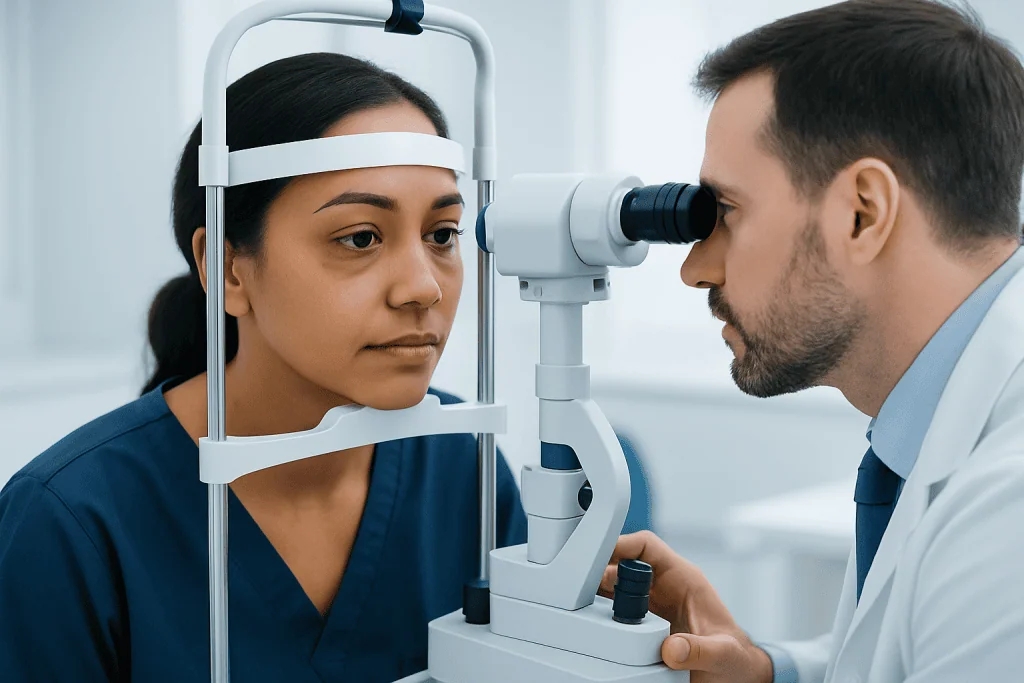
During examination, the clinician looks at the skin pattern, eyelid margins, eyelashes, eye surface, and surrounding facial skin. A slit-lamp examination may be used when eye irritation, eyelid-margin disease, or another ocular condition is suspected. Photographs can be useful for monitoring a lesion over time.
If a spot has concerning features or its cause is uncertain, referral to an ophthalmologist, dermatologist, or oculoplastic specialist may be recommended. A dermatoscopic examination or, less commonly, a biopsy may be needed to identify a specific skin lesion. Testing for allergies may be considered when contact dermatitis is suspected.
Treatment Options
Treatment is based on the underlying cause. When irritation or contact allergy is suspected, the first step is often to stop using possible triggers, especially newly introduced products around the eyes. Fragrance-free, gentle cleansing and avoiding eye rubbing can help the skin barrier recover. A clinician may recommend a suitable moisturizer or a short course of prescription treatment for inflammation when appropriate.
If allergies are contributing, managing the allergy and reducing rubbing may improve both symptoms and discoloration. Measures may include avoiding known allergens, using cool compresses, and using clinician-recommended allergy treatments. Eyelid-margin hygiene may be advised when blepharitis is present. It is important not to apply medicated creams near the eyes unless a healthcare professional has specifically recommended them, as some products can thin the skin or raise eye pressure with prolonged use.
For persistent pigment changes, a dermatologist may discuss carefully selected topical treatments or procedures. The eyelid area requires particular caution because it is delicate and close to the eye. Cosmetic lightening products, strong exfoliants, and unregulated creams should not be used without expert guidance, as they may cause irritation and worsen hyperpigmentation.
When discoloration is due to a bruise, it generally fades as the injury heals. A suspicious mole or lesion requires specialist management, which may involve observation, biopsy, or removal depending on the diagnosis. Acibadem International’s multidisciplinary specialists and JCI-accredited hospitals can assess eyelid and skin concerns for international patients.
Prevention and Everyday Self-Care
Gentle daily care can reduce irritation and help prevent worsening of pigment changes. The eyelids should be cleansed without scrubbing, and makeup should be removed carefully. Avoid sharing eye cosmetics, replace old products, and stop using any product that causes stinging, itching, redness, or scaling.
Sun protection is important for preventing darkening of existing pigmentation. Wearing UV-protective sunglasses and a broad-brimmed hat can protect the eye area. If sunscreen is used near the eyes, it should be a product that is well tolerated and applied carefully to avoid getting it into the eyes.
People with allergies can benefit from identifying triggers and limiting eye rubbing. Cool compresses may soothe itching, while adequate sleep and hydration can lessen the tired appearance that may make under-eye shadows more noticeable. These measures may improve appearance but do not replace medical assessment of a new or changing eyelid lesion.
- Use mild, fragrance-free products around the eyes.
- Avoid rubbing, scratching, and aggressive exfoliation.
- Protect eyelid skin from ultraviolet exposure.
- Seek advice before using pigment-lightening products near the eyes.
When to See a Doctor
A routine medical appointment is appropriate for persistent darkening, recurrent eyelid rash, unexplained brown patches, or discoloration that does not improve after avoiding possible irritants. Assessment is also advisable when a lesion is changing in size, shape, color, or texture, or when it becomes raised, crusted, painful, or bleeds.
Prompt evaluation is important if a brown or dark spot affects only one eyelid and is new or evolving, particularly if there is eyelash loss, a persistent sore, or distortion of the eyelid. These features often have benign explanations, but examination is the safest way to clarify the diagnosis.
Urgent medical care is needed for sudden marked swelling, severe eye pain, a significant injury, double vision, reduced vision, inability to move the eye normally, fever with eyelid redness, or swelling that spreads around the eye. These symptoms may indicate a problem beyond simple skin pigmentation and should not be managed at home alone.
Frequently asked questions
Why is one of my eyelids turning brown?
One-sided brown discoloration can result from a healing bruise, irritation, a pigment spot, or an eyelid skin condition. Because a new or changing one-sided lesion may need closer examination, it is sensible to arrange an assessment with an eye doctor or dermatologist.
Can rubbing the eyes cause brown eyelids?
Yes. Repeated rubbing can irritate delicate eyelid skin and may trigger or worsen post-inflammatory hyperpigmentation. Managing itching and avoiding rubbing are important parts of preventing further darkening.
Are brown eyelids caused by allergies?
Allergies can contribute, especially when they cause itchy, watery eyes and frequent rubbing. The discoloration usually develops from irritation and inflammation rather than from the allergy alone.
Will brown eyelid discoloration go away?
It depends on the cause. A bruise often fades over days to weeks, while pigment changes after inflammation may take longer to improve. Treating the underlying trigger and protecting the skin from irritation and sun exposure can support recovery.
Is it safe to use skin-lightening cream on the eyelids?
Not without medical advice. The eyelid area is very sensitive, and some lightening or exfoliating products can cause irritation, skin thinning, or eye injury if used incorrectly. A dermatologist or ophthalmologist can recommend safer options when treatment is appropriate.
When is a brown spot on the eyelid concerning?
A spot should be checked if it is new, enlarging, irregular, multicolored, raised, bleeding, crusted, painful, or associated with missing eyelashes. Most eyelid changes are not serious, but early professional assessment is important when these warning signs are present.
This article is for general information only and is not a substitute for professional medical advice. Please consult a qualified doctor about your individual situation.
Explore treatments in Turkey — costs, top hospitals & a free quote
JCI-accredited · board-certified surgeons · reply within 24h
Add us as a Preferred Source to see more of our trusted health content across Google Search, AI Overviews and Discover.