Test Asma: How Asthma Is Diagnosed

There is no single test that diagnoses asthma for every person. Spirometry is the most common breathing test used to assess airflow in and out of the lungs.
Key Takeaways
- There is no single test that diagnoses asthma for every person.
- Spirometry is the most common breathing test used to assess airflow in and out of the lungs.
- Symptoms can be intermittent, so normal test results do not always rule out asthma.
- A bronchodilator response test, peak flow monitoring, challenge testing or allergy testing may be used when needed.
- Urgent medical assessment is important for severe or rapidly worsening breathing difficulty.
A test asma, or asthma test, usually combines a review of symptoms with lung function testing such as spirometry. These assessments help a clinician confirm whether asthma is present, rule out other causes of breathing symptoms and plan suitable care.
What Is a Test Asma?
A test asma is an evaluation used to find out whether symptoms such as wheezing, coughing, chest tightness or shortness of breath are caused by asthma. Asthma is a long-term condition in which the airways can become inflamed and temporarily narrowed, making it harder to move air in and out of the lungs. The assessment is usually performed by a doctor or respiratory healthcare professional.
Asthma cannot always be confirmed with one test alone. Clinicians bring together a person’s symptom pattern, medical and family history, physical examination and results from breathing tests. This approach is useful because asthma symptoms may come and go, and several other conditions can cause similar breathing concerns.
Testing also helps identify the degree to which airflow is limited and whether it improves after an inhaled medicine that relaxes airway muscles. This information can support an accurate diagnosis and help tailor an asthma management plan.
When Asthma Testing May Be Recommended
A clinician may recommend asthma testing when a person has recurring wheeze, breathlessness, chest tightness or cough. Symptoms that are worse at night, early in the morning, during exercise, after exposure to cold air, or around smoke, dust, pollen, animals or strong scents can suggest asthma. A persistent cough may be the main symptom in some people, particularly children.
The medical consultation usually includes questions about when symptoms began, how often they occur, possible triggers and whether they affect sleep, school, work or physical activity. A history of eczema, allergic rhinitis or food allergies may be relevant, as may a family history of asthma or allergies.
It is helpful to bring a list of current medicines and inhalers, as well as any records of prior emergency visits or lung tests. Keeping a brief symptom diary before an appointment can also be useful. It may note the timing of symptoms, likely triggers, activity level and response to prescribed reliever medicine.
Common Tests Used to Diagnose Asthma
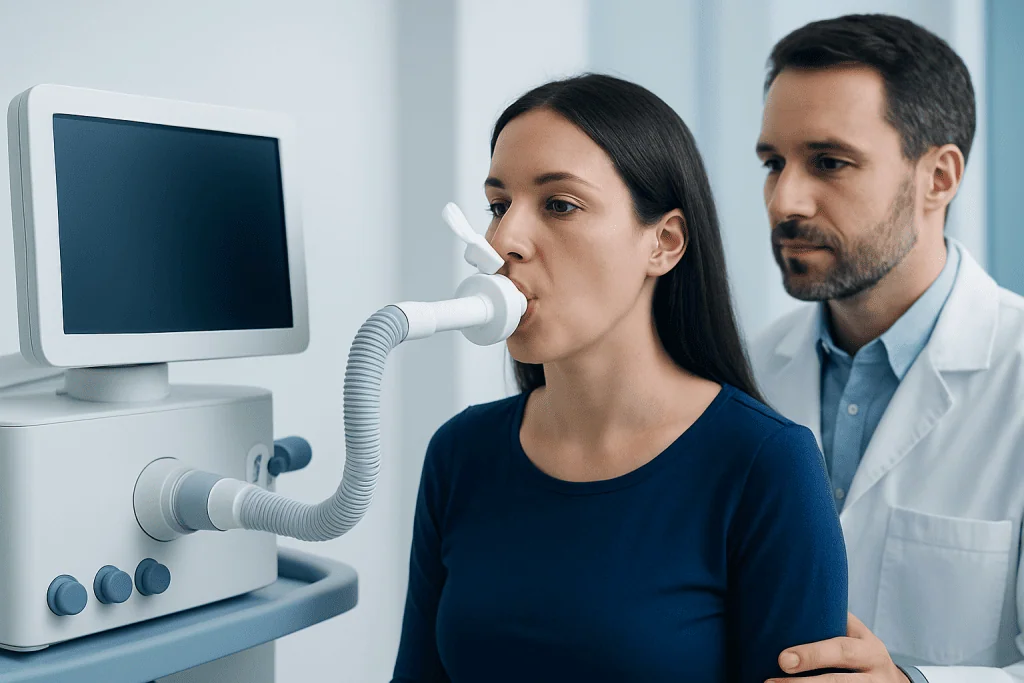
Spirometry is the most commonly used lung function test for asthma. The person takes a full breath in and then blows forcefully into a mouthpiece connected to a machine. It measures how much air is exhaled and how quickly it is expelled. Reduced airflow can occur with asthma, although results may be normal when symptoms are currently mild or absent.
A bronchodilator reversibility test is often performed with spirometry. Measurements are taken before and after an inhaled bronchodilator. A meaningful improvement in airflow after the medicine supports the possibility of asthma, because airway narrowing in asthma is often reversible.
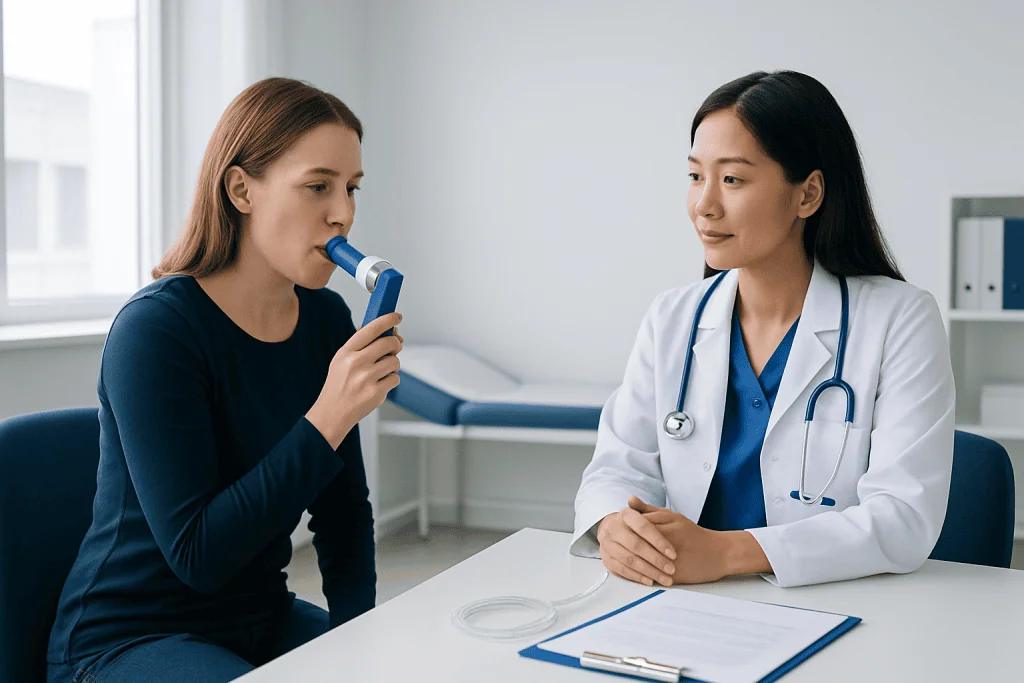
Peak expiratory flow monitoring may be used over several weeks at home. A small handheld meter records how quickly a person can blow air out. Readings taken at different times of day can show variability in airflow, which may support an asthma diagnosis. The doctor will explain how to use the device and interpret the recorded results.
When standard tests do not provide a clear answer, additional assessments may be considered. These can include fractional exhaled nitric oxide testing, which may indicate certain types of airway inflammation, or a carefully supervised bronchial challenge test that checks whether the airways react more strongly than expected to a controlled stimulus.
Other Assessments That May Be Needed
A physical examination is an important part of asthma assessment. During an appointment, a clinician may listen to the lungs, check oxygen levels when appropriate and look for signs of allergy or another health condition. However, a normal chest examination does not exclude asthma, especially if symptoms are not active at the time.
Allergy testing may be useful for people whose symptoms appear linked to allergens such as pollen, house dust mites, mould or animal dander. Skin-prick tests or blood tests can identify sensitisation to certain allergens, but they do not diagnose asthma by themselves. Results must be interpreted together with symptoms and exposure history.
A chest X-ray, blood tests, heart assessments or testing for reflux may be considered when symptoms are unusual, persistent or not responding as expected. These tests are generally used to look for alternative or coexisting explanations, such as respiratory infection, chronic obstructive pulmonary disease, vocal cord dysfunction, heart conditions or anaemia.
For people with established asthma, periodic lung function testing can help monitor control and response to treatment. More information about the condition is available in this asthma overview.
How to Prepare for an Asthma Test
Preparation instructions differ depending on the test. The clinic may ask the person to avoid using certain inhalers for a defined period beforehand, particularly if a bronchodilator response or challenge test is planned. It is important not to stop prescribed treatment without receiving specific advice from the healthcare team.
For spirometry, people are commonly advised to wear comfortable clothing that does not restrict breathing. They may also be asked to avoid smoking, vigorous exercise, alcohol or a large meal for a period before testing. Following the individual instructions provided by the clinic supports reliable results.
During the test, the healthcare professional will demonstrate the technique and may ask for several attempts to obtain accurate readings. Blowing hard and fast can feel tiring, but the test is generally brief. A person should mention any dizziness, chest discomfort or difficulty completing the manoeuvre.
Children can often complete lung function tests when they are old enough to follow instructions reliably. For younger children, diagnosis may rely more heavily on symptom history, clinical examination and careful follow-up over time.
Understanding Asthma Test Results
Test results are interpreted in the context of the individual, rather than as an isolated number. A result suggesting airflow obstruction that improves after bronchodilator medicine may support asthma. Variation in peak flow readings over time, airway inflammation markers and results of challenge testing can provide further evidence when appropriate.
Normal spirometry does not necessarily mean that asthma is absent. Because asthma often varies from day to day, testing between episodes can be normal. The clinician may repeat testing when symptoms are present, arrange home monitoring, or consider another type of assessment.
A positive test also needs careful interpretation. Other respiratory conditions can affect breathing test results, especially in adults who smoke or have had long-term occupational exposure to irritants. A qualified clinician can explain whether findings fit asthma, another condition, or more than one cause of symptoms.
Once asthma is diagnosed, treatment may include education about triggers, an inhaler plan and regular review. Asthma treatment is chosen according to symptom frequency, risk of flare-ups and lung function, and should be reviewed if symptoms change.
Supporting Healthy Breathing After Testing
If asthma is diagnosed, following the written management plan provided by a clinician can help reduce symptoms and lower the risk of flare-ups. This usually includes taking prescribed medicine as directed, using correct inhaler technique and attending follow-up reviews. Inhaler technique should be checked regularly because small errors can reduce how much medicine reaches the lungs.
Where possible, avoiding personal triggers may help. Common examples include tobacco smoke, vaping aerosols, air pollution, workplace irritants and allergens that clearly provoke symptoms. People with allergic rhinitis may also benefit from discussing treatment for nasal allergy symptoms, as upper and lower airway conditions can be related.
Regular physical activity is encouraged for most people with well-controlled asthma. A clinician can advise on preventing exercise-related symptoms and ensuring that a suitable reliever plan is in place. Vaccinations, including those advised for a person’s age and health status, may also form part of routine preventive care.
For international patients, Acibadem International’s multidisciplinary specialists and JCI-accredited hospitals can assess respiratory symptoms and provide coordinated asthma care when appropriate.
When to Seek Medical Care
Medical advice should be sought for new, recurrent or worsening wheezing, unexplained shortness of breath, a cough that persists, or breathing symptoms that wake a person from sleep. Assessment is also important when symptoms limit normal activities, exercise, work or school, or when an inhaler is needed more often than advised.
Urgent medical care is needed for severe breathing difficulty, trouble speaking in full sentences because of breathlessness, bluish or grey lips or face, marked drowsiness, confusion, or symptoms that are not improving with prescribed reliever medicine. These may be signs of a severe asthma attack or another urgent medical problem.
People who have previously had a severe asthma attack, hospital care for asthma or repeated courses of urgent treatment should discuss an updated action plan with their clinician. Prompt review can help identify possible triggers, check medication technique and adjust long-term care safely.
Frequently asked questions
What is the main test asma doctors use?
Spirometry is the main lung function test used when assessing possible asthma. It measures the amount and speed of air exhaled from the lungs, often before and after an inhaled bronchodilator. A doctor also considers symptoms and medical history rather than relying on spirometry alone.
Can asthma be diagnosed with a blood test?
A blood test alone cannot diagnose asthma. Blood tests may sometimes help assess allergies or eosinophils, a type of immune cell associated with some forms of airway inflammation. These findings are considered alongside breathing tests and clinical symptoms.
Do I need to stop my inhaler before an asthma test?
Some lung tests require avoiding certain inhalers beforehand because they can affect the results. The timing depends on the medicine and the type of test being performed. A person should follow the clinic’s instructions and should not stop prescribed treatment without medical advice.
Can spirometry be normal if I have asthma?
Yes. Asthma symptoms and airway narrowing can vary, so spirometry may be normal between episodes. If asthma is still suspected, a clinician may repeat the test, arrange peak flow monitoring or consider other assessments.
How long does an asthma test take?
Spirometry itself often takes only a short time, although the full appointment may be longer because it includes instructions, repeated attempts and sometimes testing before and after bronchodilator medicine. Home peak flow monitoring usually takes place over days or weeks. More specialised challenge tests can take longer and are performed under supervision.
Can children have asthma tests?
Many school-aged children can perform spirometry if they can follow the breathing instructions. In younger children, asthma assessment often relies more on symptom patterns, family history, examination and response to carefully monitored treatment. The testing approach is adapted to the child’s age and needs.
This article is for general information only and is not a substitute for professional medical advice. Please consult a qualified doctor about your individual situation.
Asthma in Turkey — costs, top hospitals & a free quote
JCI-accredited · board-certified surgeons · reply within 24h
Add us as a Preferred Source to see more of our trusted health content across Google Search, AI Overviews and Discover.

More from the Health Library

Rose Quartz — Explained by Medical Evidence, Not Myths

Kegel Testicles — Explained by Medical Evidence, Not Myths

Skin Care Products Containing Peptides: A Complete Medical Overview

Entresto: An Evidence-Based Guide for Patients

Scapula — Explained by Medical Evidence, Not Myths