

How to Check BP Without Cuff? Here Is What the Evidence Says

A blood pressure cuff is currently needed for an accurate home blood pressure measurement. High blood pressure commonly causes no symptoms, so how a person feels cannot confirm or rule it out.
Key Takeaways
- A blood pressure cuff is currently needed for an accurate home blood pressure measurement.
- High blood pressure commonly causes no symptoms, so how a person feels cannot confirm or rule it out.
- Pulse rate and pulse strength are not the same as blood pressure.
- Wearables and phone apps should not replace a clinically validated blood pressure monitor unless specifically approved for this purpose.
- Urgent medical assessment is important for severe symptoms such as chest pain, breathlessness, fainting, weakness on one side, or sudden trouble speaking.
It is understandable to want a quick way to check blood pressure without equipment, especially when feeling unwell. However, evidence shows that blood pressure cannot be measured accurately without a validated cuff-based device; symptoms, pulse checks, smartwatches and most phone apps may offer clues about wellbeing but do not provide a reliable blood pressure reading.
What the evidence says about checking BP without a cuff
Blood pressure (BP) is the force of blood pushing against artery walls as the heart pumps and relaxes. At present, there is no reliable way for most people to check BP without a validated blood pressure monitor that uses a cuff. The cuff briefly applies pressure to an artery, allowing the device to calculate systolic pressure (the higher number) and diastolic pressure (the lower number).
Feeling normal is reassuring, but it cannot confirm that blood pressure is within a healthy range. High blood pressure often produces no noticeable symptoms, while common symptoms such as headache, fatigue, anxiety or dizziness can have many possible causes. Likewise, a person may feel unwell even when their BP is normal.
Trying to estimate BP from the pulse, skin color, headache severity, or a manual wrist or neck check is not accurate enough to diagnose high or low blood pressure. These observations may help a clinician assess a person who is acutely ill, but they cannot replace an actual measurement.
Why symptoms and pulse checks cannot measure blood pressure
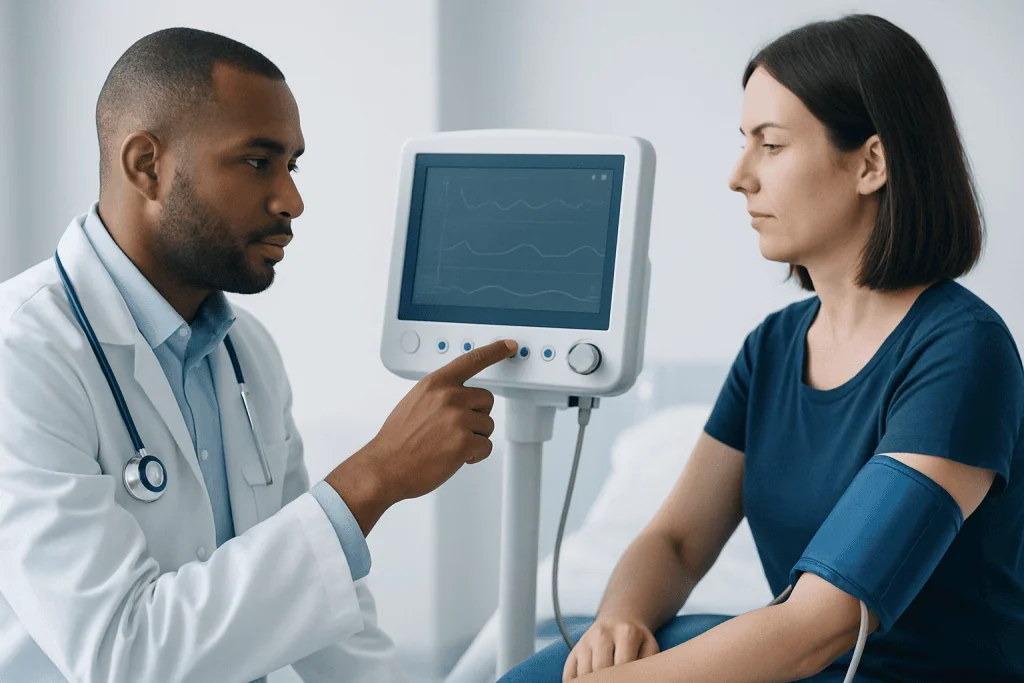
Pulse and blood pressure are related but different. The pulse is the rhythmic expansion of an artery with each heartbeat, and it provides information mainly about heart rate and rhythm. Blood pressure depends on several factors, including the heart’s pumping force, blood vessel tone, blood volume and the resistance within the circulation.
A fast pulse can occur with exercise, stress, fever, dehydration, pain, anemia, certain medicines, or an abnormal heart rhythm. It does not necessarily mean BP is high. Similarly, a slow pulse does not automatically mean BP is low. A pulse that feels strong or weak to the fingers is also subjective and cannot provide a dependable BP number.
Symptoms sometimes associated with very high or very low BP may include lightheadedness, blurred vision, nausea, weakness, palpitations or headache. Yet these are nonspecific symptoms. A healthcare professional uses a measured BP reading, medical history, examination and, when needed, tests to identify the cause safely.
- High BP is often silent and may be discovered during routine screening.
- Low BP may cause symptoms when standing, but this requires measurement in appropriate positions to assess.
- New, severe or persistent symptoms should not be self-diagnosed as a blood pressure problem.
Can a smartwatch or phone app check BP?
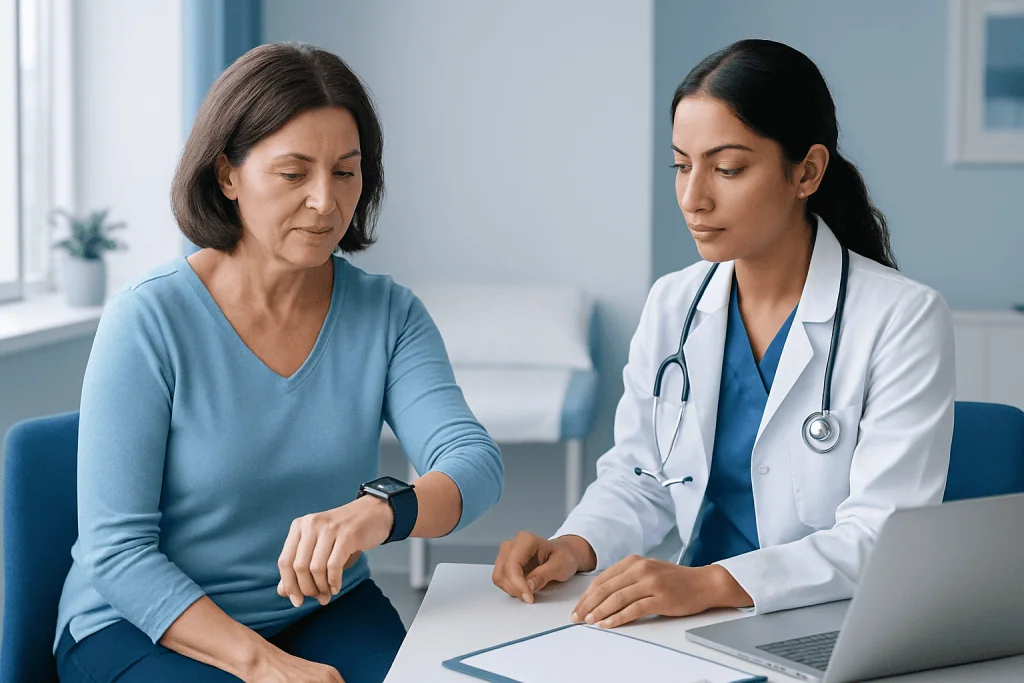
Many consumer devices can track heart rate, activity, sleep patterns or oxygen saturation estimates. These measurements can be useful for personal health awareness, but they are not automatically equivalent to a blood pressure measurement. Most smartphone apps that claim to calculate BP by using a camera, fingertip signal, facial scan or questionnaire have not been sufficiently validated for clinical decision-making.
Some wearable technologies may estimate blood pressure in limited settings or may require regular calibration against a cuff. Their accuracy can vary with movement, skin contact, body position, circulation, temperature and the individual device. A reading from an unvalidated device should not be used to start, stop or change blood pressure medicine.
People considering a home monitor should look for an upper-arm device that has undergone independent clinical validation. A wrist monitor can be accurate only when used very carefully at heart level, but upper-arm monitors are generally easier to position correctly. A pharmacist, doctor or nurse may be able to help identify an appropriate device and check that it is being used correctly.
The most reliable ways to measure blood pressure
For home monitoring, an automated, validated upper-arm cuff is the practical standard. It should have a cuff size that fits the person’s arm; a cuff that is too small or too large can produce inaccurate readings. Blood pressure may also be measured in a clinic using an automated device or by a trained professional using a manual cuff and stethoscope.
Preparation matters. Before checking BP, a person should avoid smoking, caffeine and exercise for about 30 minutes where possible. They should empty their bladder, sit quietly for around five minutes, rest their back against a chair, keep both feet flat on the floor and support the arm at heart level. Talking, crossing the legs or measuring over clothing can affect the result.
One isolated reading rarely tells the full story. Clinicians may ask for readings at consistent times over several days, often with two measurements taken about one minute apart each time. They consider the average pattern rather than reacting to a single unexpected value. Hypertension treatment is tailored to the individual after accurate assessment of BP and overall cardiovascular risk.
What to do if a cuff is not available
If a cuff is not available and there are no concerning symptoms, the safest next step is usually to arrange a proper BP check rather than trying to estimate it. This may be available through a primary care clinic, pharmacy, workplace health service or community screening program. People with a history of high BP should follow their clinician’s monitoring plan.
Until BP can be measured, it is sensible to avoid making medication changes based on symptoms alone. Taking extra doses, stopping prescribed medicines, or borrowing someone else’s medication can lead to harmful BP changes or interactions. A person who has missed a dose should follow the instructions given with their prescription or contact a pharmacist or clinician for advice.
For a person who feels faint, it may help to sit or lie down promptly to reduce the risk of falling. Getting up slowly, drinking fluids if appropriate, and avoiding driving while dizzy may be sensible short-term measures. However, repeated episodes, fainting, or symptoms that do not settle need medical assessment because causes may include dehydration, medication effects, heart rhythm conditions or other illnesses.
When to seek medical care
Most occasional headaches, brief dizziness or awareness of the heartbeat are not medical emergencies and may not be caused by BP. Still, prompt medical advice is appropriate if these symptoms are recurrent, worsening, associated with a new medication, or occurring in someone with known high BP, heart disease, kidney disease, diabetes or pregnancy.
Emergency care is needed for chest pain, severe shortness of breath, fainting, seizure, sudden confusion, new weakness or numbness on one side of the body, facial drooping, sudden difficulty speaking, sudden severe headache, or major changes in vision. These symptoms can have causes other than blood pressure but require urgent evaluation. Possible warning signs of stroke should be treated as an emergency; see stroke for more information.
When a person has severe symptoms, clinicians do not rely on a single home reading alone. They measure BP properly and assess pulse, oxygen level, neurological signs and heart function as needed. Investigations may include blood tests, an electrocardiogram, urine testing or imaging, depending on the symptoms and medical history.
Protecting long-term heart and blood vessel health
Regular BP screening is important because elevated BP may develop without warning signs. Healthy lifestyle measures can support BP and overall cardiovascular health, whether or not a person has a diagnosis of hypertension. These include a balanced eating pattern rich in vegetables, fruits and fiber, limiting excess salt and alcohol, staying physically active, maintaining a weight appropriate for the individual, avoiding tobacco, and managing stress and sleep.
These steps complement, rather than replace, prescribed care. People with diagnosed high BP should attend follow-up appointments and take medications as directed. Their clinician may also assess related risk factors such as cholesterol, blood sugar, kidney function and family history.
Acibadem International’s multidisciplinary specialists and JCI-accredited hospitals can assess blood pressure concerns and related cardiovascular risks for international patients. Accurate monitoring and an individualized clinical review can help determine whether symptoms require treatment, further investigation or reassurance.
Frequently asked questions
Can blood pressure be checked by feeling the pulse?
No. Feeling the pulse can indicate whether the heart is beating and may give a rough sense of its rate and regularity, but it cannot provide a blood pressure reading. A cuff-based, clinically validated monitor is needed for reliable measurement.
Can a headache tell someone their blood pressure is high?
No. Headaches are common and have many causes, while high blood pressure often has no symptoms. A blood pressure reading is needed to know whether BP is elevated, particularly if headaches are new, severe or recurring.
Are phone apps accurate for measuring blood pressure?
Most phone apps are not validated to measure blood pressure accurately enough for medical decisions. An app may help record readings obtained with a validated monitor, but it should not replace the monitor itself unless a healthcare professional confirms that the technology is suitable.
What is the best home device for checking blood pressure?
A clinically validated automatic upper-arm monitor with the correct cuff size is generally preferred for home use. It should be used while seated and rested, with the arm supported at heart level. Bringing the monitor to a clinic can help confirm that its readings and technique are accurate.
Should someone take extra blood pressure medicine if they feel unwell?
No. Symptoms alone do not show whether BP is high or low, and changing a prescribed dose without advice can be unsafe. A person should contact their prescribing clinician, pharmacist or urgent care service for guidance, depending on the symptoms.
When is a blood pressure concern an emergency?
Emergency assessment is needed for symptoms such as chest pain, severe breathing difficulty, fainting, sudden weakness, trouble speaking, confusion, seizures, sudden severe headache or sudden vision loss. These symptoms require urgent care even if a BP reading is unavailable.
References
- American Heart Association
- World Health Organization
- Centers for Disease Control and Prevention
- National Institute for Health and Care Excellence
- European Society of Cardiology
This article is for general information only and is not a substitute for professional medical advice. Please consult a qualified doctor about your individual situation.
Explore treatments in Turkey — costs, top hospitals & a free quote
JCI-accredited · board-certified surgeons · reply within 24h
Add us as a Preferred Source to see more of our trusted health content across Google Search, AI Overviews and Discover.
Check your numbers in seconds
BMI, calories, due date, blood pressure and 30+ more clinical calculators — free, instant, doctor-reviewed ranges.

More from the Health Library

Related Specialists

Prof. Dr. Turgay Çelikel
Internal Medicine
Fzt. Gülsen Ersözlü
Physical Medicine & Rehabilitation
Psk. Duygu Gökyıldırım Uslu
Psychology
Dt. Mete Dalbeler
Oral & Dental Health