

What Your Companion Can Do on Procedure Day in Turkey

Companion procedure day guidance in Turkey: learn how you can support your loved one, coordinate updates and manage practical logistics in Istanbul.
If you are accompanying someone for a procedure in Turkey, your calm, practical support can make the day easier for both of you. This guide explains what you can prepare, where you may be asked to wait, how updates are usually shared and how to plan for the first hours after treatment.
At a glance
- Your main role: Provide reassurance, practical help and a reliable point of contact.
- Arrival plan: Aim to arrive early and follow the hospital’s check-in instructions.
- During the procedure: You will usually wait in a designated area rather than enter clinical rooms.
- Updates: Agree in advance who may receive information and how staff can reach you.
- Bring with you: Identification, patient documents, phone charger, payment or insurance details if requested.
- After treatment: Help with transport, prescriptions, comfort and the first recovery instructions.
Your role on procedure day
Being a companion on procedure day is less about doing everything and more about being a steady, organised presence. Your loved one may feel anxious, tired or distracted by instructions, so you can help by keeping documents together, listening carefully and offering calm reassurance.
Before leaving your accommodation, confirm the hospital address, expected arrival time, the patient’s fasting or medication instructions and the name of the person coordinating your visit. If anything is unclear, ask the international patient services team before travelling to the hospital rather than making assumptions.
At Acibadem International, patient coordinators and interpreters can help international patients and companions understand the practical flow of the day. Even so, it is useful for you to keep your own notes of important timings, contact numbers and the agreed plan for getting back to your hotel or residence.
Prepare together before you leave
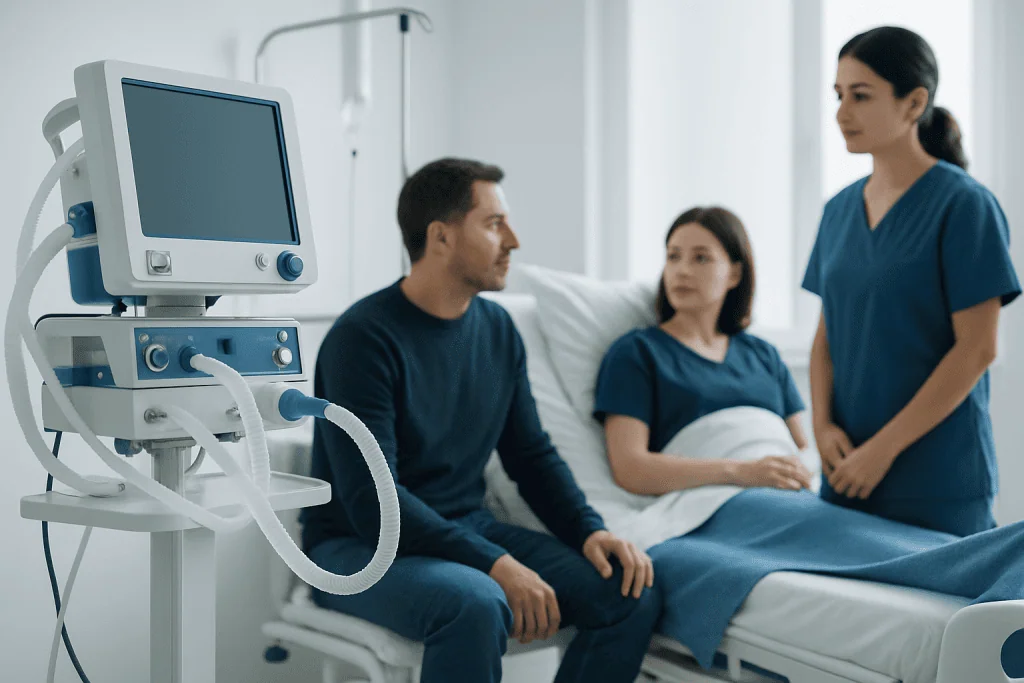
A smooth day often starts the evening before. Help the patient lay out comfortable clothing, gather identification and medical paperwork, and pack only essentials. Check whether jewellery, contact lenses, makeup, valuables or certain personal items should be left behind, as requirements can differ according to the procedure and anaesthesia plan.
Follow the clinical team’s instructions exactly regarding food, drinks and regular medicines. Do not advise the patient to stop, start or change medication yourself; if there is uncertainty, contact the care team. It can be helpful to write down the time of the last permitted meal, drink or medicine so you can both check it together.
- Passport or official identification for the patient and companion
- Appointment confirmation and hospital contact details
- Medical reports, test results and medication list requested by the team
- Phone, charger and a portable power bank if available
- Comfortable layers, reading material and a small amount of local spending money
Plan transport with extra time for Istanbul traffic, hotel lifts, parking or finding the correct hospital entrance. If Acibadem International has arranged transport or accommodation support, confirm the collection point and contact number the day before.
At hospital check-in and pre-procedure preparation

On arrival, staff will guide the patient through registration and pre-procedure steps. You may be asked to wait while identity checks, consent discussions, examinations, blood tests, imaging or preparation are completed. These steps are designed for safety, and the exact sequence can change if the clinical team needs to review something further.
Your loved one should answer medical questions directly whenever possible. You can help by having their medication list and prior records available, but avoid speaking on their behalf unless they ask you to or staff request clarification. If language support is needed, ask for an interpreter rather than relying on incomplete translation.
Before the patient goes into the procedure area, confirm practical details: where you should wait, how long the planned procedure may take, which phone number staff should use, and who is authorised to receive updates. Ask whether you can visit during recovery and whether there are any limitations based on the patient’s condition, privacy rules or the unit’s routine.
While your loved one is in the procedure area
Most companions cannot stay inside operating rooms, procedure suites or recovery areas. This protects privacy, infection control and the team’s ability to focus on care. You will generally be directed to a waiting lounge, cafeteria or another designated area nearby.
Keep your phone charged, switched on and audible, but use headphones or step outside for calls so the waiting area remains quiet. Stay reachable at the number given to the hospital, and tell the desk before leaving the building or moving to another floor. Procedures can take longer or shorter than expected for many ordinary reasons, including preparation and recovery time, so try not to interpret a timing change as a sign that something is wrong.
Use the waiting time practically. Review the onward travel plan, identify where you can collect any prescribed medicines if needed, and make sure the patient’s room, hotel or apartment is ready for their return. Eat and drink yourself when appropriate; companions often overlook their own needs and then have less energy to provide support later.
Receiving updates and communicating with family
Hospitals have confidentiality responsibilities, so staff can only share information with people the patient has authorised. Agree with your loved one in advance whether you are the main contact and which family members, if any, may receive updates. If the patient is able to decide on the day, their wishes should guide these arrangements.
Ask the team how updates will be given. Depending on the setting, a nurse, coordinator or doctor may speak with you after the procedure, while some information may need to be discussed directly with the patient once they are awake and comfortable. An interpreter can support clear communication when required.
When sharing news with relatives, keep messages factual and avoid promising a discharge time, outcome or next step until the clinical team confirms it. A simple update such as “the procedure is finished and we are waiting for the doctor’s review” is usually more helpful than speculation.
Supporting the first hours after treatment
After a procedure, the patient may be sleepy, uncomfortable, emotional or temporarily confused, especially if they have received sedation or anaesthesia. Speak calmly, help them find their belongings and listen as the team explains recovery instructions. Ask for written information when available, particularly if you will be helping with medicines, wound care, mobility or follow-up appointments.
Do not assume the patient can travel alone, drive, make important decisions or return immediately to sightseeing. The care team will advise when it is safe to leave and what support is needed. If discharge is planned the same day, arrange appropriate transport and ensure a responsible adult remains available for the period recommended by the clinician.
Before leaving, check that you understand who to contact if concerns arise, where and when follow-up will occur, and which symptoms require urgent medical advice. Acibadem International’s international patient services can assist with practical communication and travel coordination, while medical questions should always be directed to the treating clinical team.
Step by step
- Confirm the day-before plan. Review the appointment time, hospital location, transport route and any fasting or medication instructions with the patient. Save the relevant hospital, coordinator and driver numbers in both of your phones.
- Pack a small, organised day bag. Bring documents, identification, requested medical records, chargers and basic comfort items. Leave valuables behind unless there is a clear reason to carry them.
- Arrive early and check in calmly. Allow additional time for traffic and registration, especially in Istanbul. Follow staff directions about where the patient should go and where you should wait.
- Set communication preferences. Confirm that the patient has authorised you to receive appropriate updates. Ask who will contact you, how you should remain reachable and whether an interpreter is available.
- Wait nearby and stay available. Remain in the designated area or tell staff if you need to step away. Keep your phone charged and avoid reading too much into changes to the estimated timetable.
- Listen to recovery and discharge instructions. Be present when possible as staff explain medicines, activity limits, meals, transport and warning signs. Write down questions and ask for clarification before you leave.
- Help create a calm return environment. Arrange safe transport and make sure the patient has water, suitable food if permitted, prescribed items and a comfortable place to rest. Keep the discharge contact details easy to find.
Your checklist
- Confirm the appointment time, hospital campus and arrival entrance.
- Review fasting, medication and personal-preparation instructions with the patient.
- Carry passports or identification, appointment details and requested medical documents.
- Save the international patient coordinator and hospital contact numbers.
- Bring a charged phone, charger and portable battery if possible.
- Agree who can receive updates and what you will tell family members.
- Plan transport for both arrival and discharge, allowing for Istanbul traffic.
- Pack comfortable layers and simple items for your own waiting time.
- Ask for written discharge instructions and follow-up contact details.
- Keep the patient’s medicines and valuables organised after discharge.
Key takeaways
- Your most valuable support is calm organisation, not medical decision-making.
- Follow the hospital’s fasting, medication, arrival and waiting-area instructions exactly.
- Confirm in advance who is authorised to receive updates and how staff will contact you.
- Procedure timings can change for routine reasons, so remain nearby and reachable.
- After treatment, focus on safe transport, clear discharge instructions and a quiet recovery setting.
Frequently asked questions
Can I stay with my loved one during the procedure in Turkey?
Usually, you cannot enter the operating room or procedure suite because of safety, privacy and infection-control requirements. You may be able to stay with the patient during parts of registration or preparation, depending on the unit and their condition. The hospital team will tell you where to wait and when you may be able to visit afterward.
Will the hospital give me updates while the patient is in the procedure?
Updates depend on the procedure, hospital routine and the patient’s consent for information sharing. Before the procedure begins, ask who will contact you and which number they will use. Some clinical details may be discussed directly with the patient once they are awake and able to participate.
What should I bring as a companion on procedure day?
Bring identification, your phone and charger, appointment details, important contacts and any documents the hospital specifically requested. Comfortable clothing, water and reading material can also help during the wait, although you should follow any restrictions in the clinical area. Avoid bringing unnecessary valuables.
Can I translate for the patient?
You can offer emotional support and help the patient remember practical information, but professional interpretation is preferable for medical discussions. This helps ensure that consent, risks, instructions and questions are understood accurately. Acibadem International can arrange language support through its international patient services when needed.
How long should I expect to wait?
The total time may include check-in, pre-procedure preparation, the procedure itself and recovery, so it can be longer than the estimated treatment time alone. Timings may change because the team must complete safety checks or respond to clinical needs. Ask staff for an approximate schedule, but keep your day flexible.
Can the patient travel back to the hotel alone after a procedure?
That depends on the procedure, the type of anaesthesia or sedation used and the treating clinician’s advice. After some same-day procedures, patients need a responsible adult to accompany them and may not be allowed to drive or use public transport alone. Confirm the discharge plan before the day of treatment whenever possible.
What should I do if I do not understand the discharge instructions?
Ask the nurse, doctor or interpreter to explain them again before leaving. Request written instructions and make notes about medicines, activity limits, follow-up and urgent warning signs. For medical concerns after discharge, use the contact route provided by the treating team rather than relying on online advice.
Add us as a Preferred Source to see more of our trusted health content across Google Search, AI Overviews and Discover.
More Patient Guides
When ICU Care May Be Needed After Surgery in Turkey: What Families Should Expect
ICU care after surgery in Turkey means close monitoring if extra support is needed. This guide explains what families should expect in…
9 min read
Unexpected Overnight Stay in Turkey: What Patients and Companions Should Be Ready For
Unexpected overnight stay in Turkey? Here is what patients and companions should prepare for, from essentials and updates to hospital logistics in…
9 min read
At Acibadem, How We Support Family Members During Your Treatment Journey
Family support during treatment at Acibadem includes companion guidance, interpreters, visit planning, and practical help in Turkey.
8 min read