Cosmetic Eyelid: Procedure, Recovery and Results

Cosmetic eyelid surgery can treat drooping upper-lid skin, lower-lid bags, and some contour concerns around the eyes. A specialist assessment helps distinguish cosmetic concerns from eyelid conditions that may affect vision or eye comfort.
Key Takeaways
- Cosmetic eyelid surgery can treat drooping upper-lid skin, lower-lid bags, and some contour concerns around the eyes.
- A specialist assessment helps distinguish cosmetic concerns from eyelid conditions that may affect vision or eye comfort.
- Most people have temporary bruising, swelling, dryness, or tightness during early recovery.
- The procedure can create long-lasting improvement, but it does not stop natural facial aging.
- Unexpected pain, reduced vision, severe swelling, or signs of infection need urgent medical assessment.
Cosmetic eyelid surgery, also called blepharoplasty, is a procedure that improves the appearance of the upper eyelids, lower eyelids, or both by addressing excess skin, fat prominence, and selected age-related changes. It is usually performed as an outpatient procedure, and results develop gradually as swelling settles.
What Is Cosmetic Eyelid Surgery?
Cosmetic eyelid surgery, commonly called blepharoplasty, is an operation that reshapes the tissues around the eyes. It may remove or reposition excess skin and fat and, in selected cases, adjust supporting eyelid structures. The goal is to create a smoother, less heavy, or less puffy eyelid appearance while preserving normal eyelid function.
The procedure can involve the upper eyelids, lower eyelids, or both. Upper eyelid surgery often addresses loose skin that creates a hooded appearance. Lower eyelid surgery is more commonly used for prominent under-eye bags, skin laxity, or changes in the transition between the lower eyelid and cheek.
Although it is often chosen for appearance, an assessment should also consider eye health and vision. Excess upper-lid skin may sometimes narrow the upper field of vision; when this is present, the concern may be functional rather than purely cosmetic. A qualified surgeon can explain whether eyelid surgery is appropriate and whether another approach is needed.
Who May Consider a Cosmetic Eyelid Procedure?

People may consider cosmetic eyelid surgery when changes around their eyes make them feel that they look tired, heavy-lidded, or older than they feel. Common concerns include upper-eyelid skin folds, lower-eyelid puffiness, loose lower-lid skin, and asymmetry. These features may develop with age, but genetics, skin quality, sun exposure, allergies, and fluid retention can also influence their appearance.
Good candidates are generally in good overall health, do not smoke or are willing to stop around the time of surgery, and have realistic expectations. Blepharoplasty can improve specific eyelid features, but it cannot erase all wrinkles, lift the eyebrows, or change the entire shape of the face. Some people may benefit more from brow treatment, skin resurfacing, or another facial procedure.
An eye examination may be particularly important for people with dry eye symptoms, glaucoma, thyroid eye disease, previous eye surgery, contact lens use, or a history of eyelid injury. People taking blood-thinning medicines or supplements should discuss these with their clinician before making changes, as medicines should never be stopped without medical guidance.
- Upper eyelid procedures mainly address redundant skin and, when appropriate, prominent fat.
- Lower eyelid procedures may remove or reposition fat and manage skin looseness.
- Combined procedures can be considered when both upper and lower eyelid concerns are present.
How the Procedure Is Performed
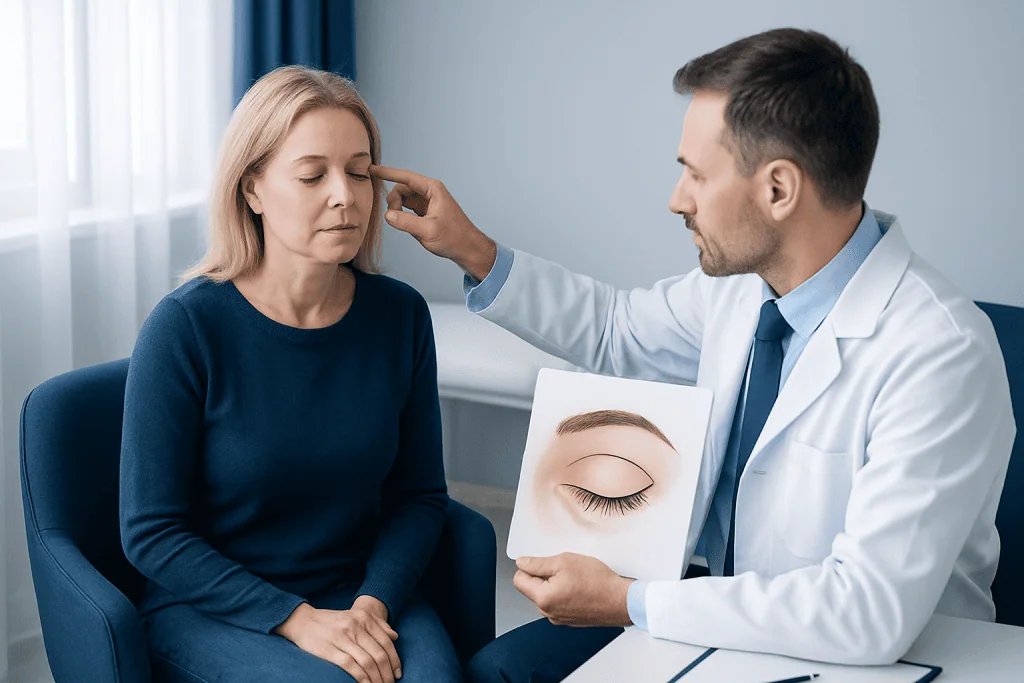
Cosmetic eyelid surgery is usually performed in an outpatient setting. Depending on the planned procedure, it may be carried out with local anesthesia and sedation or with general anesthesia. The surgeon marks the natural eyelid creases and carefully plans the incisions so scars are usually placed in less noticeable locations.
For upper eyelid surgery, the incision is generally hidden in the upper eyelid crease. The surgeon removes a conservative amount of skin and may adjust small amounts of fat or muscle when needed. Careful planning is important because removing too much tissue can affect eyelid closure or produce an unnatural appearance.
For lower eyelid surgery, the incision may be just beneath the lower eyelashes or inside the eyelid, known as a transconjunctival approach. An internal incision can be useful when the main concern is fat prominence without a need to remove skin. Fat may be removed or repositioned to soften the contour between the eyelid and cheek.
The operation length varies according to whether one or both eyelids are treated and whether other procedures are performed at the same time. At the consultation, the surgical team should review the plan, anesthesia, likely scars, expected recovery, possible alternatives, and individual risks.
Recovery After Eyelid Surgery
Swelling, bruising, mild soreness, tightness, and watery or dry-feeling eyes are common during the first days after cosmetic eyelid surgery. These effects usually improve steadily, although the pace differs between individuals. Cool compresses, resting with the head elevated, and using prescribed eye ointment or drops may support comfort during the early recovery period.
Most people can do quiet daily activities within several days, but they should allow time for visible swelling and bruising to settle. The care team will advise when it is appropriate to return to work, wear contact lenses, use eye makeup, drive, exercise, swim, and resume other activities. Strenuous exercise and activities that raise blood pressure are commonly postponed during early healing.
Incision care matters. Patients should keep the area clean, use only recommended products, avoid rubbing the eyes, and protect healing skin from sun exposure. If non-dissolving sutures are used, they are often removed at an early follow-up appointment. Follow-up visits allow the surgical team to monitor healing and address questions.
Vision may be temporarily blurred from ointment, tears, or swelling. However, sudden or worsening changes in vision should not be assumed to be a normal part of recovery and require urgent medical advice.
Results, Scars and Long-Term Expectations
Early results can be difficult to judge because swelling and bruising temporarily alter the eyelid contour. Many people see a noticeable improvement as the initial swelling reduces, while more refined healing continues over the following weeks and months. Incisions usually fade over time, though scar healing varies with skin type, individual biology, and aftercare.
Upper eyelid surgery often provides a long-lasting reduction in excess skin, and lower eyelid fat treatment can give durable improvement in under-eye bags. However, cosmetic eyelid surgery does not stop skin aging, changes in eyebrow position, or shifts in facial fat. New laxity or wrinkles may develop gradually over the years.
Natural-looking results depend on maintaining appropriate eyelid support and avoiding overcorrection. The aim should be improvement rather than a perfectly symmetrical or permanently unchanged appearance. Reviewing before-and-after photographs from the surgeon’s own practice may help a patient discuss the type of result they consider natural and suitable.
Some concerns around the eye are not caused only by eyelid skin or fat. Pigmentation, fine lines, cheek volume loss, prominent tear troughs, and brow descent may remain after blepharoplasty. A surgeon can explain which features surgery is expected to improve and which may require other treatments or may be best left untreated.
Risks, Safety and When to Seek Medical Care
All surgery has potential risks. With cosmetic eyelid surgery, these may include bleeding, infection, delayed wound healing, noticeable scarring, persistent swelling, asymmetry, dry or irritated eyes, difficulty fully closing the eyes, changes in eyelid position, and the possible need for revision surgery. Serious complications are uncommon but can affect vision, which is why an experienced surgical and eye-care assessment is important.
People should contact their surgical team promptly if they develop increasing redness, warmth, discharge, fever, worsening pain, persistent vomiting, or swelling that becomes markedly worse rather than better. New double vision, substantial vision changes, severe eye pain, or sudden swelling around one eye should be treated as urgent concerns and assessed immediately.
Medical care should also be sought for a new drooping eyelid, unexplained eyelid swelling, a painful lump, persistent irritation, or a change in vision before considering cosmetic treatment. These symptoms can have causes unrelated to appearance and should be evaluated by an eye specialist.
Acibadem International’s multidisciplinary specialists and JCI-accredited hospitals assess and treat eyelid concerns for international patients, including situations where cosmetic goals need to be considered alongside eye health and safety.
Preparing for a Consultation and Supporting Healing
A consultation is an opportunity to share health history, previous facial or eye procedures, medications, allergies, dry-eye symptoms, and goals for treatment. The clinician may examine eyelid position, skin quality, fat prominence, brow position, tear production, and the ability to close the eyes completely. Photographs may be taken for surgical planning and comparison during follow-up.
Preparation often includes arranging transport home, planning practical help if needed, and setting aside recovery time. Smoking and nicotine products can interfere with healing, so clinicians commonly recommend stopping well before and after surgery. Alcohol, supplements, and medicines that can increase bleeding risk should be discussed with the care team rather than stopped independently.
Patients can support recovery by following individualized instructions, attending follow-up appointments, avoiding unapproved creams near the eyes, and using sun protection after the incisions have healed. A balanced diet, adequate rest, and patience are also important because the final appearance develops gradually rather than immediately.
Frequently asked questions
Is cosmetic eyelid surgery the same as blepharoplasty?
Yes. Blepharoplasty is the medical term for surgery that reshapes the upper eyelids, lower eyelids, or both. It may address excess skin, protruding fat, and selected changes in eyelid contour.
How long does recovery from cosmetic eyelid surgery take?
The earliest swelling and bruising usually improve over the first one to two weeks, although recovery varies. More subtle swelling and scar maturation can continue for weeks to months. The surgical team can give more specific guidance based on the type of procedure performed.
Will cosmetic eyelid surgery leave scars?
Any incision creates a scar, but eyelid incisions are usually positioned in natural folds or along the lash line to make them less visible. Scars commonly fade over time, although they do not disappear completely. Following incision-care and sun-protection advice can support healing.
Is eyelid surgery painful?
Most people experience soreness, tightness, or irritation rather than severe pain after the procedure. The clinician will provide instructions for safe pain relief and eye care. Severe or rapidly worsening pain should be assessed urgently.
Can eyelid surgery improve vision?
Cosmetic eyelid surgery is intended to improve appearance. However, when excess upper-eyelid skin blocks part of the upper visual field, removing it may improve that obstruction. A formal eye assessment may be needed to determine whether vision is affected.
How long do blepharoplasty results last?
Results are generally long-lasting, especially when excess upper-lid skin or lower-lid fat has been treated. Natural aging continues, so skin laxity, wrinkles, or brow descent may gradually develop over time. The durability of results differs from person to person.
References
- American Society of Plastic Surgeons
- American Academy of Ophthalmology
- Mayo Clinic
- National Health Service
- U.S. Food and Drug Administration
This article is for general information only and is not a substitute for professional medical advice. Please consult a qualified doctor about your individual situation.
Explore treatments in Turkey — costs, top hospitals & a free quote
JCI-accredited · board-certified surgeons · reply within 24h
Add us as a Preferred Source to see more of our trusted health content across Google Search, AI Overviews and Discover.
Check your numbers in seconds
BMI, calories, due date, blood pressure and 30+ more clinical calculators — free, instant, doctor-reviewed ranges.

More from the Health Library



Related Specialists
Prof. Dr. Kerim Sarıyılmaz
Orthopedic Surgery & Traumatology
Prof. Dr. Emre Toğrul
Orthopedic Surgery & Traumatology
Prof. Dr. Cem Fıçıcıoğlu
Gynecology & Obstetrics
Prof. Dr. Fuat Demirkıran
Gynecology & Obstetrics