Joint Replacement: Procedure, Recovery and Results

Joint replacement commonly involves the hip, knee or shoulder, although other joints can be treated in selected cases. The decision is based on pain, function, imaging findings, overall health and the response to non-surgical care—not age alone.
Key Takeaways
- Joint replacement commonly involves the hip, knee or shoulder, although other joints can be treated in selected cases.
- The decision is based on pain, function, imaging findings, overall health and the response to non-surgical care—not age alone.
- Early movement and structured physiotherapy are central to safe joint replacement rehabilitation.
- Most people have temporary pain and swelling after surgery, with improvement occurring gradually over weeks to months.
- Complications are uncommon but can include infection, blood clots, stiffness, dislocation and implant-related problems.
Joint replacement is surgery that removes damaged parts of a joint and replaces them with artificial components designed to reduce pain and improve movement. It is most often considered when symptoms from arthritis or joint damage continue despite non-surgical treatment and affect daily life.
Joint replacement: what it is and how it works
Joint replacement, also called arthroplasty, is an operation in which a surgeon removes damaged joint surfaces and replaces them with carefully fitted artificial components, known as implants or prostheses. The main goals are to relieve persistent pain, restore more comfortable movement and help a person return to important daily activities.
It is most commonly performed for the hip and knee. Shoulder replacement is another established option, while replacement of the ankle, elbow, wrist and smaller joints may be appropriate for selected people. The artificial joint is usually made from combinations of metal, durable plastic and ceramic materials. These components are designed to reproduce smooth joint movement while minimizing friction.
Joint replacement does not cure the underlying tendency toward arthritis, but it can address the severely damaged joint responsible for symptoms. Many people experience substantial improvements in pain and function, although the result depends on the joint treated, the reason for surgery, rehabilitation, general health and individual healing.
Who may be a candidate for joint replacement?
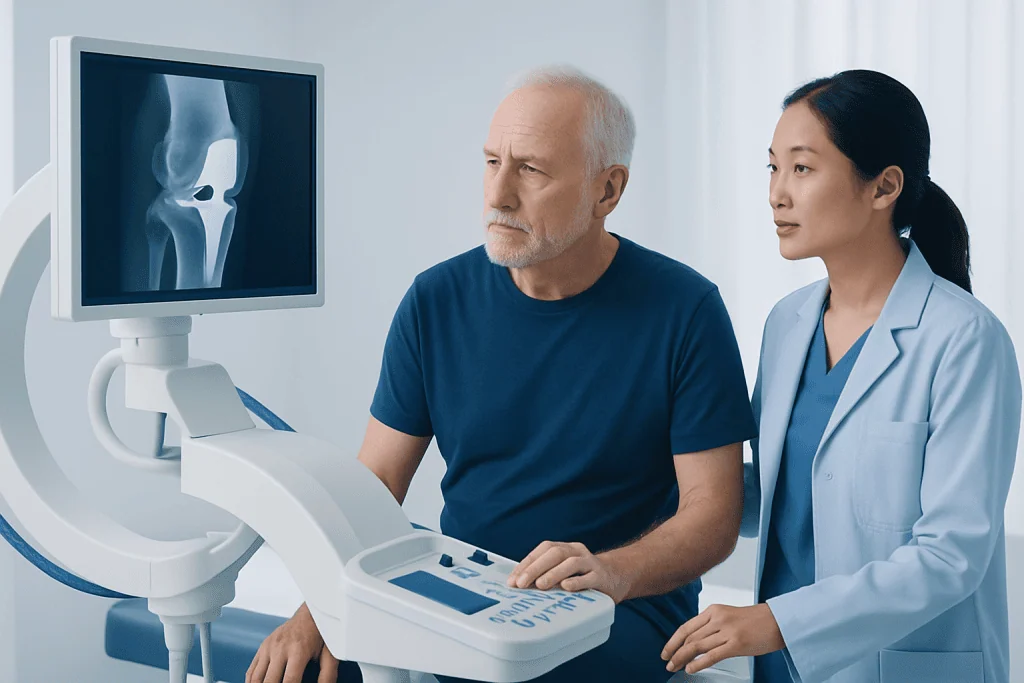
A person may be considered for joint replacement when joint pain and stiffness have a major effect on walking, sleep, work, self-care or quality of life. Osteoarthritis is the most common reason, but inflammatory arthritis, previous injury, loss of blood supply to bone, joint deformity and some fractures can also lead to advanced joint damage.
Doctors usually begin with non-surgical measures where appropriate. These may include exercise therapy, activity adjustments, weight management when relevant, walking aids, pain-relieving medicines, injections in selected situations and treatment of conditions such as inflammatory arthritis. Surgery may be discussed if these approaches no longer provide adequate relief or function.
Candidacy is individualized. An orthopedic surgeon considers symptoms, physical examination findings, X-rays or other imaging, joint alignment, muscle strength, medical conditions, medicines, smoking status and the person’s goals. Age alone does not determine whether surgery is suitable; the expected benefit and ability to participate in recovery are especially important.
Before an operation, the care team may recommend optimizing conditions such as diabetes, anemia, heart or lung disease, dental infection risk and nutrition. Preparing the home, arranging support and practicing exercises advised by a physiotherapist can also make the early recovery period easier.
What happens during joint replacement surgery?
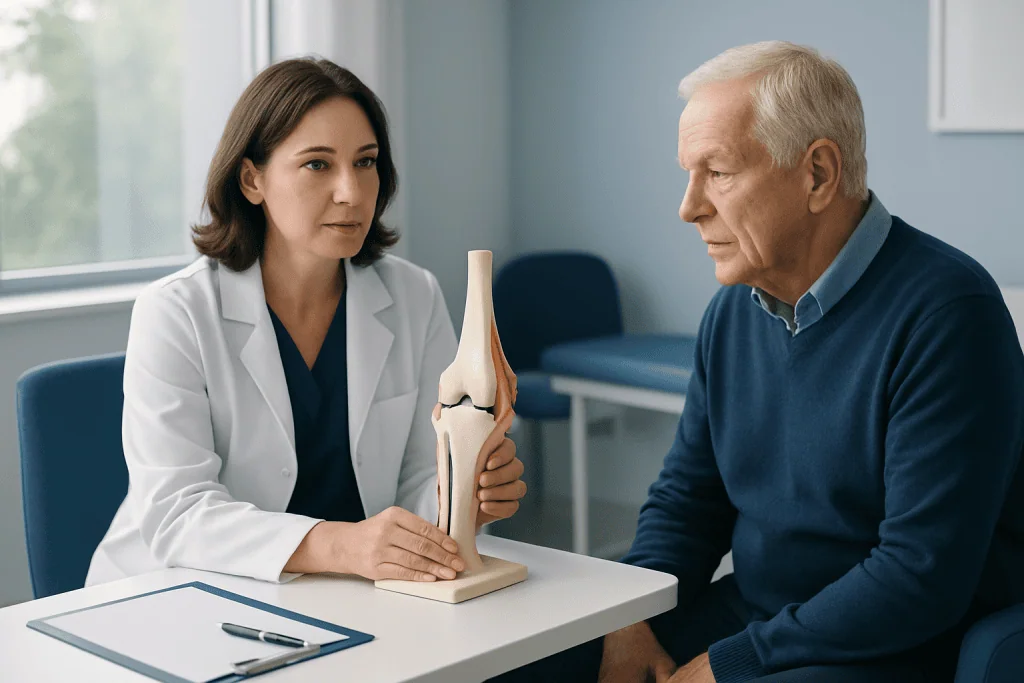
The exact technique depends on the joint and diagnosis, but joint replacement generally follows a similar sequence. The person receives anesthesia, which may be general anesthesia, regional anesthesia or a combination. The surgical team monitors breathing, circulation and comfort throughout the operation.
The surgeon makes an incision to access the affected joint, removes damaged cartilage and bone surfaces, and shapes the remaining bone to hold the implant. Trial components are used to check fit, movement, stability and leg length or alignment where relevant. The final components are then secured with or without bone cement, depending on the implant type and bone quality.
For example, hip replacement replaces the ball of the thigh bone and the socket in the pelvis, while knee replacement resurfaces the ends of the thigh and shin bones and may replace the back surface of the kneecap. Some people may be suitable for partial knee replacement, which preserves healthy areas of the knee. The operation is followed by wound care, pain management, blood-clot prevention and early mobilization.
A detailed discussion with the orthopedic team helps clarify the planned approach, type of implant, anesthesia options and expected hospital stay. For people exploring surgical care, joint replacement treatment should include an individualized assessment rather than a one-size-fits-all plan.
Joint replacement recovery time and rehabilitation
Joint replacement recovery begins soon after surgery. When medically appropriate, many people stand or take assisted steps on the day of surgery or the following day. Early movement supports circulation, helps prevent complications and begins the process of restoring confidence with the new joint. Hospital stays vary according to the operation, health needs and local care pathway.
Joint replacement rehabilitation usually includes guided exercises to improve range of motion, muscle strength, balance and walking. A physiotherapist explains how to use a walker, crutches or a cane when needed, and how to safely get in and out of bed, use stairs and protect the surgical area. Following the prescribed exercise program consistently is one of the most important parts of recovery.
Joint replacement surgery recovery time differs widely. Many people resume basic household activities within several weeks, although tiredness, swelling and reduced endurance can continue longer. Recovery after hip or knee replacement often progresses over months, and it may take up to a year to appreciate the full benefit. Return to driving, work, sports and travel should be discussed with the surgical team because timing depends on pain control, strength, mobility, medications and the type of activity.
Helpful self-care includes taking prescribed medicines as directed, keeping follow-up appointments, caring for the incision according to instructions, staying active within advised limits and avoiding falls. Low-impact activity such as walking, cycling or swimming may be encouraged after appropriate healing, while high-impact activities may not be recommended for every implant or patient.
How painful is joint replacement?
Joint replacement is a major operation, so it is normal to have pain and swelling during the early healing period. Pain is usually most noticeable in the first days after surgery and then improves gradually as tissues heal and activity becomes easier. The aim of treatment is not to expect a person to tolerate severe pain, but to manage it safely enough to support sleep, movement and rehabilitation.
Care teams commonly use a multimodal approach, meaning several methods are combined to reduce pain while limiting side effects. This may include regional anesthesia or nerve blocks, non-opioid pain medicines when safe, short-term stronger pain medicines when needed, ice, elevation, pacing of activity and physical therapy. The specific plan should account for allergies, kidney or liver disease, stomach problems and other medicines.
Pain ratings are subjective and can vary from one person and day to another. Instead of focusing only on a number, it is useful to tell the care team whether pain is preventing deep breathing, sleep, walking or exercise. Sudden worsening pain, pain that is not responding to the prescribed plan, or pain accompanied by fever, wound drainage, chest symptoms or marked calf swelling requires prompt medical advice.
How painful is a hip replacement on a scale of 1 to 10?
There is no reliable single number for hip replacement pain because pain scores depend on the person’s health, pain sensitivity, surgical approach, anesthesia, rehabilitation and the day after surgery. Some people report moderate to severe discomfort at first, especially with movement, while others feel their postoperative pain is manageable with the planned pain-control program.
In the first few days, pain may rise temporarily during physiotherapy or when changing position. This does not necessarily mean something is wrong; movement is part of rebuilding strength and mobility. However, the rehabilitation team can often adjust timing of medicines, activity level, positioning or exercise technique to make recovery more tolerable.
For most people, the pain from surgical healing gradually replaces the long-standing arthritis pain that led to surgery. Clear communication with the surgeon, nurses and physiotherapist is important. They can distinguish expected postoperative discomfort from symptoms that need further assessment.
What is the hardest joint replacement surgery to recover from?
There is no universal answer to the hardest joint replacement surgery to recover from. Recovery is affected by the joint involved, the extent of surgery, muscle and tendon repair, pre-existing weakness, other health conditions, previous operations and the person’s support at home. A procedure that is challenging for one person may be more straightforward for another.
Shoulder replacement can feel demanding because recovery requires protecting repaired tissues while gradually restoring arm movement and strength. Knee replacement is often described as difficult in the early phase because swelling and stiffness can make bending and straightening the knee uncomfortable. Hip replacement may allow walking to improve relatively early, but precautions and muscle recovery can still influence daily activities.
Revision joint replacement, performed to address a problem with a previous implant, is often more complex than a first-time replacement. It may involve less available bone, scar tissue or infection-related care. The surgeon can explain the expected recovery demands for an individual procedure and help set realistic milestones.
What is the hardest part of knee replacement recovery?
For many people, the hardest part of knee replacement recovery is managing swelling and discomfort while working consistently to regain knee motion and strength. The knee can feel tight, warm and stiff for a period after surgery, particularly after exercise or increased activity. Progress is often uneven, with better and more difficult days.
Early rehabilitation places emphasis on safely straightening and bending the knee, activating the thigh muscles and gradually improving walking. Avoiding exercises because of discomfort can contribute to stiffness, but pushing too hard may increase pain and swelling. A physiotherapist can help identify an appropriate balance between regular practice and rest.
Sleep disruption, dependence on a walking aid and frustration with a slower-than-expected pace can also be difficult. Setting short-term goals, asking for practical support and discussing concerns early can help. Persistent inability to progress, increasing redness or drainage, fever, new calf swelling or sudden shortness of breath should be reported urgently.
Benefits, risks and when to seek medical care
The potential benefits of joint replacement include less pain, improved ability to walk or use the limb, better sleep and greater independence in daily life. Artificial joints are designed to be durable, but they are not permanent in every case. Over time, components can wear, loosen or develop other problems, and a small number of people may later need further surgery.
Possible risks include infection, blood clots, bleeding, nerve or blood-vessel injury, stiffness, persistent pain, instability, dislocation in some joint replacements, fracture around the implant and anesthesia-related complications. The team reduces these risks through careful planning, preventive medicines where appropriate, sterile technique, early mobilization and follow-up, but no operation is risk-free.
When to seek medical care: a person should contact a clinician for worsening joint pain, loss of function, increasing deformity or symptoms that are no longer controlled with usual treatment. After surgery, urgent assessment is needed for chest pain, shortness of breath, coughing blood, sudden one-sided leg swelling, fever with increasing wound redness, drainage, or severe unexpected pain. These symptoms do not always indicate a serious complication, but they should not be ignored.
Acibadem International’s multidisciplinary specialists and JCI-accredited hospitals support international patients requiring assessment, surgery and rehabilitation planning for joint conditions. A qualified orthopedic clinician can help determine whether joint replacement is appropriate and what recovery may realistically involve.
Frequently asked questions
How long does joint replacement last?
Modern joint implants are designed to last many years, but their lifespan varies by joint, implant type, activity level, body weight, bone quality and other factors. Some implants may eventually wear, loosen or develop complications that require further evaluation. Regular follow-up and following activity advice can help protect the joint.
Can a person walk after joint replacement surgery?
Many people begin standing and walking with support on the day of surgery or the next day, if medically appropriate. A walker, crutches or cane may be needed temporarily. The pace of progress depends on the joint replaced, pain control, balance, strength and overall health.
What activities should be avoided after joint replacement?
Activity advice differs by joint and person. High-impact sports, jumping, contact sports and activities with a high fall risk may not be suitable for everyone because they can place added stress on an implant. The orthopedic surgeon and physiotherapist can recommend safer activities and an appropriate timeline for returning to them.
Is joint replacement only for older adults?
No. Although joint replacement is common in older adults because osteoarthritis becomes more frequent with age, younger adults may also need it after severe arthritis, injury or other joint disease. The decision is based on symptoms, joint damage, expected benefit and individual health factors rather than age alone.
What is the difference between partial and total joint replacement?
Total replacement replaces all major damaged surfaces of a joint, while partial replacement treats only the affected section when the remaining parts are healthy enough to preserve. Partial knee replacement is a common example. Not every person is suitable for a partial procedure, and imaging and examination help guide the decision.
What should a person arrange at home before joint replacement?
It can help to prepare a clear path for walking, remove loose rugs and cords, place commonly used items within easy reach and arrange help with meals, transport or pets during the first days. Depending on the operation, equipment such as a raised toilet seat or shower chair may be recommended. The rehabilitation team can provide tailored home-safety guidance before discharge.
References
- American Academy of Orthopaedic Surgeons
- National Institute of Arthritis and Musculoskeletal and Skin Diseases
- National Health Service
- Centers for Disease Control and Prevention
- American Association of Hip and Knee Surgeons
This article is for general information only and is not a substitute for professional medical advice. Please consult a qualified doctor about your individual situation.
Joint Replacement in Turkey — costs, top hospitals & a free quote
JCI-accredited · board-certified surgeons · reply within 24h
Add us as a Preferred Source to see more of our trusted health content across Google Search, AI Overviews and Discover.

Orthopedics & Spine
Care for bones, joints and the musculoskeletal system, including joint replacement, sports injuries and trauma.
126 specialists in this unitMore from the Health Library



Related Specialists

Dr. Mustafa Bozkurt
Medical Oncology
Dr. Cenk Ersemiz
Family Medicine
Dr. Havva Gölalan
Oral & Dental Health
Prof. Dr. Onur Yaman (m)
Neurosurgery