Knee Fracture Treatment: How It Works, Results and What to Expect

A knee fracture may involve the kneecap, the lower end of the thighbone, or the upper end of the shinbone. Prompt assessment is important because fractures around the knee can affect joint alignment, stability and the ability to bear weight.
Key Takeaways
- A knee fracture may involve the kneecap, the lower end of the thighbone, or the upper end of the shinbone.
- Prompt assessment is important because fractures around the knee can affect joint alignment, stability and the ability to bear weight.
- Treatment ranges from bracing and activity restriction to surgical fixation with screws, plates, wires or other implants.
- Rehabilitation is a central part of recovery and helps restore knee motion, strength, balance and walking ability.
- Recovery time varies widely with fracture type, treatment method, overall health and adherence to the rehabilitation plan.
Knee fracture treatment depends on which bone is broken, whether the pieces remain aligned, and whether the knee joint or surrounding soft tissues are affected. Many stable fractures heal with immobilization and guided rehabilitation, while displaced or unstable injuries may need surgery to restore joint alignment and movement.
Knee Fracture Treatment: How It Works
Knee fracture treatment aims to allow the broken bone to heal in the correct position while protecting the knee joint and preserving as much movement as possible. The term can describe fractures of the patella (kneecap), distal femur (lower thighbone), proximal tibia (upper shinbone, including the tibial plateau), or less commonly nearby bone structures that contribute to the knee joint.
The best approach depends on the fracture pattern. If bone fragments are stable and well aligned, a clinician may recommend a brace, splint or cast, limits on weight-bearing, pain management and planned follow-up imaging. If the fracture is displaced, unstable, open, extends into the joint, or prevents the knee’s extensor mechanism from working normally, surgery may be considered.
In either approach, treatment is not only about bone healing. Orthopedic teams also monitor skin and circulation, nerves, swelling, ligament and cartilage injuries, blood-clot risk, and the gradual return of knee motion. A personalized rehabilitation plan helps reduce stiffness and safely rebuild function.
Which Injuries May Need Treatment?
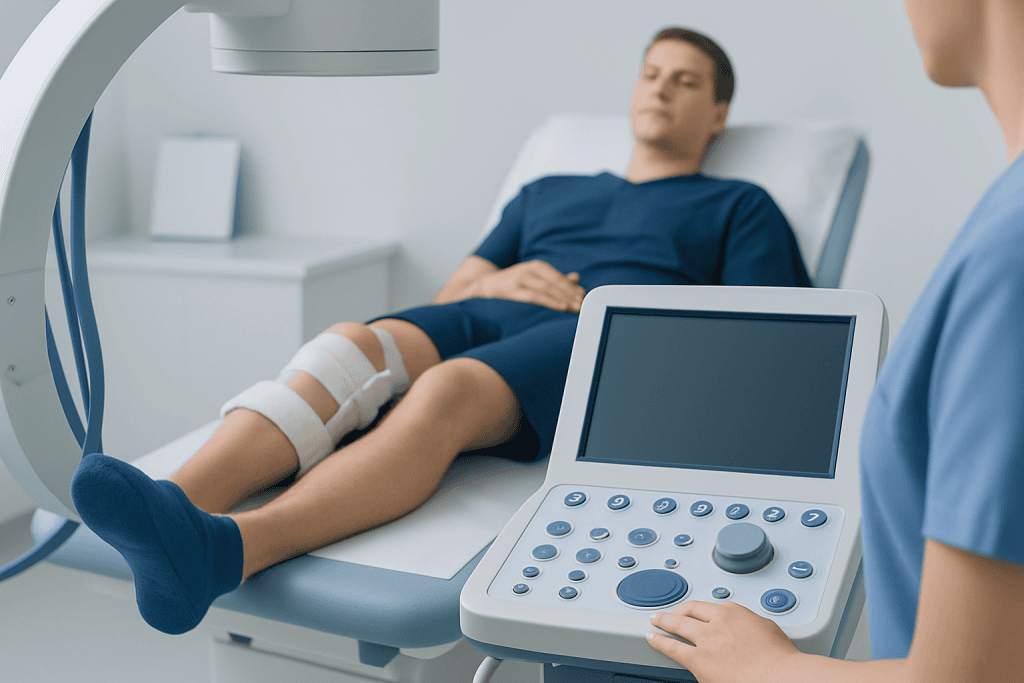
A fall directly onto the knee, a sports injury, a road traffic collision, or a high-energy impact can cause a knee fracture. In older adults and people with reduced bone strength, a lower-impact fall may be enough to cause a fracture. The location and energy of the injury help clinicians anticipate associated damage and plan care.
Patella fractures can make it difficult or impossible to straighten the knee or lift the leg while it is straight. Tibial plateau fractures affect the upper surface of the shinbone and may involve the weight-bearing cartilage of the knee. Distal femur fractures occur just above the knee and may be more complex in people with osteoporosis or previous knee replacement surgery.
Symptoms may include severe pain, rapid swelling, bruising, tenderness, deformity, inability to bear weight, and reduced range of motion. Not every painful knee injury is a fracture, but these symptoms require timely clinical assessment, particularly after trauma.
- Stable fractures may remain in position and sometimes heal without an operation.
- Displaced fractures have fragments that have moved out of normal alignment.
- Comminuted fractures involve several pieces of bone and can be harder to stabilize.
- Open fractures, where bone or deep tissue communicates with a wound, require urgent specialist care.
Assessment and Candidacy for Surgery
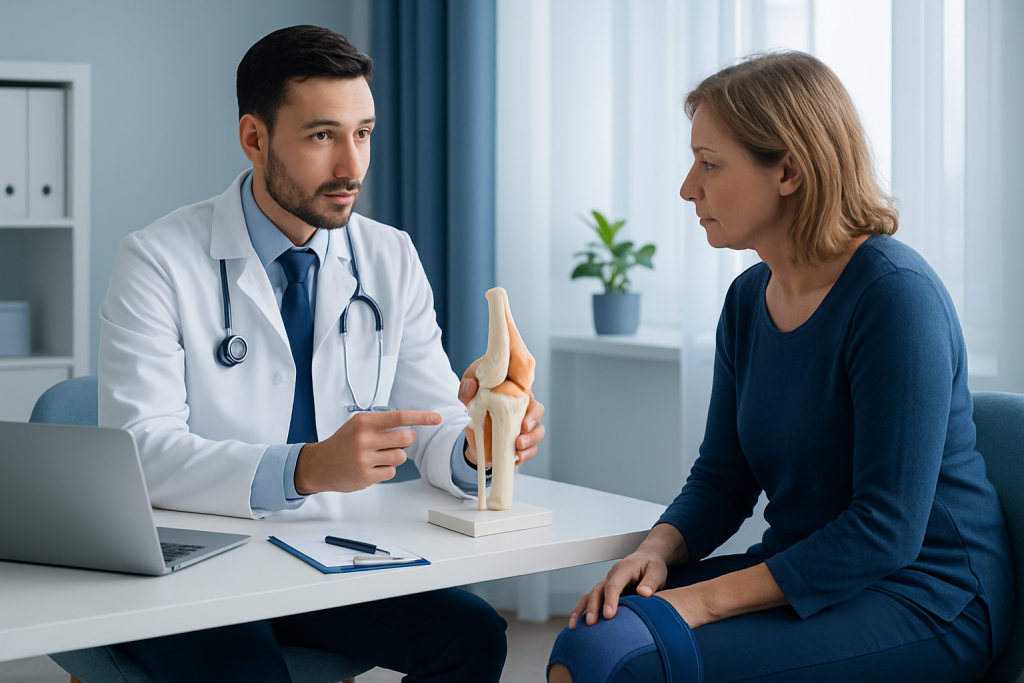
Diagnosis begins with a history of the injury and a physical examination. A clinician checks pain, swelling, skin condition, circulation in the foot, sensation, muscle function and knee stability. X-rays usually confirm a fracture and show whether the bone is displaced. CT scans can provide detailed images of complex fractures, especially those involving the joint surface, while MRI may be used when ligament, tendon, cartilage or hidden bone injury is suspected.
Surgery is usually considered when alignment cannot be maintained with bracing, when the joint surface is disrupted, or when the fracture compromises knee function. For example, a displaced patella fracture may need fixation if the patient cannot actively straighten the knee. A displaced tibial plateau or distal femur fracture may need precise reconstruction to support joint stability and weight-bearing.
The decision also considers general health, bone quality, activity needs, skin swelling, infection risk and the person’s ability to follow recovery instructions. In some cases, surgery is delayed briefly until swelling has improved; in others, urgent treatment is needed because of an open wound, impaired blood flow, compartment syndrome concerns or an associated dislocation.
Knee Fracture Surgery: Step by Step
When surgery is recommended, it is commonly performed under general anesthesia or regional anesthesia with sedation. The orthopedic surgeon first reviews imaging and positions the leg to allow careful access to the fracture. The exact incision and technique vary according to the bone involved and the fracture pattern.
The surgeon gently realigns bone fragments, a process called reduction. Fixation devices such as screws, plates, rods, pins, wires or sutures may then hold the fragments in place while healing occurs. For fractures affecting the joint surface, restoring a smooth and stable surface is particularly important. Bone graft material may occasionally be used where there is bone loss or a depressed joint surface.
After fixation, the surgical team checks stability and knee alignment, closes the incision and applies dressings and, when appropriate, a brace. Some patients go home the same day or after a short hospital stay, while more complex injuries may require longer monitoring. Knee fracture treatment is planned around both the operation and the structured aftercare that follows it.
Not all fractures require internal fixation. External fixation may be used temporarily in selected high-energy injuries with major swelling or soft-tissue damage, before definitive reconstruction can be performed. The care plan is individualized and may involve orthopedic trauma surgeons, anesthesiologists, physiotherapists and rehabilitation specialists.
Benefits, Risks and Expected Results
The expected benefit of treatment is a healed fracture with the best achievable knee alignment, stability and function. Non-surgical care avoids an operation when the fracture is stable. Surgical fixation can improve alignment and allow a carefully supervised return to movement in fractures that would otherwise heal poorly or leave the knee unstable.
Results vary because fractures around the knee differ greatly in severity. Many people regain useful walking ability and daily function, but recovery may take months. Fractures involving the joint surface, severe soft-tissue injuries, multiple fractures, reduced bone quality, smoking, diabetes and delayed rehabilitation can make recovery more complex.
Possible complications include infection, wound healing problems, bleeding, blood clots, nerve or blood-vessel injury, stiffness, persistent pain, delayed union or nonunion, loss of alignment, hardware irritation and post-traumatic osteoarthritis. These risks are not inevitable, and the care team uses preventive measures such as careful surgical technique, movement guidance, clot-prevention strategies where appropriate and follow-up imaging.
Some implants remain in place permanently. If hardware causes persistent symptoms after the bone has healed, an orthopedic surgeon may discuss whether removal is appropriate. Ongoing symptoms should be assessed rather than assumed to be a normal part of recovery.
Recovery Timeline and Rehabilitation
Recovery begins with protecting the fracture and controlling swelling and pain. Patients are given clear instructions about wound care, use of crutches or a walker, brace settings, leg elevation, safe activity and whether any weight can be placed through the leg. Weight-bearing restrictions vary significantly: some people may bear weight early in a locked brace, while others need to avoid weight-bearing for a longer period.
Follow-up appointments commonly include repeat X-rays to confirm that healing and alignment are progressing as expected. Stitches or staples, if used, are usually removed after the incision has healed. The rehabilitation team then progresses exercises based on the fracture, the stability of fixation and the surgeon’s instructions.
Physiotherapy may begin with gentle motion and circulation exercises, followed by work on knee flexibility, quadriceps strength, hip strength, balance and gait. The timing of increased bending, strengthening and return to higher-impact activity must be individualized. Trying to do too much too soon can place stress on healing bone and soft tissues, while prolonged immobility can contribute to stiffness and weakness.
Bone healing often takes several weeks, but restoring confidence, strength and full functional movement may take several months or longer. Athletes and people returning to physically demanding work usually need assessment of strength, movement control and task-specific readiness before resuming full activity.
Self-Care and When to Seek Medical Care
During recovery, patients should follow the prescribed restrictions, attend follow-up visits and take medicines only as directed. Keeping the leg elevated when advised, using ice safely through a barrier if approved, maintaining adequate nutrition, avoiding smoking and participating consistently in physiotherapy can support recovery. A doctor can also advise on calcium, vitamin D or bone-health assessment when relevant.
Medical advice should be sought promptly after a knee injury if there is severe pain, marked swelling, deformity, inability to stand or bear weight, inability to straighten the knee, an open wound, numbness, a cold or pale foot, or worsening pain. Emergency care is especially important after high-energy trauma or when there are signs of impaired circulation.
After treatment, urgent assessment is needed for fever with increasing wound redness or drainage, sudden calf swelling or pain, chest pain, shortness of breath, new numbness or weakness, uncontrolled pain, or a brace or cast that feels excessively tight. These symptoms may have different causes, but they should not be ignored.
Acibadem International’s multidisciplinary orthopedic, imaging, anesthesia and rehabilitation specialists support diagnosis and treatment of knee fractures for international patients in JCI-accredited hospitals. Follow-up should always be coordinated with a qualified orthopedic team, particularly for complex injuries or concerns during recovery.
Frequently asked questions
Can a knee fracture heal without surgery?
Yes. Stable, non-displaced fractures may heal with a brace, splint or cast, restricted activity and close follow-up. Surgery may be needed when bone fragments are displaced, the joint surface is unstable, or normal knee function cannot be maintained.
How long does recovery from a knee fracture take?
Bone healing commonly takes several weeks, but full recovery of knee movement, strength and walking confidence can take months. The timeline depends on the bone involved, fracture severity, treatment method, other injuries and the rehabilitation plan.
Will I be able to walk after knee fracture surgery?
Many people regain the ability to walk after appropriate treatment and rehabilitation. However, the timing and amount of permitted weight-bearing differ by fracture type and fixation stability, so the surgeon’s instructions should be followed closely.
What is the most common type of knee fracture?
Fractures of the patella, or kneecap, are a common injury around the knee, often caused by a direct fall or impact. Fractures of the tibial plateau and distal femur are also important because they can affect the knee joint surface and weight-bearing.
Can a knee fracture cause arthritis later in life?
A fracture that involves the knee joint surface can increase the future risk of post-traumatic osteoarthritis, particularly if the cartilage or alignment is significantly affected. Accurate treatment, rehabilitation and long-term follow-up when symptoms persist may help protect function, although arthritis cannot always be prevented.
When can exercise restart after a knee fracture?
Gentle rehabilitation exercises may begin early when approved by the treating team, but higher-impact exercise must wait until healing and strength are adequate. A physiotherapist and orthopedic clinician can guide a safe progression based on imaging, movement and functional recovery.
References
- American Academy of Orthopaedic Surgeons
- National Institute of Arthritis and Musculoskeletal and Skin Diseases
- OrthoInfo
- Mayo Clinic
- National Health Service
This article is for general information only and is not a substitute for professional medical advice. Please consult a qualified doctor about your individual situation.
Joint and spine care in Turkey — expert assessment & treatment
JCI-accredited · board-certified surgeons · reply within 24h
Add us as a Preferred Source to see more of our trusted health content across Google Search, AI Overviews and Discover.