Is Laser Eye Surgery Safe: Procedure, Recovery and Results

Laser vision correction reshapes the cornea to reduce dependence on glasses or contact lenses. Safety depends greatly on appropriate candidacy, accurate testing and following postoperative instructions.
Key Takeaways
- Laser vision correction reshapes the cornea to reduce dependence on glasses or contact lenses.
- Safety depends greatly on appropriate candidacy, accurate testing and following postoperative instructions.
- Dry eye symptoms, glare and halos are common early effects; serious sight-threatening complications are uncommon but possible.
- Results are usually long-lasting, although age-related vision changes and occasional enhancement procedures can occur.
- An ophthalmologist should assess corneal thickness, prescription stability, eye surface health and overall eye health before surgery.
Laser eye surgery is generally safe for carefully selected adults with stable vision and healthy eyes, but it is not risk-free or suitable for everyone. A detailed preoperative assessment helps an eye surgeon match the procedure to the person’s eyesight, corneal health, lifestyle and expectations.
Overview: Is Laser Eye Surgery Safe?
Is laser eye surgery safe? For people who are suitable candidates, laser vision correction is generally considered a safe and effective elective procedure when it is planned after a comprehensive eye examination and performed by an experienced ophthalmic surgeon. It permanently changes the shape of the cornea, the clear front surface of the eye, to improve how light focuses on the retina.
“Laser eye surgery” includes several procedures, most commonly LASIK, PRK and SMILE. They are used mainly to correct short-sightedness (myopia), long-sightedness (hyperopia) and astigmatism. The best option depends on the prescription, corneal thickness and shape, dry-eye tendency, work or sports needs, and other eye-health findings.
Laser surgery can reduce reliance on glasses or contact lenses, but it cannot promise perfect vision for every person. It also does not prevent later age-related changes such as presbyopia, the gradual loss of near focusing ability that commonly develops from the 40s onward, or cataracts. An informed decision weighs the expected benefits against the individual’s risks and visual goals.
How Laser Vision Correction Works
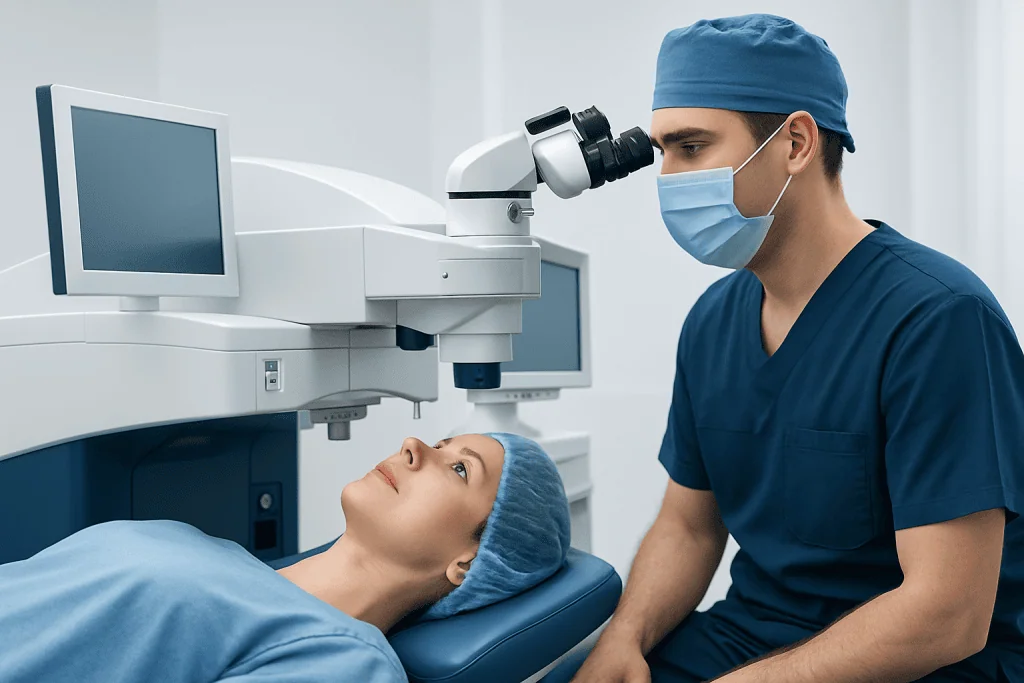
The cornea provides much of the eye’s focusing power. If its curve is slightly too steep, too flat or uneven, light does not focus precisely on the retina and vision may be blurred. An excimer laser removes microscopic amounts of corneal tissue in a carefully planned pattern to alter this curvature. In SMILE, a femtosecond laser creates a small lens-shaped piece of tissue within the cornea that is removed through a small incision.
LASIK involves creating a thin corneal flap, reshaping tissue underneath with an excimer laser, and repositioning the flap. PRK reshapes the surface layers after the outer corneal cells are removed; these cells grow back during healing. Because PRK does not create a flap, it may be considered for some people with thinner corneas or a higher likelihood of eye impact, although recovery is usually slower.
The surgical plan is based on detailed measurements rather than prescription alone. Corneal mapping, eye-surface assessment, pupil measurement and refraction testing help identify irregularities or conditions that could make treatment less predictable. Patients can learn more about modern laser eye surgery options during an ophthalmology consultation.
Who May Be a Suitable Candidate?

Laser surgery is usually considered for adults whose glasses or contact lens prescription has been stable for at least a period determined by the surgeon. Candidates should have healthy corneas, realistic expectations and an eye prescription within the range that the chosen procedure can safely treat. A full medical and eye history is important, including previous surgery, medications, allergies and contact lens use.
It may not be recommended when the cornea is too thin or irregular, when there is active eye infection or inflammation, or when significant dry eye is not controlled. Conditions that affect corneal structure, including keratoconus, need specialist evaluation because laser corneal reshaping may be unsuitable. Uncontrolled diabetes, autoimmune disease, pregnancy and breastfeeding may also affect timing or eligibility.
People with cataracts, glaucoma, retinal disease or severe visual symptoms need a tailored assessment. In some situations, treating the underlying issue first or considering another form of vision correction is safer. Contact lenses can temporarily alter corneal measurements, so the surgeon may advise stopping their use before preoperative tests.
- Stable refractive error and healthy corneal measurements support safer planning.
- Dry-eye symptoms should be identified and managed before surgery.
- People should be comfortable with the possibility of needing glasses for some tasks after surgery.
What Happens During the Procedure?
Before surgery, the ophthalmology team confirms the treatment plan and reviews what to expect. Numbing eye drops are used, so the procedure is not usually painful, although a person may feel pressure, notice lights or hear equipment sounds. Most laser treatments are performed while the person is awake, and the active laser treatment itself generally lasts only a short time.
For LASIK, the surgeon creates and lifts the corneal flap, applies the programmed laser reshaping, then returns the flap to position. For PRK, the surface cell layer is removed before laser reshaping, and a protective contact lens is placed while the surface heals. For SMILE, the surgeon removes a precisely created lenticule through a small corneal incision.
Patients generally need someone to take them home after treatment. The care team provides eye drops and clear instructions about rubbing the eyes, water exposure, make-up, exercise and follow-up appointments. Following these instructions is an important part of protecting the healing cornea and supporting a smooth recovery.
Recovery Timeline and Expected Results
Recovery varies by procedure and by person. After LASIK or SMILE, many people notice improved vision within a day or two, but vision can fluctuate while the eyes settle. Mild burning, tearing, light sensitivity, haziness or a gritty sensation may occur in the first hours or days. PRK commonly involves more discomfort initially and vision may improve more gradually over several weeks.
Dry eye symptoms are especially common in the early recovery period and can temporarily affect visual clarity. Preservative-free lubricating drops and other treatments may be recommended according to the surgeon’s advice. Follow-up visits check healing, vision, eye pressure and the cornea’s appearance.
People often ask, “Is laser eye surgery last forever?” The corneal reshaping is permanent, but eyesight can still change over time. Near-vision glasses may be needed later because of presbyopia, and a small number of people may have residual prescription or later change that leads them to discuss an enhancement procedure. The expected result should be individualized rather than assumed from another person’s experience.
Regarding laser eye surgery success rate, outcomes are commonly measured by reduced dependence on corrective lenses and the ability to achieve a useful level of uncorrected distance vision. Results depend on the starting prescription, eye anatomy, procedure selected and healing response. Laser eye surgery is not always successful in the sense of producing identical results for every eye or eliminating every need for glasses.
Benefits, Risks and Safety Considerations
Potential benefits include clearer unaided distance vision, less dependence on contact lenses or glasses, and convenience for selected daily activities. For some people, avoiding contact-lens discomfort or lens-related infections is an important practical advantage. However, whether laser surgery is recommended depends on personal circumstances rather than lifestyle preference alone.
Temporary side effects can include dry eyes, glare, halos around lights, starbursts, reduced contrast in dim conditions and fluctuating vision. These symptoms often improve during healing, but in some people they can persist. Under- or over-correction, residual astigmatism, flap-related concerns after LASIK, infection, inflammation, corneal scarring and reduced best-corrected vision are less common but important risks to discuss before consenting.
Serious complications that threaten sight are uncommon, but no elective eye procedure is entirely risk-free. This is why the question “is laser surgery on eyes safe?” is best answered after an individual evaluation. A surgeon should explain the likely benefits, alternatives, limitations and specific risk factors in understandable terms, allowing adequate time for questions and decision-making.
People should not choose treatment based only on convenience or a general expectation of perfect vision. A careful assessment, appropriate technology and consistent follow-up are central to safe care. Related eye concerns, including dry eye syndrome, may need treatment before a decision about laser correction is made.
Protecting Eye Health After Surgery
During recovery, patients should use prescribed drops exactly as directed and avoid rubbing or pressing on the eyes. They should attend scheduled follow-up visits even if vision seems clear, as some healing changes are best identified during an examination. Sunglasses can improve comfort in bright light and provide ultraviolet protection outdoors.
The surgeon will advise when it is safe to resume driving, swimming, contact sports, eye make-up and strenuous exercise. In general, avoiding contaminated water and protecting the eyes from accidental injury are especially important in the early healing period. Anyone who returns to contact sports should discuss appropriate eye protection.
Long-term eye care remains important after successful laser surgery. Routine eye examinations can detect changes unrelated to refractive error, including cataracts, glaucoma and retinal conditions. If dry, irritated or blurred vision persists, an eye professional can assess whether the eye surface or another condition needs attention.
Acibadem International’s multidisciplinary specialists and JCI-accredited hospitals assess and treat eye conditions for international patients, including people considering laser vision correction.
When to Seek Medical Care
Patients should contact their eye surgeon promptly if they have increasing pain, worsening redness, a sudden reduction in vision, increasing light sensitivity, discharge, or a new shadow, curtain or shower of floaters. These symptoms do not always indicate a serious problem, but they need timely professional assessment after eye surgery.
Urgent assessment is also appropriate for an eye injury, chemical exposure, sudden loss of vision, severe headache with visual symptoms, or flashes of light with new floaters. People should not attempt to manage concerning symptoms with leftover drops or by waiting for a routine appointment.
Before surgery, a person should seek an ophthalmology opinion if they have unstable vision, frequent dry-eye symptoms, known corneal disease, previous eye surgery or uncertainty about suitability. A consultation can clarify whether laser correction, glasses, contact lenses or another option is the safest choice.
Frequently asked questions
Is laser eye surgery always successful?
No. Laser eye surgery can provide excellent vision for many suitable candidates, but results vary with the prescription, corneal characteristics, procedure type and healing response. Some people still need glasses for certain tasks, and a small number may need an enhancement or another form of correction.
Is laser eye surgery safe for everyone?
No. Safety depends on individual suitability. People with unstable prescriptions, thin or irregular corneas, uncontrolled dry eye, certain eye diseases or some health conditions may not be suitable candidates or may need another approach.
Does laser eye surgery hurt?
Numbing drops are used, so significant pain during the procedure is not expected. Pressure or temporary discomfort may be felt, and irritation, tearing or light sensitivity can occur during the early recovery period, particularly after PRK.
How long does it take to recover from laser eye surgery?
Many people have functional vision within a few days after LASIK or SMILE, although vision may fluctuate initially. PRK recovery is usually slower, with clearer vision developing over weeks. Complete stabilization can take longer and differs between individuals.
Can vision get worse after laser eye surgery?
Temporary blur and fluctuating vision can occur while the cornea heals. Less commonly, complications or residual refractive error can affect vision, which is why follow-up care is important. Sudden worsening vision or significant pain should be reported promptly to the treating eye team.
Is laser surgery recommended instead of glasses or contact lenses?
Laser surgery is an elective option, not a requirement. It may be recommended when a person is a suitable candidate and wishes to reduce dependence on glasses or contact lenses, but glasses and contact lenses remain safe and effective choices for many people.
References
- American Academy of Ophthalmology
- U.S. Food and Drug Administration
- National Eye Institute
- Royal College of Ophthalmologists
This article is for general information only and is not a substitute for professional medical advice. Please consult a qualified doctor about your individual situation.
Eye Surgery in Turkey — costs, top hospitals & a free quote
JCI-accredited · board-certified surgeons · reply within 24h

Ophthalmology
Comprehensive eye care from laser vision correction to retina, cornea and cataract surgery.
75 specialists in this unitMore from the Health Library



Related Specialists

Dr. Dilek Çoban
Pediatrics
Dr. Suat Özdek
Pediatrics
Dr. Zühre Esra Kıvanç
Inpatient Clinic Physicians Clinical Service
Prof. Dr. Bülent Evren Erkul
Otorhinolaryngology