Torn Patellar Tendon Recovery: A Week-by-Week Timeline

A complete patellar tendon tear usually requires prompt surgical repair to restore active knee straightening. Most people use a brace and crutches in the early weeks while the tendon repair gains strength.
Key Takeaways
- A complete patellar tendon tear usually requires prompt surgical repair to restore active knee straightening.
- Most people use a brace and crutches in the early weeks while the tendon repair gains strength.
- Physical therapy progresses from safe motion to strengthening, balance, and activity-specific training.
- Recovery milestones vary; return to running and pivoting sports should be based on strength and function, not the calendar alone.
- New swelling, fever, wound concerns, calf pain, or a sudden loss of knee function needs medical assessment.
Torn patellar tendon recovery time is commonly 6 to 12 months, although healing and return to everyday activities vary with the severity of the injury, treatment approach, and rehabilitation progress. Early protection of the repair is followed by carefully guided movement, strengthening, and gradual return to work, exercise, and sport.
Overview: How Long Does Torn Patellar Tendon Recovery Take?
Torn patellar tendon recovery time is often about 6 to 12 months for a return to unrestricted activities, particularly sports that involve running, jumping, or quick changes of direction. Many people can manage basic daily tasks earlier, but the repaired tendon and surrounding muscles need time to regain strength, flexibility, and control.
The patellar tendon connects the bottom of the kneecap (patella) to the top of the shinbone. Together with the quadriceps muscles and kneecap, it forms the knee’s extensor mechanism, which allows the leg to straighten and supports walking, stair climbing, standing from a chair, and jumping.
A partial tear may sometimes be treated without surgery, while a complete rupture commonly needs surgical repair. The exact plan depends on the location and size of the tear, how recently it occurred, overall health, activity goals, and the treating orthopedic specialist’s assessment.
Symptoms, Causes and Risk Factors
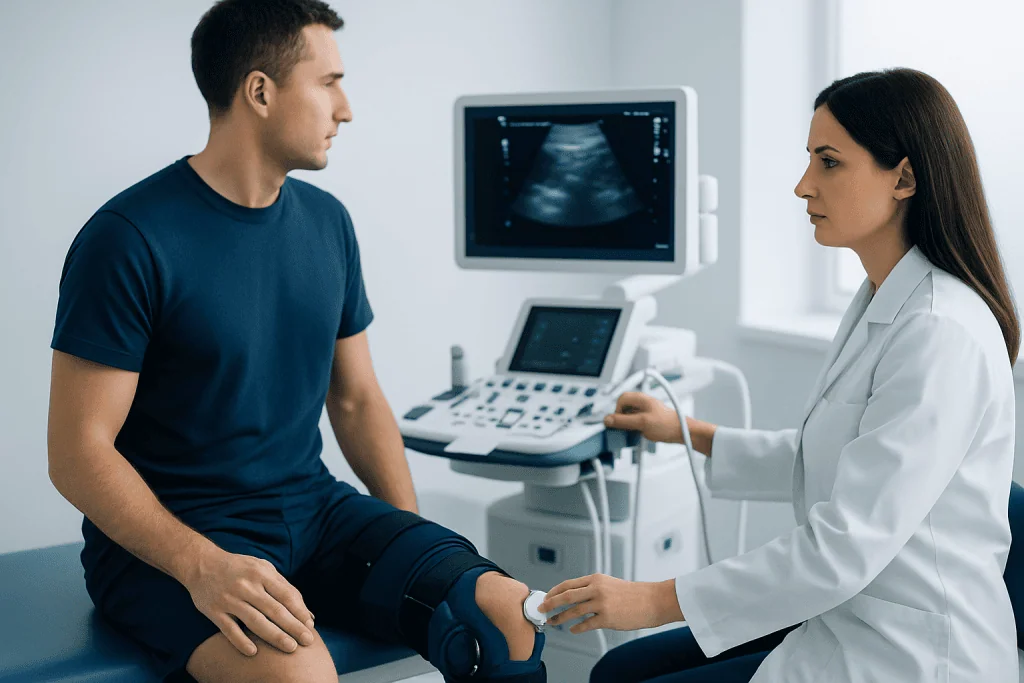
A patellar tendon tear often occurs after a forceful knee bend while the quadriceps muscles are contracting, such as when landing from a jump, falling, or suddenly changing direction. People may feel a pop or sharp pain at the front of the knee, followed by swelling, bruising, and difficulty bearing weight.
A complete tear can make it difficult or impossible to actively straighten the knee or lift the straight leg while lying down. The kneecap may sit higher than usual because it is no longer held down by the tendon. These signs need urgent clinical assessment, especially after an injury.
Risk may be higher in people with previous tendon problems, repeated jumping activities, chronic kidney disease, diabetes, inflammatory conditions, or certain medications that can affect tendon health. However, a rupture can also happen unexpectedly in an otherwise healthy person during trauma or sport.
- Sudden pain and swelling below the kneecap
- A popping sensation at the time of injury
- Inability to straighten the knee or perform a straight-leg raise
- Difficulty walking, climbing stairs, or bearing weight
Diagnosis and Choosing Treatment
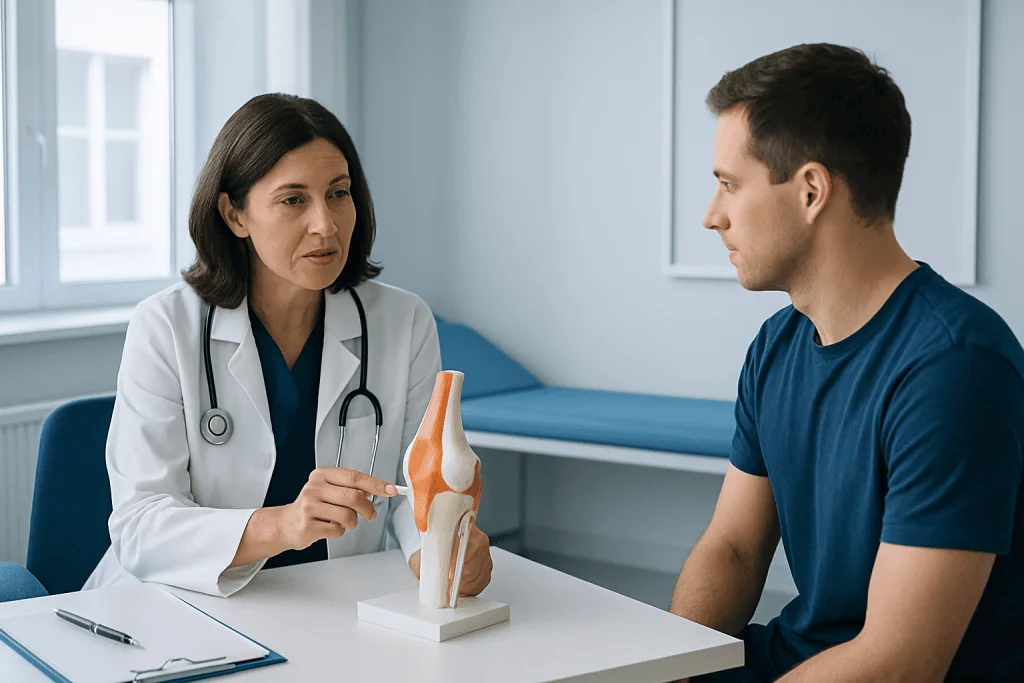
An orthopedic clinician usually begins with a history of the injury and a focused knee examination. They assess swelling, tenderness, the ability to extend the knee, and the position of the kneecap. X-rays may help show kneecap position or rule out a fracture, while ultrasound or magnetic resonance imaging (MRI) can clarify whether the tendon is partially or completely torn.
Partial tears with preserved knee extension may be managed with a brace, activity modification, pain control, and a supervised rehabilitation program. Complete tears and injuries that significantly disrupt active knee extension are typically treated with surgery, ideally without unnecessary delay, because earlier repair may be technically more straightforward.
The decision is individual. A clinician considers the patient’s functional limitations, tendon quality, associated injuries, health conditions, and rehabilitation ability. People with persistent front-of-knee symptoms without a complete rupture may also require assessment for related tendon conditions, such as patellar tendinitis.
Patellar Tendon Repair: How the Procedure Works
Patellar tendon repair aims to reconnect the torn tendon to the kneecap or restore continuity within the tendon so the knee extensor mechanism can work again. It is generally considered for complete acute ruptures, major partial tears with loss of function, and selected chronic tears. In long-standing injuries, the tendon may retract or weaken, making reconstruction more complex.
During surgery, performed under anesthesia, the surgeon makes an incision at the front of the knee and identifies the torn tendon. Strong sutures are placed in the tendon and secured to the kneecap, commonly through small bone tunnels or with fixation devices. Depending on the injury, the repair may be reinforced with additional tissue or surgical material. The wound is then closed and the knee is protected in a brace.
Most patients are assessed before surgery for anesthesia fitness and for factors that may influence healing, such as smoking, diabetes control, medications, skin condition, and infection risk. The treating team also explains the rehabilitation commitment required after patellar tendon repair, since surgery and structured rehabilitation work together to support recovery.
Potential benefits include restoration of knee extension and improved stability for walking and daily activities. Risks include infection, blood clots, stiffness, wound problems, persistent weakness or pain, altered sensation around the incision, and re-tear. Although these complications are not inevitable, patients should discuss their individual risks with their surgeon.
Week-by-Week Recovery Timeline
Weeks 0–2: The priority is protecting the repair and controlling pain and swelling. A brace is commonly kept locked in extension for walking, and crutches are usually needed. Weight-bearing instructions vary by repair and surgeon; patients should follow their specific plan. Elevation, prescribed pain relief, wound care, and gentle circulation exercises may be recommended.
Weeks 2–6: Follow-up visits monitor wound healing and brace fit. Guided physical therapy often begins or progresses with carefully limited knee bending, gentle quadriceps activation, and mobility work for the hip and ankle. The amount of knee flexion allowed is increased gradually because forcing motion too early can stress the healing tendon.
Weeks 6–12: Many rehabilitation plans begin a gradual transition away from crutches and, later, from the brace if knee control is safe. Therapy focuses on restoring walking mechanics, increasing range of motion, and building controlled strength in the quadriceps, hamstrings, hips, and core. Swelling after activity may still occur and should be discussed with the rehabilitation team.
Months 3–6: Strengthening, balance, and functional exercises become more demanding. Depending on progress, some people begin low-impact conditioning such as cycling, pool exercise, or an elliptical trainer. Running, jumping, and heavy lifting are usually delayed until the knee has adequate range of motion, strength, and movement control.
Months 6–12: Return-to-sport training may be introduced for people whose goals include athletics or physically demanding work. Readiness is assessed through symptoms, strength comparison between legs, functional tests, and confidence with movement. A return to competition is usually gradual rather than a single event, and some people need longer than 12 months to reach their prior level.
Rehabilitation, Self-Care and Prevention of Setbacks
Rehabilitation is essential after a patellar tendon injury, whether treatment is surgical or non-surgical. A physical therapist helps progress exercises at a pace that protects the tendon while addressing stiffness, muscle weakness, walking changes, and reduced balance. Missing appointments or advancing exercises independently can slow recovery or increase stress on the healing repair.
At home, patients can support recovery by using the brace and mobility aids as instructed, completing approved exercises, keeping follow-up appointments, and avoiding activities that cause sharp pain or knee instability. A balanced diet with sufficient protein and adequate hydration can support general recovery. People who smoke are encouraged to seek support to stop, as smoking can impair wound and tendon healing.
After recovery, gradual training progression, appropriate warm-ups, lower-limb strength work, and attention to technique may help reduce the likelihood of tendon overload. These measures cannot prevent every injury, particularly traumatic ruptures, but they can support overall knee resilience. Rehabilitation may also include related physical therapy and rehabilitation for safe return to everyday movement.
When to Seek Medical Care
Immediate medical assessment is appropriate after a knee injury if a person cannot straighten the knee, cannot lift the straight leg, cannot bear weight, notices a visible change in kneecap position, or has rapidly increasing swelling. Prompt diagnosis helps guide the most appropriate treatment and may be especially important when a complete tendon rupture is suspected.
After surgery, patients should contact their clinical team promptly for increasing redness, warmth, drainage, fever, severe or worsening pain, numbness, or problems with the incision or brace. Urgent assessment is also needed for calf swelling or pain, chest pain, shortness of breath, or a sudden new loss of knee function.
Acibadem International’s multidisciplinary specialists and JCI-accredited hospitals evaluate and treat knee tendon injuries for international patients, including orthopedic assessment, surgical care where appropriate, and rehabilitation planning. Individual recovery advice should always come from the treating orthopedic surgeon and rehabilitation team.
Frequently asked questions
Can a torn patellar tendon heal without surgery?
Some partial tears may heal with bracing, activity modification, and supervised rehabilitation when active knee extension is preserved. A complete patellar tendon rupture usually requires surgery because the tendon is no longer able to transmit the force needed to straighten the knee normally.
How soon can someone walk after patellar tendon repair?
Many people are allowed some degree of protected walking soon after surgery while wearing a locked knee brace and using crutches. The amount of weight that is safe to place on the leg differs between repairs, so the surgeon’s instructions should be followed closely.
When can someone bend the knee after patellar tendon surgery?
Knee bending is commonly started gradually during the early rehabilitation period, often with limits set by the surgeon and physical therapist. The schedule depends on the repair, tendon quality, associated injuries, and healing progress; aggressive early bending can place too much force on the repair.
When can someone return to work after a patellar tendon tear?
Return timing depends on job demands. Desk-based work may be possible earlier with appropriate mobility arrangements, while work involving prolonged standing, climbing, lifting, kneeling, or uneven surfaces may require several months and a safe functional assessment.
When can someone run after a patellar tendon repair?
Running is usually not considered until later rehabilitation, commonly after several months, when walking is normal and the knee has sufficient motion, strength, and control. The clinician may use functional testing rather than time alone to decide whether running can begin safely.
What are signs that recovery is not progressing as expected?
Increasing pain or swelling, repeated knee buckling, inability to regain expected motion, new weakness in straightening the knee, or a sudden popping sensation should be reviewed by the clinical team. Infection symptoms, wound drainage, fever, calf pain, chest pain, or shortness of breath require prompt medical attention.
References
- American Academy of Orthopaedic Surgeons
- OrthoInfo
- National Institute of Arthritis and Musculoskeletal and Skin Diseases
- American Physical Therapy Association
- Mayo Clinic
This article is for general information only and is not a substitute for professional medical advice. Please consult a qualified doctor about your individual situation.
Joint and spine care in Turkey — expert assessment & treatment
JCI-accredited · board-certified surgeons · reply within 24h
Add us as a Preferred Source to see more of our trusted health content across Google Search, AI Overviews and Discover.