Plasmapheresis Treatment: How It Works, Results and What to Expect

Plasmapheresis separates plasma from blood cells and replaces the removed plasma with albumin, donor plasma, or another prescribed replacement fluid. It is used for specific conditions and is not appropriate for every autoimmune or neurological illness.
Key Takeaways
- Plasmapheresis separates plasma from blood cells and replaces the removed plasma with albumin, donor plasma, or another prescribed replacement fluid.
- It is used for specific conditions and is not appropriate for every autoimmune or neurological illness.
- A session commonly lasts a few hours, while the number and timing of sessions depend on the condition and response.
- Benefits may begin within days for some illnesses, but recovery also depends on controlling the underlying disease.
- Most people tolerate treatment well with monitoring, although blood pressure changes, tingling, bleeding, allergic reactions, and catheter-related problems can occur.
Plasmapheresis treatment, also called therapeutic plasma exchange, is a procedure that removes plasma from the blood and replaces it with a suitable fluid. It can quickly reduce harmful antibodies, proteins, or toxins in selected immune, blood, nerve, and kidney-related conditions, usually alongside treatment for the underlying cause.
Overview: what plasmapheresis treatment does
Plasmapheresis treatment is a blood-cleaning procedure that removes a person’s plasma, the liquid portion of blood. Blood cells are separated from plasma by a machine, then returned to the body with a replacement fluid. The procedure is more precisely called therapeutic plasma exchange (TPE), although the terms are often used interchangeably.
Plasma can contain antibodies, abnormal proteins, immune complexes, or other substances that contribute to illness. By lowering these substances quickly, plasma exchange may help stabilize symptoms or reduce organ damage while other medicines begin to work. It does not usually cure the underlying condition because the body can continue producing the harmful substance.
Doctors use plasma exchange in carefully selected situations, including certain neurological autoimmune disorders, blood disorders, kidney diseases, and severe immune-mediated illnesses. Its role depends on the diagnosis, severity, timing of treatment, and a person’s overall health.
How plasma exchange works and who may be a candidate
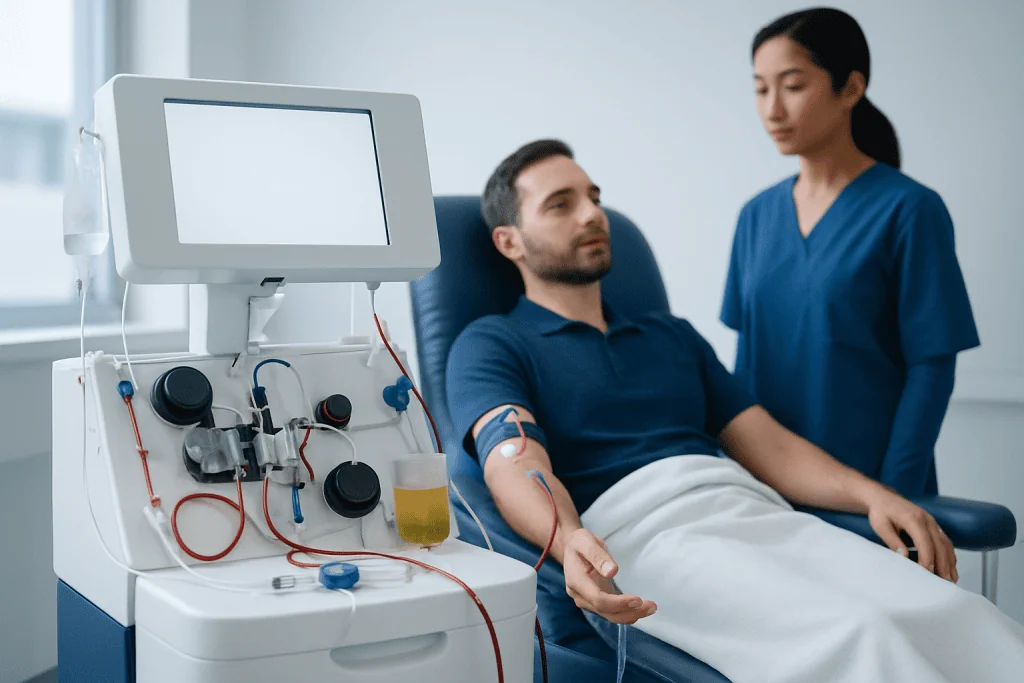
During plasma exchange, blood flows through sterile tubing into a specialized machine. The machine separates plasma from red cells, white cells, and platelets. The removed plasma is discarded, while the blood cells are combined with replacement fluid and returned through the same access line or a second line.
Replacement fluid is often albumin, a purified blood protein solution. In some situations, donor plasma is used because it contains clotting factors that need to be replaced. The care team selects the fluid based on the condition being treated, bleeding risk, laboratory results, and the planned number of exchanges.
Potential candidates include people with conditions such as myasthenia gravis crisis, Guillain-Barré syndrome, thrombotic thrombocytopenic purpura, certain rapidly progressive kidney diseases, or complications related to abnormal blood proteins. For example, plasma exchange may be part of care for myasthenia gravis when symptoms are severe or rapid improvement is needed. Eligibility is determined by a specialist after reviewing diagnosis, symptoms, blood tests, vascular access, and possible risks.
- Plasma exchange is usually considered when rapid removal of harmful circulating substances is clinically important.
- It may be used as a temporary bridge to medicines, surgery, or longer-term disease control.
- People with unstable blood pressure, serious bleeding concerns, severe infection, or difficulty obtaining vascular access may need additional assessment before treatment.
Step by step: what happens during a plasmapheresis session

Before treatment, the team confirms the treatment plan, checks vital signs, and reviews medicines, allergies, recent symptoms, and blood test results. Blood is drawn through a large vein using two needles in some cases. If repeated sessions are planned or peripheral veins are not suitable, a temporary central venous catheter may be placed.
Once the procedure begins, the patient usually rests in a reclining chair or bed while the apheresis machine processes blood in cycles. Anticoagulant is used in the tubing to prevent clotting. The team monitors blood pressure, pulse, comfort, and any symptoms throughout the session.
The amount of plasma exchanged is prescribed according to body size and clinical need. A typical session lasts about two to four hours, though preparation, line placement, observation, and individual treatment requirements can make the overall visit longer. Some people need only a short series of treatments; others require exchanges over days or weeks.
Afterward, the access site is checked and the person may be observed briefly before going home or returning to an inpatient unit. The primary team will also continue or adjust treatment for the underlying disease. Plasmapheresis treatment should always be delivered by an experienced apheresis and multidisciplinary clinical team.
Benefits, results and recovery timeline
The main benefit of plasma exchange is speed: it can lower the level of disease-causing substances in the bloodstream more quickly than many medicines alone. This can be particularly valuable when weakness, kidney inflammation, abnormal clotting, or other complications are progressing quickly. However, the degree of improvement varies widely between diagnoses and individuals.
Some people notice changes in symptoms after the first few treatments, while others improve gradually as the underlying condition responds to immunotherapy, medication, or supportive care. In certain disorders, plasma exchange prevents further worsening rather than producing an immediate noticeable change. The treating specialist evaluates response through symptoms, examination findings, and relevant laboratory tests.
Many people feel tired on the day of treatment and recover with rest, fluids if permitted, and regular meals. They can often return to usual light activities the next day, but this depends on their illness, access type, blood pressure, and concurrent treatment. People receiving treatment for a serious acute condition may need hospital care and a longer recovery period.
Plasma exchange is often combined with disease-specific therapy rather than used alone. In neurological autoimmune disease, care may also include medicines that modify immune activity and rehabilitation to support function and recovery.
How long does it take to see results from plasmapheresis?
Results from plasmapheresis may begin within hours to days because the procedure immediately lowers the amount of target substances circulating in the blood. Whether a person feels better that quickly depends on what is being treated, how advanced the illness is, and whether tissue or nerve injury has already occurred.
For acute immune-related conditions, doctors may assess change after several sessions rather than after one treatment. Improvement can include stabilization of weakness, easier breathing or swallowing, better laboratory values, or less evidence of ongoing organ injury. In other cases, the main goal is to prevent further deterioration while longer-acting treatment takes effect.
A lack of immediate improvement does not automatically mean treatment has failed. The team considers the diagnosis, treatment timing, number of exchanges completed, and alternative explanations for symptoms before deciding whether to continue, modify, or stop therapy.
Is plasmapheresis hard on the body?
Plasmapheresis is a significant medical procedure, but it is generally well tolerated when performed in an appropriate setting with close monitoring. The process temporarily changes fluid balance and can reduce proteins and clotting factors, which is why replacement fluids, laboratory monitoring, and individualized treatment plans are important.
Common short-term effects can include tiredness, feeling cold, light-headedness, nausea, bruising near the needle site, or a temporary drop in blood pressure. Anticoagulant used during the procedure can lower calcium levels briefly, causing tingling around the mouth or in the hands, muscle cramps, or a metallic taste. These symptoms can usually be managed promptly by the care team.
Less common but more serious risks include allergic reactions to replacement plasma, bleeding, infection or clotting related to a central catheter, and heart rhythm changes in vulnerable people. Patients should tell staff immediately about chest discomfort, breathing difficulty, swelling, rash, severe dizziness, chills, or new pain during or after treatment.
What is the success rate of plasma exchange?
There is no single success rate for plasma exchange because it is used for many different diseases, each with different goals and expected outcomes. In some conditions it is a strongly supported emergency or first-line therapy; in others it is used selectively, as a rescue treatment, or when standard therapy has not worked sufficiently.
Success may mean rapid improvement, prevention of further decline, normalization of a laboratory abnormality, safer preparation for another treatment, or temporary control until longer-term therapy takes effect. A favorable response also depends on how early treatment begins, the severity of illness, other health conditions, and whether the underlying disease can be controlled.
Before treatment, the specialist should explain the expected purpose in the individual case, the number of planned sessions, how response will be measured, and what alternatives may be considered. This individualized discussion is more useful than a general percentage.
How long does a plasmapheresis treatment typically last?
A plasmapheresis treatment itself typically lasts about two to four hours. The exact duration depends on body size, blood flow through the access line, the volume of plasma to be exchanged, the replacement fluid, and whether any pauses are needed for comfort or safety.
The first appointment may take longer because it can include assessments, consent, blood tests, and placement of a vascular access catheter if needed. People should ask their care team how long to allow for the full visit, including arrival, treatment, and post-procedure observation.
The number of sessions varies considerably. A short course may involve several exchanges over one to two weeks, while some conditions require a different schedule. The treating team reviews progress regularly and adjusts the plan based on symptoms and test results.
When to seek medical care
Anyone considering plasma exchange should seek assessment from the specialist managing the underlying condition. New or rapidly worsening weakness, trouble breathing, difficulty swallowing, confusion, unusual bruising or bleeding, severe fatigue, or reduced urine output may require urgent medical evaluation, particularly in a person with a known autoimmune, blood, or kidney disorder.
After a treatment session, urgent medical advice is important for fever, redness or drainage at a catheter site, persistent bleeding, fainting, severe shortness of breath, chest pain, facial swelling, or widespread rash. These symptoms do not always indicate a serious complication, but they should be assessed without delay.
For international patients, Acibadem International’s multidisciplinary specialists and JCI-accredited hospitals can assess conditions that may require plasma exchange and coordinate treatment across neurology, hematology, nephrology, and critical care services.
Frequently asked questions
What is the difference between plasmapheresis and plasma exchange?
The terms are often used interchangeably in everyday clinical conversation. More precisely, plasmapheresis refers to removing plasma, while therapeutic plasma exchange removes plasma and replaces it with albumin, donor plasma, or another prescribed fluid. Most treatments described for immune or blood-related diseases are therapeutic plasma exchange.
Can plasmapheresis cure an autoimmune disease?
Plasmapheresis generally does not cure an autoimmune disease. It temporarily reduces harmful antibodies or immune substances already circulating in the blood. Medicines and other disease-specific treatments are usually needed to control ongoing antibody production and reduce the chance of relapse.
Do patients need a central line for plasmapheresis?
Not always. If veins are large and reliable enough, treatment may be performed through needles placed in the arms. A central venous catheter may be needed when veins are difficult to access, blood flow needs to be higher, or several urgent treatments are planned.
Can a person eat before plasmapheresis?
In many cases, people can eat a light meal before treatment unless their clinical team gives different instructions. Good hydration may also be encouraged when medically appropriate. The care team should be told about diabetes, kidney disease, fluid restrictions, and all current medicines before the appointment.
How many plasmapheresis sessions are needed?
The number of sessions depends on the condition, its severity, and how the person responds. Some people receive a short series over several days, while others need a different schedule. The treating specialist reviews symptoms and laboratory findings to decide when treatment can stop or needs adjustment.
Will plasmapheresis make the immune system weak?
Plasma exchange can temporarily remove antibodies and other protective proteins as well as harmful substances. This may increase infection-related considerations, especially when combined with immune-suppressing medicines. Clinicians weigh this risk against the expected benefit and monitor patients throughout the treatment course.
References
- American Society for Apheresis
- National Institutes of Health
- Mayo Clinic
- National Health Service
- Merck Manual Consumer Version
This article is for general information only and is not a substitute for professional medical advice. Please consult a qualified doctor about your individual situation.
Explore treatments in Turkey — costs, top hospitals & a free quote
JCI-accredited · board-certified surgeons · reply within 24h
Add us as a Preferred Source to see more of our trusted health content across Google Search, AI Overviews and Discover.
Check your numbers in seconds
BMI, calories, due date, blood pressure and 30+ more clinical calculators — free, instant, doctor-reviewed ranges.