Ivc Filter MRI Safety: Preparation, Procedure and Results
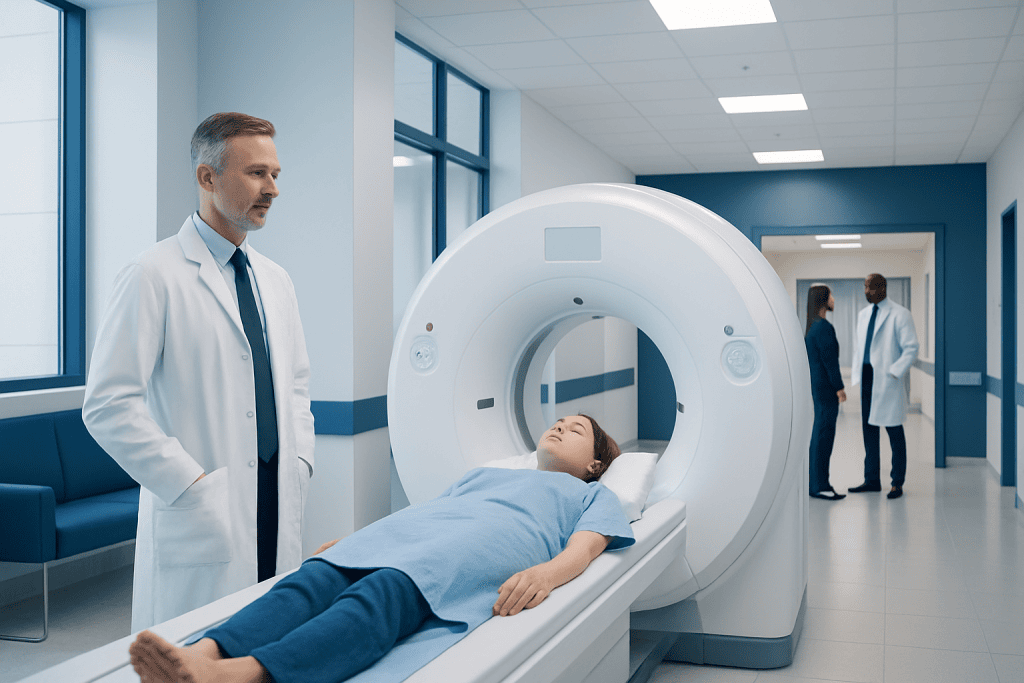
Many modern IVC filters are labelled MRI conditional rather than MRI safe without restrictions. The radiology team should identify the filter model and check the manufacturer’s instructions before MRI.
Key Takeaways
- Many modern IVC filters are labelled MRI conditional rather than MRI safe without restrictions.
- The radiology team should identify the filter model and check the manufacturer’s instructions before MRI.
- An IVC filter contains metal, but this does not automatically prevent MRI scanning.
- Follow-up after filter insertion is important, particularly for retrievable filters that may need removal.
- New leg swelling, chest pain, shortness of breath, or significant bleeding after placement needs urgent medical assessment.
Most people with an inferior vena cava (IVC) filter can have an MRI, but safety depends on the exact filter model, when it was placed, and the MRI scanner settings. The safest approach is to tell the radiology team about the filter before the scan so they can confirm the manufacturer’s MRI conditions.
IVC Filter MRI Safety: The Answer First
IVC filter MRI safety is usually manageable: many currently used inferior vena cava filters can be scanned under specified MRI conditions. However, no one should assume that every filter is suitable for every scan. The MRI department must confirm the exact device, the scanner strength, and any timing or positioning instructions before imaging begins.
An IVC filter is a small device placed in the inferior vena cava, the large vein carrying blood from the lower body back to the heart. It is designed to trap some blood clots before they can travel to the lungs, usually when anticoagulant medicines cannot be used or have not provided adequate protection.
MRI uses a strong magnetic field and radiofrequency energy rather than ionising radiation. Because filters are made from metal alloys, radiology teams review device-specific information to reduce the risk of movement, heating, image distortion, or other device-related concerns. This verification is a routine part of safe MRI screening.
How an IVC Filter Works and Who May Need One
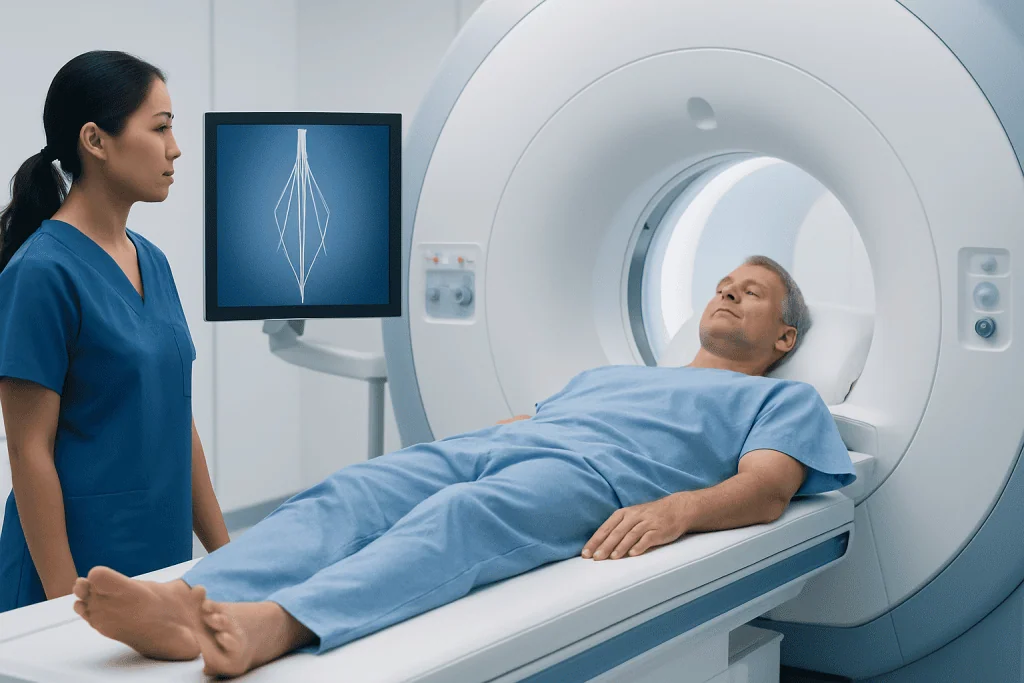
Deep vein thrombosis (DVT) is a blood clot, usually in a deep vein of the leg or pelvis. If part of the clot travels to the lungs, it can cause a pulmonary embolism. IVC filters are not a replacement for anticoagulant treatment in most people; instead, they are considered in selected situations, such as a high risk of pulmonary embolism when anticoagulation is temporarily unsafe.
A specialist may consider a filter for a person with recent or active venous thromboembolism who has major bleeding, needs urgent surgery, has a very high bleeding risk, or cannot take anticoagulants for another medical reason. The decision is individualized and considers the reason for the clot, expected duration of risk, and whether the filter can later be retrieved.
There are permanent and retrievable filters. A retrievable device may be removed once protection is no longer needed, which can reduce the chance of long-term filter-related complications. Ongoing care often involves collaboration between vascular medicine, interventional radiology, haematology, and the clinician managing the underlying clotting condition.
For information about related clotting conditions, patients can read about deep vein thrombosis and pulmonary embolism.
Can I Get an MRI Right After Getting an IVC Filter?

Whether an MRI can be performed immediately after IVC filter placement depends on the specific filter and its manufacturer’s MRI labelling. Many contemporary filters are MRI conditional at 1.5 Tesla (T) and 3 Tesla (T), sometimes with no required waiting interval, but this cannot be generalized to every device or clinical situation.
The term “MRI conditional” means that a device can be scanned safely only when stated requirements are met. These may include the magnet strength, scan duration, radiofrequency exposure limits, or patient position. An MRI safety check should also consider other implants, such as stents, pacemakers, clips, joint replacements, or medication pumps.
If MRI is clinically urgent, the ordering clinician and radiology team can review the implant record, procedure report, filter card, and manufacturer documentation. If the device cannot be identified promptly, another imaging method may sometimes be more appropriate until the information is confirmed.
Patients should not delay urgent medical care solely because they have an IVC filter. Instead, they should state that they have a filter and provide all available details so the care team can make a safe, timely imaging plan.
Are There Any IVC Filters That Are Not MRI Safe?
Yes. MRI compatibility varies by device, particularly among older filters or filters for which documentation is unavailable. Some may have restrictions, while others may not have sufficient safety data for a particular MRI setting. For this reason, an IVC filter MRI safety list from a general website is not a substitute for device-specific verification by the imaging provider.
Radiology staff commonly check the filter’s brand, model, material, date of placement, and MRI labelling. They may obtain this information from the patient’s implant card, hospital records, procedure report, or the clinician who inserted the filter. If needed, an X-ray or other imaging may help identify the filter type.
Patients should avoid relying on the phrase “MRI safe” alone. Current implant terminology distinguishes between MR Safe, MR Conditional, and MR Unsafe. Most implanted metallic devices that can be scanned have conditional requirements, meaning the MRI team must follow the manufacturer’s instructions carefully.
This process is especially important for IVC filter MRI safety at 3T. A filter that is acceptable at 1.5T may have different requirements at 3T, so scanner strength must be part of the review.
Do IVC Filters Have Metal?
Yes. IVC filters are generally made from medical-grade metal alloys, such as stainless steel, nitinol, cobalt-chromium alloys, or titanium-containing materials. These materials allow the filter to expand, anchor in the vena cava, and withstand blood flow. The precise composition differs between devices.
Having metal in the body does not automatically mean MRI is unsafe. The main questions are whether the magnetic field could affect the device, whether radiofrequency energy could cause meaningful heating, and whether the device creates image artefact. In most cases, an IVC filter is located far from the brain, spine, or joints being scanned, but it can affect images of the abdomen or nearby structures.
Image artefact is not usually harmful, but it can make a small area around the filter harder to interpret. Radiologists can often adapt MRI sequences or recommend an alternative test if the filter interferes with the diagnostic question.
IVC Filter Placement: Step by Step, Benefits and Risks
IVC filter placement is usually performed by an interventional radiologist or vascular specialist using image guidance. Before the procedure, the team reviews the reason for the filter, medications, allergies, kidney function when contrast may be needed, and bleeding risk. The patient may receive local anaesthetic and, in some cases, medication to help them relax.
A small catheter is inserted into a vein, commonly through the neck or groin. Using fluoroscopy or ultrasound guidance, the clinician advances the catheter into the inferior vena cava and releases the filter in the planned position. The catheter is removed and pressure or a small dressing is applied to the access site.
The intended benefit is short- or long-term protection from pulmonary embolism in carefully selected patients. Potential complications include bleeding or bruising at the access site, infection, filter tilt, movement, fracture, vein blockage, clot formation around the filter, or difficulty retrieving a retrievable device. These risks are weighed against the risks of untreated clotting.
Patients considering or preparing for the procedure can learn more about IVC filter placement.
What Are the Safety Precautions to Be Taken After Inserting an IVC Filter?
After placement, patients should follow the discharge instructions provided by their care team. This commonly includes keeping the insertion site clean and dry as advised, avoiding strenuous activity for the recommended period, and monitoring for increasing pain, swelling, redness, bleeding, or drainage at the access site.
It is important to continue anticoagulant medicines exactly as instructed. Some people receive an IVC filter because anticoagulation is temporarily unsuitable, while others may restart medication when it becomes safe. A filter does not treat an existing clot and does not remove the need for individualized clot-prevention care.
Patients should keep their implant card or procedure information and show it before future MRI scans, surgeries, or invasive procedures. They should also attend scheduled follow-up appointments. If a retrievable filter was placed, the team should reassess whether it can be removed once the risk of pulmonary embolism has decreased.
Recovery is often brief, with many people returning to usual light activities within a day or two, depending on their underlying illness and access site. The condition that led to filter placement may require longer treatment, monitoring, or rehabilitation.
When to Seek Medical Care
Patients should contact their medical team promptly if they develop worsening pain, redness, swelling, persistent bleeding, fever, or drainage at the insertion site. They should also seek advice if they have questions about an upcoming MRI, cannot locate their implant information, or have missed a planned follow-up visit for a retrievable filter.
Emergency assessment is needed for symptoms that may suggest a serious clotting or bleeding problem, including sudden shortness of breath, chest pain, coughing blood, fainting, a very rapid heartbeat, or new severe swelling or pain in a leg. These symptoms can have several causes, but they should not be managed at home.
Before any MRI, patients should tell the radiology staff that they have an IVC filter, even if it was placed many years ago. Acibadem International’s multidisciplinary specialists and JCI-accredited hospitals support international patients requiring assessment and treatment for venous clotting conditions and IVC filter care.
Frequently asked questions
Is an IVC filter safe in an MRI?
Many IVC filters can be scanned safely under specific MRI conditions, but safety depends on the exact model and the scanner settings. The radiology department should verify the filter’s manufacturer instructions before the scan. Patients should bring their implant card or procedure details when available.
Can I have a 3T MRI with an IVC filter?
Some filters are approved for MRI at 3T, while others may have different conditions or may require a different imaging approach. The answer cannot be based on the presence of a filter alone. The MRI team must confirm the device’s MRI labelling and follow the stated conditions.
What information does the radiology team need before MRI?
Helpful details include the filter brand and model, the date and hospital of placement, and an implant card or procedure report. The team also needs to know about other implants, previous surgeries, and whether the scan is planned at 1.5T or 3T. If details are unavailable, staff may contact the placing facility or use other records to identify the device.
Can an MRI move an IVC filter?
For filters that are appropriately labelled and scanned under the manufacturer’s conditions, meaningful movement is not expected. However, this is why the device must be identified and screened before MRI. Uncertain or older devices need individualized review rather than assumptions.
How long should an IVC filter stay in place?
The duration depends on why the filter was placed and whether it is permanent or retrievable. Retrievable filters should be reviewed regularly and removed when protection from pulmonary embolism is no longer needed, if removal is appropriate. The treating specialist can advise on timing based on the patient’s clotting and bleeding risks.
Does an IVC filter set off airport security?
An IVC filter is small and implanted deep inside the body, so it does not usually cause problems at airport security. It is still sensible to keep implant information available for medical appointments and emergencies. Airport screening procedures do not replace medical MRI safety screening.
References
- U.S. Food and Drug Administration
- American College of Radiology
- Society of Interventional Radiology
- National Heart, Lung, and Blood Institute
- Radiological Society of North America
This article is for general information only and is not a substitute for professional medical advice. Please consult a qualified doctor about your individual situation.
Explore treatments in Turkey — costs, top hospitals & a free quote
JCI-accredited · board-certified surgeons · reply within 24h
Add us as a Preferred Source to see more of our trusted health content across Google Search, AI Overviews and Discover.