Lisfranc Operation: Procedure, Recovery and Results

A Lisfranc operation may use plates, screws or other fixation devices to realign the midfoot, or fusion to permanently stabilize damaged joints. Surgery is generally considered when the injury is displaced, unstable, involves fractures, or is unlikely to heal well with immobilization alone.
Key Takeaways
- A Lisfranc operation may use plates, screws or other fixation devices to realign the midfoot, or fusion to permanently stabilize damaged joints.
- Surgery is generally considered when the injury is displaced, unstable, involves fractures, or is unlikely to heal well with immobilization alone.
- Most people avoid putting weight on the foot for several weeks, while full recovery can take many months.
- Pain is expected early after surgery but is managed with anesthesia, prescribed pain relief, elevation and a structured aftercare plan.
- Accurate diagnosis and timely treatment can help reduce the risk of ongoing pain, deformity and post-traumatic arthritis.
A Lisfranc operation is performed to restore alignment and stability in the midfoot when a Lisfranc injury causes displaced bones, torn supporting ligaments, or joint instability. It commonly involves internal fixation or fusion, and recovery requires a carefully staged period of non-weight-bearing, gradual walking, and rehabilitation.
Overview: what is a Lisfranc operation?
A Lisfranc operation is surgery to treat an injury affecting the Lisfranc joint complex, a group of small joints and strong ligaments in the middle of the foot. This area connects the long bones leading to the toes with the bones of the arch. It is essential for transferring force during standing, walking and push-off.
The operation aims to restore the normal position of the bones and create a stable midfoot. Depending on the pattern and severity of injury, an orthopedic surgeon may use screws, plates or other devices to hold the joints in place, known as open reduction and internal fixation (ORIF). In some cases, especially with severe joint damage or arthritis risk, fusion of selected midfoot joints may be recommended.
Lisfranc injuries can occur after a twist, fall, sports injury or road traffic accident. They range from ligament tears to fracture-dislocations. Because even a subtle injury may affect foot mechanics, assessment by a foot and ankle orthopedic specialist is important when a Lisfranc injury is suspected.
Who may need surgery and how is the injury assessed?
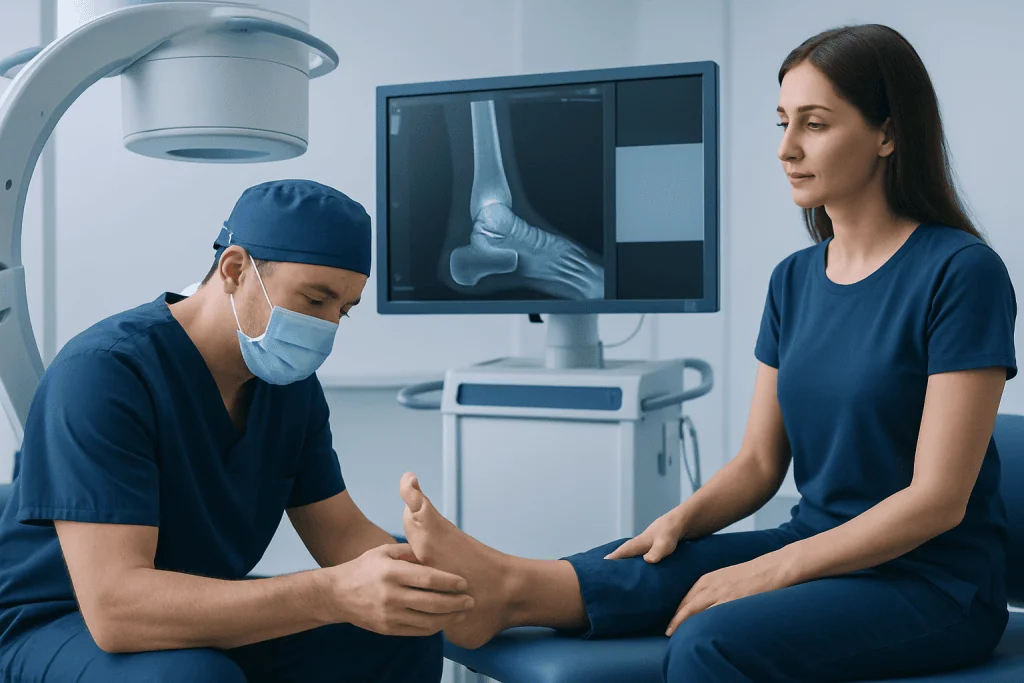
Not every Lisfranc injury requires an operation. A stable injury with no displacement may sometimes be treated with a cast or boot and strict protection from weight-bearing. Surgery is more often advised when imaging shows bones or joints that have moved out of alignment, widening between key bones, fractures, joint instability, or a midfoot that cannot maintain its position under stress.
Evaluation begins with a discussion of how the injury happened, symptoms and medical history. The clinician examines swelling, bruising, tenderness and the ability to bear weight. Bruising on the sole of the foot can be an important clue. Weight-bearing X-rays, when safe and appropriate, can show subtle separation or malalignment that may not be visible on standard images.
CT scans can define fracture patterns and support surgical planning, while MRI may help identify ligament damage when X-rays are inconclusive. The surgical decision also considers activity needs, bone quality, skin condition, circulation, diabetes, smoking status and other health factors that can affect healing.
Midfoot injury assessment may also involve rehabilitation planning, particularly where an individual has had a complex fracture or needs support returning to sport, work or daily mobility.
How does a Lisfranc operation work?

The two main surgical approaches are fixation and fusion. With fixation, the surgeon realigns the joints and secures them using screws, plates, small wires or other implants. These devices hold the bones in their corrected position while healing takes place. Whether hardware is later removed depends on the fixation method, symptoms, healing and the surgeon’s recommendation.
Fusion, also called arthrodesis, joins one or more damaged joints permanently. The surgeon prepares the joint surfaces and stabilizes them with hardware so that bone grows across the joint. Fusion is often considered when there is substantial cartilage injury, severe instability, primary arthritis, or a high likelihood of painful arthritis after fixation. Fusing selected midfoot joints generally aims to preserve as much useful foot movement as possible while eliminating painful movement at injured joints.
The procedure is usually carried out under general anesthesia, sometimes with a regional nerve block to support pain control after surgery. A small incision or a combination of incisions is made over the top or inner side of the foot. The surgeon restores alignment using direct visualization and X-ray guidance, places the selected fixation or fusion hardware, and closes the skin before applying a splint, cast or protective boot.
For patients considering operative care, foot and ankle surgery may include individualized assessment of the injury pattern, operative approach and rehabilitation needs.
Is a Lisfranc surgery a major surgery?
A Lisfranc operation is considered a significant orthopedic procedure because it treats a weight-bearing joint complex that is important for daily mobility. It requires anesthesia, surgical realignment or fusion, internal hardware in many cases, and a substantial period of protected recovery. However, the exact extent of surgery varies widely, from fixation of a limited ligament injury to reconstruction of several fractured or dislocated joints.
It is usually planned after swelling has improved enough for the skin to be operated on safely. In more severe injuries, temporary stabilization may occasionally be needed before definitive repair. The procedure may be performed as day surgery or require a short hospital stay, depending on the injury, operation, pain control, mobility and general health.
As with any operation, patients should discuss their individual anesthetic and surgical risks with the treating team. A clear understanding of weight-bearing restrictions and practical support at home is especially important, since walking on the operated foot too early can compromise the repair.
What are the benefits and risks of a Lisfranc operation?
The main potential benefit of a Lisfranc operation is restoration of stable, well-aligned midfoot anatomy. This can improve the chance of comfortable walking and reduce the likelihood of progressive arch collapse, chronic instability or arthritis caused by poorly aligned joints. Surgery is intended to protect long-term foot function, but outcomes depend on the original injury severity, cartilage damage, healing and adherence to rehabilitation advice.
Risks include wound healing problems, infection, bleeding, nerve irritation or numbness, blood clots, persistent swelling, stiffness, ongoing pain, delayed bone healing and problems with screws or plates. Even after technically successful surgery, post-traumatic arthritis may develop because the joint cartilage can be damaged at the time of injury. Some people later need hardware removal or additional surgery.
Smoking and nicotine exposure can impair bone and wound healing. Diabetes, poor circulation, osteoporosis and certain medications may also influence planning and recovery. The care team can advise on risk reduction, medication adjustments and signs that need prompt review.
In complex cases, coordinated orthopedic care and rehabilitation can support recovery. Acibadem International’s multidisciplinary specialists and JCI-accredited hospitals evaluate and treat orthopedic conditions for international patients.
How long does it take to walk normally after Lisfranc surgery?
Walking normally after Lisfranc surgery often takes several months, not just a few weeks. Many patients are instructed not to bear weight through the operated foot for approximately 6 to 8 weeks, although the exact period depends on the repair, healing progress and surgeon’s protocol. During this stage, crutches, a walker, knee scooter or wheelchair may be used.
After follow-up examination and imaging show adequate healing, weight-bearing is usually reintroduced gradually in a boot. Physical therapy may help restore ankle and foot movement, strength, balance and walking mechanics. Transitioning to a supportive shoe commonly follows, but the pace should be individualized.
Some people can walk more comfortably in regular footwear by around 3 to 6 months, while returning to a fully natural gait, demanding work or sport may take 6 to 12 months or longer. Residual swelling and stiffness can persist for many months, particularly after high-energy injuries or fusion. Following the surgeon’s instructions is more important than reaching a particular calendar milestone.
How long does it take to recover from a Lisfranc injury after surgery?
Recovery from a Lisfranc injury after surgery is a staged process. The early weeks focus on protecting the surgical repair, controlling swelling and keeping the incision clean and dry as instructed. Elevating the foot, using prescribed pain treatment and attending scheduled wound checks can support this phase.
Once the surgeon confirms that healing is progressing, rehabilitation gradually shifts toward safe loading, range-of-motion exercises and rebuilding strength. Formal physiotherapy may be recommended, especially for people returning to physically demanding employment, running or pivoting sports. The rehabilitation plan differs for fixation and fusion, as well as for simple and complex injuries.
Many people notice meaningful improvement over 6 to 12 months. Recovery may be longer if there were multiple fractures, extensive ligament damage, complications, associated injuries or delayed healing. Some degree of foot stiffness, reduced tolerance for high-impact activity or intermittent swelling can remain even when the foot is stable and functional.
Supportive rehabilitation may be part of physical therapy and rehabilitation, with goals based on mobility, work demands and everyday activities.
How painful is a Lisfranc surgery?
It is normal to have pain and throbbing after a Lisfranc operation, particularly during the first few days when swelling is greatest. Pain experience varies between individuals and is influenced by the injury itself, the extent of surgery and personal health factors. The surgical team develops a pain-management plan that may include anesthesia techniques, prescribed medicines and non-medication measures.
Elevation above heart level when resting, protecting the foot from pressure and following instructions about the splint or cast can help control swelling-related discomfort. A regional nerve block may provide temporary numbness and pain relief immediately after surgery; patients should follow safety advice until sensation and strength return.
Pain should gradually become more manageable rather than intensify. Severe pain not relieved by the prescribed plan, increasing tightness in the cast or splint, new numbness, blue or pale toes, fever, wound drainage or spreading redness should be reported promptly to the surgical team.
When to seek medical care
Urgent medical assessment is appropriate after a foot injury when there is inability to bear weight, marked midfoot swelling, deformity, severe tenderness, numbness, a cold or discolored foot, or bruising on the sole. These features can occur with a Lisfranc injury and should not be dismissed as a simple sprain. Early diagnosis helps guide appropriate treatment.
After surgery, patients should contact their care team urgently for worsening rather than improving pain, fever, increasing redness or drainage from the incision, calf pain or swelling, shortness of breath, chest pain, or changes in toe color, temperature or sensation. These symptoms need timely evaluation.
Follow-up appointments and repeat X-rays are a key part of care. They allow the surgeon to assess alignment, healing and the appropriate timing for progression from non-weight-bearing to walking and rehabilitation.
Frequently asked questions
What is the difference between Lisfranc fixation and fusion?
Fixation realigns the injured joints and holds them with hardware while healing occurs. Fusion permanently joins selected damaged joints to prevent painful movement. The most suitable approach depends on the injury pattern, joint cartilage damage, stability and the person's functional needs.
Will screws or plates need to be removed after Lisfranc surgery?
Not all hardware needs to be removed. Some surgeons may recommend removal of certain screws after healing, while plates and fusion hardware are often left in place unless they cause symptoms or complications. The decision is individualized and based on follow-up findings.
Can a Lisfranc injury heal without surgery?
Some nondisplaced and stable Lisfranc injuries can heal with strict immobilization and avoidance of weight-bearing. Injuries with displacement, instability or fractures often need surgery to restore alignment. Imaging and specialist assessment are important because subtle instability can be missed.
When can someone drive after Lisfranc surgery?
Driving should not resume until the person can safely control the vehicle, is no longer using sedating pain medication, and has been cleared by the surgeon. Recovery may take longer for surgery on the right foot because braking requires reliable strength and reaction time. Insurance and local legal requirements should also be considered.
Can someone return to sport after a Lisfranc operation?
Many people can return to recreational or competitive activity after rehabilitation, but the timeline varies considerably. Running, jumping and cutting sports are usually delayed until healing, strength, balance and sport-specific function have been assessed. Some people may need to modify high-impact activities if pain, stiffness or arthritis persists.
What footwear is helpful after Lisfranc surgery?
Once a clinician approves regular shoes, supportive footwear with a stable sole and adequate room for swelling is often helpful. In some cases, an orthotic insert or stiff-soled shoe may reduce stress across the midfoot. Recommendations should be tailored by the orthopedic and rehabilitation team.
References
- American Academy of Orthopaedic Surgeons
- American Orthopaedic Foot & Ankle Society
- National Institute for Health and Care Excellence
- Mayo Clinic
This article is for general information only and is not a substitute for professional medical advice. Please consult a qualified doctor about your individual situation.
Joint and spine care in Turkey — expert assessment & treatment
JCI-accredited · board-certified surgeons · reply within 24h
Add us as a Preferred Source to see more of our trusted health content across Google Search, AI Overviews and Discover.

More from the Health Library



Related Specialists

Dr. Gamze Uçar
Pulmonary Medicine
Prof. Dr. Mehmet Özkan
Cardiovascular Surgery
Assoc. Prof. Dr. Oğuz Durakbaşa
Orthopedic Surgery & Traumatology
Dr. İletişim | 444 55 44
Emergency Service