Sarcoma Specialist: An Evidence-Based Patient Guide
Sarcomas are uncommon and diverse, so expert pathology review and multidisciplinary planning are especially important. A biopsy should usually be planned by the team that may perform definitive surgery, because the biopsy route can affect later treatment.
Key Takeaways
- Sarcomas are uncommon and diverse, so expert pathology review and multidisciplinary planning are especially important.
- A biopsy should usually be planned by the team that may perform definitive surgery, because the biopsy route can affect later treatment.
- Treatment may include surgery, radiotherapy, systemic therapy or a carefully selected combination, depending on sarcoma type and stage.
- Follow-up is individualized because recurrence risk varies by tumor location, grade, size and treatment received.
- A new or enlarging lump, particularly one that is deep or larger than about 5 cm, should be medically assessed promptly.
A sarcoma specialist is a doctor with focused experience in diagnosing and treating sarcomas, rare cancers that begin in bone or soft tissues such as muscle, fat, nerves, blood vessels and connective tissue. Early referral to a specialist team can help ensure that imaging, biopsy planning, pathology review and treatment are coordinated in the right order.
What does a sarcoma specialist do?
A sarcoma specialist is usually a medical oncologist, orthopedic oncologist, surgical oncologist or other cancer physician whose practice includes significant experience with sarcoma. Sarcoma is not one single disease: it is a group of many different tumors that can arise in bone and soft tissues. Because the subtypes can behave differently and may require different treatments, care is commonly organized through a multidisciplinary sarcoma team.
This team may include radiologists, pathologists, surgeons, medical oncologists, radiation oncologists, rehabilitation professionals, nurses and supportive-care clinicians. The specialist helps bring these perspectives together, confirms the diagnosis, reviews whether cancer has spread, and recommends a treatment plan tailored to the individual’s tumor and general health.
Online resources, including sarcoma eMedicine articles, can be useful introductions but cannot replace expert review of scans and tissue samples. Published evidence, current guidelines and, in selected circumstances, a sarcoma case report may inform clinical discussion; however, a case report alone does not establish the best treatment for an individual patient.
Why specialist sarcoma evaluation matters
Sarcomas can resemble common non-cancerous conditions, such as lipomas, cysts, sports injuries or benign bone lesions. At the same time, some benign tumors can resemble sarcoma on initial imaging. A structured sarcoma evaluation aims to identify the exact tumor type while avoiding procedures that could complicate later surgery.
Pathology is particularly important. A pathologist experienced in sarcoma may use microscopy, immunohistochemical tests and molecular testing to classify the tumor. In some cases, specialist review changes or refines an initial diagnosis, which can alter the recommended treatment approach.
Before treatment begins, the multidisciplinary team considers the tumor’s location, size, depth, grade, subtype and whether it has spread. The person’s age, other health conditions, physical function and priorities also matter. This approach supports sarcomas evidence based diagnosis and management rather than a one-size-fits-all plan.
For people travelling for care, Acibadem International’s multidisciplinary specialists and JCI-accredited hospitals provide sarcoma diagnosis and treatment planning for international patients.
Symptoms and when to seek medical care
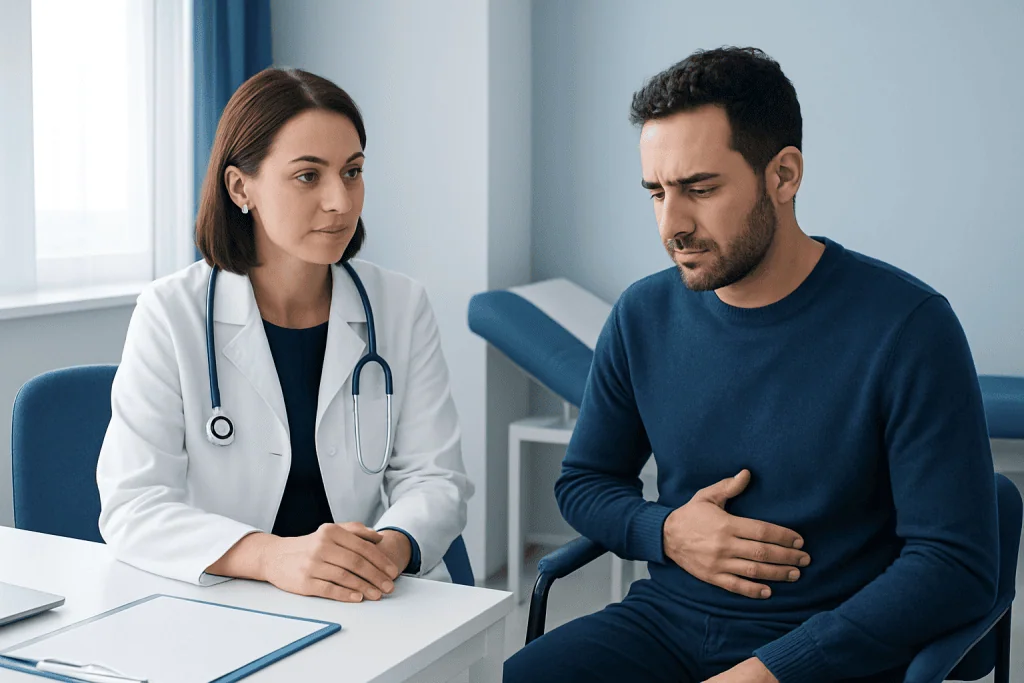
Soft-tissue sarcoma often causes a lump that may be painless at first. A lump that is enlarging, firm, deep beneath the skin, painful, or larger than approximately 5 cm deserves assessment. Sarcomas in the abdomen or pelvis may cause fullness, persistent abdominal discomfort, altered bowel habits, early fullness after meals or unexplained weight loss, although these symptoms have many possible causes.
Bone sarcoma may cause persistent bone pain, pain that becomes more noticeable at night, swelling near a bone or joint, limping, or an unexplained fracture. These symptoms do not necessarily mean cancer, but they should not be ignored when they persist or worsen.
Medical care should be sought promptly for a rapidly growing lump, severe or escalating pain, weakness or numbness near a mass, unexplained bleeding, or symptoms suggesting a fracture. A primary care clinician can arrange initial assessment, while suspicious findings should be referred to a sarcoma specialist team without unnecessary delay.
How diagnosis and staging are performed
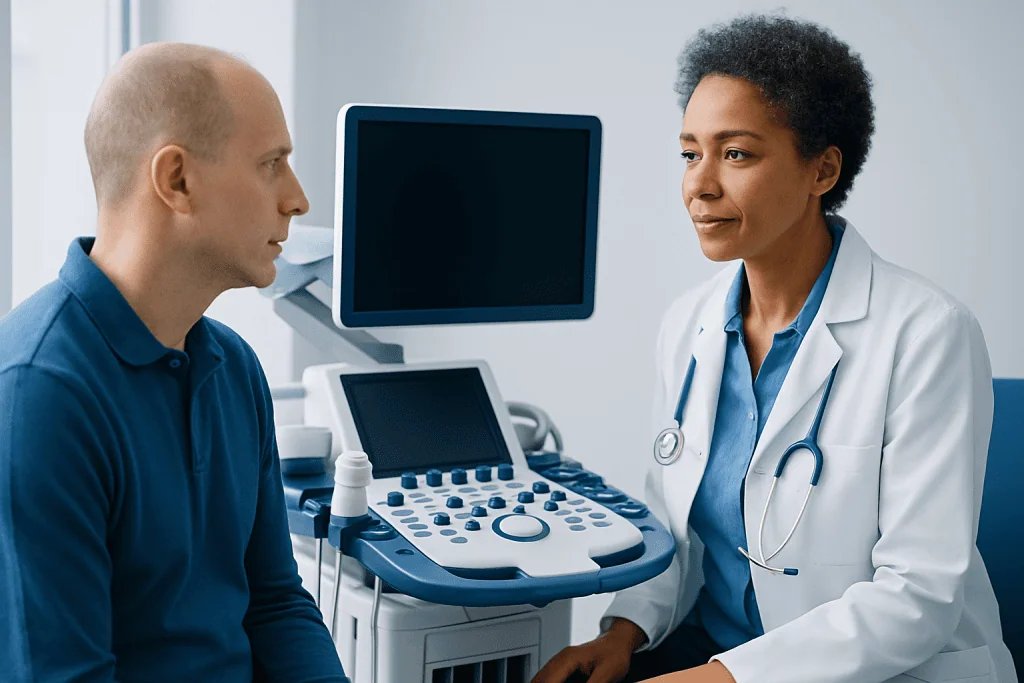
Assessment starts with a medical history and examination. Imaging is selected according to the site of concern. Ultrasound may help assess a superficial lump, while magnetic resonance imaging (MRI) is commonly used for soft-tissue tumors in an arm or leg. Computed tomography (CT), X-ray, PET imaging or bone scanning may be appropriate in specific situations, particularly for staging or evaluating tumors in the chest, abdomen, pelvis or bone.
If imaging suggests sarcoma, a core needle biopsy is often used to collect tissue. The biopsy is not simply a preliminary procedure: its route should be chosen carefully so that it can be removed during later surgery if needed. For this reason, biopsy planning should ideally occur after review by the treating sarcoma team. An unplanned excision of a suspicious lump can make subsequent treatment more complex.
Staging assesses the extent of disease. It may include chest imaging because some sarcomas can spread to the lungs, as well as other tests guided by subtype and symptoms. The team then discusses the findings in a multidisciplinary meeting and explains the diagnosis, stage, treatment goals and available options in understandable terms.
Treatment options: how a sarcoma care plan works
Surgery is the main treatment for many localized sarcomas. The aim is to remove the tumor with an appropriate margin of surrounding tissue while preserving function whenever safely possible. Depending on the site, surgery may involve orthopedic, general, thoracic, vascular, plastic or neurosurgical expertise. Reconstructive procedures may be considered when tissue, bone, nerves or blood vessels need repair.
Radiotherapy uses carefully planned radiation to reduce the risk of local recurrence in selected soft-tissue sarcomas. It may be given before surgery, after surgery, or occasionally as the main local treatment when surgery is not suitable. Planning considers likely benefit alongside effects on wound healing, nearby organs, long-term stiffness and other possible side effects.
Systemic treatment includes chemotherapy, targeted therapy, immunotherapy or other medicines, depending on the sarcoma subtype, stage and treatment objective. It may be used before surgery to shrink a tumor, after local treatment in selected settings, or to control advanced disease. Not every sarcoma responds to the same medicines, which is another reason diagnosis at subtype level matters.
Clinical trials may be discussed when available and appropriate. Good care also includes pain management, nutrition, physiotherapy, occupational therapy, emotional support and fertility discussions when treatment could affect reproductive health.
Procedure pathway, candidacy, recovery and possible risks
For a person who is a candidate for surgery, the usual pathway is: specialist assessment; appropriate imaging; planned biopsy and pathology review; staging; multidisciplinary discussion; pre-operative preparation; surgery; pathology assessment of the removed tumor; and follow-up treatment or surveillance where needed. Some people receive radiotherapy or systemic treatment before surgery, while others proceed directly to an operation. The sequence is individualized.
Candidacy depends on whether the tumor can be removed safely, its location and relationship to important structures, whether there is spread to other sites, the expected benefit of local treatment and the person’s overall health. Even when a tumor is advanced, specialist care can often offer options to relieve symptoms, preserve function and control disease.
Recovery after surgery ranges from days to several weeks or longer. It depends on the operation, reconstruction, use of radiotherapy, wound healing and rehabilitation needs. The care team provides instructions about wound care, activity, pain control, mobility exercises and when to contact the hospital. Returning to work, sport or usual daily activities is gradual and varies widely.
Potential benefits include removal or control of cancer, symptom relief and preservation of function. Possible risks include bleeding, infection, blood clots, wound problems, nerve injury, stiffness, swelling, loss of strength and changes in appearance or function. Radiotherapy and systemic treatments have their own potential side effects, which should be discussed before treatment begins.
Surveillance, self-care and questions to ask
After treatment, follow-up visits look for recurrence, treatment effects and changes in physical or emotional wellbeing. Sarcoma surveillance guidelines generally recommend risk-adapted follow-up rather than identical schedules for everyone. The frequency of examinations and imaging depends on tumor subtype, grade, size, site, stage and the time since treatment. Follow-up commonly includes physical examination and chest imaging, with local imaging when clinically appropriate.
Between visits, people should report a new lump, persistent or increasing pain, unexplained cough or breathlessness, unusual bleeding, significant fatigue or other new symptoms. These symptoms are often caused by conditions other than recurrence, but timely review is sensible. Maintaining activity within the rehabilitation plan, eating adequately, avoiding tobacco and attending appointments can support general recovery.
Useful questions for a sarcoma specialist include: What is the exact sarcoma subtype and grade? Has the pathology been reviewed by a sarcoma pathologist? What are the goals of treatment? Is surgery recommended, and will radiotherapy or systemic treatment be needed? What effects on mobility, work, fertility or daily life should be expected? What follow-up plan is appropriate?
A second opinion from a sarcoma center can be reasonable, especially before major surgery or when the diagnosis is uncertain. It should complement, not delay, necessary care. The treating team can help patients gather imaging, pathology slides and reports for review.
Frequently asked questions
What type of doctor is a sarcoma specialist?
A sarcoma specialist may be a medical oncologist, orthopedic oncologist, surgical oncologist or radiation oncologist with focused expertise in sarcoma. Because sarcomas can affect different body tissues, treatment is usually planned by a multidisciplinary team rather than one doctor alone.
When should a lump be assessed for possible sarcoma?
A lump should be assessed if it is growing, painful, firm, deep, fixed in place or larger than about 5 cm. Most lumps are not sarcoma, but these features warrant medical evaluation and may require imaging.
Why should a biopsy be planned by a sarcoma team?
The biopsy route can influence the surgery needed later, because tissue along the biopsy track may need to be removed with the tumor. Planning it with the treating team helps obtain an adequate sample while protecting future treatment options.
Does every sarcoma require chemotherapy?
No. Chemotherapy is helpful for some sarcoma subtypes and situations, but it is not routinely used for every person with sarcoma. The decision depends on the exact subtype, grade, tumor location, stage and treatment goals.
Can sarcoma be treated without surgery?
Surgery is often important for localized sarcoma, but it may not be appropriate or possible in every situation. Radiotherapy, systemic therapy, ablation procedures or symptom-focused care may be considered depending on the type and extent of disease.
How long does sarcoma follow-up continue?
Follow-up commonly continues for several years and may be longer for some sarcoma types. The schedule is individualized because the likelihood and pattern of recurrence differ according to the tumor and treatment received.
References
- World Health Organization
- National Cancer Institute
- European Society for Medical Oncology
- National Comprehensive Cancer Network
- American Cancer Society
This article is for general information only and is not a substitute for professional medical advice. Please consult a qualified doctor about your individual situation.
Joint and spine care in Turkey — expert assessment & treatment
JCI-accredited · board-certified surgeons · reply within 24h
Add us as a Preferred Source to see more of our trusted health content across Google Search, AI Overviews and Discover.