Peripheral IV Catheter: An Evidence-Based Patient Guide

A peripheral IV catheter provides short-term access to the bloodstream without surgery. The needle used for insertion is removed immediately, leaving only a soft plastic catheter in the vein.
Key Takeaways
- A peripheral IV catheter provides short-term access to the bloodstream without surgery.
- The needle used for insertion is removed immediately, leaving only a soft plastic catheter in the vein.
- Site selection, hand hygiene, skin antisepsis and regular assessment are central to safe IV care.
- Mild tenderness or bruising can occur, but increasing pain, redness, swelling or leaking should be reported promptly.
- The catheter should be removed when it is no longer needed or if complications are suspected.
A peripheral IV catheter is a short, flexible tube placed into a vein, usually in the hand or arm, to provide temporary access for fluids, medicines, contrast dye or blood products. It is a common hospital procedure performed using infection-prevention and monitoring practices designed to make treatment safe and comfortable.
Overview: What Is a Peripheral IV Catheter?
A peripheral IV catheter, also called a peripheral intravenous catheter or IV cannula, is a thin, flexible plastic tube inserted into a vein near the surface of the skin. It is most often placed in the hand, forearm or arm. Health professionals use it to give fluids, medications, antibiotics, anesthesia-related medicines, contrast material for some scans, or blood products when appropriate.
The device is intended for short-term intravenous treatment. During insertion, a small needle guides the catheter into the vein. Once the catheter is correctly positioned, the needle is removed and only the soft plastic tube remains. The catheter is secured with a dressing and connected to a cap, extension tubing or an IV line.
A peripheral IV is different from a central venous catheter, which reaches a larger, deeper vein and may be used when treatment is expected to last longer or when certain medicines require central access. The clinical team selects the most suitable type of access based on the treatment, vein condition and expected duration of care.
How a Peripheral IV Works and Who May Need One
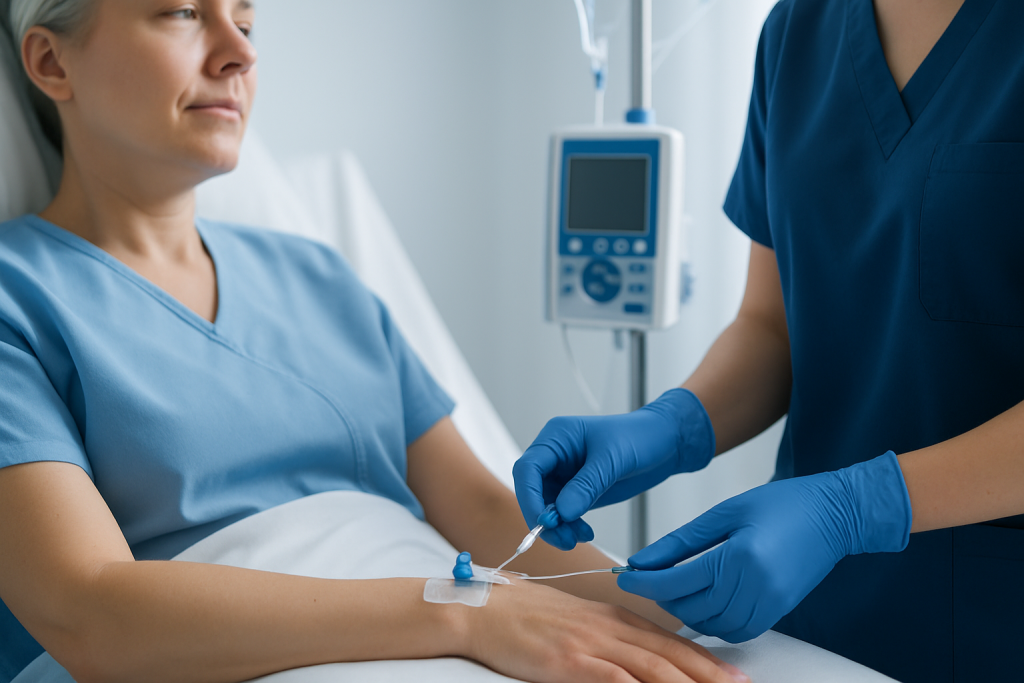
A peripheral IV catheter creates a controlled route from an IV bag or syringe into the bloodstream. Fluids and medicines travel through tubing into the catheter and then into the vein. A healthcare professional may flush the device with sterile saline to help confirm that it remains open and usable between treatments.
People may need a peripheral IV during emergency care, surgery, childbirth, treatment for dehydration, infection, pain, nausea or other acute health needs. It may also be used in outpatient settings for a planned infusion or diagnostic procedure. Having an IV does not necessarily mean a person is seriously ill; it is often simply the most reliable way to provide treatment.
Not every treatment requires an IV. When medicines, fluids and nutrition can be safely taken by mouth, this may be preferred. For those with difficult-to-access veins, fragile skin, a history of multiple IV attempts, or a need for longer-term therapy, clinicians may consider ultrasound-guided placement or another vascular-access device.
- Common sites include veins on the hand, forearm and upper arm.
- Lower-limb placement is generally avoided in adults unless there is a specific clinical reason.
- The smallest suitable catheter is usually chosen for the prescribed treatment.
What Happens During IV Insertion?

Before the procedure, the clinician confirms the person’s identity, explains why IV access is needed and checks for relevant concerns, such as allergies to adhesives or antiseptic products. They assess veins and choose a site that is likely to support the planned treatment while allowing comfort and movement where possible.
Hand hygiene is performed, and the skin is cleaned with an appropriate antiseptic and allowed to dry. A tourniquet may be placed above the selected area to make the vein easier to see or feel. The clinician then inserts the needle-and-catheter device through the skin and into the vein. A brief pinch, pressure or stinging sensation is common.
When the catheter is in the vein, the needle is withdrawn, the catheter is secured, and a transparent sterile dressing is applied. The IV may be connected to tubing and checked for proper flow. Staff should label and document the device and reassess it regularly throughout its use.
Evidence-based practice for peripheral intravenous catheter management emphasizes appropriate hand hygiene, skin preparation, aseptic technique, securement and ongoing review of whether the IV is still needed. These elements of IV insertion evidence based practice help reduce avoidable complications.
Benefits, Comfort and the Recovery Timeline
The main benefit of a peripheral IV catheter is timely delivery of treatment when oral medicines or fluids are unsuitable, insufficient or too slow to act. It may avoid repeated needle sticks when several doses or fluids are needed over a short period. It also enables the care team to adjust treatment quickly in a monitored setting.
After insertion, most people can use the arm gently and continue usual activities permitted by their medical condition. The dressing should remain clean, dry and firmly attached. It is normal to feel aware of the catheter at first, but persistent pain or a burning sensation during an infusion should not be ignored.
The length of time an IV remains in place depends on the person’s treatment needs, the condition of the site and local peripheral intravenous catheter guidelines. Rather than replacing every catheter automatically at a fixed interval, many services assess the IV regularly and remove or replace it when it is no longer needed or when there is a clinical indication.
Once removed, a nurse or clinician applies gentle pressure and a small dressing. Minor bruising or tenderness may last for a few days. The small puncture site typically closes quickly, and no special recovery period is usually required.
Risks and Safety Monitoring
Peripheral IV catheters are widely used and generally safe, but no invasive procedure is entirely without risk. Common minor effects include brief pain at insertion, a small bruise, or slight bleeding. Some people require more than one attempt if veins are small, deep, mobile or difficult to access.
Possible complications include infiltration, when non-irritating fluid enters surrounding tissue; extravasation, when a medicine that can damage tissue leaks outside the vein; phlebitis, which is inflammation of a vein; blockage of the catheter; and local infection. Rarely, a more serious bloodstream infection can develop. Care teams monitor for these concerns and remove the IV when indicated.
Patients can support safe care by telling staff promptly about pain, burning, coolness, swelling, dampness under the dressing, redness, drainage, or an infusion that seems uncomfortable. They should not adjust tubing, remove the dressing or reconnect equipment themselves unless specifically instructed by a qualified professional.
IV evidence based practice also includes daily review of ongoing need. Removing an unnecessary catheter is one of the simplest and most important ways to reduce the chance of IV-related complications.
Caring for an IV During Treatment
While a peripheral IV catheter is in place, the person should avoid pulling, twisting or catching the tubing on clothing or bedding. The arm can often be moved normally, but the care team may recommend limiting repetitive bending if the catheter is near a joint. A protective cover may be used during bathing according to local instructions.
The dressing should be kept clean and dry. If it becomes loose, wet, visibly soiled or blood-stained, the clinical team should be told so it can be assessed and changed using sterile technique. Staff will also check that the catheter is secure, the skin looks healthy and the prescribed infusion is running correctly.
Evidence based practice peripheral IV insertion and maintenance does not rely on one step alone. It combines careful device choice, correct insertion technique, trained staff, clear communication and repeated site assessment. Patients are encouraged to ask what the IV is for, how long it may be needed and whom to notify if they notice a change.
When to Seek Medical Care
In a hospital, clinic or infusion center, patients should tell a nurse or doctor immediately if the IV site becomes painful, red, warm, swollen, firm, pale, cool, numb, leaking or visibly streaked along the vein. They should also report fever, chills or feeling suddenly unwell, particularly if these symptoms occur during an infusion.
After leaving care, medical advice should be sought promptly for worsening redness, swelling, pus-like drainage, increasing tenderness, fever or red streaks near a former IV site. Urgent assessment is appropriate for severe swelling, trouble breathing, facial swelling, fainting or other sudden severe symptoms.
Acibadem International’s multidisciplinary specialists and JCI-accredited hospitals provide assessment and treatment for international patients who require hospital-based intravenous therapies and vascular access planning. The appropriate team can explain the purpose of IV treatment, monitor the catheter and address any concerns during care.
Frequently asked questions
Does getting a peripheral IV catheter hurt?
Most people feel a brief pinch or sting when the needle enters the skin. After the needle is removed, the flexible catheter should not cause significant pain. Ongoing pain, burning or throbbing should be reported to a healthcare professional.
How long can a peripheral IV catheter stay in?
The duration depends on treatment needs, the condition of the IV site and the policies of the healthcare setting. It is commonly removed when it is no longer needed or earlier if there are signs of a problem. Regular assessment helps determine whether it remains safe to use.
Can a peripheral IV catheter cause infection?
Infection is possible but uncommon when appropriate insertion and maintenance practices are followed. Hand hygiene, skin antisepsis, sterile equipment and prompt removal of unnecessary IVs reduce risk. Redness, warmth, drainage, fever or chills should be reported promptly.
What is the difference between infiltration and phlebitis?
Infiltration occurs when IV fluid leaks from the vein into nearby tissue, often causing swelling, coolness or discomfort. Phlebitis is inflammation of the vein and may cause tenderness, redness, warmth or a firm cord-like area. Both require assessment by a healthcare professional.
Can a person shower with an IV catheter?
This depends on the type of dressing, location of the IV and instructions from the care team. In general, the dressing and tubing should be kept dry and protected from direct water. Patients should ask their nurse or clinician before showering.
Why might an IV need to be replaced?
An IV may need replacement if it stops working, becomes painful, leaks, is dislodged, or shows signs of inflammation or infection. It may also be changed if treatment requirements change. Replacing a problematic catheter helps protect the vein and supports safe treatment.
References
- Centers for Disease Control and Prevention
- World Health Organization
- Infusion Nurses Society
- National Institute for Health and Care Excellence
- Royal College of Nursing
This article is for general information only and is not a substitute for professional medical advice. Please consult a qualified doctor about your individual situation.
Explore treatments in Turkey — costs, top hospitals & a free quote
JCI-accredited · board-certified surgeons · reply within 24h
Add us as a Preferred Source to see more of our trusted health content across Google Search, AI Overviews and Discover.