Ulnar Wrist Pain Treatment: How It Works, Results and What to Expect

Pain on the ulnar side of the wrist can arise from tendons, ligaments, cartilage, bones, or joint wear. A clinical examination and, when needed, imaging help identify the cause before treatment is chosen.
Key Takeaways
- Pain on the ulnar side of the wrist can arise from tendons, ligaments, cartilage, bones, or joint wear.
- A clinical examination and, when needed, imaging help identify the cause before treatment is chosen.
- Bracing and guided rehabilitation are common first-line treatments, particularly after a minor injury or overuse.
- Recovery time varies widely, from days to weeks for mild irritation to months after a significant ligament injury or surgery.
- Sudden deformity, severe swelling, numbness, weakness, or pain after a fall should be assessed promptly.
Ulnar wrist pain treatment depends on what is causing pain on the little-finger side of the wrist. Many people improve with temporary activity modification, a supportive brace, pain-relief measures, and hand therapy; persistent structural problems may need injections or surgery.
Overview: How ulnar wrist pain treatment works
Ulnar wrist pain treatment is designed to reduce pain, protect injured structures, restore wrist movement, and help the person return safely to work, sport, and everyday hand use. The ulnar side is the side of the wrist closest to the little finger. Because several small bones, tendons, ligaments, nerves, and cartilage structures meet in this area, the most effective treatment depends on the underlying diagnosis.
Common causes include a sprain, tendon inflammation, a triangular fibrocartilage complex (TFCC) injury, joint instability, arthritis, a fracture, or ulnar impaction syndrome, in which the ulna places excess load on the wrist cartilage. Some cases begin after a fall or twisting injury, while others develop gradually with repetitive gripping, racquet sports, weight training, computer use, or manual work.
Initial care is often non-surgical. It may include relative rest, a brace or splint, cold therapy in the early phase of injury, and a structured rehabilitation plan. If symptoms continue, a hand and wrist specialist may recommend further imaging, an injection in selected circumstances, or an operation to repair or address a specific structural problem.
Symptoms, causes and who may need treatment
Ulnar-sided wrist pain may feel sharp with twisting, pushing up from a chair, opening a jar, or bearing weight through the hand. Some people notice clicking, catching, swelling, reduced grip strength, stiffness, or a sense that the wrist is unstable. Pain may be localized near the bony prominence at the end of the ulna or deeper within the wrist joint.
TFCC injuries are an important cause of pain in this location. The TFCC is a group of cartilage and ligaments that helps stabilize the wrist and allows forearm rotation. It can tear following trauma or wear gradually over time. Other possible causes include extensor carpi ulnaris tendon irritation or instability, inflammation around the tendon sheath, arthritis, ganglion cysts, nerve irritation, and fractures that may not be obvious immediately after an injury.
People may be more likely to need assessment if pain follows a fall onto an outstretched hand, occurs with repeated loading or rotation, or does not settle after avoiding aggravating activity. Previous wrist injury, inflammatory arthritis, joint hypermobility, and work or sports involving forceful gripping can also contribute. A diagnosis is important because treatments that help a tendon problem may not adequately support an unstable joint or fracture.
Diagnosis and candidacy for different treatments
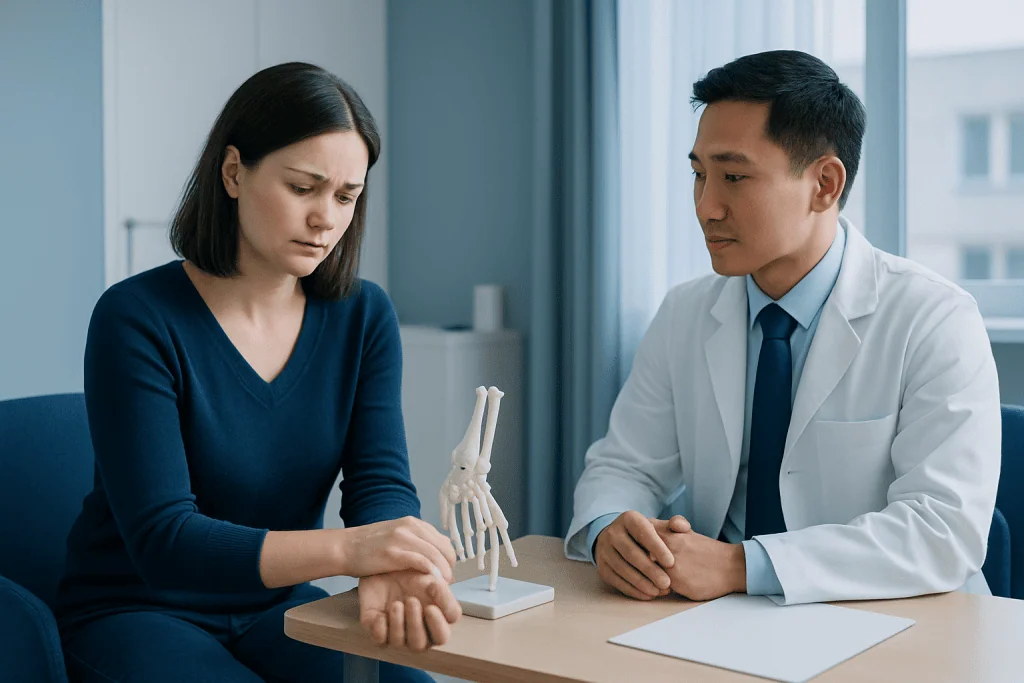
A clinician usually begins by asking how the pain started, which movements trigger it, and whether there are mechanical symptoms such as clicking or weakness. Examination may include checking swelling, tenderness, wrist and forearm movement, grip strength, tendon stability, and signs of nerve involvement. Comparing both wrists can be useful.
Plain X-rays can identify fractures, changes in joint alignment, arthritis, and differences in bone length that may contribute to ulnar impaction. Depending on the suspected cause, ultrasound, magnetic resonance imaging (MRI), or computed tomography (CT) may also be considered. MRI can be especially useful for evaluating soft tissues such as the TFCC, tendons, and ligaments, although imaging findings are always interpreted alongside symptoms and examination results.
Non-surgical management is generally appropriate for many mild to moderate overuse injuries, stable sprains, and some degenerative TFCC changes. Procedures are considered when there is a repairable tear, persistent instability, a displaced fracture, mechanical symptoms, or ongoing pain and functional limitation despite an adequate course of conservative care. Decisions should reflect the person’s diagnosis, daily demands, general health, and recovery goals.
Treatment options and what a procedure involves
Conservative treatment commonly starts with reducing or modifying activities that provoke pain, especially repetitive twisting, heavy lifting, push-ups, and forceful gripping. A removable wrist brace or a more restrictive splint may be recommended for a limited period to reduce strain while tissues recover. A clinician may also suggest suitable pain-relief options based on the person’s health history. Hand therapy can then address movement, gradual strengthening, grip mechanics, and a safe return to activity.
For selected patients, an image-guided or specialist-delivered injection may be used to reduce inflammation or clarify the source of pain. It is not appropriate for every cause of ulnar wrist pain, and repeated injections may not be advisable around some tendon structures. The treating clinician will discuss the likely benefit, alternatives, and potential risks before recommending one.
If surgery is needed, the exact procedure depends on the diagnosis. Wrist arthroscopy uses a small camera and instruments through tiny incisions to inspect the joint and, in some cases, trim damaged tissue or repair a TFCC tear. Other operations may stabilize a tendon, fix a fracture, or alter bone alignment when ulnar impaction is the main problem. These procedures are planned by an orthopedic hand and wrist surgeon, often after imaging and a trial of non-surgical treatment.
A typical surgical pathway includes pre-operative assessment, anesthesia planning, the procedure itself, and a period of splinting or casting afterward. Follow-up appointments monitor wound healing and wrist stability, and hand therapy usually begins at a time chosen to protect the repair while preventing excessive stiffness. Hand surgery may be considered when a structural wrist problem requires specialist operative care.
Benefits, risks and recovery timeline
The main benefits of treatment are reduced pain, better grip and wrist function, and improved confidence using the hand. With non-surgical care, improvement is often gradual rather than immediate. A person may need to avoid the activity that caused symptoms while continuing gentle movements or exercises recommended by a clinician. Returning too quickly to heavy loading can prolong recovery.
For a mild sprain or tendon irritation, symptoms may improve within a few weeks, although complete return to demanding sport or manual work can take longer. A TFCC injury or more substantial ligament problem may require several weeks of immobilization and rehabilitation. Recovery after surgery is variable and may take several months, particularly when a repaired structure must heal before strengthening begins.
Risks vary by treatment. Bracing can lead to stiffness if used longer than advised, while injections may cause temporary soreness and have specific tissue-related risks that should be discussed individually. Surgical risks include infection, bleeding, stiffness, persistent pain, nerve or tendon injury, incomplete symptom relief, and the need for further treatment. These complications are uncommon but are part of informed decision-making.
Progress is usually measured by pain levels, range of motion, grip strength, and the ability to perform relevant activities. A rehabilitation team can adapt exercises and work or sports restrictions over time. Acibadem International’s multidisciplinary specialists and JCI-accredited hospitals can assess and treat wrist conditions for international patients when specialist care is needed.
Should I wear a brace for ulnar wrist pain?
A brace can be helpful for ulnar wrist pain when it limits movements that irritate an injured tendon, ligament, or joint. It is commonly used after a minor injury, during painful activities, or for a defined period after a diagnosis such as a stable TFCC injury. The ideal style and duration depend on the suspected cause; some conditions need a simple wrist support, while others may require a splint that also limits forearm rotation.
A brace should not be used as a substitute for assessment after a significant injury or when pain is persistent. Wearing it continuously for too long without guidance may contribute to stiffness and weakness. A clinician or hand therapist can advise when to wear it, when to begin weaning from it, and which exercises are safe during recovery.
How long does it take for ulnar wrist pain to heal?
Healing time depends on the cause, the severity of injury, how well the wrist can be protected, and the demands placed on the hand. Mild overuse-related pain or a minor sprain may settle over several days to a few weeks with activity changes and appropriate support. More significant tendon, cartilage, or ligament injuries often need several weeks to months of rehabilitation.
If surgery is required, the wrist may be protected in a splint or cast initially, followed by a progressive therapy program. Recovery of strength and comfort with weight-bearing may continue for months. Persistent pain does not always mean treatment has failed, but it should be reviewed so the diagnosis, rehabilitation plan, and activity progression can be reassessed.
Is ulnar wrist pain serious, and how can it heal faster?
Ulnar wrist pain is often related to a manageable strain or overuse problem, but it can sometimes signal a fracture, ligament injury, tendon instability, or joint condition that benefits from prompt assessment. It is more concerning when it follows a fall or direct blow, causes marked swelling or deformity, is associated with numbness or weakness, or prevents normal use of the hand.
The safest way to support recovery is to protect the wrist from painful loading, follow a clinician’s advice about bracing, and complete a gradual rehabilitation program rather than trying to push through pain. Early gentle movement may be appropriate in some cases, but it should not be forced. Good sleep, balanced nutrition, and avoiding tobacco also support tissue healing, while return to sport or heavy work should be based on function rather than a fixed date.
There is no reliable shortcut for healing a damaged ligament or cartilage structure. Seeking an accurate diagnosis, following the treatment plan consistently, and addressing technique or ergonomic contributors are the most practical ways to avoid delayed recovery and recurrent symptoms.
Frequently asked questions
What causes pain on the little-finger side of the wrist?
Pain on the little-finger side of the wrist may come from a sprain, TFCC injury, tendon inflammation or instability, arthritis, a fracture, or ulnar impaction. Because these conditions can feel similar, an examination is useful when pain persists, recurs, or began after trauma.
How long does it take for ulnar wrist pain to heal?
A mild overuse injury may improve within a few weeks, while a ligament, cartilage, or tendon injury can take weeks to months. Healing also depends on whether the wrist can be protected from activities that repeatedly trigger pain. A clinician can give a more individualized estimate after identifying the cause.
Should I wear a brace for ulnar wrist pain?
A wrist brace can reduce painful movement and support recovery in some injuries. The type of brace and how long to use it should be guided by the diagnosis, since too much immobilization can cause stiffness. A healthcare professional can help select appropriate support.
Is ulnar wrist pain serious?
It is often not dangerous, especially when related to mild overuse, but it should not be ignored if it is severe, persistent, or follows an injury. Prompt assessment is particularly important for deformity, major swelling, loss of strength, numbness, or an inability to move or use the wrist normally.
How can ulnar wrist pain heal faster?
Recovery is best supported by avoiding painful loading, using a brace only as advised, and following a gradual hand therapy plan when recommended. Trying to return to heavy gripping, lifting, or sport too soon can delay healing. An accurate diagnosis is important because the right treatment differs between tendon, ligament, cartilage, and bone injuries.
Will ulnar wrist pain require surgery?
Most people do not need surgery and improve with non-surgical management. Surgery may be considered for certain tears, instability, fractures, or ongoing symptoms that have not improved with appropriate conservative care. A hand and wrist surgeon can explain whether an operation is likely to help in an individual case.
References
- American Academy of Orthopaedic Surgeons
- American Society for Surgery of the Hand
- National Institute of Arthritis and Musculoskeletal and Skin Diseases
- Mayo Clinic
This article is for general information only and is not a substitute for professional medical advice. Please consult a qualified doctor about your individual situation.
Joint and spine care in Turkey — expert assessment & treatment
JCI-accredited · board-certified surgeons · reply within 24h
Add us as a Preferred Source to see more of our trusted health content across Google Search, AI Overviews and Discover.

More from the Health Library



Related Specialists

Fzt. Fırat Çenberci
Physical Medicine & Rehabilitation
Prof. Dr. Ömer Faruk Taşer
Orthopedic Surgery & Traumatology
Dr. Zeynep Sağırkaya
Occupational Medicine
Dr. Bayarmaa Khishigsuren
Medical Oncology