Ir Procedure: An Evidence-Based Patient Guide

Interventional radiology combines real-time imaging with minimally invasive techniques to diagnose and treat many conditions. Most IR procedures use a small catheter, needle, tube, or device guided by ultrasound, X-ray, CT, or MRI.
Key Takeaways
- Interventional radiology combines real-time imaging with minimally invasive techniques to diagnose and treat many conditions.
- Most IR procedures use a small catheter, needle, tube, or device guided by ultrasound, X-ray, CT, or MRI.
- The procedure length, anesthesia needs, and recovery time depend on the condition and treatment performed.
- IR procedures are generally less invasive than open surgery, but they still carry procedure-specific risks.
- A specialist team considers imaging findings, symptoms, overall health, and treatment goals before recommending an IR procedure.
An IR procedure is an image-guided treatment or diagnostic procedure performed by an interventional radiologist, usually through a small puncture in the skin rather than a large surgical incision. It can help treat blood vessel conditions, cancer, pain, blocked drainage pathways, bleeding, and other health concerns while supporting a less invasive recovery when appropriate.
IR Procedure Overview
An IR procedure is a procedure performed in interventional radiology, a medical specialty that uses imaging to guide instruments inside the body. An interventional radiologist may use ultrasound, fluoroscopy (live X-ray), computed tomography (CT), or other imaging methods to place a needle, catheter, drain, stent, filter, or treatment device with precision.
Many interventional radiology procedures are minimally invasive. Rather than making a large incision, the clinician often enters through a tiny opening in the skin, commonly in the wrist, groin, neck, abdomen, or back. This approach may reduce tissue disruption and can allow some patients to return home sooner than they would after an open operation.
However, IR is not one single treatment. It includes diagnostic procedures, such as image-guided biopsies, and treatments for a wide range of concerns, including narrowed or blocked blood vessels, abnormal bleeding, fluid collections, some cancers, painful fractures, and urinary or biliary obstruction. The most appropriate option depends on the individual diagnosis and should be decided with the relevant medical and surgical specialists.
How an IR Procedure Works
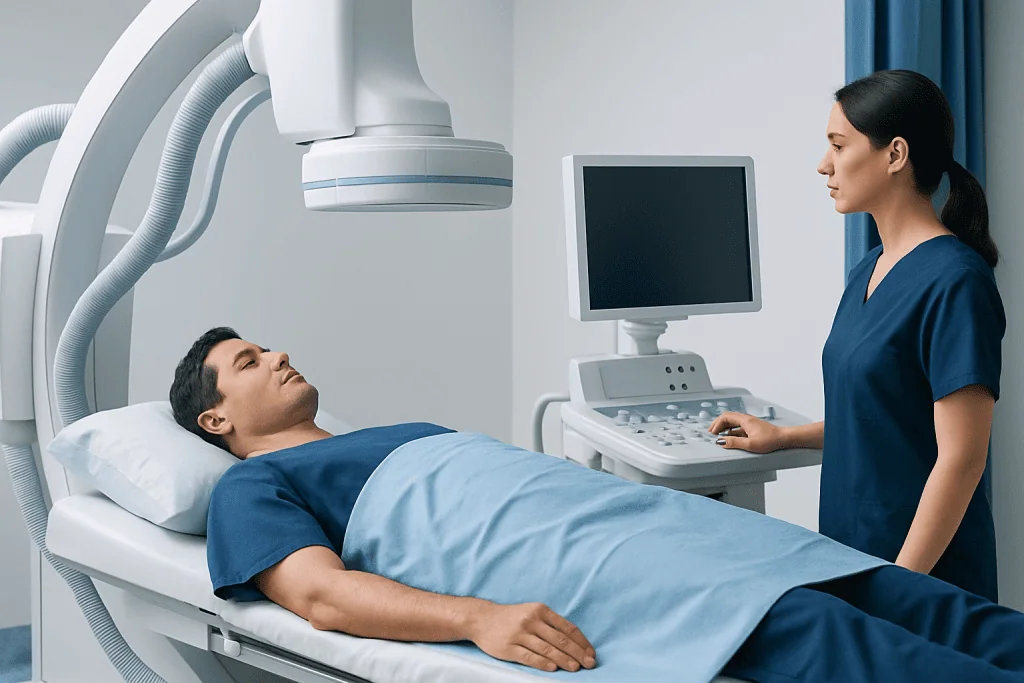
Interventional radiology relies on imaging to show the clinician where an instrument is located in relation to blood vessels, organs, tumors, bones, or other structures. Before starting, the team reviews scans, laboratory results, medications, allergies, and the reason for treatment. This planning helps identify the safest route to the treatment area.
During the procedure, a thin flexible tube called a catheter may be inserted into a blood vessel and guided toward the target area. In other procedures, a needle may be guided directly through the skin to collect tissue, drain an infection, treat a tumor, or place a tube. Contrast dye may be used during certain procedures to make blood vessels or organs visible on X-ray imaging.
Depending on the procedure, the radiologist may widen a narrowed vessel with a balloon, place a stent, block selected blood vessels, remove a clot, deliver treatment directly to a target, drain fluid, or obtain a biopsy sample. The imaging guidance is central to accuracy, but it does not remove all risks. Patients should discuss expected benefits, alternatives, and possible complications with their care team.
What Are Common IR Procedures?

Common IR procedures include image-guided biopsies, drainage of abscesses or fluid collections, placement of feeding tubes, nephrostomy tubes for kidney drainage, and biliary drainage procedures for blocked bile ducts. These interventions can support diagnosis, relieve symptoms, treat infection, or prepare a patient for additional care.
Vascular IR procedures include angiography, angioplasty, stent placement, embolization, catheter-directed clot treatment, and placement or removal of certain vascular devices. For example, embolization intentionally blocks blood flow to a selected area and may be used to control bleeding, treat some vascular abnormalities, or manage certain tumors. A person with narrowed arteries may be assessed for angioplasty or stent treatment when clinically appropriate.
In cancer care, image-guided approaches may be used for biopsies, ablation of selected tumors, or targeted intra-arterial therapies. Other examples include vertebral augmentation for carefully selected painful vertebral compression fractures and uterine artery embolization for some people with symptomatic fibroids. An individual IR procedure example may look very different from another, which is why general IR procedure guides cannot replace personalized medical advice.
- Image-guided biopsy
- Abscess or fluid drainage
- Angiography, angioplasty, and stenting
- Embolization to manage bleeding or selected tumors
- Catheter-based treatment of some blood clots
- Tumor ablation or targeted cancer treatment
Who May Be a Candidate for Interventional Radiology?
A person may be considered for an interventional radiology procedure when imaging-guided treatment could address a specific medical problem effectively and with less invasiveness than another approach. Candidates may include people with blocked vessels, abnormal bleeding, infections requiring drainage, vascular conditions, certain cancers, or obstruction affecting the kidneys, bile ducts, or digestive system.
Candidacy is individualized. The team considers the diagnosis, location and extent of disease, symptoms, prior treatments, kidney function, blood counts, infection status, bleeding risk, pregnancy status where relevant, and the person’s ability to lie still or receive sedation. Some people may need a different procedure, medication-based care, open surgery, or combined treatment involving several specialties.
Patients should tell the care team about all medicines, including blood thinners, diabetes medicines, supplements, and non-prescription drugs. They should also report previous reactions to contrast material, anesthesia, latex, or medications. An interventional radiologist may work closely with vascular surgeons, oncologists, gastroenterologists, urologists, neurologists, and other clinicians to develop an appropriate plan.
Step-by-Step: What Happens During an IR Procedure?
Preparation usually begins with registration, a review of medical history, consent, and checks of vital signs. The team may place an intravenous line and take blood tests if needed. Patients may be asked not to eat or drink for a specified period before procedures involving sedation or anesthesia; the exact instructions should come from the treating hospital.
In the procedure room, the skin is cleaned and covered with sterile drapes. Many IR procedures use local anesthetic to numb the access area, often with moderate sedation to reduce discomfort and anxiety. Some procedures require deeper sedation or general anesthesia, especially when they are longer, more complex, or performed in children or patients unable to remain still.
The interventional radiologist guides the needle or catheter using imaging, performs the planned treatment or diagnostic step, and then removes or secures the device as needed. Pressure, a closure device, or a small dressing may be used at the entry site. An IR procedure note is created for the medical record and typically documents the indication, imaging guidance, treatment performed, medications or sedation used, findings, and immediate outcome.
Afterward, the patient is monitored in a recovery area. The team checks comfort, blood pressure, pulse, the access site, and any symptoms that could suggest a complication. Before discharge, patients receive individualized instructions about activity, wound care, medicines, eating and drinking, follow-up, and symptoms that require prompt attention.
How Long Does an Interventional Radiology Procedure Take?
The length of an interventional radiology procedure varies widely. A straightforward image-guided biopsy or drainage may take less than an hour, while complex vascular, cancer, or clot-related procedures can take several hours. Time spent in the hospital is usually longer than the treatment itself because preparation, imaging review, anesthesia or sedation, and recovery monitoring are also needed.
Some procedures are completed as outpatient care, allowing the patient to go home the same day with a responsible adult if sedation was used. Others require overnight observation or a longer hospital stay, particularly when treatment is urgent, complex, associated with significant illness, or followed by close monitoring.
The care team can provide the best estimate after reviewing the intended procedure and a person’s health needs. Delays may occur if additional imaging is needed, if anatomy is more complex than expected, or if safety checks indicate that the procedure should be adjusted or postponed.
Benefits, Risks, and Recovery Timeline
Potential benefits of an IR procedure include targeted treatment, smaller skin openings, less disruption of surrounding tissue, and potentially shorter recovery compared with an open operation. In some situations, it can also provide an alternative when conventional surgery would carry greater risk. The expected benefit depends on the exact condition being treated and cannot be assumed for every person.
Risks vary by procedure but may include bruising, bleeding, infection, pain, blood vessel injury, blood clots, unintended injury to nearby structures, reactions to contrast material or medicines, and incomplete treatment. Radiation exposure is relevant to procedures using fluoroscopy or CT; clinicians use the lowest practical exposure while obtaining the images needed for safe treatment. Serious complications are uncommon for many procedures but remain possible.
Recovery may range from several hours after a simple biopsy to days or weeks after a more involved intervention. Mild soreness, fatigue, or bruising around an access site can occur. Patients should follow activity restrictions carefully, especially after a vascular procedure, and should not drive after sedation until they have been cleared according to discharge instructions.
Evidence-based IR procedure guidelines emphasize careful patient selection, infection prevention, appropriate imaging, medication review, and follow-up. At Acibadem International, multidisciplinary specialists in JCI-accredited hospitals can assess and treat suitable international patients using interventional radiology alongside other medical and surgical options.
Are IR Procedures Considered Surgery?
IR procedures are often described as minimally invasive procedures rather than traditional open surgery. They usually involve a needle puncture or very small skin incision, with imaging used to guide treatment through the body. Many are performed by interventional radiologists rather than surgeons.
That said, an IR procedure is still an invasive medical intervention and should be approached with the same attention to consent, preparation, safety, and follow-up as any other procedure. Some interventions may replace surgery, while others complement surgery or are used when surgery is not the best option.
Whether an IR procedure is classified as surgery for insurance, employment, recovery planning, or medical documentation can vary by healthcare system and procedure. The treating hospital can explain how a planned intervention is categorized and what restrictions or recovery expectations apply.
When to Seek Medical Care
Before a planned IR procedure, patients should contact the care team if they develop fever, new illness, worsening breathing problems, a possible pregnancy, or changes in medicines, particularly blood thinners. They should also ask for clarification if pre-procedure fasting, medication, transport, or aftercare instructions are unclear.
After an IR procedure, urgent medical assessment is important for heavy or persistent bleeding, rapidly enlarging swelling at the access site, severe or worsening pain, fever or chills, chest pain, shortness of breath, fainting, new weakness, confusion, or a cold, pale, painful limb. These symptoms do not always indicate a serious complication, but they should not be ignored.
For less urgent concerns, such as increasing redness, drainage, persistent nausea, unexpected bruising, or pain that is not improving, patients should contact their procedural team promptly. Follow-up imaging or clinic visits may be needed to confirm that the treatment worked as intended and to plan any next steps.
What Is the Highest Salary for an Interventional Radiologist?
Interventional radiologist compensation is not a medical measure of expertise or of the quality of a specific procedure. It varies substantially by country, healthcare system, years of experience, employment model, workload, subspecialty focus, call responsibilities, and whether the physician works in an academic, public, or private setting.
There is no single reliable worldwide “highest salary” figure because compensation data change over time and are reported differently across regions. Patients choosing care may find it more useful to ask about the physician’s relevant training, experience with the proposed procedure, team support, safety processes, expected outcomes, and follow-up arrangements.
A qualified interventional radiologist should be appropriately licensed and credentialed for the procedure being offered. The patient can also ask whether their case will be reviewed in a multidisciplinary meeting and what alternatives are available.
Frequently asked questions
Is an IR procedure painful?
Many IR procedures are performed with local anesthetic, which numbs the skin and deeper tissues at the access site. Sedation may also be used, so patients may feel pressure or brief discomfort rather than sharp pain. The care team monitors comfort throughout the procedure and can explain the planned pain-control approach beforehand.
Do patients stay awake during interventional radiology procedures?
Many patients are awake but relaxed with local anesthetic and moderate sedation. Others may need deep sedation or general anesthesia, depending on the procedure, their medical condition, and their ability to remain still. The anesthesia plan is individualized and discussed before treatment.
How should a patient prepare for an IR procedure?
Preparation may include blood tests, imaging review, medication adjustments, and fasting instructions. Patients should provide a complete medicine list and report allergies, kidney problems, bleeding disorders, pregnancy, and prior reactions to contrast or anesthesia. The hospital will give procedure-specific instructions, including whether someone must accompany the patient home.
What is the recovery time after an IR procedure?
Recovery can be as short as a few hours for some outpatient procedures, while more complex treatments may require an overnight stay or several weeks of gradual recovery. The timeline depends on the treatment, the access site, the underlying condition, and whether complications occur. The procedural team provides individualized activity and wound-care advice.
Can an IR procedure replace open surgery?
In selected situations, interventional radiology can offer an alternative to open surgery or can reduce the need for a larger operation. It is not suitable for every condition, and some patients benefit most from surgery, medication, or combined care. A multidisciplinary assessment helps determine the safest and most effective approach.
What should patients ask before an IR procedure?
Helpful questions include why the procedure is recommended, what alternatives exist, what type of anesthesia or sedation is planned, and what recovery is expected. Patients may also ask about important risks in their individual case, follow-up arrangements, and who to contact if concerns arise after discharge. Clear answers support informed consent and practical preparation.
References
- Society of Interventional Radiology
- Radiological Society of North America
- National Institute of Diabetes and Digestive and Kidney Diseases
- National Cancer Institute
- World Health Organization
This article is for general information only and is not a substitute for professional medical advice. Please consult a qualified doctor about your individual situation.
Heart care in Turkey — expert evaluation and treatment
JCI-accredited · board-certified surgeons · reply within 24h
Add us as a Preferred Source to see more of our trusted health content across Google Search, AI Overviews and Discover.