Diaper Rash Treatment for Babies: How It Works, Results and What to Expect

Frequent diaper changes, gentle cleaning and a thick barrier layer are the foundation of care for most diaper rashes. Improvement often starts within two to three days when the skin is kept clean, dry and protected.
Key Takeaways
- Frequent diaper changes, gentle cleaning and a thick barrier layer are the foundation of care for most diaper rashes.
- Improvement often starts within two to three days when the skin is kept clean, dry and protected.
- A rash involving skin folds, bright-red spots around the edges or no response to basic care may need medical assessment for yeast or another cause.
- Avoid scrubbing, scented wipes and powders, which can further irritate damaged skin.
- Seek prompt medical advice for fever, blisters, pus, spreading redness, open sores or a baby who seems unwell.
Diaper rash treatment for babies usually focuses on reducing moisture and friction, protecting the skin with a barrier ointment, and allowing the area to dry. Most mild irritant rashes begin to improve within a few days, but a persistent, severe or unusual rash should be assessed by a clinician.
Overview: How Diaper Rash Treatment for Babies Works
Diaper rash treatment for babies works by breaking the cycle of moisture, friction and irritation that damages delicate skin. The main steps are changing wet or soiled diapers promptly, cleaning gently, drying the area without rubbing, and applying a protective barrier ointment or paste at each change. This creates a physical shield between the skin and urine or stool while the skin repairs itself.
Diaper dermatitis is common in infancy and is often an irritant rash rather than an infection. It may cause red, tender-looking skin on the buttocks, genitals, lower abdomen or upper thighs. A baby may be more unsettled during diaper changes, but many rashes are mild and respond well to consistent home care.
Not every rash in the diaper area has the same cause. Yeast, bacterial infection, eczema, psoriasis, allergic contact reactions and certain viral illnesses can look similar. For this reason, a rash that is severe, spreads, affects skin folds, or does not start improving with routine care should be reviewed by a pediatric clinician.
Who Benefits and When Medical Treatment Is Needed

Most babies with a mild diaper rash are suitable for simple supportive care at home. This is especially true when the rash appears after longer contact with a wet or soiled diaper and the baby is otherwise feeding, behaving and sleeping as usual. Parents and caregivers can begin skin-protective measures straight away.
A clinician may recommend a different approach when the rash has features of yeast infection, such as intense redness involving the creases of the groin and small red bumps or pustules around the main rash. In that situation, an antifungal medicine may be prescribed or recommended. A clinician may also consider a short, carefully selected anti-inflammatory treatment or other medicine when appropriate; these should not be used without professional advice in the diaper area.
Babies at higher risk of diaper irritation include those with frequent loose stools, recent antibiotic exposure, skin sensitivity, teething-related changes in stool frequency, or a history of eczema. Risk does not mean a rash is unavoidable, but it makes regular skin protection especially helpful.
Step-by-Step: A Gentle Diaper Rash Care Routine
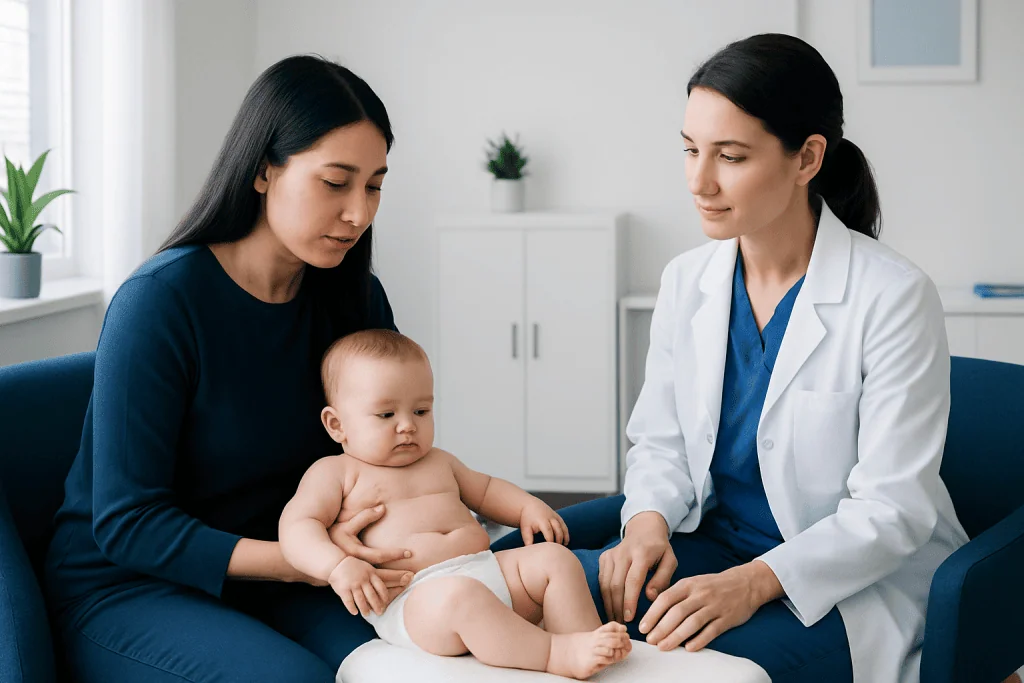
At each diaper change, begin by washing hands. Remove the diaper and gently clean stool or urine from the skin using lukewarm water and a soft cloth, cotton pad, or fragrance-free, alcohol-free wipe. Avoid scrubbing, as inflamed skin can be easily damaged. If possible, rinse rather than repeatedly wipe when stool is difficult to remove.
Pat the area dry with a soft towel, or let it air-dry briefly. Then apply a generous visible layer of a barrier product, commonly one containing zinc oxide or petrolatum. The product does not need to be completely removed at every change; gently remove only soiled material and reapply the barrier layer. This reduces unnecessary rubbing on healing skin.
Place a clean diaper on loosely enough to allow air circulation while still preventing leaks. Choose an absorbent diaper and change it whenever it is wet or soiled, including after bowel movements. If a new wipe, diaper brand, soap or lotion appears to have triggered irritation, stopping that product may help identify and avoid a contact reaction.
- Use plain water or mild, fragrance-free cleansing products.
- Apply barrier ointment or paste regularly, especially overnight.
- Do not use talcum powder, cornstarch powder, scented products or harsh antiseptics unless specifically advised by a clinician.
- Do not use adult creams, antifungal products or steroid creams unless a healthcare professional has recommended them for the baby.
How Long Does It Take for a Diaper Rash to Work?
Parents often mean, “How long does diaper rash treatment take to work?” With regular diaper changes, gentle cleansing and barrier protection, a mild irritant rash often begins to look less red and less sore within two to three days. Complete healing can take several days, particularly if the skin was very inflamed or if the baby continues to have frequent stools.
If there is no clear improvement after two to three days of careful home treatment, it is sensible to contact a pediatric clinician. A different diagnosis, including yeast infection or allergic irritation, may be contributing. Treatment directed at the underlying cause can then be considered safely.
Healing is not always perfectly linear. The skin may look better after a day, then become temporarily more irritated after a loose stool or a long period in a wet diaper. Consistency with the care routine is more important than trying many products at once.
What Heals a Diaper Rash Fastest?
The fastest safe approach is usually not a single product but a consistent combination of frequent diaper changes, gentle cleaning, short periods of drying, and a thick protective barrier layer. Keeping stool and urine away from the skin reduces further injury, while the barrier allows the skin’s outer layer to recover.
For a rash caused by yeast or bacteria, basic barrier care alone may not be enough. A clinician can examine the pattern and decide whether prescription or clinician-recommended medicine is needed. Using the wrong medicated cream can delay diagnosis or irritate the skin, so it is best to seek advice rather than trial multiple treatments.
Dietary changes, herbal products and home remedies are not routinely needed for ordinary diaper rash. Parents should avoid applying products that are not designed for infant skin, especially products containing fragrance, essential oils, strong antiseptics or numbing agents. Simple care is often both the safest and most effective option.
Should I Leave My Diaper Off for Diaper Rash?
Brief diaper-free time can be helpful because it lets air reach the skin and reduces contact with moisture and friction. A caregiver may place the baby on a clean, soft, washable towel or waterproof pad for a short, supervised period after cleaning and before putting on a new diaper. There is no need to leave a baby without a diaper for long periods.
Diaper-free time is an addition to, rather than a replacement for, barrier protection and prompt diaper changes. Once a fresh diaper is applied, a generous barrier layer can continue protecting the skin. A diaper that fits comfortably, without being overly tight, may also reduce rubbing.
Safety and comfort remain important. Babies should never be left unattended during diaper-free time, and the room should be comfortably warm. If the baby becomes cold or distressed, a clean diaper can be applied straight away.
How Does a Healing Diaper Rash Look?
A healing diaper rash usually becomes less bright red, less widespread and less swollen. The skin may still look pink or mildly dry for a short time, but it should gradually appear calmer. During recovery, babies are often less uncomfortable during cleaning and diaper changes.
Small areas of superficial peeling can occur as damaged outer skin sheds, but the area should not develop new blisters, weeping fluid, yellow crusting, pustules or rapidly expanding redness. A rash should also not become increasingly painful. These changes can suggest infection or another skin problem and deserve medical assessment.
Once the skin looks normal again, it is helpful to continue prompt changes and a barrier product for a little longer, particularly overnight or during diarrhea. This can reduce the chance of the rash returning before the skin barrier has fully regained resilience.
When to Seek Medical Care
Parents should contact a doctor or pediatric clinician if the rash is severe, has not begun improving after two to three days of good home care, or keeps returning. Medical assessment is also important when the rash spreads beyond the diaper area, involves the skin folds prominently, or has a sharply defined or unusual pattern.
Prompt medical advice is needed if there are blisters, open sores, bleeding, pus, yellow crusting, fever, marked swelling, or redness that appears to spread. A baby who seems unusually sleepy, very irritable, feeds poorly or otherwise seems unwell should be assessed without delay.
Acibadem International’s multidisciplinary pediatric and dermatology specialists in JCI-accredited hospitals can assess persistent or complex diaper-area skin rashes for international patients. A clinician can help distinguish routine irritant dermatitis from infections and other skin conditions, then recommend an age-appropriate care plan.
Frequently asked questions
What is the best diaper rash treatment for babies?
For most mild rashes, the best treatment is frequent diaper changing, gentle cleaning with water or a fragrance-free product, careful drying and a thick layer of barrier ointment or paste. Zinc oxide and petrolatum are common barrier ingredients. If the rash is severe or does not improve, a clinician should examine it.
Can diaper rash be caused by yeast?
Yes. Yeast can overgrow in the warm, moist diaper environment, especially after diarrhea or antibiotic use. A yeast rash may be very red, affect skin creases and have small red spots around its edges. It may require an antifungal medicine recommended by a clinician.
How often should a baby’s diaper be changed during a rash?
A diaper should be changed as soon as it is wet or soiled, with particular attention to bowel movements. Many babies need several changes each day, and some need more during diarrhea. The goal is to minimize the amount of time skin is in contact with moisture and stool.
Can baby wipes make diaper rash worse?
Some wipes may sting or irritate already inflamed skin, especially if they contain fragrance, alcohol or other potential irritants. Plain lukewarm water and a soft cloth are a gentle option. If wipes are used, fragrance-free and alcohol-free varieties are generally preferred.
Should diaper rash cream be wiped off at every diaper change?
It is usually unnecessary to scrub all barrier cream away at every change. Removing only the soiled layer gently and adding more product helps protect healing skin from friction. Vigorous wiping can make a rash more painful and prolong irritation.
Is a diaper rash contagious?
Ordinary irritant diaper rash is not contagious. However, some rashes caused by infection may need assessment and targeted treatment. If there are blisters, fever, pus, rapidly spreading redness or the baby seems unwell, a clinician should be contacted promptly.
References
- American Academy of Pediatrics
- American Academy of Dermatology
- National Health Service
- Mayo Clinic
- HealthyChildren.org
This article is for general information only and is not a substitute for professional medical advice. Please consult a qualified doctor about your individual situation.
Explore treatments in Turkey — costs, top hospitals & a free quote
JCI-accredited · board-certified surgeons · reply within 24h
Add us as a Preferred Source to see more of our trusted health content across Google Search, AI Overviews and Discover.