Treatment of Dentoalveolar Abscess: How It Works, Results and What to Expect

A dentoalveolar abscess is a pocket of pus caused by a bacterial infection around a tooth or its supporting tissues. Antibiotics may be used in selected cases, but they do not replace dental drainage and treatment of the infected tooth.
Key Takeaways
- A dentoalveolar abscess is a pocket of pus caused by a bacterial infection around a tooth or its supporting tissues.
- Antibiotics may be used in selected cases, but they do not replace dental drainage and treatment of the infected tooth.
- Root canal treatment can often preserve a tooth; extraction may be necessary when the tooth cannot be restored.
- Pain and swelling usually begin to improve after effective treatment, although complete healing takes longer.
- Facial swelling, fever, difficulty swallowing or breathing, and feeling very unwell require urgent medical assessment.
Treatment of dentoalveolar abscess focuses on draining pus and removing the infection’s source, usually with root canal treatment or tooth extraction. Prompt dental assessment can relieve pain, protect nearby tissues and reduce the risk of the infection spreading.
Overview: how treatment of dentoalveolar abscess works
Treatment of dentoalveolar abscess works by controlling the infection, releasing trapped pus when present, and treating the tooth or gum problem that allowed bacteria to enter. A dental abscess does not reliably resolve without professional care. The most appropriate approach depends on whether the infection began in the tooth pulp, around the root tip, or in the gums and supporting tissues.
During assessment, a dentist or oral and maxillofacial surgeon identifies the infection’s source and checks whether it has spread beyond the tooth area. Treatment may involve opening and draining the abscess, root canal treatment to clean the inside of the tooth, periodontal treatment for a gum-related infection, or removal of a tooth that cannot be saved. Antibiotics are sometimes prescribed when there are signs of spreading infection or systemic illness, but they are not a substitute for source control.
The main benefits of timely care are relief of pressure and pain, control of infection, and preservation of natural teeth whenever feasible. Dental teams also address the underlying cause, such as decay, a cracked tooth, prior dental treatment that has failed, or advanced gum disease, to lower the chance of recurrence.
Who may need treatment and how diagnosis is made

A dentoalveolar abscess may cause a persistent or throbbing toothache, tenderness when biting, gum swelling, a visible pimple-like bump on the gum, bad taste, or sensitivity to hot and cold. Some people have little pain if the abscess is draining through the gum, but the infection still needs treatment. An abscess can occur at any age and may develop even in a tooth that has had previous fillings, crowns, or root canal treatment.
Diagnosis usually begins with a discussion of symptoms and medical history, followed by an examination of the teeth, gums, face, and neck. The clinician may tap the tooth, test its response to temperature or electrical stimulation, and assess gum pockets. Dental X-rays commonly help show changes around the root, bone loss, decay, fractures, or other causes of infection. More extensive imaging may be needed if deep facial-space infection is suspected.
People with diabetes, immune system suppression, dry mouth, untreated tooth decay, gum disease, or difficulty accessing routine dental care may have a higher risk of dental infections or complications. Pregnancy, medication use, allergies, and other health conditions should be discussed before treatment so the plan can be tailored safely.
- Drainage is considered when pus has collected and can be safely accessed.
- Root canal treatment may be appropriate when the tooth is restorable.
- Extraction may be recommended when the tooth is severely damaged or cannot be predictably restored.
- Urgent hospital-based assessment may be needed if infection is spreading or affects breathing or swallowing.
Step by step: drainage, root canal treatment, or extraction
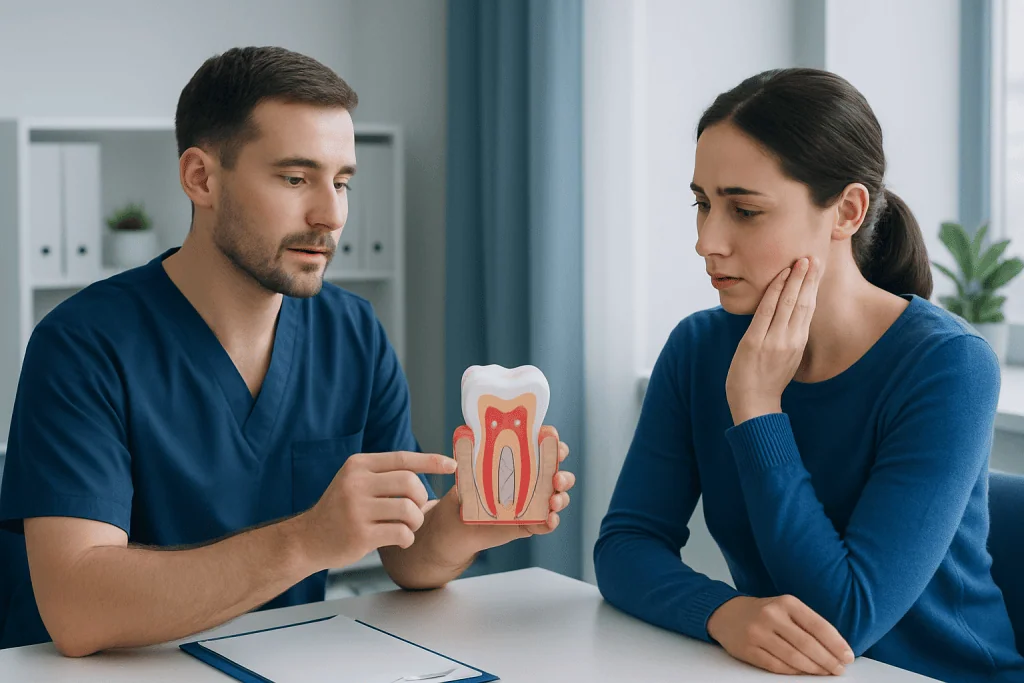
Before treatment, the dental team reviews X-rays, explains the options, and uses local anesthesia to numb the area. If there is a fluctuant swelling, the clinician may make a small opening in the gum to drain the pus and reduce pressure. The area may be rinsed, and in some situations a small drain is placed briefly to allow continued drainage. Drainage provides relief, but the infected tooth or gum source also needs definitive treatment.
When infection comes from inside a tooth, root canal treatment may be used to preserve it. The dentist makes an opening in the tooth, removes infected or damaged pulp tissue, disinfects the root canals, and seals them. Depending on the situation, this may occur over one or more appointments. A crown or other restoration is often needed afterward to protect the treated tooth from fracture.
If the tooth is not restorable, extraction removes the source of infection. The clinician gently loosens and removes the tooth, cleans the socket as needed, and provides instructions for healing. Gum-related abscesses may require cleaning below the gumline, drainage, treatment of a foreign object or trapped food, and longer-term periodontal care. When needed, clinicians can coordinate root canal treatment or tooth extraction as part of the overall plan.
Antibiotics may be appropriate for fever, spreading swelling, swollen lymph nodes, cellulitis, immune compromise, or when prompt drainage cannot be completed. They should be taken exactly as prescribed. They may reduce bacterial spread, but they generally cannot eliminate an abscess without dental treatment of the source.
Is treating a dental abscess painful?
Dental abscess treatment is designed to reduce pain, not add to it. Local anesthesia is typically used for drainage, root canal treatment, or extraction, so the person should not feel sharp pain during the procedure. They may feel pressure, vibration, or movement, especially during an extraction, and anesthesia can be more difficult to achieve in severely inflamed tissue.
After treatment, mild soreness, tenderness when biting, and temporary swelling are common. These symptoms can usually be managed with the aftercare plan provided by the clinician and suitable over-the-counter pain relief if it is safe for the individual’s health conditions and medicines. People should not exceed labeled directions or combine medicines without professional advice.
Severe pain that is worsening rather than improving, new swelling, persistent bleeding, fever, or a bad taste with increasing discharge should be reported to the dental team. These symptoms may mean that the infection needs reassessment or that additional treatment is required.
Recovery timeline, results, and how healing is monitored
Many people notice less pressure and pain within 24 to 48 hours after effective drainage or treatment of the source. Visible swelling may take several days to settle, while deeper tissue and bone healing continue over weeks to months. The exact timeline varies according to the size and location of the abscess, the treatment performed, overall health, and whether infection had spread.
After drainage or extraction, it is usually advisable to follow the clinician’s instructions about eating, oral hygiene, rinsing, activity, and follow-up. Soft foods may be more comfortable initially. Smoking and tobacco use can delay healing and increase complications, so avoiding them is important. A follow-up appointment allows the clinician to confirm that symptoms are resolving and complete restorative treatment where needed.
How do you know if a dental abscess is healing? Healing is generally suggested by steadily decreasing pain, swelling, drainage, and tenderness, along with improved ability to open the mouth, chew, and sleep. The tooth and nearby gum may remain sensitive for a short time, but the overall trend should be better, not worse. Only a dental examination and, when needed, follow-up X-rays can confirm that infection around the tooth and bone is resolving.
How long does it take to recover from dental abscess surgery? After a simple incision and drainage or extraction, discomfort often improves over a few days and routine activities can often resume quickly, depending on the person’s symptoms and procedure. The extraction socket and surrounding soft tissue may take one to two weeks to close substantially, while bone remodeling takes longer. Root canal treatment may cause temporary tenderness for several days, and a permanent restoration may require a later appointment.
Risks, benefits, and preventing another abscess
The benefits of treatment include controlling infection, relieving pain and pressure, protecting surrounding bone and tissues, and potentially saving the affected tooth. Root canal treatment is often preferred when a tooth can be restored because it keeps the natural tooth in place. Extraction can be the safer option when restoration is unlikely to succeed, and replacement choices can be discussed after healing.
All dental procedures have possible risks. These can include temporary pain or swelling, bleeding, bruising, delayed healing, persistent infection, and the need for further treatment. Root canal treatment can occasionally fail if bacteria remain or re-enter the tooth, while extraction carries procedure-specific risks that vary by tooth position. The treating clinician explains relevant risks and alternatives before care.
Prevention centers on regular dental checkups, brushing twice daily with fluoride toothpaste, cleaning between teeth daily, limiting frequent sugary foods and drinks, and obtaining early care for cavities, loose fillings, cracked teeth, or gum bleeding. Managing gum disease is also important; timely care for periodontal disease can reduce infection-related complications around teeth.
Acibadem International’s multidisciplinary dental and oral health specialists in JCI-accredited hospitals can assess and treat dentoalveolar abscesses for international patients, with referral to relevant medical services when infection requires broader care.
When to seek medical care
How long is too long to have a dental abscess? There is no safe waiting period for a suspected dental abscess. A person should arrange urgent dental assessment as soon as possible, even if pain comes and goes or swelling appears to drain. Pain may lessen when pressure is released, but the underlying infection can remain and may progress.
Same-day urgent dental or medical advice is appropriate for increasing facial or jaw swelling, fever, feeling unwell, worsening pain, difficulty opening the mouth, or swelling that does not improve after treatment. People with immune suppression, poorly controlled diabetes, or significant medical conditions should seek advice promptly because infections can become more serious in these settings.
Emergency medical care is needed for difficulty breathing, swallowing, or speaking; swelling of the tongue, floor of the mouth, neck, or around the eye; confusion; severe weakness; or rapidly spreading facial swelling. These signs may indicate an infection extending beyond the tooth area and require immediate evaluation.
Frequently asked questions
Can antibiotics cure a dentoalveolar abscess?
Antibiotics may be needed when there is spreading infection, fever, or certain health risks, but they usually cannot cure an abscess by themselves. The infected tooth, root canal system, or gum area generally needs drainage and definitive dental treatment. A clinician determines whether antibiotics are appropriate.
Can a dentist save a tooth with an abscess?
Often, yes. If the tooth is structurally restorable, root canal treatment can remove infection from inside the tooth and allow it to remain in place. If the tooth is too damaged, cracked, or poorly supported, extraction may be the more reliable option.
What should someone do while waiting for a dental appointment?
They should contact a dentist urgently and follow any advice given. Gentle brushing, avoiding chewing on the painful side, choosing soft foods, and using suitable non-prescription pain relief according to the label may help. They should not try to pop, cut, or drain an abscess at home.
Why did the pain stop even though the swelling is still there?
Pain can lessen if an abscess drains or if the tooth nerve becomes severely damaged. This does not mean the infection has resolved. Ongoing swelling, drainage, or a gum bump needs dental assessment.
Can a dental abscess spread to other parts of the body?
In some cases, dental infection can spread into nearby facial and neck tissues and, rarely, more widely. Prompt treatment greatly reduces this risk. Urgent medical care is needed for breathing or swallowing difficulty, rapidly increasing swelling, fever with severe illness, or swelling near the eye or neck.
Will a dental abscess come back after treatment?
Recurrence is less likely when the infection source is fully treated and follow-up care is completed. However, it can return if bacteria re-enter a treated tooth, a restoration leaks or breaks, gum disease remains untreated, or a new cavity develops. Regular dental reviews and good daily oral hygiene are important.
References
- American Dental Association
- American Association of Endodontists
- National Health Service
- Centers for Disease Control and Prevention
- Merck Manual Consumer Version
This article is for general information only and is not a substitute for professional medical advice. Please consult a qualified doctor about your individual situation.
Explore treatments in Turkey — costs, top hospitals & a free quote
JCI-accredited · board-certified surgeons · reply within 24h
Add us as a Preferred Source to see more of our trusted health content across Google Search, AI Overviews and Discover.

More from the Health Library



Related Specialists

Prof. Dr. Oya Yönal
Gastroenterology
Prof. Dr. Çetin Kılıççı
Gynecology & Obstetrics
Fzt. Necla Aleyna Yiğit
Physical Medicine & Rehabilitation
Dr. Burcu Solmaz
Pediatrics