Epiglottitis Treatment: How It Works, Results and What to Expect

Epiglottitis is a medical emergency when it causes breathing difficulty, noisy breathing, drooling or inability to swallow. The first priority is keeping the airway safe; examinations of the throat should not delay emergency care.
Key Takeaways
- Epiglottitis is a medical emergency when it causes breathing difficulty, noisy breathing, drooling or inability to swallow.
- The first priority is keeping the airway safe; examinations of the throat should not delay emergency care.
- Antibiotics are commonly used when a bacterial infection is suspected, often starting through a vein in hospital.
- Recovery often begins within a few days, but treatment duration and hospital stay depend on airway swelling and the underlying cause.
- Vaccination against Haemophilus influenzae type b has greatly reduced a major childhood cause of epiglottitis.
Epiglottitis treatment starts with urgent assessment of breathing because swelling near the entrance to the windpipe can worsen quickly. Care commonly includes hospital monitoring, antibiotics for suspected bacterial infection and airway support when needed; most people improve once treatment begins promptly.
Epiglottitis treatment: how it works
Epiglottitis treatment is urgent because the epiglottis, a small flap of tissue at the base of the tongue, can become swollen and partly block airflow into the windpipe. The care team first assesses whether the person is breathing safely. If there are signs of significant airway narrowing, treatment is provided in an emergency department or hospital where airway specialists and appropriate equipment are immediately available.
When infection is thought to be the cause, doctors usually give antibiotics. These are often started intravenously because swallowing may be difficult and because prompt treatment is important. The antibiotic choice may be adjusted after blood tests, cultures or other clinical information suggest the most likely organism.
Care may also include oxygen, intravenous fluids when swallowing is unsafe, pain relief and medication to reduce fever. In selected cases, clinicians may use corticosteroids to help reduce swelling, although the decision is individualized. Treatment is not a home-care situation when epiglottitis is suspected.
How serious is epiglottitis?
Epiglottitis can be serious because inflammation may progress rapidly and make breathing difficult. With early recognition, close monitoring and appropriate treatment, many people recover well. However, waiting at home for severe throat symptoms to settle can be unsafe when breathing, swallowing or voice changes are present.
Symptoms may include severe sore throat, pain on swallowing, difficulty swallowing, drooling, muffled or altered voice, fever, anxiety, leaning forward to breathe, and high-pitched or harsh breathing sounds. In adults, symptoms sometimes develop over a longer period than in children, but urgent assessment is still needed.
A person with suspected epiglottitis should remain calm and upright, if possible, and should not be forced to lie down or attempt to eat or drink. Caregivers should avoid trying to inspect the throat with a spoon, finger or tongue depressor, as this can cause distress and may worsen airway obstruction in a person with significant swelling.
What is the most effective treatment for epiglottitis?

The most effective epiglottitis treatment is prompt hospital-based care that protects the airway first and treats the underlying cause. For bacterial epiglottitis, this generally means close airway observation together with antibiotics. If breathing is compromised or likely to deteriorate, the team may secure the airway with a breathing tube, called intubation, in a controlled setting.
Not every person requires intubation. Doctors consider breathing effort, oxygen levels, voice and swallowing changes, the extent of swelling, age, other illnesses and how quickly symptoms are progressing. Patients with less severe symptoms may still need monitored hospital care because the condition can change over time.
When a noninfectious cause is suspected, such as a thermal injury, chemical irritation or trauma, management focuses on airway safety and treating the specific injury. ENT, emergency medicine, anesthesiology, intensive care and infectious disease clinicians may work together when needed.
How epiglottitis is diagnosed and assessed
Epiglottitis how to diagnose safely depends on the person’s condition. In someone with obvious breathing distress, clinicians focus on stabilizing the airway rather than performing tests that could cause discomfort or delay care. Diagnosis may be based initially on symptoms, clinical examination and the response of the airway to monitoring.
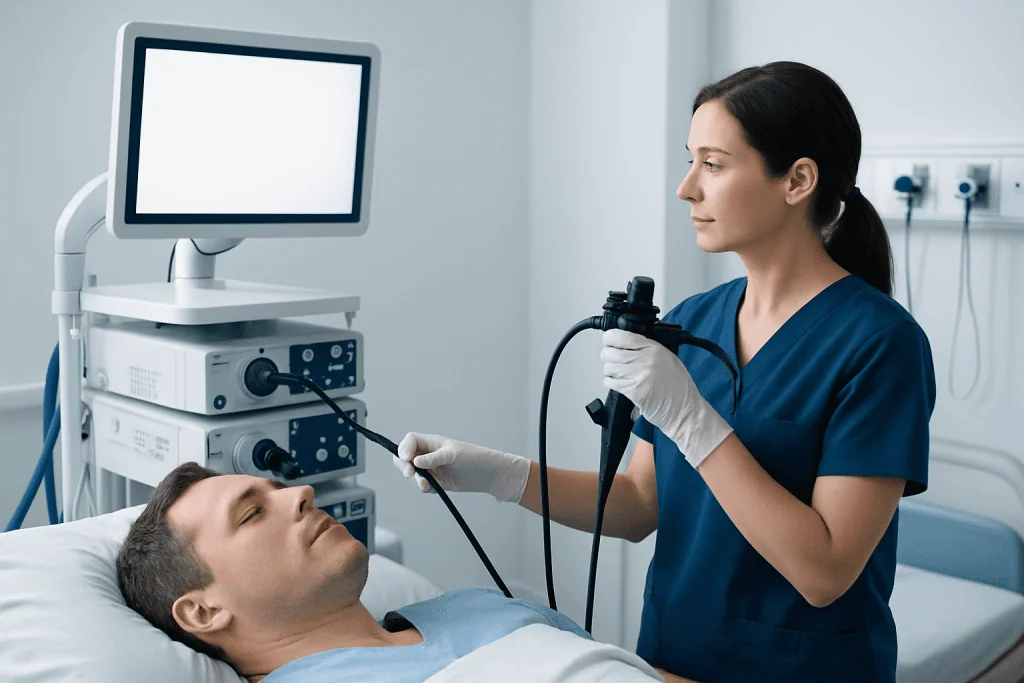
Once it is safe, doctors may use flexible laryngoscopy, a thin camera passed gently through the nose, to view the upper airway. This is performed by trained specialists in an environment prepared for airway support. Blood tests and blood cultures can help identify infection and guide antibiotic decisions.
Imaging is not always necessary. A neck X-ray or CT scan may sometimes be considered in a stable patient when the diagnosis is uncertain, but these tests should never postpone urgent airway management. Conditions that can resemble epiglottitis include severe tonsil infection, deep neck infection, allergic swelling and inhaled foreign material.
Who needs hospital treatment and what happens step by step?
Anyone with suspected epiglottitis needs urgent medical assessment. Hospital treatment is particularly important for people with noisy breathing, drooling, increasing difficulty swallowing, respiratory distress, low oxygen levels, altered alertness or rapidly progressing symptoms. Young children require especially careful assessment because their airways are smaller and can narrow more quickly.
In the emergency setting, the team typically keeps the patient in a position that supports comfortable breathing, continuously monitors oxygen levels and heart rate, and avoids unnecessary throat examination. An ENT specialist and anesthesiology team may be involved early if airway intervention could be needed.
If intubation is required, it is performed by experienced clinicians using a carefully planned approach. Rarely, when a breathing tube cannot be placed safely, a surgical airway may be necessary. After the airway is secure, clinicians provide antibiotics when indicated, fluids, symptom relief and monitoring in a high-dependency or intensive care setting if appropriate.
- Airway and breathing are assessed immediately.
- Oxygen and intravenous access may be provided.
- Antibiotics are started when bacterial infection is likely.
- Airway observation or intubation is chosen according to severity.
- Tests and specialist examination are completed once safe.
Epiglottitis treatment time, recovery and expected results
Epiglottitis treatment time varies according to the severity of swelling, whether airway support was needed and the cause of inflammation. People who respond well to antibiotics and do not need a breathing tube may begin feeling better within a few days. Those requiring intensive care or intubation generally need longer observation and recovery.
Epiglottitis treatment duration includes the period of hospital monitoring and the full prescribed antibiotic course when infection is confirmed or strongly suspected. Intravenous treatment may be changed to oral medicine once the person is clinically improving and can swallow safely. The treating clinician determines the appropriate plan based on progress and test results.
For the question of epiglottitis how long to heal, many people recover without lasting problems after timely treatment. Fatigue, throat discomfort or a hoarse voice can persist temporarily. Follow-up may be advised if symptoms recur, swallowing remains difficult, there is a concern about an underlying immune problem, or the cause was not clearly identified.
What are the four D's of epiglottitis?
The “four D’s” is a memory aid sometimes used to describe concerning features of epiglottitis: dysphagia (difficulty swallowing), drooling, dysphonia (a muffled or changed voice) and dyspnea (difficulty breathing). These features can occur together, but not every person has all four.
In children, drooling, refusal to eat or drink, sitting forward, agitation and noisy breathing may be particularly important warning signs. In adults, severe pain when swallowing that seems greater than expected from the appearance of the mouth can also raise concern.
The four D’s are not a diagnostic test and should not be used to rule out epiglottitis. Any breathing difficulty, drooling or inability to swallow saliva needs emergency evaluation, regardless of the number of symptoms present.
What age gets epiglottitis and when to seek medical care
Epiglottitis can affect people of any age. It was historically more common in young children, often due to Haemophilus influenzae type b (Hib). Routine Hib vaccination has made this cause much less common in vaccinated populations, while epiglottitis is now seen relatively often in adults and can be caused by several bacteria as well as noninfectious injuries.
Emergency medical care is needed immediately for trouble breathing, rapid or noisy breathing, bluish lips or skin, drooling, inability to swallow saliva, a muffled voice, severe worsening throat pain, confusion, or a child who is sitting forward and struggling to breathe. Emergency services should be contacted rather than driving if symptoms are severe or worsening.
For less urgent but persistent sore throat, fever or swallowing pain without breathing symptoms, a qualified doctor can assess the cause and advise appropriate care. Acibadem International’s multidisciplinary specialists and JCI-accredited hospitals provide diagnosis and treatment for epiglottitis and other urgent ENT conditions for international patients.
Frequently asked questions
Can epiglottitis be treated at home?
No. Suspected epiglottitis requires urgent medical assessment because airway swelling can worsen unexpectedly. Home remedies, food, drinks and attempts to look into the throat should not delay emergency care when breathing or swallowing is affected.
Are antibiotics always needed for epiglottitis?
Antibiotics are commonly used because bacterial infection is a frequent cause of epiglottitis. The medical team decides on the most appropriate medicine based on the person’s presentation, test results and possible noninfectious causes.
How long does a person stay in hospital with epiglottitis?
The length of stay depends on airway safety, the response to treatment and whether intensive care or intubation was needed. Some stable patients improve after a short monitored admission, while more severe cases require longer hospital care.
Can adults get epiglottitis?
Yes. Epiglottitis can occur at any age and is now commonly recognized in adults as well as children. Adult symptoms may develop more gradually, but breathing difficulty, drooling or an inability to swallow still require emergency assessment.
Is epiglottitis contagious?
Whether it is contagious depends on the cause. Some bacterial or viral infections that can contribute to epiglottitis may spread between people, while injury-related causes do not. Clinicians may recommend precautions or preventive treatment for close contacts in specific bacterial infections.
Can epiglottitis come back?
Recurrence is uncommon, but it can happen. A clinician may investigate recurrent episodes for immune disorders, anatomical issues, ongoing irritation or other underlying causes.
References
- Centers for Disease Control and Prevention
- Merck Manual Professional Edition
- National Health Service
- American Academy of Otolaryngology–Head and Neck Surgery
This article is for general information only and is not a substitute for professional medical advice. Please consult a qualified doctor about your individual situation.
Explore treatments in Turkey — costs, top hospitals & a free quote
JCI-accredited · board-certified surgeons · reply within 24h
Add us as a Preferred Source to see more of our trusted health content across Google Search, AI Overviews and Discover.