Premature Beats Treatment: How It Works, Results and What to Expect

Premature beats are early heartbeats that may feel like a flutter, skipped beat, thump or brief racing sensation. Occasional premature beats are common and often harmless in people with a structurally healthy heart.
Key Takeaways
- Premature beats are early heartbeats that may feel like a flutter, skipped beat, thump or brief racing sensation.
- Occasional premature beats are common and often harmless in people with a structurally healthy heart.
- Testing helps identify the rhythm, measure how often it occurs and look for underlying heart disease or reversible triggers.
- Treatment may include lifestyle changes, addressing contributing conditions, medication or catheter ablation for selected patients.
- Urgent assessment is important for palpitations with chest pain, fainting, severe breathlessness or persistent rapid heartbeat.
Premature beats treatment depends on the type, frequency and cause of extra heartbeats, as well as whether they cause symptoms or affect heart function. Many people need reassurance and trigger management only, while others benefit from medication or catheter ablation after a cardiology assessment.
Overview: how premature beats treatment works
Premature beats treatment aims to reduce troublesome extra heartbeats, address their cause and protect heart function when beats are very frequent. An early heartbeat may arise in the upper chambers of the heart, called premature atrial contractions (PACs), or in the lower chambers, called premature ventricular contractions (PVCs). Both can create a sensation of a skipped beat, flutter, pause or stronger beat afterward.
In many people, occasional premature beats do not require active treatment. A clinician may recommend reassurance, monitoring and changes to triggers such as excess caffeine, alcohol, nicotine, poor sleep or stress. Treatment becomes more important when symptoms are disruptive, there is known heart disease, or frequent PVCs are associated with reduced pumping strength of the heart.
The best plan is individualized. It is based on the rhythm seen on testing, the number of extra beats over time, symptoms, medical history, medicines and heart structure. A cardiologist or heart-rhythm specialist can explain whether observation, medication or a procedure is most appropriate.
What causes premature beats and who may need treatment?
Premature beats can occur without a clear cause, including in people with otherwise healthy hearts. They may become more noticeable with fatigue, emotional stress, dehydration, fever, stimulants, alcohol, smoking, recreational drugs or intense exercise. Some over-the-counter cold remedies and prescribed medicines can also contribute, so it is important not to stop a prescribed medicine without medical advice.
Doctors also consider potentially treatable contributors, including thyroid disorders, anemia, electrolyte changes, sleep apnea and coronary artery disease. In people with heart muscle disease, prior heart attack, valve disease or heart failure, extra beats may need closer assessment because the underlying heart condition influences risk and treatment choices.
Frequency alone does not determine whether a person needs treatment, but a high burden of PVCs over time can occasionally contribute to weakening of the heart muscle. This is why clinicians may monitor heart rhythm and heart pumping function, especially when PVCs are frequent or symptoms have changed.
- Symptoms that interfere with sleep, work, exercise or daily wellbeing
- Frequent PVCs documented on ambulatory rhythm monitoring
- Reduced heart pumping function or suspected PVC-related cardiomyopathy
- Premature beats occurring with structural heart disease or another abnormal rhythm
How do clinicians diagnose premature beats?

Diagnosis starts with a careful discussion of symptoms. A clinician may ask when palpitations occur, how long they last, whether they are linked with exercise or stimulants, and whether there is dizziness, fainting, chest discomfort or breathlessness. Medical and family history can help identify possible inherited rhythm conditions or heart disease.
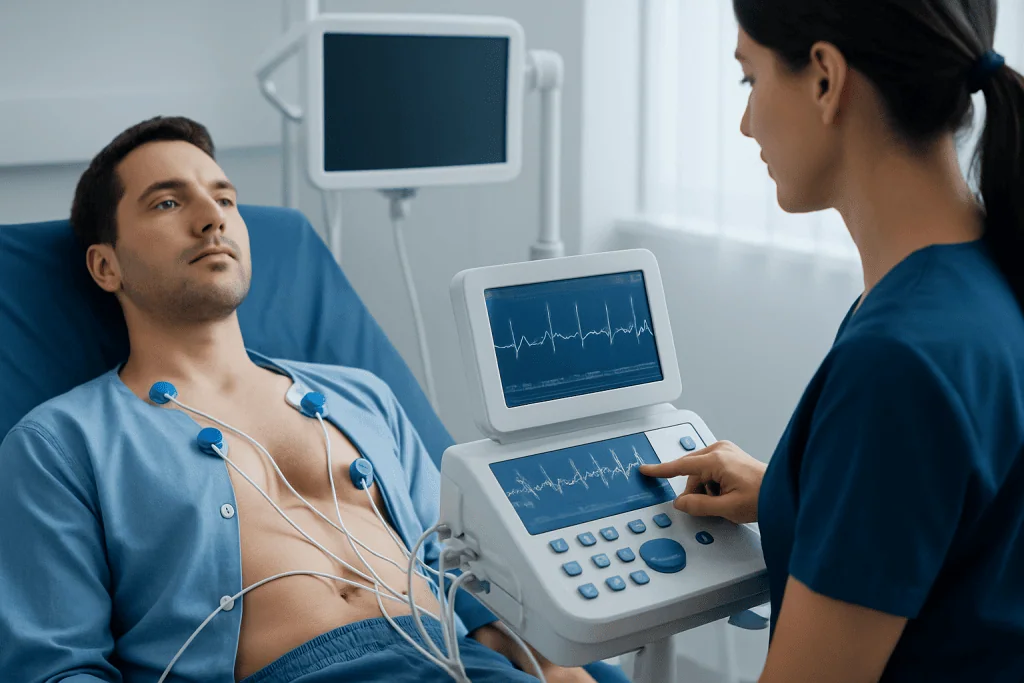
An electrocardiogram (ECG) records the heart’s electrical activity and can identify a premature beat if it occurs during the test. Because extra beats may come and go, a Holter monitor or longer event monitor may be used to record the rhythm during ordinary activities. This helps determine the type and amount of premature beats and whether other arrhythmias are present.
Further evaluation may include blood tests, an echocardiogram to assess heart structure and pumping function, or an exercise test when symptoms occur with activity. Cardiac imaging or other testing may be recommended for selected people. The goal is to distinguish common benign ectopic beats from rhythms or heart conditions that need specific care.
Premature beats treatment options: lifestyle, medicines and ablation
For people with infrequent, benign premature beats, the first approach is often identifying patterns and reducing triggers. Regular sleep, adequate hydration, balanced meals, gradual stress-management practices and moderation of caffeine and alcohol may reduce symptoms for some people. Treating related conditions, such as sleep apnea or thyroid disease, can also be important.
When symptoms remain distressing, a clinician may discuss medicines that slow or stabilize the heart rhythm, often beginning with options such as beta blockers when suitable. The choice depends on the person’s blood pressure, other health conditions, rhythm pattern and possible side effects. Antiarrhythmic medicines may be considered in selected circumstances and generally require careful follow-up.
Catheter ablation can be an effective option for some people with frequent, symptomatic PVCs, medication intolerance, or evidence that PVCs are affecting heart function. During this minimally invasive heart-rhythm procedure, a specialist identifies the small area triggering the extra beats and delivers energy to disrupt that abnormal electrical focus. The procedure is usually performed by an electrophysiologist in a cardiac catheterization laboratory.
For people with frequent PVCs and a suitable rhythm focus, cardiac ablation may reduce the PVC burden and improve symptoms. Whether it is appropriate depends on the location of the premature beats, the results of imaging and monitoring, and the person’s overall health.
What happens during catheter ablation and recovery?
Before ablation, the care team reviews rhythm-monitoring results, imaging and medicines. Patients receive instructions about eating, drinking and whether any medicines need adjustment before the procedure. Sedation or anesthesia is used according to the planned procedure and individual needs, and the team monitors heart rhythm, blood pressure and oxygen levels throughout.
Thin, flexible catheters are passed through a blood vessel, commonly from the groin, to the heart. The electrophysiologist maps the electrical signals to locate where the premature beats begin. Radiofrequency heat or cryotherapy may then be used to treat the target tissue. The length of the procedure varies because it depends on how readily the abnormal rhythm can be reproduced and mapped.
Afterward, patients are observed while the catheter-entry site is checked for bleeding or swelling. Some go home the same day, while others may stay overnight depending on the procedure and their health. Mild bruising or soreness at the access site is common. The care team provides individualized instructions about activity, bathing, driving, medicines and follow-up.
It can take days to weeks to judge the full rhythm response, and some people notice occasional palpitations during healing. Follow-up ECGs, monitors or echocardiograms may be used to assess symptoms, PVC frequency and heart function. A repeat procedure is occasionally considered when a significant focus remains or returns.
Benefits, risks and realistic expectations
The expected benefit of treatment is not simply a normal rhythm tracing; it is improved comfort, safer management of an underlying condition and, when relevant, preservation or recovery of heart function. Lifestyle measures may reduce recognizable triggers but do not eliminate every premature beat. Medication can reduce symptoms and frequency for some people, although response varies.
Catheter ablation can substantially reduce PVCs when the source can be accurately identified and treated. However, no procedure can promise complete or permanent elimination of all palpitations. Extra beats can occasionally arise from a different location later, and ongoing follow-up may be needed.
Potential ablation risks include bleeding, bruising, blood-vessel injury, infection, blood clots, reaction to sedation, damage to nearby heart structures and, rarely, serious complications. Risks vary with the location of the PVC focus and the person’s health. An electrophysiologist discusses expected benefits, alternatives and individual risks before treatment.
At Acibadem International, multidisciplinary cardiology and electrophysiology specialists in JCI-accredited hospitals evaluate and treat heart-rhythm conditions for international patients. A treatment decision should always follow a personalized review by a qualified clinician.
When to seek medical care
A person should arrange a medical appointment for new, recurrent or worsening palpitations, particularly if they occur frequently, affect daily life, happen during exercise or are accompanied by reduced exercise tolerance. Assessment is also advisable for anyone with known heart disease, a family history of sudden cardiac death or inherited rhythm disorders, or symptoms that began after a medication change.
Emergency medical care is needed when palpitations occur with chest pain or pressure, fainting, near-fainting, severe shortness of breath, confusion, new weakness, or a persistent fast or irregular heartbeat. These symptoms do not always mean a serious problem, but they require prompt evaluation.
Keeping a brief symptom record can be useful before an appointment. It may include the time symptoms occur, their duration, possible triggers, pulse readings if available, accompanying symptoms and medicines or supplements used that day. This information can support a more focused clinical evaluation.
Frequently asked questions
Do heart PVCs ever go away?
PVCs may lessen or disappear, especially when they are related to temporary triggers such as stress, lack of sleep, illness, stimulant use or alcohol. Some people continue to have occasional PVCs for years without harm. If PVCs are frequent or troublesome, treatment of triggers, medication or ablation may reduce them.
How long does it take for PVCs to weaken the heart?
There is no single timeline. In a small group of people, a high PVC burden over months or longer may contribute to a weakened heart muscle, but many people with PVCs never develop this problem. Rhythm monitoring and echocardiography help a cardiologist assess individual risk and monitor heart function.
What will a cardiologist do for PVCs?
A cardiologist will review symptoms, medical history, medicines and possible triggers, then usually perform or arrange an ECG. They may recommend a Holter monitor, blood tests, an echocardiogram or exercise testing to measure PVC frequency and check for underlying heart disease. Treatment may range from reassurance and lifestyle guidance to medication or referral to an electrophysiologist for ablation.
Can you live a full life with PVCs?
Many people with occasional PVCs and a healthy heart can live fully and remain active. The important step is obtaining an appropriate evaluation when PVCs are new, frequent, symptomatic or associated with heart disease. Following individualized advice about activity, triggers and follow-up can provide reassurance and support long-term heart health.
Are premature atrial contractions treated the same as PVCs?
PACs and PVCs are both early beats, but they start in different heart chambers and may be evaluated somewhat differently. In many cases, both are benign and managed with trigger reduction and reassurance. A clinician may recommend more testing if symptoms are significant, the rhythm is frequent, or there are signs of underlying heart disease.
Should exercise be avoided with premature beats?
Most people with benign premature beats can continue appropriate physical activity, and regular exercise supports cardiovascular health. However, palpitations that begin or worsen with exercise, or occur with chest pain, dizziness or breathlessness, should be assessed before vigorous activity continues. A clinician can give individualized guidance after reviewing the rhythm and heart evaluation.
References
- American Heart Association
- Heart Rhythm Society
- European Society of Cardiology
- National Heart, Lung, and Blood Institute
This article is for general information only and is not a substitute for professional medical advice. Please consult a qualified doctor about your individual situation.
Explore treatments in Turkey — costs, top hospitals & a free quote
JCI-accredited · board-certified surgeons · reply within 24h
Add us as a Preferred Source to see more of our trusted health content across Google Search, AI Overviews and Discover.
Check your numbers in seconds
BMI, calories, due date, blood pressure and 30+ more clinical calculators — free, instant, doctor-reviewed ranges.