Knuckle Replacement Surgery: Procedure, Recovery and Results

Knuckle replacement surgery is most commonly performed for painful arthritis affecting the metacarpophalangeal or proximal interphalangeal finger joints. The main goals are pain relief, improved alignment and easier daily hand function; restoring full strength is not always expected.
Key Takeaways
- Knuckle replacement surgery is most commonly performed for painful arthritis affecting the metacarpophalangeal or proximal interphalangeal finger joints.
- The main goals are pain relief, improved alignment and easier daily hand function; restoring full strength is not always expected.
- Most people need a splint and guided hand therapy, with recovery continuing for several months.
- Implants can loosen, wear, fracture or become unstable over time, and some people may need further surgery.
- The best procedure depends on the affected joint, the underlying condition, hand demands and the condition of surrounding tendons and ligaments.
Knuckle replacement surgery, also called finger joint arthroplasty, replaces a severely damaged finger joint with an implant to relieve pain and support everyday hand use. It is most often considered when arthritis or injury causes persistent symptoms despite non-surgical care.
Overview: what is knuckle replacement surgery?
Knuckle replacement surgery is a procedure that removes damaged surfaces of a finger joint and replaces them with an artificial implant. It is also known as finger joint arthroplasty. The operation is designed primarily to reduce ongoing pain, improve joint position and make activities such as dressing, writing, holding light objects or using utensils more manageable.
The word “knuckle” can refer to several finger joints. Replacement is commonly considered for the metacarpophalangeal (MCP) joints, where the fingers meet the hand, and sometimes for the proximal interphalangeal (PIP) joints in the middle of the fingers. Different joints experience different forces, so the type of implant and expected outcome vary.
Joint replacement is not always the first surgical choice. In some situations, joint fusion, tendon procedures, joint cleaning or other reconstructive surgery may provide a more reliable result. A hand surgeon considers the person’s diagnosis, affected fingers, movement needs and expectations before recommending an operation.
How it works and who may be a candidate
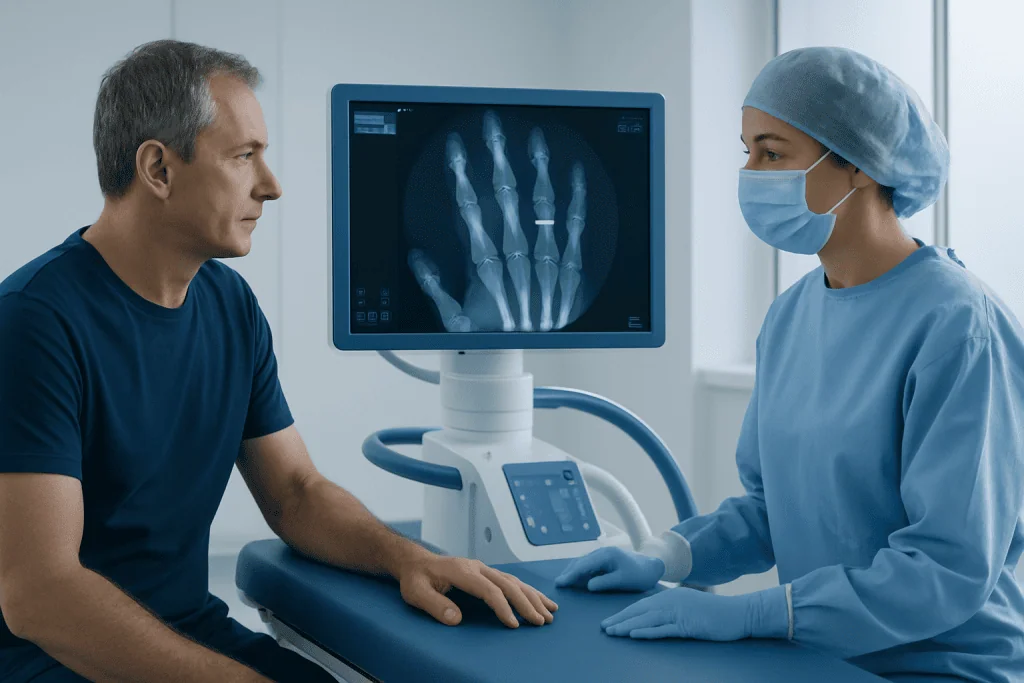
During joint replacement, the surgeon reshapes or removes the worn joint surfaces and places an implant between or within the bones. Implants may be made from silicone, metal and plastic components, pyrocarbon, or other materials. The design aims to provide a stable, smoothly moving joint while preserving as much useful movement as possible.
People may be candidates when they have pain, stiffness, deformity or loss of hand function caused by inflammatory arthritis, such as rheumatoid arthritis, osteoarthritis, previous injury, or less commonly other joint disorders. Surgery is usually considered after measures such as activity modification, splinting, hand therapy and appropriate medication have not provided enough relief.
A suitable candidate should be able to take part in rehabilitation and follow temporary activity restrictions. People whose work or hobbies require repetitive heavy gripping, forceful impact or manual labor may need a different surgical approach, because finger implants are not intended to tolerate unlimited high-load use. The surgeon also assesses skin condition, infection risk, bone quality, tendon balance and joint stability.
Related hand conditions can influence treatment planning. For example, people with rheumatoid arthritis may have multiple joints and tendons affected, so care may involve rheumatology, hand surgery and rehabilitation professionals.
What happens during the procedure?

Finger joint replacement is usually performed by an orthopedic hand surgeon or plastic surgeon with hand-surgery expertise. It may be done under regional anesthesia, which numbs the arm, with sedation, or under general anesthesia depending on the procedure and the person’s health needs. It is often an outpatient operation, although the care plan is individualized.
The surgeon makes an incision over or near the joint, carefully protects the tendons, nerves and blood vessels, and exposes the damaged joint. The worn bone ends are prepared, and the implant is fitted and checked for alignment, motion and stability. In some cases, soft tissues around the joint are repaired or balanced to help correct deformity.
The incision is closed and the hand is placed in a protective dressing and often a splint. A hand therapist may be involved early to guide safe movement and splint use. The details can differ significantly between MCP and PIP replacement, as well as between implant types, so the surgical team provides individualized instructions.
People considering surgical care can discuss hand surgery options with a specialist, including whether replacement, fusion or another reconstruction is most appropriate for their joint.
Recovery timeline: how long does it take to recover from a knuckle replacement?
Knuckle replacement recovery time is gradual. The first one to two weeks focus on protecting the incision, controlling swelling and attending wound checks. A splint may be worn continuously at first, and the hand is typically kept elevated when possible. Pain and swelling commonly improve over the first several weeks, but they can fluctuate with activity.
Guided hand therapy is an important part of knuckle surgery recovery. Depending on the joint and reconstruction, carefully controlled exercises may begin early to reduce stiffness while protecting repaired tissues. Therapy may continue for several weeks or months and can include splint adjustments, range-of-motion work, swelling management and training for daily activities.
Many people resume light, low-demand activities in roughly six to eight weeks, but this varies. Useful movement, comfort and confidence with the hand often continue to improve over three to six months. Full recovery after finger joint replacement may take six months or longer, particularly when several joints are treated, arthritis is advanced or tendon imbalance needs correction.
Before-and-after expectations should be realistic. Knuckle replacement surgery before and after images may show straighter fingers or less visible deformity, but the most meaningful changes are often less pain and improved ability to perform personal daily tasks. The operation may not restore a normal-looking joint, full motion or the strength of an unaffected hand.
Benefits and possible risks
The potential benefits of knuckle replacement surgery include reduced pain, improved finger alignment, better ability to open the hand and enhanced performance of selected daily activities. For people with inflammatory arthritis and MCP joint deformities, replacing several joints may also improve the overall position and balance of the hand.
Results differ according to the joint replaced, the underlying disease, implant design and adherence to therapy. In general, pain relief and functional improvement are the main measures of success. Motion may improve, remain similar or occasionally decrease, especially if the joint was very stiff before surgery. Strength may remain limited, and heavy gripping is often discouraged to protect the implant.
Possible surgical risks include infection, bleeding, nerve irritation, wound-healing problems, stiffness, continued pain, tendon imbalance, joint instability, dislocation, implant fracture, loosening or wear. Scar sensitivity and numbness around the incision can also occur. Some complications can require additional splinting, therapy or revision surgery.
Careful follow-up helps the team identify concerns early. New redness, increasing drainage, fever, severe or worsening pain, a cold or pale finger, or sudden loss of movement should be reported promptly to the surgical team.
Are knuckle replacements successful?
Knuckle replacements can be successful when success is defined realistically: less pain, improved alignment and more comfortable everyday hand use. Many people experience meaningful improvement, particularly when the surgery is selected for the right joint and condition and is followed by a structured rehabilitation program.
However, a replacement is not a cure for the underlying arthritis, and it is not designed to make every hand function normally. Artificial finger joints have limits and may eventually wear, loosen or fail. Outcomes can be less predictable in people who place high force through their hands or have severe tendon, ligament or bone damage.
The surgeon can explain the expected outcome for the individual finger and implant type. Questions worth discussing include which activities are likely to become easier, which activities should be permanently modified, how long an implant may last, and what alternatives are available if replacement is not suitable.
Is finger joint replacement a major surgery?
Finger joint replacement is a significant reconstructive operation, even though it is smaller in scale than hip or knee replacement. It involves bones, joint surfaces, tendons and soft tissues in a complex part of the body that is essential for daily function. It also requires a period of protection and specialized hand rehabilitation.
For many people, the operation is performed as day surgery and does not require a prolonged hospital stay. Even so, recovery should not be minimized: swelling, stiffness and changing activity limits can continue for months. Planning for help with household tasks, transport and work duties can make the early recovery period easier.
Which joint replacement is the hardest to recover from depends on the person, the procedure and the definition of recovery. Large joint replacements can involve more walking and general mobility demands, while finger joint replacement may be challenging because small losses of motion, strength or sensation can affect detailed hand tasks. A surgeon and hand therapist can explain the specific recovery demands of the recommended operation.
When to seek medical care
Medical assessment is appropriate for persistent finger-joint pain, swelling, stiffness, deformity, clicking, weakness or difficulty using the hand for everyday activities. An evaluation is especially helpful when symptoms interfere with sleep, work, self-care or participation in valued activities despite rest and other conservative measures.
Urgent medical care is important after an injury that causes a visibly deformed finger, inability to move the finger, marked numbness, loss of circulation, an open wound, or rapidly increasing swelling. A hot, red, very painful joint with fever also needs prompt assessment because infection must be ruled out.
Acibadem International’s multidisciplinary specialists and JCI-accredited hospitals can assess hand and joint conditions and provide individualized surgical and rehabilitation planning for international patients. A qualified hand surgeon can help determine whether joint replacement or another treatment is the safest and most appropriate option.
Frequently asked questions
How long does it take to recover from a knuckle replacement?
Initial wound healing usually takes a few weeks, while splinting and hand therapy commonly continue for several weeks to months. Many people return to light activities in about six to eight weeks, but improvement in movement, swelling and comfort can continue for three to six months or longer. Recovery varies with the joint treated, number of joints, underlying arthritis and therapy plan.
Are knuckle replacements successful?
They can be successful for relieving pain, improving alignment and helping with selected daily activities. Results are most reliable when the procedure matches the person’s joint condition and activity needs, and when rehabilitation is followed closely. Full strength, normal motion and unlimited heavy use should not be expected.
Which joint replacement is the hardest to recover from?
There is no single answer because recovery depends on the person, the joint, the extent of surgery and rehabilitation needs. Finger joint replacement can be demanding because hand function relies on precise movement, sensation and tendon balance. Larger joint replacements may be more challenging for walking and overall mobility, while finger procedures can have a greater effect on fine tasks.
Is finger joint replacement a major surgery?
It is a meaningful reconstructive procedure involving a complex, highly functional part of the hand, although it is often performed as day surgery. It requires protection of the repair, follow-up visits and specialized hand therapy. The recovery commitment is important even when the incision and hospital stay are relatively small.
How long do knuckle replacement implants last?
Implant durability varies by the joint replaced, implant material, activity level, underlying disease and joint stability. Some implants function well for many years, while others may wear, loosen, fracture or become unstable sooner. Regular follow-up and avoiding forceful repetitive use when advised can help protect the replacement.
Will a knuckle replacement restore normal hand strength?
The main purpose of surgery is usually pain relief and improved functional alignment rather than full restoration of strength. Some people notice improved ability to use the hand because pain is reduced, but heavy gripping strength may remain limited. The surgeon and therapist can advise which activities are safe as recovery progresses.
References
- American Society for Surgery of the Hand
- American Academy of Orthopaedic Surgeons
- National Institute of Arthritis and Musculoskeletal and Skin Diseases
- National Health Service
This article is for general information only and is not a substitute for professional medical advice. Please consult a qualified doctor about your individual situation.
Joint and spine care in Turkey — expert assessment & treatment
JCI-accredited · board-certified surgeons · reply within 24h
Add us as a Preferred Source to see more of our trusted health content across Google Search, AI Overviews and Discover.

More from the Health Library



Related Specialists

Dt. Gökhan Töre
Oral & Dental Health
Prof. Dr. Kaan Erler
Orthopedic Surgery & Traumatology
Dr. Afssane Nikain
Pediatrics
Prof. Dr. Murat Bozkurt
Orthopedic Surgery & Traumatology