How to Use Aed Defibrillator: An Evidence-Based Patient Guide
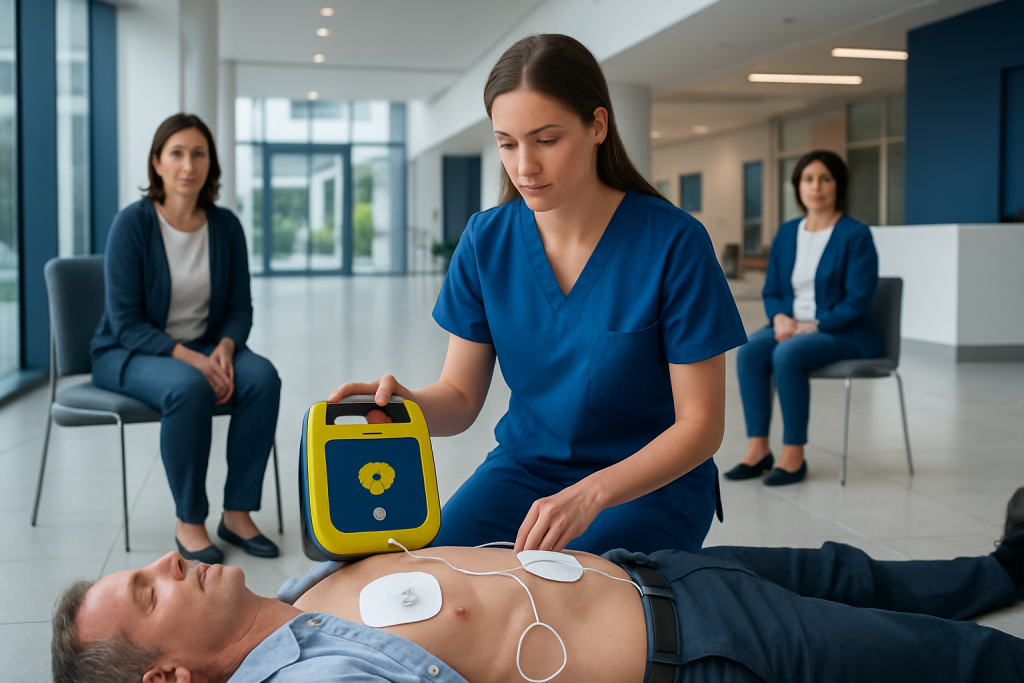
An AED should be used immediately for a person who is unresponsive and not breathing normally or is only gasping. Call local emergency services and begin high-quality CPR while someone brings the AED.
Key Takeaways
- An AED should be used immediately for a person who is unresponsive and not breathing normally or is only gasping.
- Call local emergency services and begin high-quality CPR while someone brings the AED.
- AEDs analyze the heart rhythm and advise a shock only when appropriate; users should follow the device prompts.
- Everyone must stay clear of the person while the AED analyzes the rhythm and while a shock is delivered.
- Resume CPR immediately after a shock or a no-shock message, unless the person begins showing clear signs of life.
- AED use is not a substitute for emergency medical care; professional assessment is needed even if the person wakes up.
To use an AED defibrillator, call emergency services, begin CPR, switch on the AED, attach the pads to the bare chest, and follow its voice or visual instructions. AEDs are designed for public use and can help deliver a shock only when the device identifies a shockable heart rhythm.
Overview: How an AED Helps During Cardiac Arrest
Knowing how to use AED defibrillator equipment can help a bystander respond to a suspected sudden cardiac arrest. An automated external defibrillator (AED) is a portable device that checks the heart’s electrical rhythm and, if needed, instructs the user to give a controlled electric shock. Its spoken and visual prompts are designed to guide people with little or no medical training.
An AED is used when a person suddenly collapses, is unresponsive, and is not breathing normally. Occasional gasping or irregular breaths can occur in cardiac arrest and should not be mistaken for normal breathing. The priority is to activate local emergency services, begin CPR, and use an AED as soon as one is available.
The device does not restart every stopped heart. Defibrillation is most helpful for certain abnormal rhythms, particularly ventricular fibrillation and pulseless ventricular tachycardia. If the rhythm is not one that benefits from a shock, the AED will state that no shock is advised and will direct the rescuer to continue CPR.
How an AED Works and Who It Is For
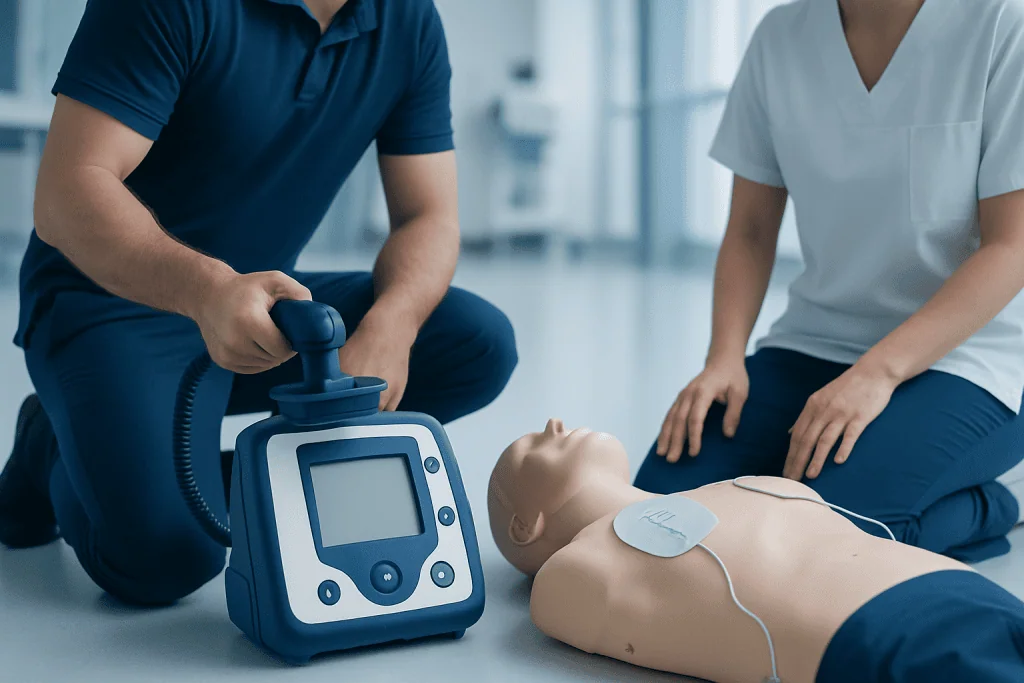
AED pads placed on the chest detect the heart’s rhythm. The AED then analyzes that rhythm automatically and determines whether a shock may be beneficial. Modern devices are designed to prevent a shock from being delivered unless the device advises it, which makes prompt use by trained or untrained bystanders appropriate in an emergency.
An AED may be used for adults, children, and infants who are unresponsive and not breathing normally. For children and infants, pediatric pads or a pediatric setting should be used when available because these reduce the delivered energy. If pediatric pads are unavailable, adult pads can generally be used in a life-threatening emergency, following the AED instructions and local resuscitation guidance.
AEDs are commonly found in airports, schools, sports facilities, workplaces, shopping centers, and other public locations. Anyone who is willing and able can use one during a suspected cardiac arrest. Dispatchers may also provide real-time CPR and AED instructions by phone while emergency teams are on their way.
What Are the 7 Steps of Using an AED?
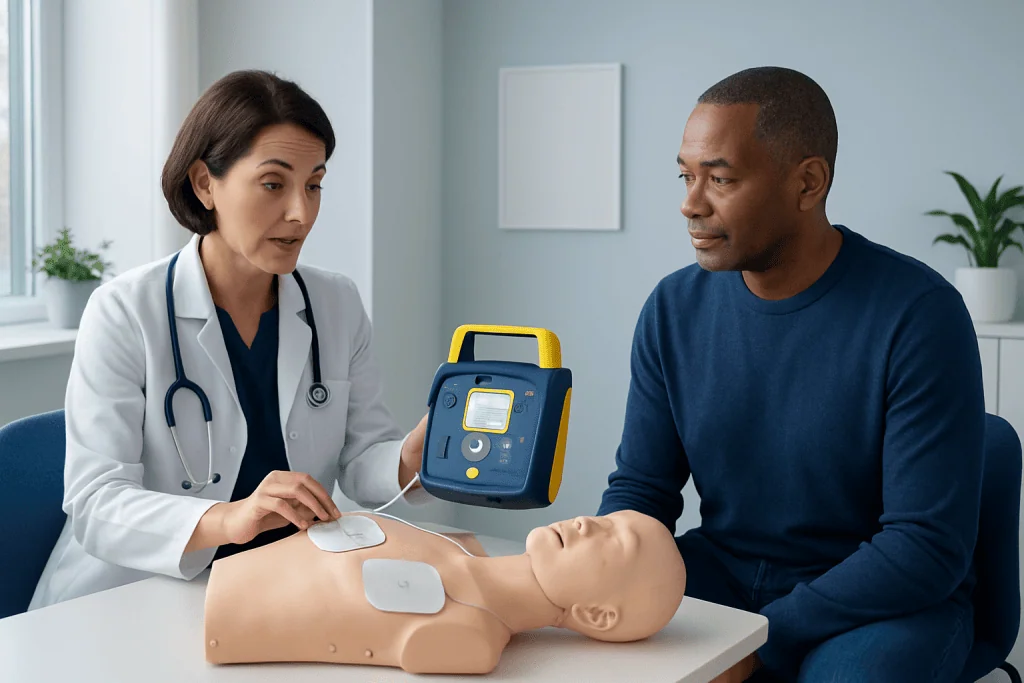
The following seven steps provide a practical sequence for using an AED. Local emergency numbers and AED models vary, so the device prompts and emergency dispatcher instructions should always take priority.
- 1. Check responsiveness and breathing. If the person does not respond and is not breathing normally or is only gasping, treat this as a suspected cardiac arrest.
- 2. Call emergency services. Ask another person to call and bring an AED if possible. If alone, follow local dispatcher guidance.
- 3. Start CPR. Give chest compressions in the center of the chest, hard and fast, while the AED is being retrieved.
- 4. Turn on the AED. Open the device and press the power button if needed. Listen to the prompts.
- 5. Expose and prepare the chest. Remove clothing, dry a wet chest, and quickly remove medication patches from pad locations.
- 6. Apply the pads and allow analysis. Place pads exactly as pictured. Ensure no one is touching the person while the device analyzes the rhythm.
- 7. Deliver a shock if advised, then resume CPR. Make sure everyone is clear before pressing the shock button when instructed. Begin CPR again immediately after the shock or after a no-shock message.
CPR should be interrupted as little as possible. After about two minutes of CPR, most AEDs will prompt another rhythm analysis. Continue this cycle until emergency professionals take over, the person begins breathing normally and showing clear signs of life, or it becomes unsafe to continue.
How Do You Correctly Use an AED Defibrillator?
Correct AED use starts with recognizing that the situation may be cardiac arrest and acting without delay. Send someone to call emergency services and retrieve the nearest AED, or call on speakerphone if alone. Start chest compressions while waiting, placing the heel of one hand in the center of the chest and pressing firmly and quickly.
Once the AED arrives, expose the person’s chest and turn on the device. Remove the backing from the adhesive pads and place them according to the pictures: typically one pad on the upper right chest below the collarbone and the other on the left side of the chest below the armpit. Do not place pads over implanted device bulges, medication patches, or very wet skin.
When the AED says it is analyzing, loudly tell everyone to stand clear and visually confirm that nobody is touching the person. If a shock is advised, again make sure nobody is in contact with the person before pressing the shock button on a semi-automatic AED. Some fully automatic AEDs deliver the shock themselves after a warning.
Afterward, immediately restart chest compressions. Do not pause to check for a pulse unless instructed by a trained professional or dispatcher. If the person starts breathing normally, keep them under observation, place them in a recovery position if appropriate, and remain ready to resume CPR if they become unresponsive again.
What Is the 3-Minute Rule for AED?
The phrase “3-minute rule” is not a universal formal AED rule. It is often used to emphasize that defibrillation should happen as quickly as possible after a witnessed cardiac arrest, ideally within the first few minutes, because early CPR and early defibrillation can improve the chance of survival for rhythms that respond to a shock.
The practical message is not to wait for three minutes. Call emergency services, start CPR immediately, and attach the AED as soon as it arrives. Every effort should be made to minimize delays, including keeping public AEDs accessible and ensuring bystanders know where they are located.
If an AED is not immediately available, chest compressions remain essential. Continue CPR until an AED arrives or emergency responders take over. A dispatcher can guide an untrained bystander through the steps and help coordinate access to nearby emergency resources.
Do You Remove a Woman's Bra for CPR?
For CPR alone, it is usually not necessary to remove a bra. Chest compressions are performed in the center of the chest over clothing if needed, and treatment should not be delayed to remove garments. The immediate priorities are calling emergency services and starting effective chest compressions.
For AED pad placement, the chest needs to be exposed enough for the adhesive pads to make direct contact with dry skin. A bra, especially one with underwire or metal components, may interfere with pad placement and should be removed or cut away if it is in the way. A responder should protect the person’s privacy as much as possible while acting quickly.
Clothing can be cut or moved aside to expose the chest. If possible, use a jacket, towel, or other item to cover areas not needed for pad placement, but do not allow privacy concerns to delay lifesaving care. Cardiac arrest is a medical emergency, and prompt action is the priority.
Benefits, Limitations, and Safety Considerations
The main benefit of an AED is that it allows defibrillation to be provided before emergency teams arrive when a person has a shockable cardiac rhythm. It gives clear prompts, analyzes the rhythm, and includes safeguards intended to reduce the risk of an inappropriate shock. Combining AED use with CPR supports blood flow to the brain and other organs until advanced care is available.
AEDs have limitations. They cannot treat every cause of collapse or every cardiac rhythm, and a no-shock message does not mean that the person no longer needs help. CPR and emergency medical assessment remain necessary. Even if a person regains consciousness, the cause of the event must be evaluated urgently in a hospital.
Before attaching pads, quickly dry a wet chest and move the person away from standing water if it can be done safely. Remove medication patches from the pad area and wipe away any residue. If the person has a visible pacemaker or implanted defibrillator under the skin, place the AED pad at least several centimeters away from the device rather than directly over it.
Do not touch the person during rhythm analysis or shock delivery, and do not use an AED in an explosive or flammable environment. If the person is wearing a transdermal medication patch where a pad needs to go, remove it using gloves or a barrier if available. Follow the AED instructions at every stage.
When to Seek Medical Care
Emergency medical care is needed immediately for any person who is unresponsive and not breathing normally. Call local emergency services, start CPR, and use an AED if available. A person who recovers after collapse, receives an AED shock, or has chest pain, fainting, severe shortness of breath, or a new irregular heartbeat also needs urgent assessment.
People who have experienced unexplained fainting, recurrent palpitations, or a close family history of sudden cardiac death should discuss these concerns with a qualified clinician. Assessment may include a medical history, physical examination, heart rhythm testing, and other investigations based on the person’s symptoms and risk factors.
Sudden cardiac arrest can arise from several underlying heart conditions, including coronary artery disease. Ongoing prevention and treatment may involve evaluation by cardiology specialists and, in selected patients, procedures such as coronary angiography to investigate blood flow in the heart.
Acibadem International’s multidisciplinary specialists and JCI-accredited hospitals diagnose and treat heart conditions for international patients. People with known heart disease can ask their clinician about appropriate follow-up, emergency planning, and CPR/AED training opportunities in their community.
Frequently asked questions
Can anyone use an AED?
Yes. AEDs are designed so that trained and untrained bystanders can follow their prompts during a suspected cardiac arrest. Calling emergency services and starting CPR should happen at the same time as someone retrieves the device whenever possible.
Should CPR be stopped while setting up an AED?
CPR should continue until the AED is ready to analyze the heart rhythm. Pauses should be as brief as possible, especially while pads are being placed. Everyone must stop touching the person during analysis and shock delivery.
Can an AED shock someone who does not need it?
An AED analyzes the heart rhythm and advises a shock only if it detects a rhythm that may benefit from defibrillation. The device's built-in safeguards are intended to prevent a shock when it is not advised. The rescuer should always follow the AED prompts.
What if the person has a pacemaker or implanted defibrillator?
A visible implanted device may appear as a small bump under the skin, often near the upper chest. AED pads should not be placed directly over it; place the pad a few centimeters away instead. Do not delay AED use because of an implanted device.
Can an AED be used on a child?
Yes, an AED can be used for a child or infant in cardiac arrest. Pediatric pads or a pediatric setting should be used when available. If they are not available, an adult AED may still be used according to the device instructions and local emergency guidance.
What should happen after an AED shock?
Chest compressions should restart immediately after a shock, without waiting to see whether the person wakes up. The AED will usually guide the rescuer through another period of CPR before it reassesses the rhythm. Emergency services should remain on the way or be called as soon as possible.
References
- American Heart Association
- European Resuscitation Council
- International Liaison Committee on Resuscitation
- American Red Cross
- Mayo Clinic
This article is for general information only and is not a substitute for professional medical advice. Please consult a qualified doctor about your individual situation.
Heart care in Turkey — expert evaluation and treatment
JCI-accredited · board-certified surgeons · reply within 24h
Add us as a Preferred Source to see more of our trusted health content across Google Search, AI Overviews and Discover.