Pediatric Massage Therapy: How It Works, Results and What to Expect

Pediatric massage therapy uses gentle techniques adapted to a child’s age, comfort, development and health status. It may support relaxation, sleep, body awareness and muscle comfort, but it does not replace medical treatment.
Key Takeaways
- Pediatric massage therapy uses gentle techniques adapted to a child’s age, comfort, development and health status.
- It may support relaxation, sleep, body awareness and muscle comfort, but it does not replace medical treatment.
- A clinician should assess children with complex medical needs, recent injury, fever, skin infection or unexplained pain before massage.
- Parents can often learn safe, simple infant-massage techniques from trained health professionals.
- Benefits may be short-term or cumulative, and the response differs from one child to another.
Pediatric massage therapy is a gentle, age-appropriate approach that may help some babies, children and adolescents feel more relaxed, comfortable and supported during recovery or rehabilitation. It should be tailored to the child’s health needs and provided or taught by a qualified professional, especially when a child has a medical condition.
Overview: What Is Pediatric Massage Therapy?
Pediatric massage therapy is the use of gentle, planned touch techniques for babies, children and adolescents. It may be used to support relaxation, comfort, sleep, body awareness and movement. Depending on a child’s needs, it can be provided by a trained massage therapist, physiotherapist, occupational therapist or another clinician experienced in pediatric care.
The approach is not simply an adult massage made smaller. Pressure, duration, positioning and the areas treated are adjusted for the child’s age, size, communication abilities, sensory preferences and medical history. Sessions may include light stroking, gentle kneading, passive movement, calming touch or parent-guided massage routines.
Pediatric massage therapy may be considered as a supportive part of wider care, such as rehabilitation after illness or injury. It is not a cure for disease and should not delay assessment or treatment for symptoms that need medical attention. For children receiving rehabilitation, massage may sometimes be combined with physical therapy goals such as comfortable movement and participation in daily activities.
How Pediatric Massage Therapy Works
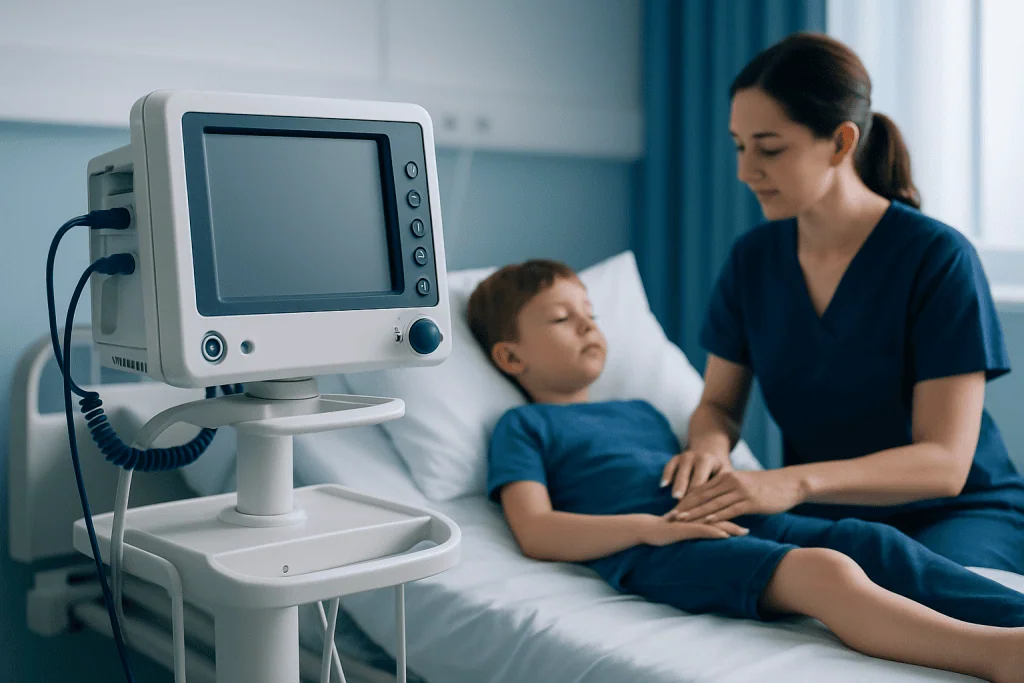
Touch receptors in the skin and deeper tissues send signals to the brain and nervous system. Calm, predictable touch may help a child feel safe and settled, particularly when it is delivered at a pace they can tolerate. Gentle massage can also temporarily reduce the sensation of muscle tightness or soreness and encourage awareness of different body areas.
The therapist begins by observing the child’s posture, movement, skin condition, comfort and responses to touch. For infants and younger children, the parent or caregiver is often actively involved. This can help the child feel secure and allows the family to continue suitable techniques at home when advised.
For children with sensory sensitivities, the therapist may start with brief contact over clothing, allow the child to choose where touch begins, or use play and breathing exercises to build comfort. The child’s verbal and nonverbal cues guide the session. Pulling away, becoming upset, guarding an area or showing pain are reasons to pause and reassess.
Who May Be a Candidate for Pediatric Massage Therapy?
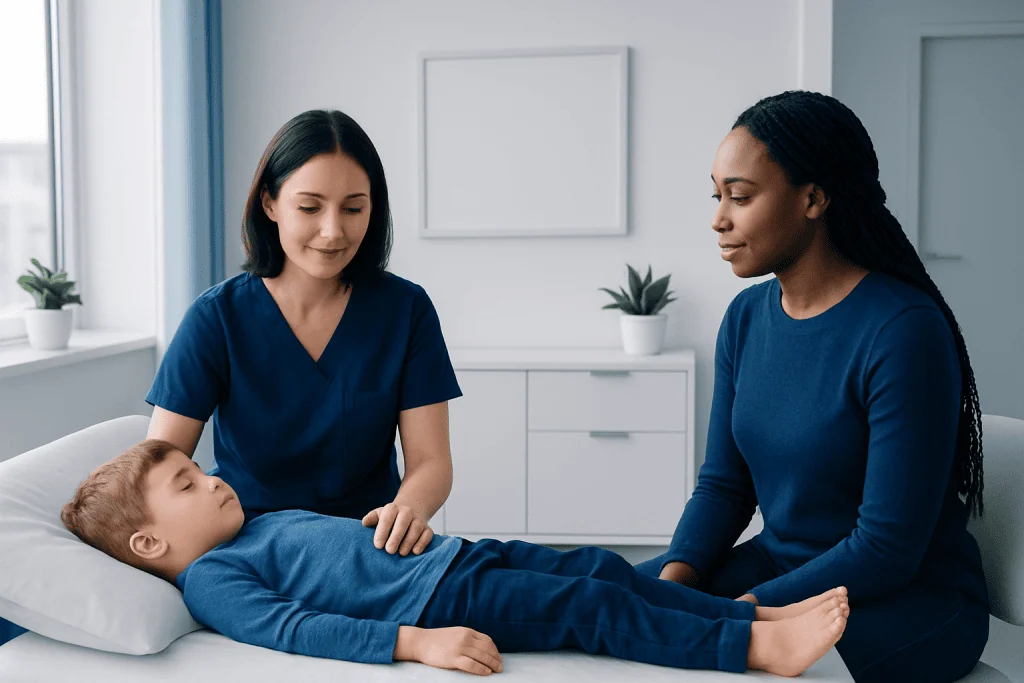
Healthy infants and children may receive gentle massage for bonding and relaxation. Older children and adolescents may use it for temporary muscle comfort after activity, stress-related tension or as part of a supervised rehabilitation plan. The most suitable approach depends on the child’s goals and overall health.
Children who have mobility limitations, muscle stiffness, developmental differences, chronic discomfort or recovery needs may benefit from an individualized clinical assessment. Massage may be one supportive element of care for some children with cerebral palsy, although the plan should be created with the child’s pediatric and rehabilitation team. It is not appropriate to assume that the same technique will help every child with a similar diagnosis.
A healthcare professional should be consulted before massage if a child has a complex condition, is medically fragile, has had recent surgery, has a bleeding disorder, takes medicines that increase bleeding risk, has a central line or other medical device, or is receiving cancer treatment. The clinician can identify precautions and coordinate care with relevant specialists.
- Suitable goals may include relaxation, parent-infant bonding, comfort and gentle support during rehabilitation.
- Massage should be postponed or modified when it causes distress, pain or worsening symptoms.
- Consent and assent matter: children should be given choices and may stop at any time.
What Happens During a Pediatric Massage Session?
Before the first session, the provider reviews the child’s medical history, current symptoms, allergies, skin concerns, medications, communication needs and family goals. Parents or guardians provide consent, and the child is involved in age-appropriate decisions. A pediatric setting should feel calm, private and respectful, with a parent or caregiver present when appropriate.
The session usually starts with simple explanation and familiarization. The therapist may demonstrate touch on a doll, on the parent’s hand or over the child’s clothing. The child can choose music, a position, a comfort item or whether to begin with hands, feet, shoulders or another non-sensitive area.
Gentle techniques are then used for a short, individualized period. Infants may be massaged while awake and calm, often with the caregiver performing the movements under guidance. For school-age children and teenagers, treatment may focus on areas of muscular tension while maintaining clear professional boundaries and appropriate draping.
At the end, the therapist checks how the child feels and may offer a simple home routine. Families should only use products recommended for the child’s age and skin sensitivity. Strong pressure, forceful stretching, deep tissue work and painful techniques are generally not appropriate for children without specific clinical direction.
Benefits, Results and Recovery Timeline
Some children appear calmer during or shortly after massage, and families may notice temporary improvements in comfort, sleep readiness or willingness to move. In infants, gentle caregiver-led massage may also support bonding and help parents become more confident in reading their baby’s cues. Results are personal and can vary with the child’s condition, environment and response to touch.
For muscle-related discomfort, the relaxing effect of a single massage may last from a few hours to a day or longer, but there is no fixed timeline. When massage is used within a rehabilitation program, repeated sessions and home strategies may help support ongoing goals. It should be viewed as a complement to, rather than a replacement for, medical assessment, exercise guidance or other recommended treatment.
Most children can return to normal activities immediately after a gentle session. They may feel sleepy, relaxed or temporarily more aware of a treated area. Offering water, a quiet activity and time to rest can be helpful. If a child develops pain, dizziness, rash, unusual fatigue or symptoms that persist, the family should contact a healthcare professional.
Evidence for pediatric massage is strongest for selected supportive outcomes, such as relaxation and short-term comfort, while evidence for treating specific medical conditions varies. Families should ask the clinician what benefit is realistic for their child and how progress will be monitored.
Is It Safe for a Child to Get Massage Treatment?
Pediatric massage can be safe when it is gentle, individualized and delivered by a properly trained provider who understands the child’s health history. A safe session respects the child’s comfort, avoids painful pressure and stops if the child shows distress. Parents or guardians should be informed about the purpose of massage, what areas will be touched and how the child can communicate “stop.”
Massage is not suitable over broken skin, burns, active rashes, infected areas, fresh surgical wounds, suspected fractures, blood clots or areas of unexplained swelling. It should also be avoided when a child has fever, vomiting, acute illness or pain that has not been assessed. Extra precautions are needed for children with cancer, bone fragility, bleeding risks or implanted medical devices.
Possible minor effects include temporary soreness, sleepiness, ticklishness or emotional discomfort. More significant problems are uncommon with gentle, appropriate care, but excessive pressure or treatment without proper screening can cause harm. A qualified clinician can advise whether massage is appropriate and what modifications are needed.
Is Pediatric Massage a Thing? What Age Is Best for Baby Massage?
Yes. Pediatric massage is a recognized supportive practice used in some pediatric, rehabilitation and neonatal settings, as well as in parent education. Its main feature is adaptation: techniques are chosen around the child’s development, medical needs, sensory profile and preferences rather than applying a standard adult routine.
For baby massage, there is no single “best” age. Many parents begin after the newborn period when the baby is medically well, feeding normally and showing calm, alert periods. Premature babies or infants with health conditions may need individualized advice from their neonatal or pediatric team before massage begins.
The best time is usually when the baby is awake, settled and not hungry, overly tired or immediately after a feed. A brief routine may begin with the legs, feet or arms, watching closely for cues such as relaxed limbs, eye contact or contented sounds. Crying, turning away, stiffening, hiccups or fussiness may mean the baby needs a break.
Families should use only a small amount of a mild, age-appropriate product if one is needed, and avoid oils or fragrances that irritate the skin. A pediatrician, nurse, physiotherapist or trained infant-massage educator can demonstrate a safe routine for the family.
When to Seek Medical Care
Massage should not be used to diagnose or manage unexplained symptoms at home. A child should be assessed promptly for severe or increasing pain, a new limp, weakness, numbness, swelling, fever, an injury, persistent headache, breathing difficulty or a sudden change in behavior or activity level.
Medical advice is also important if a baby is feeding poorly, unusually sleepy, inconsolable, has a fever or develops a rash. These symptoms can have many causes and need appropriate evaluation rather than massage alone.
For families considering pediatric massage as part of a rehabilitation plan, a pediatrician or specialist can help identify safe goals and referrals. Acibadem International’s multidisciplinary specialists and JCI-accredited hospitals support diagnosis and treatment planning for international patients, including coordinated pediatric rehabilitation when clinically appropriate.
Frequently asked questions
Is pediatric massage therapy the same as adult massage?
No. Pediatric massage therapy is adapted to a child’s body size, development, health history and comfort with touch. It usually uses lighter pressure, shorter sessions and clear involvement of a parent or guardian.
How long do the results of a massage last?
Relaxation or muscle-comfort effects may last hours, a day or sometimes longer, but the response differs between children. Massage does not create permanent changes after one session, and ongoing goals should be reviewed with the child’s healthcare team.
Can parents give their child a massage at home?
Many parents can learn simple, gentle routines for a healthy baby or child. It is best to receive guidance first if the child has a medical condition, recent injury, sensitive skin, developmental needs or ongoing pain.
Should massage be used when a child has muscle pain after sport?
Gentle massage may provide short-term comfort for mild, familiar muscle soreness when there is no injury concern. Pain after a fall, marked swelling, bruising, weakness, inability to bear weight or persistent pain needs medical assessment.
Can massage help a child with anxiety or sleep difficulties?
A calm massage routine may help some children relax and prepare for sleep, especially when paired with predictable bedtime habits. It is not a substitute for professional support when anxiety or sleep problems are persistent, severe or affecting daily life.
What should parents look for in a pediatric massage provider?
Parents should seek a licensed or appropriately qualified professional with specific training and experience in working with children. The provider should take a health history, welcome parent involvement, explain boundaries clearly and adapt or stop treatment according to the child’s cues.
References
- American Academy of Pediatrics
- World Health Organization
- American Massage Therapy Association
- National Center for Complementary and Integrative Health
This article is for general information only and is not a substitute for professional medical advice. Please consult a qualified doctor about your individual situation.
Explore treatments in Turkey — costs, top hospitals & a free quote
JCI-accredited · board-certified surgeons · reply within 24h
Add us as a Preferred Source to see more of our trusted health content across Google Search, AI Overviews and Discover.