When Was LASIK Invented: An Evidence-Based Patient Guide

Modern LASIK was introduced in 1990, although the laser technology and corneal procedures behind it were developed over earlier decades. The FDA first approved a LASIK system in the United States in 1999; approval applies to specific devices and indications.
Key Takeaways
- Modern LASIK was introduced in 1990, although the laser technology and corneal procedures behind it were developed over earlier decades.
- The FDA first approved a LASIK system in the United States in 1999; approval applies to specific devices and indications.
- LASIK reshapes the cornea to correct common refractive errors, including myopia, hyperopia, and some astigmatism.
- Not everyone is a suitable candidate; corneal health, prescription stability, dry-eye symptoms, age, and eye disease all matter.
- Most people recover functional vision quickly, but visual outcomes can change over time because the eyes continue to age.
LASIK was developed in 1990 by combining corneal flap surgery with excimer-laser reshaping; the first FDA approval for a LASIK laser system in the United States followed in 1999. Today, it is an elective vision-correction procedure that can reduce dependence on glasses or contact lenses for carefully selected adults.
Overview: when was LASIK invented?
LASIK was first developed in 1990, when ophthalmologist Dr. Ioannis Pallikaris and colleagues combined a thin corneal flap with excimer-laser treatment to reshape the cornea. This created the procedure known as laser-assisted in situ keratomileusis, or LASIK. The technique built on earlier work in corneal surgery and laser vision correction.
For people asking when LASIK eye surgery was invented, it helps to distinguish the procedure from the broader history of laser eye surgery. Excimer lasers began to be studied for precise corneal reshaping in the 1980s, and photorefractive keratectomy (PRK), which treats the corneal surface without creating a flap, came before LASIK. These procedures were designed to reduce refractive errors so that light focuses more accurately on the retina.
LASIK is now one of several laser refractive surgery options. A full eye assessment is important because the best approach may be LASIK, PRK, another laser procedure, an implantable lens, or continued use of glasses or contact lenses.
When was LASIK first invented and approved in the United States?
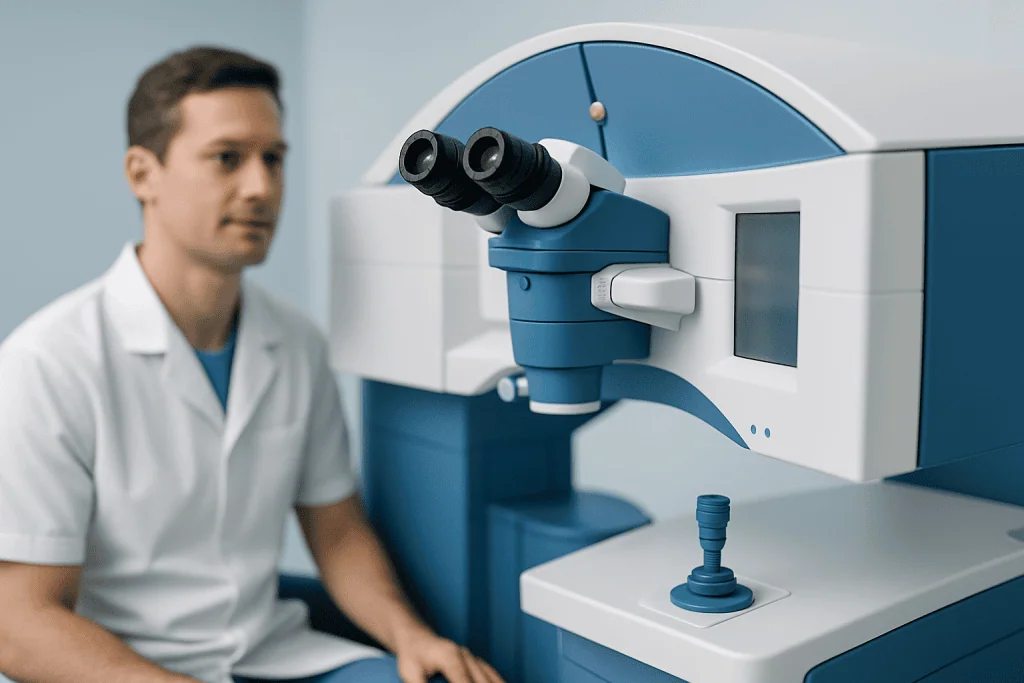
LASIK was first performed as a modern combined flap-and-laser procedure in 1990. The word “invented” can be misleading because LASIK evolved through contributions from many researchers and surgeons: radial keratotomy informed corneal refractive surgery, microkeratomes enabled flap creation, and excimer lasers made controlled tissue removal possible.
When people ask when LASIK was approved by the FDA, the usual reference point is 1999. In that year, the US Food and Drug Administration approved the first excimer laser system specifically for LASIK. Earlier FDA approvals had supported excimer-laser use for PRK. FDA clearance or approval is device- and indication-specific, meaning it does not mean that every laser platform or every patient is suitable for treatment.
So, when was laser eye surgery invented and for what purpose? Laser refractive procedures emerged from research in the 1980s and 1990s to reshape the cornea and correct focusing errors. Their purpose is to reduce reliance on corrective lenses, not to prevent all future vision changes or treat every eye condition.
How LASIK works
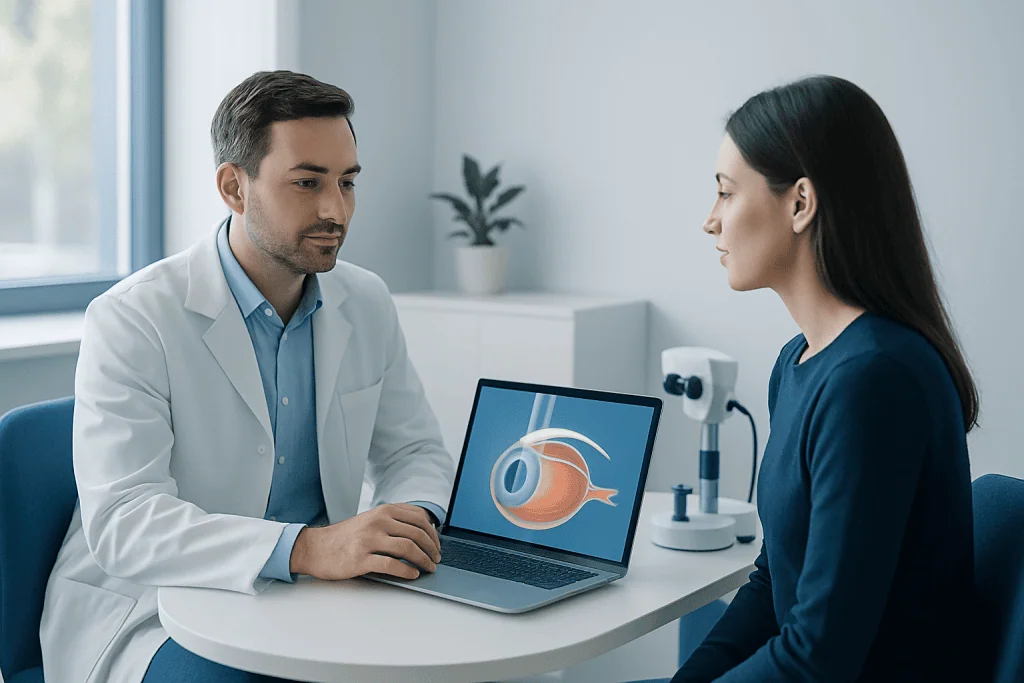
Clear vision depends on light passing through the cornea and lens and focusing precisely on the retina. In myopia, or short-sightedness, light focuses in front of the retina. In hyperopia, or long-sightedness, it focuses behind it. Astigmatism occurs when the cornea or lens has an uneven curvature, causing blurred or distorted vision.
During LASIK, a surgeon creates a very thin flap in the outer cornea. This may be made with a femtosecond laser or, less commonly, a mechanical microkeratome. The flap is gently lifted, and an excimer laser removes microscopic amounts of corneal tissue beneath it according to a personalized treatment plan. The flap is then repositioned without stitches.
The goal is to alter corneal curvature so incoming light focuses more accurately. LASIK treats refractive error, not the underlying aging of the eye. It also does not treat retinal disease, glaucoma, cataracts, or other conditions that may affect sight independently of prescription.
Who may be a candidate for LASIK?
LASIK may be considered for adults with stable refractive error, healthy corneas, and realistic expectations. A preoperative examination typically measures corneal thickness and shape, pupil size, tear production, eye pressure, and the degree of refractive error. It also reviews general health, medications, pregnancy status, contact-lens use, and visual needs at work or during hobbies.
People may not be suitable candidates if they have an unstable prescription, thin or irregular corneas, significant dry eye, active eye infection or inflammation, uncontrolled autoimmune disease, certain corneal disorders, or advanced cataracts. Keratoconus and related corneal thinning conditions require particular attention because LASIK can be unsafe when the cornea lacks structural stability.
Age matters as well. LASIK does not stop presbyopia, the age-related reduction in near focusing that commonly becomes noticeable from the 40s onward. A person who sees well at distance after LASIK may still need reading glasses later. An ophthalmologist can discuss whether monovision correction, glasses, or another approach is appropriate.
- Stable glasses or contact-lens prescription for an appropriate period
- Enough corneal thickness and a regular corneal shape
- No untreated ocular surface disease or severe dry eye
- Clear understanding that results vary and reading vision may change with age
What happens during LASIK and recovery?
LASIK is generally performed as an outpatient procedure. Before treatment, anesthetic eye drops are used to numb the surface of the eye. The patient remains awake and is asked to look toward a fixation light. The surgeon creates and lifts the corneal flap, applies the laser treatment for a short time, then carefully returns the flap to position.
Vision may seem hazy or fluctuate during the first hours and days. Many people notice useful distance vision within a day or two, but the surface of the eye and vision quality can take weeks to settle. Follow-up visits allow the ophthalmologist to monitor healing, check vision, and look for inflammation, dryness, or flap-related concerns.
Patients are usually advised to use prescribed drops, avoid rubbing the eyes, and protect the eyes during sleep for the period recommended by their surgical team. Swimming, dusty environments, eye makeup, and contact sports may need to be avoided temporarily. Recovery instructions vary by individual and should always take priority over general guidance.
Benefits, limitations, and possible risks
The potential benefit of LASIK is reduced dependence on glasses or contact lenses for distance activities. Some people achieve vision that meets legal driving standards without glasses, while others may still need glasses for certain tasks, especially in dim light or for detailed work. An enhancement procedure may occasionally be discussed if a meaningful residual prescription remains after healing.
Possible temporary effects include dry-eye symptoms, glare, halos, starbursts, fluctuating vision, and sensitivity to light. These may be more noticeable at night early in recovery. Less common but important complications include infection, inflammation, irregular healing, flap problems, undercorrection or overcorrection, and reduced best-corrected vision. Careful screening and follow-up help lower risk but cannot remove it completely.
People considering laser vision correction should compare the likely benefits with alternatives, including glasses, contact lenses, PRK, or lens-based procedures. The decision is personal and should be based on eye health, lifestyle, visual priorities, and the findings of a qualified ophthalmologist.
Why don't doctors recommend LASIK?
Doctors do recommend LASIK for many appropriately selected patients, but they do not recommend it for everyone. The procedure is elective, and an ethical recommendation requires that the expected benefit outweigh potential risks for that individual. A doctor may advise against LASIK when corneal measurements are unsuitable, dry eye is substantial, the prescription is changing, or another eye condition needs attention first.
Some people prefer not to have surgery because glasses or contact lenses already meet their needs. Others may be better suited to PRK, which does not involve a corneal flap, or to a lens-based option. A responsible consultation should include a discussion of alternatives rather than assuming LASIK is the best choice.
People with significant night-driving demands, complex visual requirements, or a history of eye trauma may need particularly individualized advice. Asking why a particular procedure is recommended—or not recommended—can help a patient make an informed decision.
What happens 10 years after LASIK, and when to seek medical care
Ten years after LASIK, many people continue to have stable and useful distance vision. However, the eye can change with time even when the cornea remains stable after surgery. Presbyopia can lead to a need for reading glasses, and some people develop a gradual return of refractive error. Cataracts can also develop with age and may change prescription or require separate treatment.
Regular eye examinations remain important after LASIK. The procedure does not protect against glaucoma, retinal tears, macular disease, diabetes-related eye changes, or other eye-health concerns. It is important to tell future eye-care professionals about prior LASIK because it can affect some corneal measurements used in later care.
When to seek medical care: prompt ophthalmic assessment is needed for sudden vision loss, severe or worsening eye pain, marked redness, significant light sensitivity, discharge, new flashes of light, a shower of floaters, or a curtain-like shadow in vision. These symptoms are not expected parts of long-term LASIK recovery and can have several causes that require timely evaluation.
Acibadem International’s multidisciplinary eye-care specialists at JCI-accredited hospitals assess refractive vision concerns and provide individualized treatment planning for international patients.
Frequently asked questions
When was LASIK first invented?
Modern LASIK was developed and first performed in 1990. It combined an earlier corneal flap technique with excimer-laser corneal reshaping. The procedure developed from decades of research in refractive surgery and laser technology.
When was LASIK approved by the FDA?
The first FDA approval for an excimer laser system used specifically for LASIK in the United States came in 1999. FDA authorization relates to particular devices and approved uses, rather than guaranteeing suitability for every person. An ophthalmologist determines whether a patient is an appropriate candidate.
Why don't doctors recommend LASIK?
Doctors may advise against LASIK when the cornea is too thin or irregular, the prescription is unstable, dry eye is significant, or another eye condition is present. They may also recommend an alternative procedure, glasses, or contact lenses when these better fit the person’s eye health and needs. Not recommending LASIK does not necessarily mean a person has a serious eye problem.
What eye surgery did Taylor Swift get?
There is no reliable, confirmed public medical information establishing that Taylor Swift has had a particular eye surgery. Health decisions and medical records are private, and online claims about a celebrity’s treatment should not be used as medical guidance. Anyone considering vision correction should base the decision on a personal ophthalmology assessment.
What happens 10 years after LASIK?
Many people maintain good distance vision for years after LASIK. However, age-related near-vision changes can still lead to reading-glass use, and some people experience a gradual return of prescription. Routine eye examinations remain important because LASIK does not prevent cataracts, glaucoma, retinal disease, or other eye conditions.
Is LASIK permanent?
The corneal tissue reshaped during LASIK does not grow back, so the surgical change itself is permanent. However, the eyes and vision can still change over time because of aging, hormonal factors, cataracts, or progression of refractive error. Some people may later need glasses, contact lenses, or an enhancement after an ophthalmologist’s assessment.
References
- US Food and Drug Administration
- American Academy of Ophthalmology
- National Eye Institute
- Mayo Clinic
This article is for general information only and is not a substitute for professional medical advice. Please consult a qualified doctor about your individual situation.
LASIK in Turkey — costs, top hospitals & a free quote
JCI-accredited · board-certified surgeons · reply within 24h
Add us as a Preferred Source to see more of our trusted health content across Google Search, AI Overviews and Discover.