Spinal Fusion for Scoliosis: Procedure, Recovery and Results
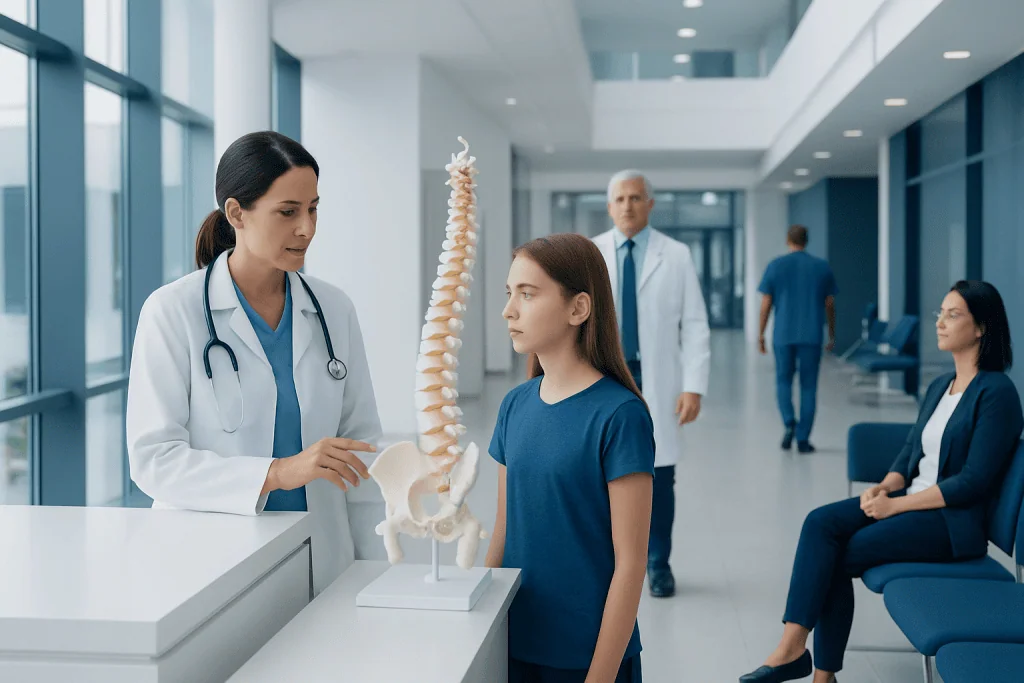
Spinal fusion permanently stabilizes the treated part of the spine; it does not fuse every vertebra. Most people are encouraged to stand and walk soon after surgery, while bone fusion continues for many months.
Key Takeaways
- Spinal fusion permanently stabilizes the treated part of the spine; it does not fuse every vertebra.
- Most people are encouraged to stand and walk soon after surgery, while bone fusion continues for many months.
- Pain is expected early in recovery but is managed with a structured, individualized plan that changes as healing progresses.
- The decision to operate depends on curve size, progression, balance, symptoms, age, growth remaining and overall health.
- Follow-up visits and imaging are important for checking wound healing, alignment, implants and bone fusion.
Spinal fusion for scoliosis is an operation that joins selected vertebrae so that a spinal curve can be corrected and remain stable as the bones heal together. It is usually considered for progressive or larger curves, particularly when bracing is unlikely to provide enough control or when symptoms and spinal balance are significant.
Overview: how spinal fusion for scoliosis works
Spinal fusion for scoliosis is a surgical procedure used to correct and stabilize a curved spine. During the operation, a surgeon carefully aligns selected vertebrae and places bone graft material between them. Over time, the graft heals into solid bone, creating one stable segment across the treated curve.
Metal screws, hooks, rods or wires may be attached to the spine to hold the correction in position while fusion occurs. These implants usually remain in place permanently and are not themselves what causes fusion; rather, they provide support while the body makes new bone.
The aim is not to make the whole spine rigid. The surgical team plans the lowest and highest levels of fusion carefully to preserve as much movement as possible while achieving a balanced, stable result. For background on the condition and curve monitoring, patients may also find scoliosis information helpful.
Who may be a candidate for surgery?
Spinal fusion may be considered when a scoliosis curve continues to progress, is large enough that further progression is likely, or significantly affects posture, spinal balance, comfort or daily function. In adolescents with idiopathic scoliosis, surgery is commonly discussed when the curve is substantial or keeps increasing despite observation or bracing. The exact threshold varies because treatment is individualized.
Adults may be assessed for surgery when scoliosis is associated with persistent pain, worsening imbalance, nerve compression, weakness, reduced walking tolerance or a curve that progresses over time. Not everyone with scoliosis needs surgery. Many mild or stable curves can be monitored and managed without an operation.
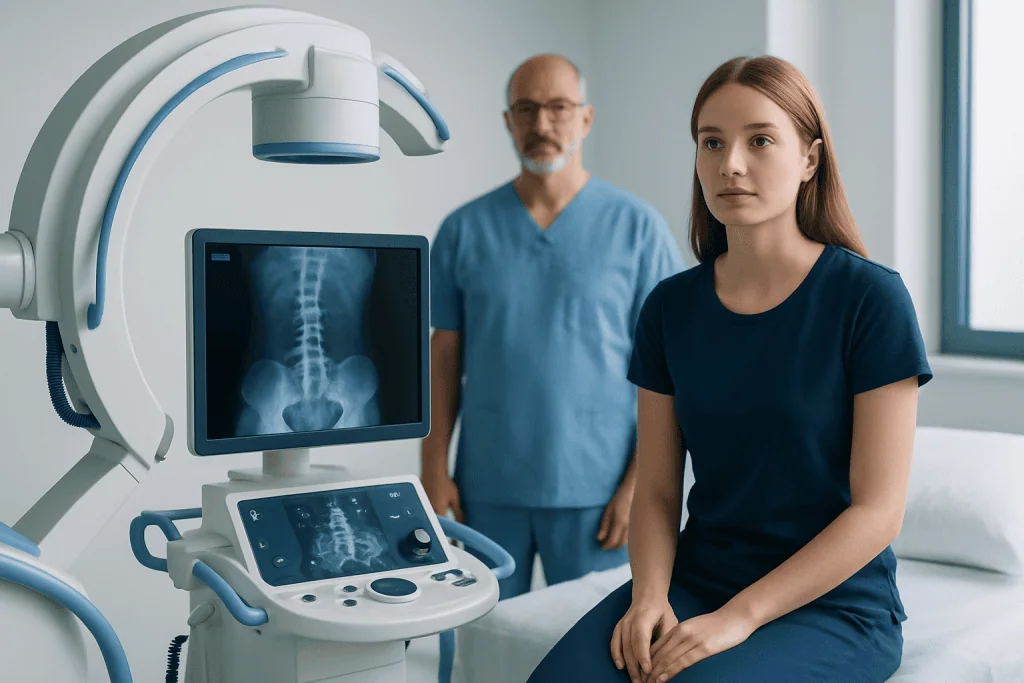
Planning includes the person’s age, bone health, remaining growth, curve flexibility, symptoms, medical conditions, previous treatment and goals. X-rays are central to planning, and some people also need MRI or CT imaging to assess nerves, discs, bone anatomy or prior surgical changes.
- Children and teenagers are usually assessed by pediatric spine specialists when growth remains.
- Adults may need evaluation of bone density, arthritis, disc changes and nerve symptoms.
- Smoking or nicotine use, poor nutrition and certain health conditions can slow bone healing and should be addressed before surgery.
What happens during spinal fusion surgery for scoliosis?
The surgical plan is specific to the curve pattern. Most scoliosis fusion procedures are performed from the back of the spine, called a posterior approach. In selected cases, surgeons may use an anterior, lateral or combined approach. The patient receives general anesthesia and is asleep throughout the procedure.
First, the team positions the patient safely and uses imaging and nerve-monitoring technology where appropriate. The surgeon exposes the planned area of the spine, places anchors such as pedicle screws, and connects them with rods. Gentle corrective forces are applied to improve alignment while protecting the spinal cord and nerves.
Next, the surface of the selected vertebrae is prepared and bone graft is placed to encourage fusion. The graft may come from the patient, a donor source or manufactured bone-graft materials, depending on the clinical plan. The incision is then closed, and the patient is monitored in a recovery area before transfer to a hospital room.
Patients should ask their surgical team what their individual spinal fusion for scoliosis protocol includes, such as blood-conservation measures, nerve monitoring, expected hospital stay, movement restrictions and the type of rehabilitation support planned.
How long does a spinal fusion for scoliosis take?
How long a spinal fusion for scoliosis takes depends on the number of spinal levels being treated, curve stiffness, the surgical approach, whether additional procedures are needed and the person’s anatomy. Many operations take several hours, but the time in the operating room includes anesthesia, positioning, safety checks and recovery preparation as well as the surgical work itself.
Families should avoid comparing one person’s operating time directly with another’s. A longer procedure does not automatically mean a poorer outcome, and a shorter procedure is not always simpler. The surgeon can give the most useful estimate after reviewing imaging and explaining the intended fusion levels.
Hospital admission often lasts several days, although this varies by age, surgical approach, pain control, mobility and local care pathways. The care team monitors breathing, circulation, nerve function, wound drainage, bowel function and the ability to move safely before discharge.
Benefits, limitations and how successful spinal fusion surgery is
The main benefits of spinal fusion are to reduce the spinal curve, improve overall balance and prevent the treated curve from worsening. Many patients also report improved appearance of shoulder, waist or trunk symmetry. When nerve compression is present in adults, decompression performed alongside fusion may help relieve leg pain or other nerve-related symptoms.
How successful is spinal fusion surgery for scoliosis? In appropriately selected patients, surgery is generally effective at producing lasting curve correction and stability. However, success is personal: it includes safe healing, a balanced posture, meaningful function and meeting realistic goals, not simply achieving a particular X-ray measurement.
Fusion does reduce movement at the levels that are joined, but people can often return to school, work, walking, swimming and many other activities after recovery. Long-term expectations vary with the location and length of fusion, age, underlying cause of scoliosis and any other spinal conditions. A surgeon can explain which activities may need modification for an individual.
No surgery is risk-free. Potential complications include infection, bleeding, blood clots, wound problems, injury to nerves, fluid leakage around the spinal cord, implant-related problems, persistent pain, incomplete bone fusion and the need for further surgery. Serious neurologic complications are uncommon, and teams use careful planning and monitoring to reduce risk, but patients should discuss their own risk profile directly with the surgeon.
Spinal fusion for scoliosis recovery timeline and pain control
How painful is spinal fusion for scoliosis? The operation causes expected postoperative pain because muscles and tissues around the spine need to heal. Pain is not the same for every person, and modern care uses a multimodal approach that may combine different types of pain relief, early movement, positioning, ice or other non-drug measures where appropriate, and regular reassessment.
How painful is spinal fusion recovery? The first days and weeks are usually the most uncomfortable, especially when changing position, coughing or beginning to walk. Pain should gradually become easier to manage rather than steadily worsening. The team gives clear instructions on medicines, constipation prevention, safe movement and when to contact the hospital.
A scoliosis spinal fusion recovery timeline often begins with sitting, standing and short walks during the hospital stay. At home, walking is gradually increased, while bending, twisting, lifting and impact activities are limited according to the surgeon’s instructions. Many students and office workers return to modified routines within several weeks, but a full return to unrestricted sports or demanding physical work may take many months.
Bone healing continues well beyond when a person feels more comfortable. Follow-up appointments and X-rays help confirm that alignment remains stable and fusion is progressing. Rehabilitation may focus on safe walking, posture, conditioning and a gradual return to activity; the precise spinal fusion for scoliosis recovery plan differs between patients and surgical teams.
Preparing well, protecting recovery and when to seek medical care
Before surgery, patients can support healing by stopping nicotine use, optimizing nutrition, discussing all medicines and supplements, and following preoperative instructions about eating, bathing and activity. People with diabetes, anemia, low bone density or other long-term conditions may need additional preparation with their medical team.
After discharge, wound-care instructions should be followed closely. Patients should take only prescribed or approved medicines, avoid nicotine, attend scheduled reviews and increase activity only as advised. New or worsening symptoms should not be managed by simply pushing through discomfort.
When to seek medical care: urgent medical advice is important for fever, increasing redness or drainage from the wound, severe or worsening pain that is not controlled by the plan, new weakness or numbness, loss of bladder or bowel control, chest pain, shortness of breath, calf swelling, or a fall or injury after surgery. For non-urgent questions about recovery, patients should contact their surgeon or care coordinator promptly.
Acibadem International’s multidisciplinary spine specialists and JCI-accredited hospitals diagnose and treat scoliosis for international patients, with treatment planning that may include scoliosis surgery and coordinated rehabilitation when appropriate.
Frequently asked questions
Is spinal fusion the only surgery for scoliosis?
No. The best procedure depends on the type of scoliosis, curve flexibility, age, remaining growth and symptoms. Some selected younger patients may be considered for growth-modulating procedures, while others may not need surgery at all. A spine specialist can explain whether fusion is the most appropriate option.
Will scoliosis come back after spinal fusion?
The fused portion of the spine is intended to remain stable because the vertebrae heal together. However, the spine above or below the fusion can continue to change over time, particularly in people with degenerative adult scoliosis or certain underlying conditions. Regular follow-up helps identify any concerns early.
Can a person bend after scoliosis spinal fusion?
Yes, most people retain the ability to bend because unfused parts of the spine, hips and pelvis continue to move. The amount of change depends mainly on how many vertebrae are fused and where the fusion ends. Daily activities are usually possible after healing, although some movements and high-impact activities may be restricted initially.
How long is bed rest after spinal fusion for scoliosis?
Extended bed rest is generally avoided because early, supported movement can help recovery. Patients are often assisted to sit, stand and walk soon after surgery when it is safe to do so. The exact timing depends on the operation, medical status and the surgeon’s protocol.
When can someone return to school, work or sport after surgery?
Return timing varies according to recovery progress, the type of activity and the extent of fusion. Many people return to modified school or desk-based routines within weeks, while physically demanding work and contact or impact sports usually require a longer gradual progression. Clearance should come from the treating surgical team.
What are signs that spinal fusion may not be healing properly?
Persistent or increasing pain, new neurologic symptoms, wound concerns or loss of correction may require assessment, but these symptoms do not always mean that fusion has failed. Imaging and clinical examinations are used to evaluate healing. Patients should contact their surgeon rather than self-diagnosing based on symptoms alone.
References
- Scoliosis Research Society
- American Academy of Orthopaedic Surgeons
- National Institute of Arthritis and Musculoskeletal and Skin Diseases
- National Health Service
- American Academy of Pediatrics
This article is for general information only and is not a substitute for professional medical advice. Please consult a qualified doctor about your individual situation.
Spinal Fusion in Turkey — costs, top hospitals & a free quote
JCI-accredited · board-certified surgeons · reply within 24h
Add us as a Preferred Source to see more of our trusted health content across Google Search, AI Overviews and Discover.