

Smoking After Dental Implants: Risks and Safe Timelines

Smoking after dental implants can delay healing and raise failure risk. Ideally stop before surgery and avoid smoking during early recovery in Turkey.
Smoking after dental implant surgery can interfere with blood flow, wound healing and the implant’s ability to integrate with your jawbone. The safest approach is to stop before treatment and remain smoke-free throughout the healing period, following your own implant surgeon’s instructions.
At a glance
- Best approach: Stop smoking before surgery and stay smoke-free during healing
- Highest-risk period: The first days and weeks after implant placement
- Why it matters: Smoking reduces blood supply and can slow healing
- Dry socket risk: Smoking can increase risk after tooth extraction or grafting
- Travel planning: Arrange follow-up and avoid restarting smoking during your stay
- Personal advice: Your surgeon’s timeline takes priority
Smoking After Dental Implants: the short answer
You should not smoke after dental implant surgery if you can avoid it. Smoking can reduce oxygen and blood flow to healing tissues, raise the chance of infection and delayed healing, and may contribute to smoking dental implant failure by affecting how well the implant integrates with the jawbone.
There is no single timeline that is safe for everyone. Many implant teams advise stopping well before surgery and avoiding cigarettes, vaping and other nicotine products for at least the early healing period; some advise avoiding nicotine until healing and osseointegration are complete. Your surgeon’s instructions should always take priority, especially if you had an extraction, bone graft, sinus lift, multiple implants or medical conditions that affect healing.
If you are travelling for treatment in Turkey, discuss your smoking history honestly during planning. Acibadem International patient services can help coordinate your appointments and follow-up plan, but your dental surgeon is the person who should confirm the safest timeline for your individual treatment.
How long after dental implants can I smoke?
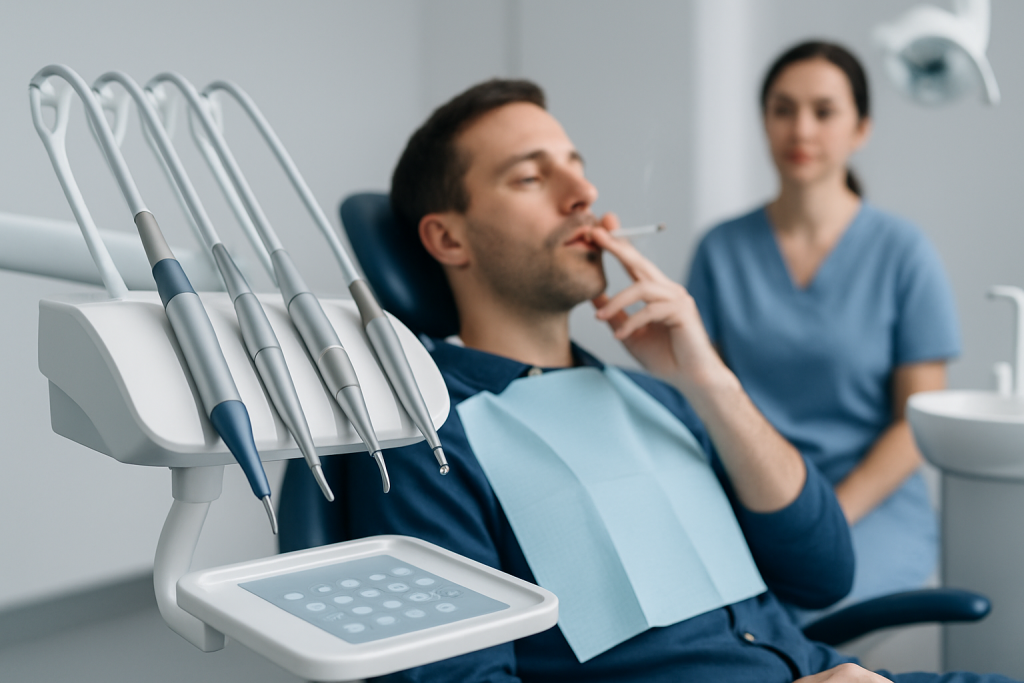
The medically cautious answer is: wait until your implant surgeon confirms that healing is stable, and avoid all nicotine for as long as they recommend. The first 72 hours are particularly important after surgery, but risk does not disappear after three days. Implant healing continues for weeks to months while the surrounding bone and gum tissues recover.
A commonly used practical framework is to stop smoking before surgery and avoid smoking for at least the first two weeks afterward, with a longer nicotine-free period often preferred during osseointegration. Your actual advice may be longer if you had a tooth removed at the same visit, required grafting, have gum disease, smoke heavily or have diabetes.
Do not treat a general timeline as permission to restart. At your review, ask whether the surgical site has healed well, whether the implant appears stable, and whether there are any reasons to continue abstaining. If stopping completely feels difficult, tell your care team before surgery so they can help you make a realistic cessation plan.
| Time around treatment | Practical smoking guidance | Why it matters |
|---|---|---|
| 2–4 weeks before surgery | Ideally stop, or begin a structured cessation plan with your clinician. | Giving tissues time without smoke exposure may support circulation and healing readiness. |
| Day of surgery | Do not smoke, vape or use nicotine unless your surgeon specifically advises otherwise. | Nicotine and inhalation can affect circulation and irritate a fresh surgical site. |
| Days 1–3 | Avoid smoking completely. | This is an early wound-healing period; suction, heat and chemicals may disrupt the clot and tissues. |
| Days 4–14 | Continue avoiding smoking and nicotine. | Gum healing is still active, and complications may not be immediately visible. |
| Weeks 3–8 | Remain smoke-free if your surgeon recommends it; attend planned reviews. | Deeper healing and bone response continue even when discomfort has improved. |
| Following months | Ask your surgeon before resuming; stopping long term remains best for implant health. | Smoking can also affect long-term gum and bone health around implants. |
What happens if you smoke 3 days before surgery?

Smoking three days before dental implant surgery does not automatically mean your treatment must be cancelled, but you should tell your surgeon and do not hide it. Tobacco smoke and nicotine can constrict blood vessels and reduce oxygen delivery to tissues. This may make healing less favourable, particularly when other risk factors are present.
Your clinician will consider the full picture: how much you smoke, whether you use nicotine products, your gum and bone health, whether grafting is planned, and any conditions or medicines that affect healing. They may proceed, adjust the plan, recommend a longer period of cessation, or in some circumstances postpone elective surgery to improve safety and predictability.
Do not try to compensate by smoking more before travel or by abruptly using unapproved products afterward. Ask your surgeon or primary care clinician about a smoking cessation protocol that is appropriate for you. A plan may include behavioural support and, where suitable, clinician-guided nicotine replacement or medication; it must be tailored because nicotine itself may be a concern around implant healing.
Will dental implants fail if you smoke?
Dental implants do not inevitably fail if you smoke, and many people who smoke do receive implants. However, smoking is a recognised risk factor for poorer healing and complications. It can affect the gums and bone around an implant, and it may increase the likelihood of early integration problems or later inflammatory disease around the implant.
Research findings vary because studies involve different smoking levels, follow-up periods and patient health factors. Still, the overall message is consistent: smoking and dental implant success are less favourable together than in non-smokers. Some research summaries describe smoking as increasing implant failure risk by around one and a half times, but this is a population-level estimate, not a prediction of what will happen to you.
Your personal risk also depends on oral hygiene, untreated gum disease, bone quality, diabetes control, alcohol use, the number and location of implants, and adherence to follow-up. A smoking cessation protocol can reduce avoidable risk and gives your surgical site the best conditions for healing. Long-term cessation also supports the gums and bone that protect your implant after the crown is fitted.
Can I still smoke and not get dry socket?
It is possible to smoke and not develop dry socket, but there is no reliable way to smoke after an extraction and guarantee that dry socket will not occur. Dry socket is most closely associated with tooth extraction rather than implant placement alone, so the issue is especially relevant when an implant is placed immediately after removal of a tooth or when extractions are part of your treatment plan.
Smoking may increase risk because the act of inhaling creates suction and because smoke and heat can irritate the wound. The blood clot that normally protects the extraction socket can be disturbed or break down too early, leaving underlying tissues exposed. Vaping, waterpipes and similar inhaled products are not a risk-free substitute because they may involve suction, heat, nicotine or irritants.
Contact your dental team promptly if pain becomes worse rather than better a few days after an extraction, if you notice a bad taste or odour, or if pain spreads toward your ear, jaw or temple. Do not place aspirin, alcohol, oils or other home remedies directly on the area. Your clinician can examine the site and provide appropriate care.
Planning a smoke-free recovery while travelling from Turkey
When you are returning home after implant treatment in Turkey, the practical challenge is often maintaining your recovery routine during airport transfers, flights, hotel stays and the first days back home. Remove cigarettes, vapes and tobacco products from your immediate routine before surgery if possible, and ask a companion to support your plan rather than offering cigarettes during stressful moments.
Keep your post-treatment instructions, prescribed medicines and your clinic’s contact details in your hand luggage. Follow instructions on eating, mouth rinsing, brushing and activity, and attend any review arranged before you travel. If you develop heavy bleeding, increasing swelling, fever, severe worsening pain, pus, a loose implant or another urgent concern, seek advice from your treating team or local urgent dental or medical care.
International patients at Acibadem International can ask for help understanding care instructions, arranging interpreter support where needed and planning practical follow-up. Good logistics do not replace clinical review, but they can make it easier for you to protect the healing period and obtain help quickly if concerns arise.
Step by step
- Tell your surgeon about all nicotine use. Share how often you smoke and whether you use cigarettes, vapes, heated tobacco, cigars, shisha or nicotine pouches. This information helps your surgeon assess healing risk and give advice that fits your treatment plan.
- Start a cessation plan before surgery. Aim to stop as far in advance as your surgeon recommends, rather than waiting until the procedure day. If you have struggled to stop before, ask your primary care clinician or a cessation service for support.
- Protect the first 72 hours. Do not smoke, vape or use products that require suction during the immediate recovery period. Take medicines exactly as prescribed and follow instructions for bleeding control, food and oral hygiene.
- Stay nicotine-free through early healing. Continue abstaining beyond the first few days because the gum and bone are still healing. Ask your implant team what duration applies to your specific procedure, including any extraction or graft.
- Attend follow-up appointments. A review can identify early signs of inflammation, poor healing or implant instability. If you are travelling internationally, confirm the review plan and know who to contact after you return home.
- Report warning signs early. Contact your dental team for worsening pain, persistent bleeding, fever, increasing swelling, discharge, a bad taste or a sensation that the implant is moving. Early assessment is safer than waiting for a scheduled appointment.
Your checklist
- Tell your implant surgeon about smoking, vaping and all nicotine products.
- Ask for your individual stop-smoking timeline before surgery.
- Arrange cessation support before travelling if you may need it.
- Avoid smoking and vaping completely on surgery day and during early recovery.
- Keep follow-up dates and clinic contact details accessible while travelling.
- Follow instructions for medications, mouth care, food and activity.
- Avoid touching the surgical site or using straws unless your surgeon says it is safe.
- Seek advice promptly for worsening pain, fever, swelling, discharge or implant movement.
Key takeaways
- Smoking after dental implants can impair healing and increase the risk of complications.
- The safest plan is to stop before surgery and stay smoke-free for the period your surgeon recommends.
- Three days without smoking before surgery may help, but it does not remove risk; be honest with your clinician.
- Smoking does not guarantee implant failure, but it is a meaningful, modifiable risk factor.
- Smoking can raise dry socket risk after an extraction, particularly in the early days.
- Your individual timeline may be longer after extraction, grafting, sinus lift or complex implant treatment.
Frequently asked questions
How long after dental implants can I smoke?
Avoid smoking until your implant surgeon confirms it is appropriate for you. The first 72 hours and first two weeks are particularly important, but bone healing continues longer, so many patients are advised to remain nicotine-free for an extended period. Your instructions may differ based on whether you had an extraction, graft or other procedure.
Does vaping have the same concerns as cigarettes after dental implants?
Vaping is not considered a risk-free alternative during implant recovery. It can involve nicotine, inhalation suction and chemical irritation, all of which may be relevant to healing. Ask your surgeon specifically about vaping rather than assuming it is permitted.
What happens if I smoke 3 days before my implant surgery?
Tell your surgeon as soon as possible. Smoking shortly before surgery may affect circulation and healing conditions, but whether your plan changes depends on your overall health and procedure. Your surgeon may proceed, modify recommendations or advise postponement in selected situations.
Will dental implants fail if I smoke?
Smoking does not mean an implant will definitely fail, but it raises the risk of healing problems and longer-term disease around implants. Smoking increases implant failure risk by about one and a half times in some research summaries, although individual outcomes vary. Stopping smoking is one of the most useful steps you can take to support treatment.
Can I smoke and avoid dry socket?
You may not develop dry socket, but smoking cannot be made reliably safe after an extraction. It can disturb the protective clot through suction and expose the healing site to heat and irritants. Avoid smoking and contact your dental team if pain worsens several days after extraction.
When can I fly after dental implant surgery?
The answer depends on the procedure, your recovery and whether you had sinus-related treatment or grafting. Ask your surgeon before booking travel, and ensure you understand your follow-up plan. If you are travelling from Turkey after treatment, keep your care instructions and emergency contact details with you.
What should I do if I smoked after my implant surgery?
Do not panic, but stop again as soon as possible and inform your dental team, especially if you smoked during the first few days. Follow all aftercare instructions closely and watch for increasing pain, swelling, bleeding, discharge or implant movement. Your clinician can advise whether you need an earlier review.
Add us as a Preferred Source to see more of our trusted health content across Google Search, AI Overviews and Discover.
More Patient Guides

Rhinoplasty Recovery Tips: Swelling, Sleeping and Stages
Rhinoplasty recovery usually involves swelling for months, elevated sleeping early on and gradual improvement. Follow your surgeon’s guidance in Turkey or at…
8 min read
Rhinoplasty Recovery Time: Day-by-Day Timeline
Rhinoplasty recovery time usually allows 1–2 weeks for initial healing, while swelling refines over months. Plan your recovery in Turkey with this…
8 min read
Gastric Bypass vs Gastric Sleeve Recovery: What to Expect
Gastric bypass vs gastric sleeve recovery usually involves 2–6 weeks of gradual healing, with bypass often needing closer nutrition follow-up in Turkey.
8 min read