

Rhinoplasty Recovery Tips: Swelling, Sleeping and Stages

Rhinoplasty recovery usually involves swelling for months, elevated sleeping early on and gradual improvement. Follow your surgeon’s guidance in Turkey or at…
Rhinoplasty recovery is gradual: bruising and most visible swelling commonly improve during the first few weeks, while subtle swelling—especially around the nasal tip—can take many months to settle. Sleeping elevated, protecting your nose from pressure and following your own surgeon’s instructions are practical ways to support a safe recovery.
At a glance
- Early recovery: Usually the first 1–2 weeks, when a splint may be in place and swelling is most noticeable.
- Sleeping position: Back sleeping with your head elevated is commonly advised in the early period; confirm timing with your surgeon.
- Visible swelling: Often improves substantially over several weeks, but changes continue for months.
- Tip swelling: May last longer than swelling over the bridge, particularly after more extensive surgery.
- Travel planning: International patients should arrange follow-up and obtain surgeon-specific flying advice before leaving Turkey.
Rhinoplasty recovery: what to expect from swelling, sleep and healing
Rhinoplasty recovery is not a straight line. Your nose and the surrounding tissues need time to settle after surgery, so it is normal for the appearance to change from day to day during the first weeks and more subtly from month to month afterward. Most people notice the greatest bruising and swelling early on, followed by gradual improvement once the initial healing phase has passed.
Your individual recovery depends on the type and extent of surgery, your skin thickness, whether bone work or septal work was performed, your general health and how closely you can follow aftercare instructions. Your surgeon’s plan always takes priority over general online guidance, including advice about medication, washing, exercise, sleeping and travel.
If you are travelling to Turkey for rhinoplasty, build flexibility into your itinerary. Acibadem International patient services can help international patients coordinate appointments, interpreter support and practical travel arrangements, but your clinical team should confirm when you are ready for each next step in recovery.
What are the different stages of swelling after rhinoplasty?
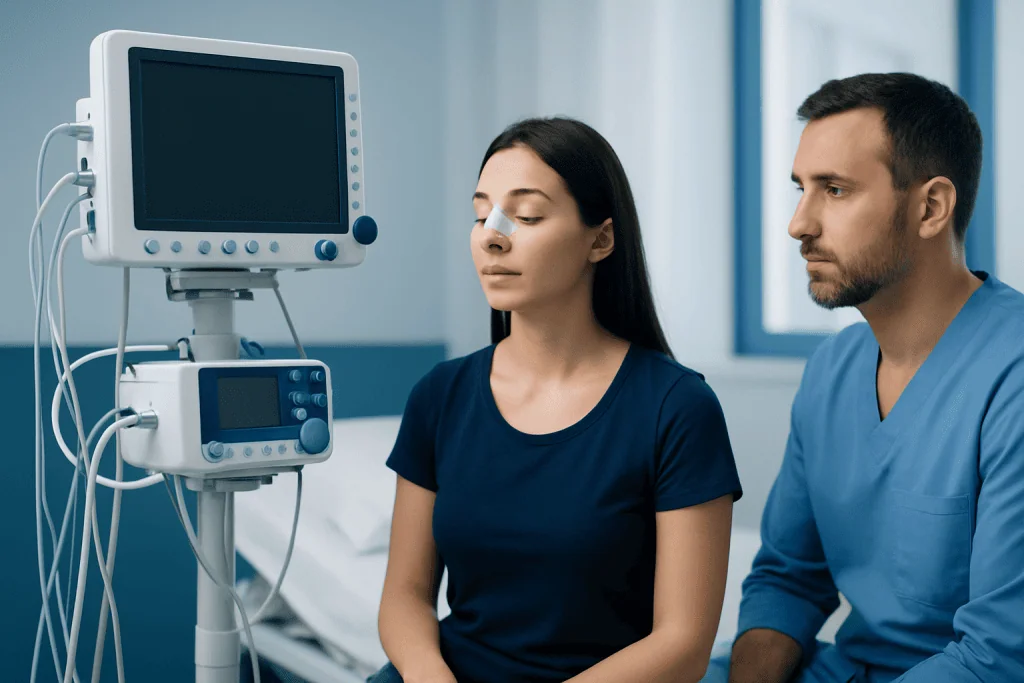
Swelling after rhinoplasty usually moves through several overlapping stages. In the first few days, inflammation is at its highest and swelling around the nose, cheeks and eyes can increase before it begins to improve. Bruising may also develop, particularly when nasal bones have been adjusted. This early appearance is temporary and is not a reliable indication of your final result.
During the next few weeks, much of the obvious facial swelling and bruising commonly fades. Your nose may still look wider, higher, uneven or firmer than expected, and the tip often remains noticeably swollen. It is also common for one side to appear to improve faster than the other while tissues heal.
Over the following months, deeper swelling gradually resolves and definition becomes clearer. Fine changes can continue for up to a year or sometimes longer, especially at the tip or after revision surgery. Keep scheduled follow-up appointments so your surgeon can assess whether what you are seeing fits your own recovery pattern.
| Recovery period | What you may notice | Helpful focus |
|---|---|---|
| Days 1–3 | Increasing swelling, congestion, tenderness and possible bruising around the eyes. | Rest, keep your head elevated, use only surgeon-approved cold compresses and medications. |
| Days 4–7 | Bruising may begin to change colour; swelling is still prominent and a splint may remain. | Protect the nose, avoid bending and follow cleaning instructions carefully. |
| Week 2 | Many people feel more comfortable in public, but the nose remains swollen and firm. | Attend follow-up, avoid pressure from glasses unless cleared, continue gentle activity only. |
| Weeks 3–6 | Visible swelling often continues to reduce; the tip may still look rounded or raised. | Resume activity only as directed and use sun protection. |
| Months 2–6 | Definition gradually improves, with intermittent morning swelling possible. | Be patient, keep follow-up arrangements and avoid judging the final shape too early. |
| Months 6–12+ | Subtle swelling and stiffness continue to settle, often most slowly at the tip. | Discuss any persistent concern with your surgeon rather than self-treating. |
When can I sleep properly after rhinoplasty?
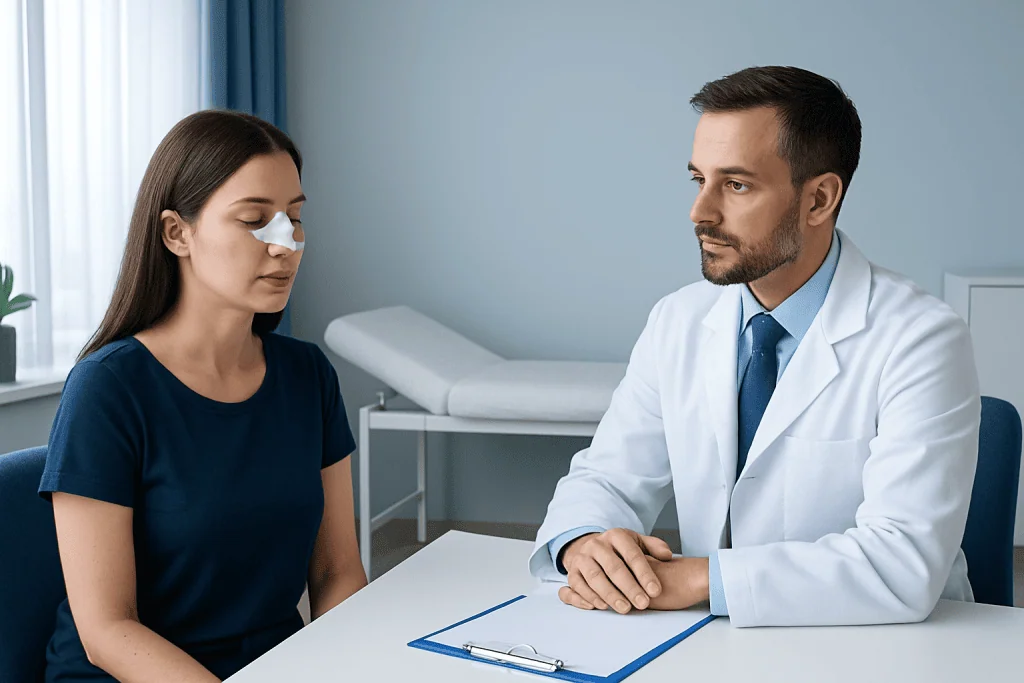
For the early recovery period, surgeons commonly ask you to sleep on your back with your head elevated. This can help limit swelling and reduces the chance of accidentally pressing, bumping or twisting your nose while asleep. Many patients find a wedge pillow, reclining position or extra pillows useful, provided they are stable and comfortable.
The exact time before you can return to side sleeping varies. Some surgeons may allow it after the first couple of weeks, while others may advise a longer period depending on how your surgery was performed and how healing is progressing. Sleeping on your stomach generally places more direct pressure on the nose and is often avoided for longer.
If you naturally turn during sleep, make the setup easier rather than relying on willpower alone. Place supportive pillows at either side of your body, keep essentials within reach and consider sleeping in a separate, calm space if a partner, child or pet could accidentally knock your face. Ask your surgeon specifically about side sleeping, stomach sleeping, CPAP use and any prescribed nasal supports.
Is my nose still swollen 3 weeks after rhinoplasty?
Yes, a nose can absolutely still be swollen three weeks after rhinoplasty. By this stage, bruising around the eyes may have largely improved, but swelling in the nose itself—particularly the tip—commonly remains. Your nose may look broader than you expected, feel stiff or numb, and appear slightly different at different times of day.
At three weeks, it is too early to assess a final rhinoplasty result. Internal healing is still underway, and normal changes in fluid retention, sleep position, activity and temperature can make swelling seem more noticeable on some days. Comparing daily photographs can increase anxiety because the improvements are usually easier to see over several weeks rather than overnight.
Contact your surgical team promptly if swelling is suddenly increasing rather than gradually settling, especially if it comes with worsening pain, fever, spreading redness, unusual discharge, significant bleeding, breathing difficulty or an injury to the nose. For patients returning home after surgery in Turkey, agree on the correct remote follow-up route before travel and seek urgent local care for severe symptoms.
What is the fastest way to reduce swelling after rhinoplasty?
There is no safe shortcut that makes postoperative swelling disappear immediately. The fastest sensible approach is to support your body’s normal healing process and follow the instructions given by your own surgeon. Rest, head elevation, adequate fluids, balanced meals and avoiding nicotine are often more useful than unproven remedies.
Use cold compresses only if, where and for as long as your surgeon recommends. They are typically placed around the cheeks or eye area rather than directly on the nose, because pressure or excessive cold can irritate healing tissues. Do not massage, tape, apply creams, use supplements or take anti-inflammatory medication unless your surgeon has specifically approved them for you.
Practical measures that may help include limiting salty processed foods if your team advises it, avoiding alcohol during the period they specify, protecting your nose from sun and avoiding strenuous exercise until cleared. Heat, heavy activity and bending forward can make swelling look worse temporarily. Smoking and vaping can interfere with healing, so ask for support to stop before and after surgery.
- Sleep on your back with your head elevated for the period your surgeon recommends.
- Take prescribed medicines exactly as directed; do not add over-the-counter products without checking.
- Keep follow-up appointments and ask before restarting exercise, glasses or facial treatments.
- Choose patience over aggressive “de-swelling” techniques that could disrupt healing.
Planning recovery when you are travelling from Turkey
International recovery planning starts before your procedure. You may need to remain in Turkey for early reviews, splint removal or other postoperative checks, and your surgeon will decide when travel is appropriate for you. Do not book a tightly fixed return journey until you understand the recommended recovery window and what support is available if plans need to change.
Before you leave, ask for clear written instructions in a language you understand. These should cover wound and splint care, medications, warning signs, showering, activity, flying, emergency contact details and the schedule for virtual or in-person follow-up. Keep copies in your hand luggage along with any prescribed medication and a list of your procedure details.
At Acibadem International, international patient teams can support communication between you and your care team and help with practical coordination such as interpreters and accommodation guidance. Once home, continue with your local healthcare arrangements where needed and contact the surgical team if you have a recovery concern rather than relying solely on social media comparisons or generic advice.
Step by step
- Prepare your recovery space before surgery. Set up a comfortable place where you can rest with your upper body elevated and keep water, prescribed medicines, tissues and a phone nearby. Arrange help with meals, luggage and household tasks for the first days if possible.
- Follow your discharge instructions exactly. Your surgeon’s written instructions are tailored to your procedure and medical history. Take medication only as prescribed, follow advice on cleaning and dressings, and do not remove a splint, tape or internal support unless your team tells you to.
- Protect your nose during the first weeks. Avoid accidental pressure, bumps and pulling on the nose. Be careful when dressing, washing your face, playing with children or pets, and moving through crowded places.
- Use the recommended sleeping position. Sleep on your back with your head elevated for the period advised by your surgeon. Ask before returning to side or stomach sleeping, particularly if you wake in those positions or use a CPAP device.
- Return to activity gradually. Gentle walking may be appropriate when your team permits it, but strenuous exercise, heavy lifting and contact sports usually require more time. Increased throbbing or swelling after activity can be a sign that you need to slow down and check with your team.
- Attend follow-up and keep communication open. Your follow-up visits allow the surgeon to check healing, remove or adjust supports when appropriate and answer questions. If you are an international patient, confirm your remote follow-up plan and the best contact method before travelling home.
- Know when to seek medical advice. Contact your surgical team for unexpected changes such as worsening pain, fever, increasing redness, concerning discharge or significant bleeding. Seek urgent local medical care for severe symptoms, breathing difficulty, chest pain, fainting or any emergency.
Your checklist
- Written discharge and medication instructions from your surgical team
- Emergency and after-hours contact details
- A planned follow-up appointment, including remote follow-up if returning home
- Supportive pillows or a wedge pillow for elevated back sleeping
- Loose front-opening clothing to avoid pulling garments over your face
- Surgeon-approved supplies for cleaning or cold compresses, if recommended
- A companion or local contact for the first part of recovery where possible
- Sun protection and any guidance about wearing glasses
- Flexible travel arrangements and documents in your hand luggage
Key takeaways
- The most visible bruising and swelling often improve in the first weeks, while subtle nasal swelling can take many months to settle.
- Sleeping on your back with your head elevated is commonly recommended early in recovery; ask your surgeon when side sleeping is suitable for you.
- A swollen nose at three weeks is commonly part of normal healing and is not a final result.
- There is no instant cure for swelling; safe recovery depends on rest, protection, prescribed care and patience.
- International patients should have a written follow-up and travel plan before leaving Turkey.
Frequently asked questions
How long does swelling last after rhinoplasty?
Most people see a meaningful reduction in visible swelling during the first several weeks, but the nose can remain swollen for months. The tip often takes the longest to settle, and final refinements may continue for a year or longer. Your surgeon can explain what is expected for your particular operation.
Why is my rhinoplasty swelling worse in the morning?
Mild morning swelling can happen because fluid shifts while you are lying down overnight. Sleeping with your head elevated, if advised by your surgeon, may help reduce this effect. Persistent or rapidly worsening swelling should be discussed with your surgical team.
Can I put ice directly on my nose after rhinoplasty?
Do not place ice directly on your nose unless your surgeon has specifically instructed you to do so. If cold compresses are recommended, they are often used gently around the cheeks or eyes rather than applying pressure to the nose. Excessive cold or pressure can be harmful to healing tissues.
When can I exercise after rhinoplasty?
The safe return to exercise varies by procedure and by your recovery. Gentle walking may be permitted earlier than vigorous cardio, lifting, swimming or contact sports, all of which can increase swelling or risk injury. Ask your surgeon for staged, personal guidance before resuming each activity.
Can I wear glasses after rhinoplasty?
Glasses can place pressure on the healing bridge of the nose, so many surgeons recommend avoiding direct pressure for a period of time. The timing and any temporary support method should come from your surgical team. Do not improvise taping or suspension methods without their approval.
When is it safe to fly after rhinoplasty in Turkey?
Your surgeon should determine when flying is appropriate based on your procedure, examination findings and overall recovery. International patients should factor early follow-up into their travel schedule and avoid assuming that a standard timeline applies to everyone. Before departure, confirm precautions for the flight and how to contact your team after returning home.
What symptoms after rhinoplasty need urgent medical attention?
Seek prompt advice for worsening rather than improving pain, fever, spreading redness, foul-smelling or unusual discharge, heavy or persistent bleeding, or sudden marked swelling. Seek emergency care for severe breathing difficulty, chest pain, fainting or another urgent medical symptom. When in doubt, contact your surgeon or local emergency services.
Add us as a Preferred Source to see more of our trusted health content across Google Search, AI Overviews and Discover.
More Patient Guides

Smoking After Dental Implants: Risks and Safe Timelines
Smoking after dental implants can delay healing and raise failure risk. Ideally stop before surgery and avoid smoking during early recovery in…
9 min read
Rhinoplasty Recovery Time: Day-by-Day Timeline
Rhinoplasty recovery time usually allows 1–2 weeks for initial healing, while swelling refines over months. Plan your recovery in Turkey with this…
8 min read
Gastric Bypass vs Gastric Sleeve Recovery: What to Expect
Gastric bypass vs gastric sleeve recovery usually involves 2–6 weeks of gradual healing, with bypass often needing closer nutrition follow-up in Turkey.
8 min read