

Rhinoplasty Recovery Time: Day-by-Day Timeline

Most people need 7–14 days of protected recovery after rhinoplasty. The splint often comes off around one week, and many patients return to desk-based routines within two weeks. Visible bruising usually fades in the first few weeks, but subtle swelling, especially at the tip, settles over 6–12 months. Your surgeon's plan always takes priority over any general timeline.
Two questions decide most rhinoplasty travel plans: how much time do you actually need to block out, and when will you look like yourself in photographs again? This guide answers both honestly, day by day.
Clinical guide: Rhinoplastyhow the procedure is performed, who it suits and the risks to weigh.
The short version: rhinoplasty recovery time usually involves 7–14 days of visible early healing, and most people return to quieter daily routines after about two weeks. The nose itself keeps settling for far longer, subtle swelling can take up to a year to resolve, sometimes more after complex or revision surgery.
Healing is personal. The timelines below describe common patterns, not promises. Your surgeon’s written instructions override anything you read here, including this page.
At a glance
- Initial rest: Usually 7–10 days at home or in your accommodation
- Splint removal: Often around 1 week, at a follow-up your surgeon schedules
- Return to work: Commonly 1–2 weeks for desk-based roles; longer for physical jobs
- Visible bruising and swelling: Often improves substantially over 2–6 weeks
- Exercise: Gentle walking early; strenuous exercise and contact sports wait longer
- Final refinement: Up to 12 months, sometimes longer for tip work or revision surgery
Rhinoplasty recovery time: the short answer
Plan for around 7–14 days of protected recovery after rhinoplasty. During the first week you will likely have an external nasal splint, congestion, bruising around the eyes, swelling and general tiredness. By the second week, many people feel comfortable returning to desk work or gentle activity, provided their surgeon agrees.
What the two-week mark does not give you is the final result. Obvious bruising and much of the early swelling improve in the first few weeks, but residual swelling, particularly around the nasal tip, can take months to settle. A refinement period of up to a year is normal. Thick nasal skin, tip work and revision surgery all extend it.
Several factors shape your personal rhinoplasty recovery time: the surgical technique (open or closed), whether the nasal bones or septum were reshaped, your skin thickness, previous nasal surgery, your general health, whether you smoke, and how closely you follow aftercare instructions. Two patients having the same operation on the same day can heal at noticeably different speeds, and both can be healing normally.
Rhinoplasty recovery timeline: day by day and week by week
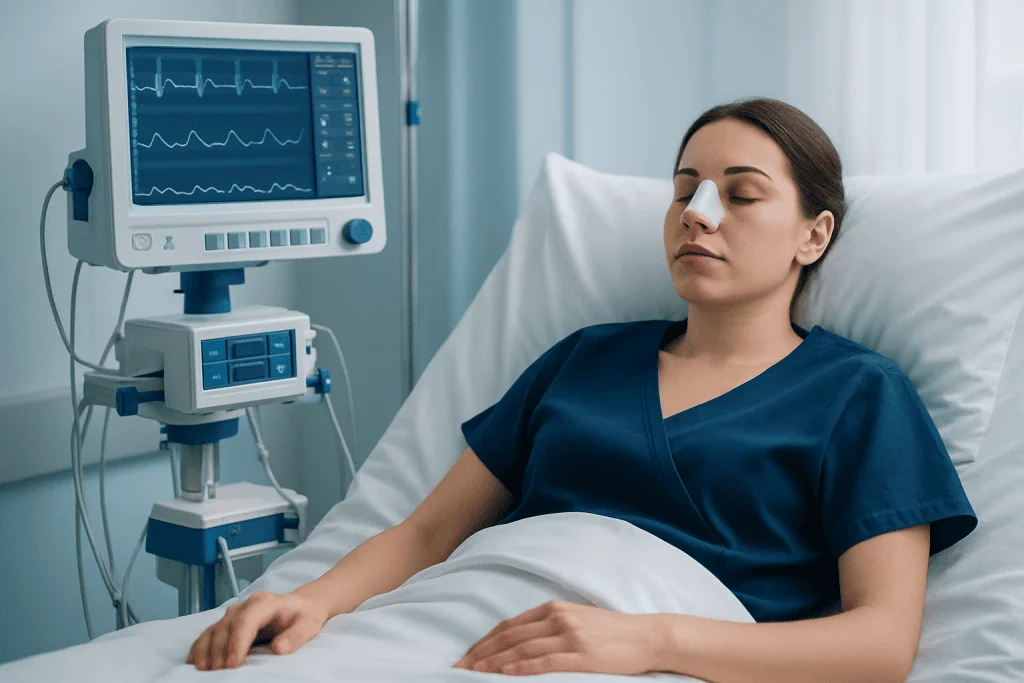
Use this overview to plan time off work, flights and support at your accommodation. Your surgeon may adjust these milestones based on your operation and how your tissues respond, so treat the dates as a planning tool rather than a fixed schedule.
- Days 0–2: Rest with your head elevated. Expect swelling, a blocked nose, mild oozing or spotting from the nostrils, and discomfort that your prescribed medication should keep manageable. Avoid bending, straining and blowing your nose. If you had general anaesthesia, the first hours follow a predictable pattern: our guide to recovery after general anaesthesia in Turkey explains what to expect.
- Days 3–7: Bruising and swelling often peak around day two or three before starting to fade. You will feel more mobile, but activity should stay very light. Short indoor walks are fine; errands and sightseeing are not.
- Days 7–10: The external splint, and stitches, where used, are usually removed at a follow-up appointment. You will look more presentable, though the nose remains swollen and the skin can feel tight or numb.
- Weeks 2–3: Many patients resume desk work, gentle walks and ordinary indoor routines. The nose still feels firm, stiff or congested, and it is easy to bump. Protecting it matters more than it looks like it should.
- Weeks 4–6: Bruising has usually resolved and swelling is far less conspicuous to other people. Your surgeon may permit a gradual return to exercise, but anything with impact or contact risk still needs caution.
- Months 2–6: The bridge and tip continue to refine. Day-to-day appearance improves steadily, though minor asymmetry from swelling can fluctuate, one side settling faster than the other is common and usually temporary.
- Months 6–12: Residual swelling settles gradually. Keep scheduled follow-up appointments, particularly if you had tip work, thicker skin or revision rhinoplasty, where refinement can run past the one-year mark.
If you are travelling internationally, do not treat this timeline as clearance to fly. Flight timing depends on your individual examination, and some patients benefit from staying a few days longer than planned: our guide on when you may need extra recovery time in Turkey before flying home covers the scenarios worth building into your booking.
How many days should I rest after rhinoplasty?

Plan for at least 7 days of proper rest, and ideally allow 10–14 days before returning to work, study or a full social schedule. That window covers your first follow-up, splint care and the period when bruising, fatigue and nasal congestion are at their most inconvenient.
Rest does not mean lying in bed all day. Short, gentle walks around your room or accommodation support circulation and comfort, provided you avoid exertion, heat, bending forward and anything that raises your blood pressure or makes your face flush. Sleep with your head elevated on two or three pillows, drink enough water and arrange easy meals in advance so you are not standing over a stove in your first week.
If your job involves lifting, long shifts, outdoor heat, frequent bending or physical exertion, you will likely need longer away, and it is worth agreeing that in advance rather than negotiating it from a hospital bed. Our guide to planning your return to work realistically walks through how to set the timeline with your employer before you travel.
Can I touch my nose 3 weeks after rhinoplasty?
At three weeks you can usually touch your nose gently when necessary, washing your face, applying skincare around it, but you should not press, squeeze, massage or test its shape unless your surgeon has specifically told you to. The tissues underneath are still healing, and the nose can remain tender, numb or swollen even when it looks settled from the outside.
Accidental pressure is the bigger risk at this stage: tight clothing pulled over the head, children and pets, crowded transport, vigorous towel drying, and glasses resting on the bridge if your surgeon has advised against them. Do not pick inside your nose or use cotton buds unless you have been shown a safe cleaning method.
Some patients receive specific taping or massage instructions; others are told not to manipulate the nose at all. These instructions vary by surgical technique, so follow your own plan even when it contradicts advice you find online. Both approaches can be correct, for different operations.
How long until you look normal after a nose job?
Most people feel socially presentable about 2 weeks after a nose job, once the splint is off and the worst of the bruising has faded. But “normal” is doing a lot of work in that sentence: the nose may still look swollen, feel stiff, and appear slightly different from one day to the next through the first several weeks. Colleagues may not notice anything; you will notice everything.
By 1–3 months, swelling over the bridge has usually improved considerably. The tip takes longest, and final contour definition continues emerging for 6–12 months. Much of what people searching for their “afternose” appearance actually want to know is this settled, months-later result, not the two-week version.
Try not to judge the outcome early or compare close-up photos daily. Nose job before and after images online almost always show the settled result, photographed in flattering, consistent conditions, not week three. If you use photographs to track your own healing, take them only as your surgeon recommends, in the same light and angle each time. For a grounded view of what comparison images can and cannot tell you, read our guide on what realistic before-and-after results mean.
Can I sleep on my side 2 weeks after rhinoplasty?
At two weeks, many surgeons still prefer you to sleep on your back with your head elevated. Side sleeping can put unwanted pressure on a healing nose and may worsen swelling on the dependent side. Whether it is safe for you depends on the details of your surgery, so this is a question for your own team rather than a forum.
If you tend to roll onto your side overnight, place pillows along your body or use a travel pillow to keep yourself supported on your back. Keep bedding clean, and avoid sleeping where a partner, child or pet could bump the nose.
Do not force a position that causes neck or back pain: there are usually practical alternatives, and your team can suggest one that protects the nose without wrecking your sleep.
How painful is rhinoplasty recovery?
Less painful than most people expect, but more uncomfortable. The dominant sensations in the first week are pressure, congestion, a blocked nose that forces mouth breathing, and tightness across the face, rather than sharp pain. Discomfort is typically strongest in the first two to three days and should be manageable with the medication your surgical team prescribes.
What surprises patients more than pain is the fatigue and the congestion. Sleeping upright, breathing through your mouth and healing all at once is tiring, which is one reason the first week’s rest matters. Take your medicines exactly as prescribed, and check with your team before adding anything, including over-the-counter painkillers, supplements or nasal sprays, because some products can affect bleeding or healing.
How much is nose reshaping? What a quote depends on
This guide will not give you a figure, because no honest general figure exists. If you are researching how much is nose reshaping, the useful thing to understand is what a quote is built from: the surgical technique and complexity, whether the septum or nasal bones are involved, whether it is a first rhinoplasty for nose reshaping or a revision, the anaesthesia and hospital stay, pre-operative tests, and the follow-up included in the plan.
A meaningful quote comes after a surgeon has reviewed your case, usually your photographs, medical history and goals, not before. When comparing quotes, compare what each one includes: splint removal and early follow-up appointments, medications, and how questions are handled after you fly home matter as much as the headline figure. A cheap quote that excludes follow-up is not cheap.
The long view: your nose years after rhinoplasty
Rhinoplasty results are generally long-lasting, but the nose is living tissue and ages with the rest of your face. Over decades, skin gradually thins, cartilage softens, and the tip can descend slightly, changes that happen to operated and unoperated noses alike. Twenty years on, most people simply have their nose, a little older, like everything else.
Some patients do seek revision surgery years or decades later, whether for age-related change, injury or a refinement they have long wanted. There is no expiry date that requires it. What helps the long-term result most is unglamorous: protecting the nose from impact during the first year, not smoking, and attending the follow-ups your surgeon schedules.
Planning rhinoplasty recovery in Turkey and the journey home
If you are having rhinoplasty in Turkey, build flexibility into your itinerary. You will usually need to remain locally for your early review and splint removal, so avoid booking a tightly packed holiday, major events or long sightseeing days immediately after surgery. A quiet base matters more than a scenic one: our checklist for recovering in a hotel after treatment in Turkey covers what to verify before you book, from air conditioning to lift access.
Acibadem’s international patient services coordinate appointments, interpreter support and practical travel arrangements around each patient’s care plan, and explain the follow-up process, including how post-return questions are handled, before departure. Ask for this to be set out clearly while you are still in Turkey, not after you land.
For the journey home, wear comfortable front-opening clothing, keep medications and written care instructions in your hand luggage, and avoid carrying heavy bags. Confirm your flight timing and nasal-care instructions with your surgeon; airline travel should follow individual medical clearance, not a generic online timeline. Packing well makes the first week noticeably easier, see what to pack for recovery after treatment in Turkey.
What are the different stages of swelling after rhinoplasty?
Swelling after rhinoplasty usually moves through several overlapping stages. In the first few days, inflammation is at its highest and swelling around the nose, cheeks and eyes can increase before it begins to improve. Bruising may also develop, particularly when nasal bones have been adjusted. This early appearance is temporary and is not a reliable indication of your final result.
During the next few weeks, much of the obvious facial swelling and bruising commonly fades. Your nose may still look wider, higher, uneven or firmer than expected, and the tip often remains noticeably swollen. It is also common for one side to appear to improve faster than the other while tissues heal.
Over the following months, deeper swelling gradually resolves and definition becomes clearer. Fine changes can continue for up to a year or sometimes longer, especially at the tip or after revision surgery. Keep scheduled follow-up appointments so your surgeon can assess whether what you are seeing fits your own recovery pattern.
| Recovery period | What you may notice | Helpful focus |
|---|---|---|
| Days 1–3 | Increasing swelling, congestion, tenderness and possible bruising around the eyes. | Rest, keep your head elevated, use only surgeon-approved cold compresses and medications. |
| Days 4–7 | Bruising may begin to change colour; swelling is still prominent and a splint may remain. | Protect the nose, avoid bending and follow cleaning instructions carefully. |
| Week 2 | Many people feel more comfortable in public, but the nose remains swollen and firm. | Attend follow-up, avoid pressure from glasses unless cleared, continue gentle activity only. |
| Weeks 3–6 | Visible swelling often continues to reduce; the tip may still look rounded or raised. | Resume activity only as directed and use sun protection. |
| Months 2–6 | Definition gradually improves, with intermittent morning swelling possible. | Be patient, keep follow-up arrangements and avoid judging the final shape too early. |
| Months 6–12+ | Subtle swelling and stiffness continue to settle, often most slowly at the tip. | Discuss any persistent concern with your surgeon rather than self-treating. |
When can I sleep properly after rhinoplasty?
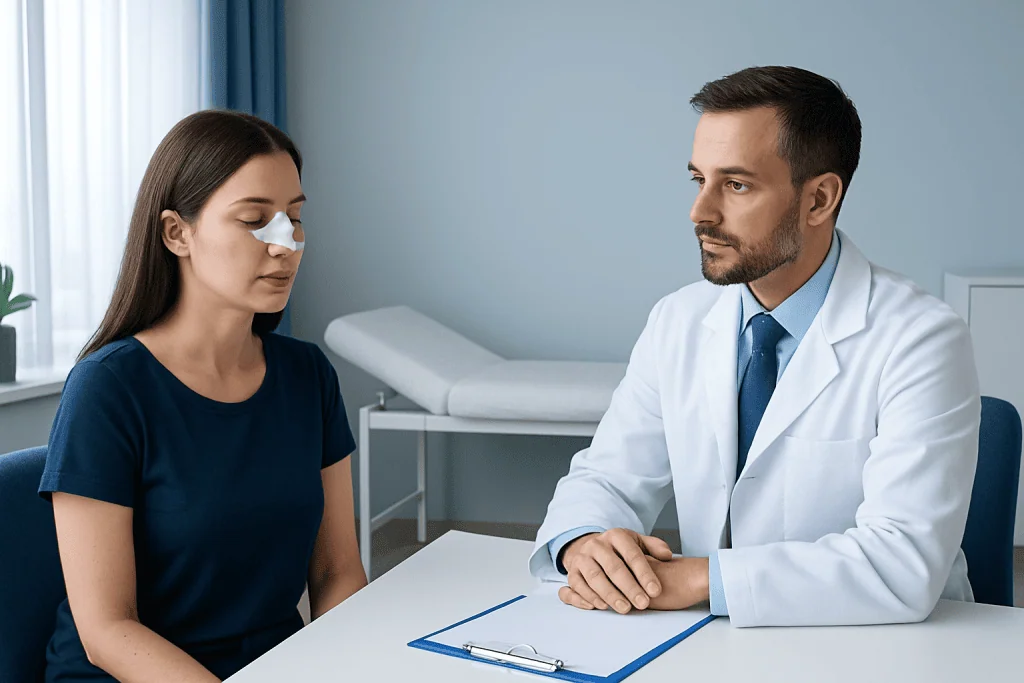
For the early recovery period, surgeons commonly ask you to sleep on your back with your head elevated. This can help limit swelling and reduces the chance of accidentally pressing, bumping or twisting your nose while asleep. Many patients find a wedge pillow, reclining position or extra pillows useful, provided they are stable and comfortable.
The exact time before you can return to side sleeping varies. Some surgeons may allow it after the first couple of weeks, while others may advise a longer period depending on how your surgery was performed and how healing is progressing. Sleeping on your stomach generally places more direct pressure on the nose and is often avoided for longer.
If you naturally turn during sleep, make the setup easier rather than relying on willpower alone. Place supportive pillows at either side of your body, keep essentials within reach and consider sleeping in a separate, calm space if a partner, child or pet could accidentally knock your face. Ask your surgeon specifically about side sleeping, stomach sleeping, CPAP use and any prescribed nasal supports.
Is my nose still swollen 3 weeks after rhinoplasty?
Yes, a nose can absolutely still be swollen three weeks after rhinoplasty. By this stage, bruising around the eyes may have largely improved, but swelling in the nose itself, particularly the tip, commonly remains. Your nose may look broader than you expected, feel stiff or numb, and appear slightly different at different times of day.
At three weeks, it is too early to assess a final rhinoplasty result. Internal healing is still underway, and normal changes in fluid retention, sleep position, activity and temperature can make swelling seem more noticeable on some days. Comparing daily photographs can increase anxiety because the improvements are usually easier to see over several weeks rather than overnight.
Contact your surgical team promptly if swelling is suddenly increasing rather than gradually settling, especially if it comes with worsening pain, fever, spreading redness, unusual discharge, significant bleeding, breathing difficulty or an injury to the nose. For patients returning home after surgery in Turkey, agree on the correct remote follow-up route before travel and seek urgent local care for severe symptoms.
What is the fastest way to reduce swelling after rhinoplasty?
There is no safe shortcut that makes postoperative swelling disappear immediately. The fastest sensible approach is to support your body’s normal healing process and follow the instructions given by your own surgeon. Rest, head elevation, adequate fluids, balanced meals and avoiding nicotine are often more useful than unproven remedies.
Use cold compresses only if, where and for as long as your surgeon recommends. They are typically placed around the cheeks or eye area rather than directly on the nose, because pressure or excessive cold can irritate healing tissues. Do not massage, tape, apply creams, use supplements or take anti-inflammatory medication unless your surgeon has specifically approved them for you.
Practical measures that may help include limiting salty processed foods if your team advises it, avoiding alcohol during the period they specify, protecting your nose from sun and avoiding strenuous exercise until cleared. Heat, heavy activity and bending forward can make swelling look worse temporarily. Smoking and vaping can interfere with healing, so ask for support to stop before and after surgery.
- Sleep on your back with your head elevated for the period your surgeon recommends.
- Take prescribed medicines exactly as directed; do not add over-the-counter products without checking.
- Keep follow-up appointments and ask before restarting exercise, glasses or facial treatments.
- Choose patience over aggressive “de-swelling” techniques that could disrupt healing.
Step by step
- Prepare a quiet first-week base. Arrange accommodation where you can rest, sleep with your head elevated and access simple meals, water and prescribed supplies. Choose front-opening tops so nothing gets pulled over your nose.
- Attend every planned review. Your early appointment is where healing is checked and, where applicable, the splint or sutures are removed. Do not schedule your departure before your surgeon confirms your follow-up needs.
- Protect your nose from pressure and impact. No bumping, squeezing or nose blowing, and no glasses on the bridge if you have been advised against them. Be especially careful in crowds, around children and pets, and when changing clothes.
- Keep activity gentle at first. Short walks as advised, but no heavy lifting, strenuous exercise, bending or anything that makes your face flush. Your surgeon will tell you when to step activity up safely.
- Use only approved medication and nasal care. Take medicines exactly as prescribed. Check before adding supplements, sprays or over-the-counter painkillers, as some can affect bleeding or healing.
- Manage swelling patiently. Use cold compresses only as instructed, usually around rather than directly on the nose. Head elevation, hydration and avoiding heat, alcohol and very salty food can also help comfort.
- Plan the journey home carefully. Ask for written aftercare and contact details before leaving, carry essentials in hand luggage, and base your flight date on your surgeon’s individual advice.
Your checklist
- Arrange 7–14 days away from demanding work or study.
- Book accommodation close enough to the hospital for follow-up appointments.
- Pack front-opening clothing, slip-on shoes and comfortable travel layers.
- Prepare extra pillows or a travel pillow for elevated back sleeping.
- Keep prescribed medicines, saline products and written instructions accessible.
- Avoid alcohol, smoking and nicotine exposure as advised by your surgeon.
- Confirm your flight date only after discussing it with your surgical team.
- Ask how follow-up questions will be handled once you are home, and keep those details with your discharge papers.
Key takeaways
- Allow at least 7–10 days of focused rest and typically 1–2 weeks before desk-based routines.
- Bruising and obvious swelling usually improve within the first few weeks; final refinement takes up to a year.
- At 3 weeks, do not press, squeeze or massage the nose unless your surgeon specifically instructs it.
- At 2 weeks, elevated back sleeping is commonly still advised; confirm side sleeping with your own surgeon.
- Flight timing and follow-up arrangements should be agreed individually before you leave Turkey.
Frequently asked questions
How long is recovery time after rhinoplasty?
Most people need 7–14 days of protected recovery before returning to desk work or ordinary routines, with the splint usually removed around one week. Visible bruising typically fades over the first few weeks, while subtle swelling, especially at the tip, settles over 6–12 months. Complex and revision cases can take longer. Your own surgeon’s timeline takes priority over any general figure.
How painful is a rhinoplasty?
Recovery is usually described as uncomfortable rather than severely painful. Pressure, congestion, facial tightness and forced mouth breathing dominate the first week, with discomfort strongest in the first two to three days and generally manageable with prescribed medication. Fatigue often surprises patients more than pain. Take medicines exactly as prescribed and check with your team before adding anything over the counter.
How risky is getting a nose job?
Rhinoplasty is an established procedure, but like all surgery it carries risk. General surgical risks include bleeding, infection and reactions to anaesthesia; risks specific to the nose include changes in breathing or sensation, and the possibility that the shape does not settle as hoped, which occasionally leads to revision surgery. Risk is managed through careful patient selection, a full and honest medical history, an experienced surgical team and disciplined aftercare, and every surgeon should discuss it with you openly before you consent.
What happens 20 years after rhinoplasty?
Results are generally long-lasting, but the nose ages with the rest of the face: skin thins gradually, cartilage softens and the tip may descend slightly over decades, changes that also happen to noses that were never operated on. Some people choose revision surgery years later for age-related change, injury or refinement, but there is no point at which a rhinoplasty must be redone.
When can I fly after rhinoplasty?
Flight timing depends on your procedure, your healing at examination, your destination and your surgeon’s assessment. Many patients are advised to remain nearby until the early review and splint removal, and only your surgical team can confirm when travel is appropriate for you. Discuss congestion, cabin pressure, medication and follow-up before booking a return date.
When can I wear glasses after rhinoplasty?
Glasses place pressure on the healing bridge, so you may be asked not to rest them directly on your nose for a period, often longer if the nasal bones were adjusted. Surgeons may suggest taping, a support device or contact lenses in the meantime. The timing is individual, so ask for a specific answer rather than assuming a standard one.
Can I blow my nose after rhinoplasty?
Not during early healing, blowing can disturb delicate tissues and increase bleeding and swelling. If you feel congested, use only the saline or cleaning products your surgeon has approved, applied in the way they showed you. Your team will tell you when normal nose blowing can safely resume, which varies with the surgery performed.
Add us as a Preferred Source to see more of our trusted health content across Google Search, AI Overviews and Discover.

Update history
- PublishedAugust 20, 2026
- Medical review approvedSeptember 12, 2026
- Last content updateSeptember 12, 2026
References2
- Nose reshaping (rhinoplasty): NHS nhs.uk
- Rhinoplasty (Nose Job): Cleveland Clinic my.clevelandclinic.org
More Patient Guides

Septoplasty Recovery: Week by Week
Learn what to expect after deviated septum surgery: a week-by-week septoplasty recovery timeline, when it is usually safe to fly home, and…

Gallbladder Surgery Recovery: Week by Week
Learn what to expect after gallbladder surgery: a week-by-week recovery timeline, pain, diet, wound care, when it is safe to fly home…
Robotic Hysterectomy Recovery: Week by Week
Recovery from robotic hysterectomy week by week: pain, lifting, wounds, driving, flying home safely, warning signs and questions to ask before you…

Breast Reconstruction Recovery: Week by Week
DIEP flap recovery week by week: hospital stay, drains, pain, walking, showering, driving, when it is usually safe to fly home, and…