Genicular Artery Embolization Procedure: An Evidence-Based Patient Guide

Genicular artery embolization is an image-guided procedure designed to reduce inflammation-related blood flow around an arthritic knee. It may be considered for some people with knee osteoarthritis pain who have not improved with exercise, medicines, injections or other conservative care.
Key Takeaways
- Genicular artery embolization is an image-guided procedure designed to reduce inflammation-related blood flow around an arthritic knee.
- It may be considered for some people with knee osteoarthritis pain who have not improved with exercise, medicines, injections or other conservative care.
- GAE does not rebuild lost cartilage or reverse osteoarthritis, and its long-term role is still being studied.
- Most people return home the same day, with recovery commonly measured in days to a few weeks rather than months.
- A vascular or interventional radiology assessment is needed to confirm whether the procedure is appropriate and safe.
- Insurance coverage, including Medicare coverage, varies because GAE may be considered investigational by some plans.
A genicular artery embolization procedure, also called GAE, is a minimally invasive image-guided treatment that may help reduce persistent knee pain related to osteoarthritis. It works by decreasing abnormal blood flow associated with inflammation in the knee lining and is considered for carefully selected people when standard nonsurgical care has not provided enough relief.
Overview: What Is Genicular Artery Embolization?
The genicular artery embolization procedure is a minimally invasive treatment used to address ongoing knee pain, most often pain associated with knee osteoarthritis. During the procedure, an interventional radiologist guides a very thin catheter through an artery, usually from the upper thigh or wrist area, toward small arteries that supply the knee. Tiny particles are then used to reduce blood flow to selected abnormal vessels.
Osteoarthritis can involve more than cartilage wear. The synovium, or lining of the joint, may become inflamed and develop an increased network of small blood vessels. These vessels can accompany inflammatory nerve growth and contribute to persistent pain. GAE aims to reduce this abnormal inflammatory blood supply while preserving circulation to healthy tissues.
GAE is not a replacement for joint replacement surgery in every situation, and it does not restore worn cartilage. It is an evolving option that may be useful for selected people who have symptoms despite nonsurgical treatment, particularly when they wish to delay or are not ready for more invasive surgery. A full assessment of knee osteoarthritis and the person’s overall health is essential before deciding on treatment.
How GAE Works and Who May Be a Candidate
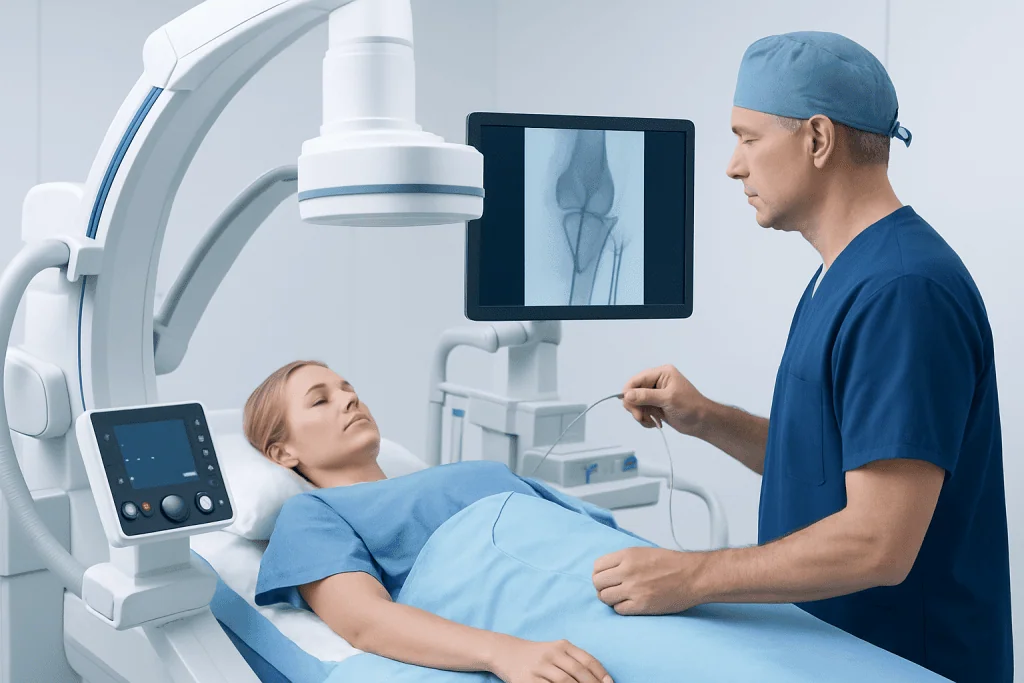
Genicular arteries are small branches of the main arteries around the knee. In GAE, imaging is used to identify areas of increased blood flow that may reflect inflamed synovial tissue. The clinician delivers embolic material through the catheter to selectively reduce flow in those target vessels. The goal is to lessen inflammation-related pain without blocking major arteries that support the leg.
A person may be considered for GAE when they have moderate to severe knee pain related to osteoarthritis, imaging findings that support the diagnosis, and insufficient improvement with an appropriate course of nonsurgical care. This may include activity modification, weight management when relevant, physiotherapy, pain-relieving medicines, braces, and injections. Clinical teams also consider how pain affects sleep, mobility, work, and daily activities.
Suitability depends on more than the degree of pain. The treating team reviews knee X-rays or other imaging, circulation in the legs, kidney function, medication use, allergies, and conditions that could raise procedural risk. A coordinated evaluation may include orthopedic, rehabilitation, pain-management, and interventional radiology perspectives. Some people may instead benefit more from knee replacement surgery or a different approach to their knee condition.
Step by Step: What Happens During the Procedure

Before the procedure, the clinical team reviews medical history, current medicines, allergies, and recent test results. Blood-thinning medicines may need special planning, but they should never be stopped without instructions from the prescribing clinician. Patients are also given guidance about food and drink before the appointment, transportation home, and what to expect afterward.
GAE is commonly performed as an outpatient procedure in an angiography suite. The patient lies on an X-ray table, and the skin at the access site is cleaned and numbed with local anesthetic. Sedation may be offered in some cases to improve comfort, while the patient continues to breathe independently and can usually communicate with the team.
The interventional radiologist inserts a small catheter into an artery and uses live X-ray imaging with contrast dye to map blood vessels around the knee. Once the relevant vessels are identified, tiny embolic particles are delivered selectively. The catheter is removed after treatment, and pressure or a closure device is used at the access site. The procedure length can vary, but patients are typically monitored for several hours before going home.
At discharge, patients receive instructions about caring for the access site, activity restrictions, medicines, and warning signs. The care team may arrange follow-up to assess pain, function, and recovery. Rehabilitation, including physical therapy and rehabilitation, can remain an important part of improving strength and mobility after pain begins to settle.
Benefits, Limitations and Risks
The possible benefit of GAE is a reduction in knee pain and improvement in function without an incision into the joint or the recovery demands of major surgery. Early clinical studies have reported meaningful symptom improvement for some patients, and the procedure is generally performed on a same-day basis. It may be particularly appealing to people seeking an additional nonsurgical option after standard treatments have not been sufficient.
However, results are not guaranteed. Pain may improve gradually over several weeks, may not improve enough, or may return over time. Research is continuing to clarify which patients are most likely to benefit, how long benefits last, how GAE compares with other treatments, and its role alongside joint replacement. GAE does not remove bone spurs, correct major deformity, repair meniscal tears, or reverse advanced cartilage loss.
As with any catheter-based procedure, there are risks. These can include bruising, bleeding, pain or infection at the access site, temporary skin discoloration, numbness, allergic reaction to contrast dye, and injury to a blood vessel. Rarely, unintended embolization can affect nearby skin, bone, nerves, or other tissues. The team uses detailed imaging and careful technique to reduce these risks, but no procedure is entirely risk-free.
A person should discuss expected benefits, alternative treatments, and individual risk factors with a qualified specialist. Acibadem International’s multidisciplinary specialists and JCI-accredited hospitals assess and treat knee conditions for international patients, including through appropriate interventional and orthopedic care pathways.
Recovery and Self-Care After GAE
Most patients go home on the day of the procedure after a period of observation. Mild soreness, bruising, or tenderness at the catheter insertion site is common. Some people also experience temporary knee discomfort or a short-lived inflammatory response as tissues adjust after embolization. The treating team may recommend simple pain-relief measures and provide personalized instructions.
For the first day or two, patients are usually advised to rest, drink fluids if medically appropriate, and avoid strenuous activity, heavy lifting, or repeated bending at the access site. Light walking is often encouraged as directed. Access-site care matters: the area should be kept clean and monitored for persistent bleeding, increasing swelling, marked redness, or worsening pain.
Recovery is not the same as the timing of pain relief. Many people can resume light daily activities within a few days, while the knee’s response may develop over several weeks. A gradual return to exercise, often supported by strengthening and mobility work, can help protect the joint and improve function. Healthy weight management, low-impact activity, and individualized rehabilitation remain useful strategies for long-term osteoarthritis care.
Patients should keep scheduled follow-up appointments and report any unexpected symptoms. A care plan may also include discussion of knee injections or other treatment options if symptoms remain significant or if another source of knee pain is identified.
When to Seek Medical Care
Anyone with persistent knee pain, swelling, stiffness, reduced walking tolerance, or difficulty completing daily activities should arrange a medical assessment. Knee pain has several possible causes, including osteoarthritis, injury, inflammatory arthritis, tendon disorders, infection, and referred pain from the hip or spine. An accurate diagnosis is important before considering GAE or any other procedure.
Urgent medical evaluation is appropriate for sudden severe knee pain after an injury, inability to bear weight, a visibly deformed joint, rapidly increasing swelling, fever with a hot or red joint, or new calf swelling and shortness of breath. These symptoms can indicate conditions that need prompt attention and should not be managed by waiting for a routine procedure consultation.
After GAE, patients should contact their treating team promptly for bleeding that does not stop with firm pressure, rapidly growing swelling at the catheter site, severe or worsening leg pain, a cold or pale foot, new weakness, fever, or signs of infection. Emergency services should be used for severe symptoms or symptoms that suggest a serious circulation or allergic reaction.
What Are the Disadvantages of Genicular Artery Embolization?
The main disadvantage of genicular artery embolization is that it is not a cure for osteoarthritis. It may reduce pain associated with inflammation in selected patients, but it does not regenerate cartilage, correct major alignment problems, or eliminate every mechanical cause of knee pain. Some people experience limited improvement, and others may eventually need additional treatment, including surgery.
Evidence for GAE is promising but still developing. Studies differ in patient selection, embolic materials, outcome measures, and follow-up duration, so long-term effectiveness and the ideal candidate profile are still being defined. Availability may also be limited because the procedure requires an experienced interventional radiology service.
There are procedural risks, including bruising, bleeding, contrast-related reactions, access-site complications, and rare unintended blockage of blood flow to nearby tissue. In addition, insurance authorization may be uncertain. Patients can make a well-informed decision by discussing alternatives, realistic goals, potential risks, and follow-up plans with their care team.
How Long Does It Take to Recover From Genicular Artery Embolization for Knee Pain?
Recovery from the catheter procedure itself is usually relatively quick. Many patients return home the same day and can often resume light everyday activities within a few days, depending on the access site, overall health, and their clinician’s instructions. Strenuous exercise and heavy lifting may need to be avoided briefly.
Improvement in knee pain may take longer than recovery from the access site. Some people notice changes within days, but benefits commonly develop over several weeks as inflammatory activity decreases. The timing and degree of relief vary, and follow-up is needed to evaluate response safely.
A gradual activity plan is usually preferable to immediately returning to high-impact exercise. A clinician or physiotherapist can advise on walking, strengthening, range-of-motion work, and other activities that are appropriate for the individual’s knee condition.
Frequently asked questions
Who is not a candidate for GAE?
GAE may not be appropriate for people whose knee pain is not primarily caused by osteoarthritis or inflammation-related synovial changes. It may also be unsuitable for people with active infection, significant poor circulation in the leg, certain severe contrast allergies, uncorrected bleeding problems, or medical conditions that make catheter procedures unsafe. Advanced structural knee damage or major deformity may lead the team to recommend a different treatment, such as orthopedic surgery.
Does Medicare cover genicular artery embolization (GAE)?
Medicare coverage for GAE is not uniform and can depend on the local Medicare Administrative Contractor, the clinical indication, and whether the procedure is considered investigational in that setting. Some private insurance plans may also require prior authorization or may not cover it. Patients should ask the treating facility and their insurer for a written coverage and out-of-pocket-cost review before scheduling treatment.
Is genicular artery embolization painful?
The access site is numbed with local anesthetic, and some patients receive sedation for comfort. People may feel brief pressure during catheter placement or contrast injection, but significant pain during the procedure is not expected. Mild soreness at the access site or temporary knee discomfort can occur afterward.
Is GAE the same as knee replacement surgery?
No. GAE is a catheter-based procedure that targets selected small blood vessels associated with knee inflammation, while knee replacement surgery removes damaged joint surfaces and replaces them with artificial components. GAE does not replace the joint or restore cartilage. The most appropriate option depends on symptoms, imaging findings, function, medical history, and treatment goals.
Can genicular artery embolization delay knee replacement?
For some appropriately selected patients, pain relief after GAE may help them postpone or avoid knee replacement for a period of time. However, this outcome is not certain, and the procedure does not stop osteoarthritis from progressing in every person. Continued monitoring and a broader osteoarthritis management plan remain important.
What tests are needed before a genicular artery embolization procedure?
The assessment commonly includes a clinical examination, knee X-rays and sometimes MRI or other imaging to clarify the source of pain. The team may also order blood tests to assess kidney function and bleeding risk, and may evaluate blood flow in the leg. The exact tests depend on the person’s health history, medicines, and planned imaging approach.
References
- Society of Interventional Radiology
- American College of Radiology
- American Academy of Orthopaedic Surgeons
- National Institute of Arthritis and Musculoskeletal and Skin Diseases
- Centers for Medicare & Medicaid Services
This article is for general information only and is not a substitute for professional medical advice. Please consult a qualified doctor about your individual situation.
Joint and spine care in Turkey — expert assessment & treatment
JCI-accredited · board-certified surgeons · reply within 24h
Add us as a Preferred Source to see more of our trusted health content across Google Search, AI Overviews and Discover.