Colonic Pseudo Obstruction Treatment: How It Works, Results and What to Expect

Acute colonic pseudo-obstruction, also called Ogilvie syndrome, resembles a bowel blockage but occurs without a mechanical obstruction. Treatment starts by correcting reversible triggers, resting the bowel and monitoring for signs of worsening dilation or bowel injury.
Key Takeaways
- Acute colonic pseudo-obstruction, also called Ogilvie syndrome, resembles a bowel blockage but occurs without a mechanical obstruction.
- Treatment starts by correcting reversible triggers, resting the bowel and monitoring for signs of worsening dilation or bowel injury.
- Neostigmine medication or colonoscopic decompression may be used when conservative care is not enough.
- Many people recover when the condition is recognized and treated promptly, but recurrence and serious complications are possible.
- New or worsening abdominal swelling, pain, vomiting, fever or inability to pass stool or gas needs urgent medical assessment.
Colonic pseudo obstruction treatment aims to safely relieve colon dilation and prevent complications, even though no physical blockage is present. Care usually begins with close monitoring and supportive measures, with medication or endoscopic decompression used when the bowel does not improve or dilation is significant.
Overview: how colonic pseudo obstruction treatment works
Colonic pseudo obstruction treatment reduces abnormal stretching of the large bowel and helps restore its movement. In acute colonic pseudo-obstruction, often called Ogilvie syndrome, the colon becomes enlarged because its normal nerve and muscle coordination is disrupted, not because a tumor, scar or twisted bowel is physically blocking it. Treatment is guided by symptoms, imaging findings, the degree and duration of dilation, and a person’s overall medical condition.
The immediate priority is to rule out a true mechanical bowel obstruction and complications such as reduced blood supply to the bowel wall or perforation. Many patients are already in hospital for another illness, after surgery, or during recovery from trauma. Care is therefore usually coordinated among gastroenterology, surgery, radiology, anesthesia or critical-care teams, and the clinicians treating the underlying condition.
Initial treatment commonly includes bowel rest, intravenous fluids when needed, correction of electrolyte abnormalities, review of medicines that slow bowel movement, and frequent abdominal examinations. If the colon does not decompress or the risk of complications is higher, clinicians may use a medicine called neostigmine, colonoscopic decompression, or surgery in selected emergencies.
How do you know if you have pseudo-obstruction?
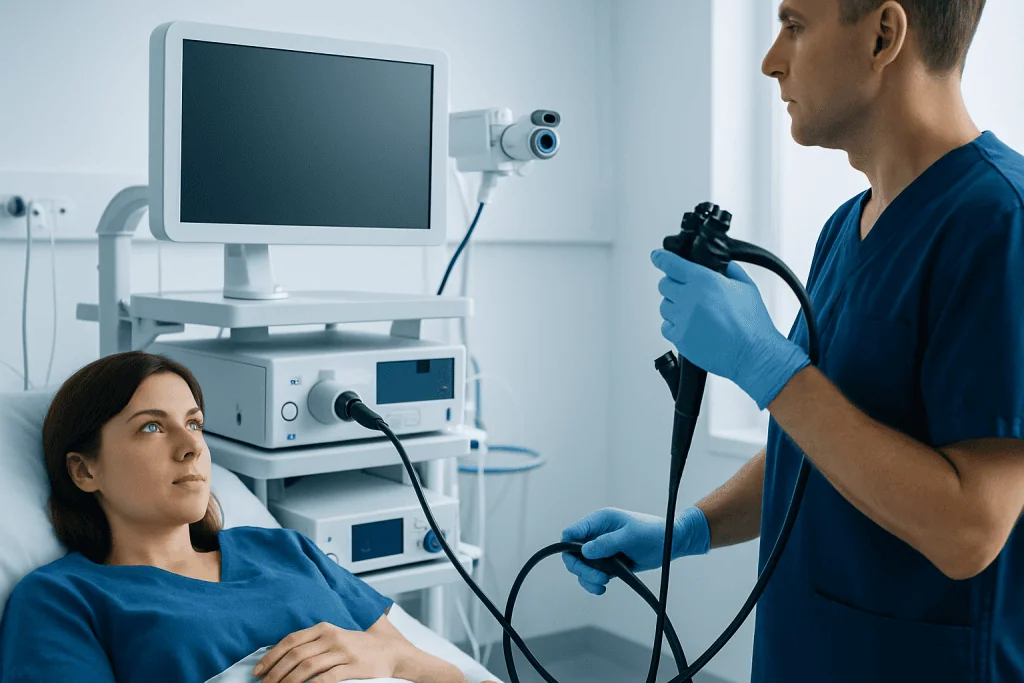
Pseudo-obstruction can cause progressive abdominal bloating or visible swelling, discomfort, nausea, vomiting, reduced appetite, constipation, and difficulty passing gas. Some people continue to pass a small amount of stool or gas, so this does not reliably exclude the condition. Symptoms can vary, particularly in older adults or people who are seriously unwell.
Because these symptoms overlap with a mechanical bowel obstruction and other abdominal conditions, they should not be self-diagnosed. A clinician will ask about recent surgery or illness, current medications, bowel habits and pain, and will examine the abdomen for tenderness, distension and bowel sounds.
Abdominal X-rays and computed tomography (CT) are commonly used to show the enlarged colon and look for a physical obstruction, volvulus, perforation or another cause. Blood tests may check hydration, electrolytes, infection markers and kidney function. In some cases, a contrast study or carefully selected endoscopic evaluation is needed to clarify the diagnosis.
Candidacy and the step-by-step treatment pathway

Conservative management is appropriate for many stable people without signs of bowel ischemia, perforation or peritonitis. Clinicians may pause oral food and drinks temporarily, provide fluids and electrolyte replacement, encourage position changes or walking when safe, and consider a nasogastric tube or rectal tube in selected cases. Medicines that can reduce bowel motility, including opioids and anticholinergic drugs, are reviewed and adjusted when clinically possible.
Serial examinations and repeat abdominal imaging help the team judge whether the colon is improving. Treatment of contributing problems is equally important. These may include infection, heart or lung disease, severe metabolic disturbance, neurologic disease, recent surgery, immobility, or use of medications that affect the nervous system or gut movement.
If supportive care does not lead to improvement, or imaging suggests substantial ongoing dilation, neostigmine may be considered. This medicine stimulates bowel activity and is given in a monitored setting because it can slow the heart rate or cause other side effects. It is not suitable for everyone, so clinicians assess heart rhythm, respiratory conditions and other individual risks before use.
When medication is unsuitable or ineffective, a gastroenterologist may perform colonoscopic decompression. A flexible scope is passed through the rectum to release trapped gas and evaluate the colon; a decompression tube may sometimes be left in place. This is a therapeutic endoscopic procedure rather than routine screening colonoscopy, and it is performed with careful attention to sedation and perforation risk.
Recovery timeline, benefits and possible risks
Recovery depends on the cause of pseudo-obstruction, how long the colon has been dilated, and a person’s underlying health. With successful conservative treatment or neostigmine, abdominal distension may begin to lessen over hours to a few days. After colonoscopic decompression, relief can be rapid, although observation remains necessary because dilation can return.
Signs of recovery can include a softer or less swollen abdomen, less nausea and discomfort, passage of gas or stool, improved tolerance of fluids or food when reintroduced, and decreasing dilation on imaging. Clinical teams interpret these changes together rather than relying on one sign alone. Eating is usually restarted gradually once bowel function and safety allow.
The major benefit of treatment is prevention of bowel injury and perforation while restoring normal function. However, pseudo-obstruction can recur, especially if the underlying trigger persists. Neostigmine can cause abdominal cramping, excess saliva, sweating, nausea and slow heart rate; colonoscopic decompression carries risks including perforation, bleeding, sedation-related complications and recurrence.
Surgery is uncommon but may be life-saving when there is perforation, dead bowel tissue, peritonitis, or failure of less invasive measures in a deteriorating patient. The type of operation depends on the affected bowel and the person’s condition. The surgical team explains the expected benefits, alternatives and possible need for a temporary or permanent stoma when surgery is being considered.
What is the prognosis for pseudo-obstruction?
The prognosis for acute colonic pseudo-obstruction is often favorable when it is recognized promptly, the underlying trigger is addressed, and the colon is safely decompressed when needed. Many people regain bowel function without surgery. However, prognosis varies because this condition often develops in people who are already recovering from major surgery or living with serious medical illness.
The most important factors are the severity and duration of bowel dilation, whether treatment works early, and whether complications such as ischemia or perforation develop. Perforation and infection in the abdomen are medical emergencies and can substantially worsen outcomes. Follow-up may be needed to monitor recovery and reduce recurrence risks.
Long-standing or recurrent symptoms may suggest chronic intestinal pseudo-obstruction, which is a different and less common disorder with different causes and management needs. A gastroenterologist can help distinguish acute illness from chronic motility problems and plan individualized follow-up.
What are the signs that a bowel obstruction is getting better?
For either pseudo-obstruction or a confirmed bowel obstruction, improvement is assessed by the full clinical picture. Common reassuring signs include reduced abdominal swelling and pain, less vomiting or nausea, passage of gas or stool, improved hydration, and increasing ability to tolerate liquids and food under medical guidance.
In hospital, clinicians also look for stable vital signs, a non-tender abdomen without signs of peritonitis, improving blood test results where relevant, and decreased bowel dilation on X-ray or CT. These findings are especially important because bowel activity can fluctuate and a brief passage of stool does not always mean an obstruction has fully resolved.
A person should not restart a normal diet, take laxatives, or assume the problem has resolved without clinical advice when obstruction is suspected. New severe pain, increasing distension, persistent vomiting, fever, faintness or blood in stool should be assessed urgently, even after initial improvement.
What is the average life expectancy of someone with a bowel obstruction?
There is no single average life expectancy for a person with a bowel obstruction. A bowel obstruction is an acute medical problem, not one diagnosis with a predictable lifespan. Outcomes depend on whether the obstruction is partial or complete, the underlying cause, how quickly it is treated, the person’s age and overall health, and whether complications occur.
Many bowel obstructions and episodes of pseudo-obstruction resolve with timely treatment and do not, by themselves, determine long-term life expectancy. In contrast, obstruction related to advanced cancer, severe infection, bowel perforation, or major underlying illness may have a different outlook because of the underlying disease. The treating team is best placed to discuss prognosis in an individual situation.
For people with complex digestive or surgical needs, Acibadem International’s multidisciplinary specialists and JCI-accredited hospitals provide assessment and treatment planning for international patients. Decisions about medication, endoscopic decompression and surgery should always be based on an in-person clinical evaluation.
When to seek medical care
Seek urgent medical care for a swollen abdomen with persistent or severe pain, repeated vomiting, inability to keep fluids down, inability to pass gas or stool, fever, a fast heartbeat, dizziness, fainting, or increasing weakness. These symptoms may occur with pseudo-obstruction, mechanical bowel obstruction, infection or other conditions that need prompt assessment.
Emergency evaluation is particularly important after recent surgery, during a hospital stay, or in people with serious neurologic, heart, lung or metabolic illness. Sudden worsening pain, a rigid abdomen, confusion, or signs of shock require emergency services rather than waiting for a routine appointment.
People who have recovered should discuss medication review, bowel habits, hydration, mobility and management of underlying conditions with their healthcare professional. There is no reliable home treatment for suspected acute colonic pseudo-obstruction, and delaying assessment can increase the risk of complications.
Frequently asked questions
Is colonic pseudo-obstruction the same as a bowel blockage?
No. Colonic pseudo-obstruction produces symptoms and bowel dilation similar to a blockage, but imaging does not show a physical obstruction in the colon. A true mechanical bowel obstruction must be excluded because the treatment approach can differ.
How quickly does colonic pseudo obstruction treatment work?
Some people improve within hours after neostigmine or colonoscopic decompression, while conservative treatment may take several days. The timeline depends on the cause, severity of dilation and response to treatment. Ongoing monitoring is important because recurrence can occur.
Can colonic pseudo-obstruction resolve without surgery?
Yes. Many cases improve with bowel rest, fluids, correction of underlying problems, medication review and careful monitoring. Neostigmine or endoscopic decompression may be used if initial measures do not work, while surgery is generally reserved for complications or treatment failure.
What causes acute colonic pseudo-obstruction?
It is often associated with severe illness, recent surgery, trauma, immobility, infection, electrolyte disturbances and medicines that slow bowel movement. The exact mechanism involves impaired regulation of colon muscle activity by the nervous system. Sometimes more than one contributing factor is present.
Can pseudo-obstruction come back after treatment?
Yes, recurrence is possible, particularly if the factor that disrupted bowel movement remains present. Follow-up care may include reviewing medications, treating contributing illnesses and monitoring symptoms. New abdominal distension or vomiting after recovery should be reported promptly.
Is it safe to use laxatives for suspected pseudo-obstruction?
A person should not start laxatives or enemas without medical advice when obstruction or pseudo-obstruction is possible. These treatments may be inappropriate in some situations and can delay proper evaluation. A clinician should first determine the cause of abdominal swelling and reduced bowel function.
References
- National Institute of Diabetes and Digestive and Kidney Diseases
- American Society for Gastrointestinal Endoscopy
- American College of Gastroenterology
- Merck Manual Professional Edition
This article is for general information only and is not a substitute for professional medical advice. Please consult a qualified doctor about your individual situation.
Persistent digestive symptoms? Get evaluated in Turkey
JCI-accredited · board-certified surgeons · reply within 24h
Add us as a Preferred Source to see more of our trusted health content across Google Search, AI Overviews and Discover.
Check your numbers in seconds
BMI, calories, due date, blood pressure and 30+ more clinical calculators — free, instant, doctor-reviewed ranges.

More from the Health Library



Related Specialists
Prof. Dr. Orhan Çınar
Emergency Service
Assoc. Prof. Dr. Abdülhak Hamit Karayağız
General Surgery
Dr. Tural Khalilov
Orthopedic Surgery & Traumatology
Prof. Dr. Şafak Kızıltaş
Gastroenterology