Suprapubic Catheter Photos: An Evidence-Based Patient Guide

A suprapubic catheter drains urine through a small opening below the navel and above the pubic bone. The tube, dressing and drainage bag can look different depending on the catheter type and stage of healing.
Key Takeaways
- A suprapubic catheter drains urine through a small opening below the navel and above the pubic bone.
- The tube, dressing and drainage bag can look different depending on the catheter type and stage of healing.
- Placement is performed by a trained clinician; patients should never attempt to insert, reposition or measure insertion depth themselves.
- Many people can wear normal loose-fitting clothing and continue selected daily activities with appropriate catheter care.
- Fever, worsening lower abdominal pain, blocked drainage, heavy bleeding or a catheter that falls out require prompt medical advice.
Suprapubic catheter photos can help patients understand that the catheter enters the bladder through a small opening in the lower abdomen, rather than through the urethra. This evidence-based guide explains what to expect before, during and after placement, including daily care, clothing, drainage and when medical advice is needed.
Overview: what suprapubic catheter photos can show
Suprapubic catheter photos usually show a soft drainage tube entering the lower abdomen through a small opening called a stoma. The opening is typically a few centimetres below the navel and above the pubic bone. The tube is secured externally and connects to a drainage bag that collects urine.
Images can be useful for general orientation, but they cannot confirm whether an individual catheter site is healing normally. The skin may look mildly pink or have a small amount of clear or light-yellow drainage shortly after placement or a catheter change. However, appearance varies with skin tone, dressing type, healing stage and the reason the catheter is needed.
A suprapubic catheter bypasses the urethra, the tube through which urine usually leaves the body. It may be used temporarily or long term when bladder drainage through the urethra is unsuitable, uncomfortable or not possible. A urology team can provide individual suprapubic catheter treatment and care guidance based on the person’s condition and daily needs.
What does a super pubic catheter look like?
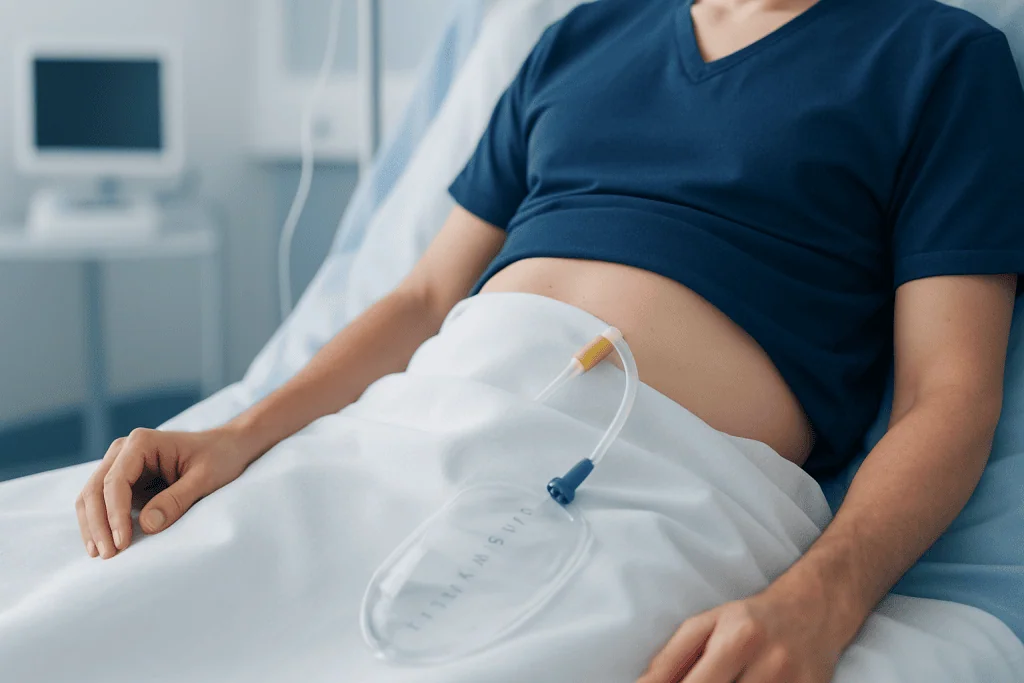
“Super pubic catheter” is a common search term for a suprapubic catheter. In photos, the visible part is usually a narrow flexible tube emerging from the lower abdomen. It may be held in place with a securement device, tape or a dressing, while the part inside the bladder is commonly held by a small water-filled balloon.
The tube generally connects to a larger leg bag during daytime activity or a bedside drainage bag overnight. The bag has a tap or valve at the bottom for emptying. Some people use a catheter valve rather than a continuously attached bag, but this is only appropriate when advised by their clinical team.
In the first days after insertion, a dressing may cover the site and there may be slight bruising, tenderness or a small amount of blood-tinged urine. Once the tract has healed, the site may appear as a small round opening around the catheter. Redness that spreads, thick or foul-smelling discharge, marked swelling, or increasing pain is not expected and should be assessed.
A reliable suprapubic catheter patient handout should explain the person’s specific catheter type, balloon volume, planned change schedule, drainage system and contact details. A generic suprapubic catheter PDF or suprapubic catheter patient education PDF can support learning, but it should not replace individualized instructions from the treating team.
How it works, who may benefit and how placement is performed

The catheter drains urine directly from the bladder through the abdominal wall. Clinicians may recommend it for urinary retention, some neurologic bladder problems, urethral injury or narrowing, prolonged need for bladder drainage, or situations in which a urethral catheter causes ongoing difficulty. The underlying reason for poor bladder emptying should be assessed, as it may relate to conditions such as urinary retention.
Not everyone is a suitable candidate. The clinician considers previous lower abdominal surgery, bleeding risk, bladder capacity, active infection, pregnancy, anatomy and whether the bladder can be safely accessed. Ultrasound or another imaging method may be used to guide placement, especially when anatomy is less straightforward.
Before the procedure, the team reviews medical history, medicines and allergies. The lower abdomen is cleaned, local anesthetic and sometimes sedation or anesthesia are used, and the bladder is filled when appropriate. A clinician creates a small opening above the pubic bone and passes the catheter into the bladder, often with ultrasound guidance. Urine flow helps confirm placement, the retention balloon is inflated inside the bladder, and the tube is connected to drainage.
Placement should only be performed by trained health professionals in an appropriate clinical setting. A suprapubic catheter documentation example in a medical record may include the catheter size and type, reason for insertion, method of placement, urine appearance, balloon inflation details, patient tolerance, drainage setup and aftercare plan. These details are for clinical safety and should be recorded by the care team.
How many inches do you insert a suprapubic catheter?
Patients and caregivers should not insert a suprapubic catheter by measuring inches. There is no universal insertion distance because the route from skin to bladder differs between individuals, and safe placement depends on anatomy, the catheter design and the clinical technique used.
Initial insertion is performed by an experienced clinician, often with imaging guidance. During planned catheter replacement, the clinician follows the established tract and the manufacturer’s instructions. The catheter should be advanced only by someone trained and authorized to do so, particularly if the tract is new or there has been a recent complication.
If a catheter slips out, it is important to seek urgent medical advice rather than attempting reinsertion at home. A new suprapubic tract can begin to narrow or close quickly. The correct action depends on how long the catheter has been in place, whether the person is trained in replacement and the instructions provided by the urology team.
Do not pull on the catheter, inflate the balloon outside the bladder, or make changes to balloon volume without professional direction. These actions can cause pain, bleeding, blockage or bladder injury. The safest approach is to keep the tube secured, avoid tension and contact the designated care service if there is a problem.
Recovery timeline, daily care and wearing pants
After placement, mild lower abdominal soreness, bladder spasms or small amounts of blood in the urine can occur for a short time. Many people are able to return home the same day or after a brief period of observation, depending on why the catheter was placed and whether another condition requires care. The clinician will explain activity limits, pain management and follow-up plans.
Over the following days, urine should continue to drain freely. The insertion site often becomes less tender as healing progresses. The first catheter change is usually planned by the urology team after the tract has matured; subsequent changes follow an individualized schedule. Patients should not assume that all catheters have the same replacement interval.
To wear pants with a suprapubic catheter, many people choose loose-waisted trousers, elastic waistbands, skirts, dresses or underwear designed to hold a leg bag. Clothing should not tug, kink or compress the tubing. The drainage bag is commonly strapped to the thigh or calf below bladder level, and the tubing should have enough slack to allow comfortable movement.
Daily care includes washing hands before and after handling the system, keeping the drainage bag below bladder level, avoiding twists in the tubing and emptying the bag before it becomes too full. The site is usually cleaned gently with water and mild soap if the care team approves, then dried carefully. Dressings are not always needed after healing, but individual instructions should be followed.
- Drink fluids according to the clinician’s advice, especially if another medical condition affects fluid intake.
- Check that urine is flowing and that the tubing is not trapped under clothing or bedding.
- Use the recommended bag-cleaning and replacement routine.
- Avoid swimming, bathing or strenuous activity until the care team confirms it is safe.
Can you still pee from the urethra with a suprapubic catheter?
Yes, some people can still pass urine through the urethra with a suprapubic catheter in place. This can happen if the bladder continues to fill and the catheter does not drain all urine, if the person has bladder spasms, or if a catheter valve is being used under medical supervision.
Small amounts of urine or fluid from the urethra may also occur because of bladder contractions or normal secretions. It is not always a sign that the catheter has failed. However, a new large amount of urethral leakage, pain, a reduced amount of urine in the bag, or a feeling of a full bladder may suggest a kink, blockage, infection or bladder spasm and should be discussed with a clinician.
People with a suprapubic catheter can still have an urge to urinate, even when the catheter is draining. The sensation may lessen over time for some individuals. Persistent severe urgency, pelvic pain or leakage can often be assessed and managed by a urology team.
A catheter does not treat the cause of every bladder symptom. For example, patients with neurologic bladder dysfunction may need additional assessment and a wider management plan. Clinicians may also investigate related problems such as urinary tract infection when symptoms point to infection.
Benefits, possible risks and preventing common problems
For appropriate patients, a suprapubic catheter can provide dependable bladder drainage while avoiding a tube in the urethra. This may improve comfort for some people, reduce urethral irritation and make personal hygiene, sexual activity or mobility easier in selected circumstances. It also allows the urethra to remain free for assessment or treatment when needed.
Like all urinary catheters, suprapubic catheters have possible risks. These include urinary tract infection, catheter blockage, urine leakage, bladder spasms, skin irritation, bleeding, accidental removal and stones in the bladder with longer-term use. Less common procedural risks include injury to nearby organs, particularly in people with complex anatomy or previous surgery.
Good catheter care can lower, but not eliminate, the risk of complications. Hand hygiene, a closed drainage system, unobstructed tubing and timely catheter changes are important. Antibiotics are not routinely needed simply because a catheter is present; they are prescribed when a clinician identifies an infection or another clear indication.
Contact the care team about cloudy or foul-smelling urine only in combination with symptoms, as urine appearance alone does not always mean infection. Fever, chills, new confusion in a vulnerable person, lower abdominal pain, flank pain, or worsening unwellness need timely assessment. Acibadem International’s multidisciplinary specialists and JCI-accredited hospitals can assess catheter-related concerns and urinary conditions for international patients.
When to seek medical care
Seek urgent medical advice if the catheter falls out, stops draining and changing position does not restore flow, or there is severe lower abdominal pain or a sense of a very full bladder. A newly placed tract may close rapidly, so a dislodged catheter should not be ignored or replaced without appropriate training.
Prompt assessment is also important for fever, chills, new severe weakness, persistent vomiting, heavy bleeding, large blood clots, rapidly spreading redness around the site, pus-like drainage, or urine leaking heavily around the catheter. These symptoms may indicate infection, blockage, injury or another complication that needs treatment.
For less urgent concerns, arrange contact with the urology team if there is increasing discomfort, recurring leakage, frequent blockage, skin irritation, ongoing bladder spasms or questions about bag supplies and catheter changes. Keeping a brief record of urine output, leakage, symptoms and catheter changes can help during review.
People should use the emergency and after-hours contact instructions provided by their local clinical team. If symptoms are severe or the person appears seriously unwell, emergency services may be needed.
Frequently asked questions
Are suprapubic catheter photos reliable for checking infection?
Photos can show visible changes such as redness, swelling or drainage, but they cannot diagnose infection on their own. A clinician considers symptoms such as fever, pain, urine drainage problems and the person’s overall condition. Contact the care team if the site looks increasingly inflamed or the person feels unwell.
Is a suprapubic catheter painful?
Placement can cause temporary discomfort, but local anesthetic, sedation or anesthesia may be used depending on the situation. Mild tenderness and bladder spasms can occur during early recovery. Severe or worsening pain should be assessed promptly.
How long can a suprapubic catheter stay in?
A suprapubic catheter may be used for a short period or for long-term bladder drainage. The duration depends on the medical reason, bladder function and treatment plan. Catheter change timing varies by catheter type and individual needs, so the clinical team should provide the schedule.
Can a person shower with a suprapubic catheter?
Many people can shower once the treating team says the site is ready, often using gentle washing and careful drying around the catheter. Instructions differ after a new placement or if there is a dressing. The drainage system should remain secure and the tubing should not be pulled.
What should be done if urine is not draining into the bag?
First check for a kinked tube, a full bag, tubing trapped under clothing or bedding, and whether the bag is below bladder level. Do not force fluid into the catheter or attempt to remove it unless specifically trained and instructed. If drainage does not resume or there is pain or bladder fullness, seek urgent medical advice.
Can suprapubic catheters cause urinary tract infections?
Yes. Any indwelling urinary catheter can increase the chance of urinary tract infection because it provides a route for bacteria to enter the urinary system. Careful hand hygiene, appropriate drainage-bag use and avoiding unnecessary catheter manipulation can help reduce risk, but symptoms should be assessed by a clinician.
References
- National Health Service
- Urology Care Foundation
- Centers for Disease Control and Prevention
- European Association of Urology
- National Institute for Health and Care Excellence
This article is for general information only and is not a substitute for professional medical advice. Please consult a qualified doctor about your individual situation.
Explore treatments in Turkey — costs, top hospitals & a free quote
JCI-accredited · board-certified surgeons · reply within 24h
Add us as a Preferred Source to see more of our trusted health content across Google Search, AI Overviews and Discover.

More from the Health Library



Related Specialists

Asst. Prof. Dr. Barış Sancak
Psychiatry
Dr. Cem Öncüloğlu
Gynecology & Obstetrics
Dr. Sertaç Uzel
Radiology
Assoc. Prof. Dr. Mehmet Salih Söylemez
Orthopedic Surgery & Traumatology