Child Orthodontic Treatment: How It Works, Results and What to Expect

An orthodontic assessment is commonly recommended by around age 7, even when treatment is not yet needed. Early treatment can guide jaw growth or create space in selected children, but it does not replace later orthodontic care for everyone.
Key Takeaways
- An orthodontic assessment is commonly recommended by around age 7, even when treatment is not yet needed.
- Early treatment can guide jaw growth or create space in selected children, but it does not replace later orthodontic care for everyone.
- Braces, removable appliances and clear aligners may be used depending on the child’s bite, tooth position and ability to follow instructions.
- Good brushing, regular dental visits and attendance at orthodontic appointments are important for safe, effective treatment.
- Temporary discomfort and mouth irritation are common; serious complications are uncommon when care instructions are followed.
Child orthodontic treatment uses carefully planned monitoring and appliances to guide developing teeth and jaws. Some children benefit from early treatment, while others are best observed until more permanent teeth have erupted.
Overview: How Child Orthodontic Treatment Works
Child orthodontic treatment is dental care that improves how a child’s teeth and jaws fit together. It may involve observation over time, removable appliances, fixed braces or, for suitable older children and teenagers, clear aligners. The aim is not simply straighter-looking teeth: orthodontic care can improve bite function, support oral hygiene and guide developing jaws when a growth-related problem is present.
Orthodontists are dentists with additional specialist training in diagnosing and correcting tooth and jaw alignment. They assess each child individually because dental development varies widely. A first orthodontic assessment is often useful by about age 7, when the first permanent molars and front teeth are usually emerging, but an assessment does not mean treatment will begin immediately.
For many children, the most appropriate plan is periodic review. This allows the orthodontist to watch tooth eruption and facial growth, then begin active treatment at the time most likely to provide a stable result. When active care is needed, treatment is planned around the child’s specific bite, growth stage, oral health and daily routine.
Who May Benefit From an Orthodontic Assessment
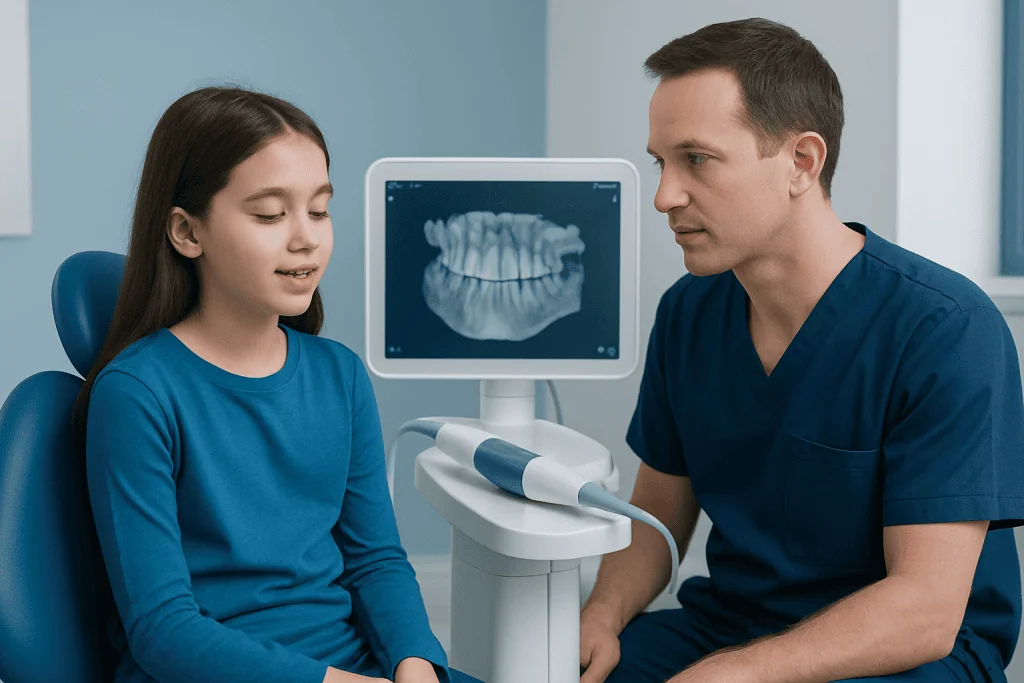
Parents or caregivers may notice crowded, crooked, widely spaced or protruding teeth. Other signs include difficulty biting or chewing, early or late loss of baby teeth, a jaw that shifts when the child closes their mouth, frequent cheek or lip biting, thumb- or finger-sucking that continues beyond the early years, or teeth that do not meet normally.
Orthodontic treatment may be considered for crossbite, overbite, underbite, open bite, significant crowding, excess spacing or teeth that are blocked from erupting into the right position. A crossbite affecting front teeth can sometimes require earlier attention because it may influence the way the jaws grow. However, not every variation in tooth position needs treatment during childhood.
Before orthodontic appliances are fitted, the teeth and gums should be healthy. Cavities, gum inflammation and poor plaque control may need treatment first. Children also need enough maturity to cooperate with cleaning, food guidance and follow-up visits. In some situations, a general dentist, pediatric dentist, oral and maxillofacial surgeon, speech and language professional, or ear, nose and throat specialist may contribute to the wider care plan.
Planning and Step-by-Step Treatment

The first consultation usually includes a discussion of the child’s dental and medical history, a bite examination and an assessment of facial and jaw growth. The orthodontist may take clinical photographs, digital scans or impressions, and dental X-rays when they are clinically justified. These records show the position of erupted and developing teeth, roots and supporting bone.
After reviewing the findings, the orthodontist explains whether observation, early treatment or later comprehensive treatment is most appropriate. The plan should describe the purpose of treatment, the appliance options, expected responsibilities, likely duration and the need for retention after active tooth movement. If teeth are severely crowded or there are concerns about eruption, additional dental assessment may be needed before a final plan is made.
For fixed braces, small brackets are bonded to teeth and connected with a thin wire. Gentle, controlled forces move teeth gradually between adjustment visits. Removable appliances may widen part of the upper jaw, guide selected teeth or influence a developing bite. Clear aligners are removable trays that are changed in stages, but they work only when worn for the time advised by the orthodontist.
Some children receive treatment in two phases. The first phase occurs while baby and permanent teeth are both present and focuses on a specific jaw or eruption concern. After a rest period, a second phase may be used once more permanent teeth have erupted. A two-phase approach is not routinely necessary; it is recommended only when its expected benefits are relevant to the child’s development.
Types of Appliances and Expected Results
Fixed braces are a reliable option for many types of tooth movement because they remain attached to the teeth. They may use metal or tooth-coloured brackets. Removable plates and functional appliances can be useful for selected bite and growth concerns, while palatal expanders may be used when an upper jaw is narrow. Each appliance has a different purpose, and not every child is suitable for every option.
Clear aligners can be an alternative for some children and adolescents with appropriate dental development and excellent wear habits. Because they can be removed, aligners may make brushing and eating easier. However, losing trays or not wearing them as directed can delay progress. The orthodontist will help families compare practical advantages and limitations rather than assuming one approach is best for all children.
Expected results include better tooth alignment, a more balanced bite and improved ability to clean between teeth. Orthodontic treatment can also make it easier to restore or protect teeth in the future. It cannot promise perfect facial symmetry or permanently prevent all tooth movement, which is why retainers and long-term dental care remain important.
Families looking for specialist information about appliance-based care can discuss orthodontic treatment options with a qualified orthodontic team. The most appropriate method is based on clinical findings rather than appearance alone.
Treatment Timeline, Comfort and Daily Care
Orthodontic care usually takes months to a few years, depending on the complexity of the bite, growth pattern, appliance type and cooperation with instructions. Appointments are scheduled at intervals determined by the treatment plan. A child may feel pressure or tenderness for a few days after braces are placed or adjusted, or when starting a new aligner stage. This is usually temporary and can often be managed with soft foods and advice from the treating clinician.
Braces can initially rub against the lips or cheeks. Orthodontic wax and simple adjustment techniques may help, and persistent irritation should be reported to the orthodontic office. Parents should avoid making appliance repairs at home. A loose bracket, poking wire, broken retainer or lost aligner should be discussed promptly with the care team.
Thorough cleaning is especially important during treatment. Children with braces should brush carefully around brackets and along the gumline, use interdental cleaning tools recommended by their dentist or orthodontist, and attend routine dental check-ups. Limiting frequent sugary drinks and snacks helps lower the risk of cavities and enamel marks. Hard, sticky or chewy foods may damage fixed appliances and are commonly discouraged.
Once active treatment is complete, retainers hold teeth in their new positions while surrounding tissues adapt. Retainers may be removable, fixed behind the teeth, or both. Wearing them exactly as instructed is essential because teeth can move after braces or aligners are finished.
Benefits, Limitations and Possible Risks
The main potential benefits of child orthodontic treatment are improved bite alignment, more orderly tooth position and easier cleaning in some cases. Timely treatment can also address selected developing jaw discrepancies or eruption problems. The likely benefit depends on the diagnosis, the child’s growth and consistent participation in care.
Orthodontic treatment has limits. It may not resolve every skeletal jaw difference, particularly after growth is complete, and future treatment can occasionally be needed. Some children may need dental restorations, tooth removal or other care as part of a coordinated plan. Orthodontists discuss alternatives, including no active treatment, so families can make an informed choice.
Common short-term effects include soreness, difficulty eating firm foods at first and irritation of the cheeks or lips. Less common risks include cavities, gum inflammation, permanent white marks on enamel, shortening of tooth roots, relapse after treatment and damage to appliances. These risks are reduced, though not entirely eliminated, by good oral hygiene, regular professional review and following appliance instructions.
Orthodontic X-rays are used only when they are expected to add useful diagnostic information. Dental teams use established radiation-safety principles and seek to minimize exposure, especially in children.
When to Seek Medical Care
A parent or caregiver should arrange a dental or orthodontic assessment if a child has pain when biting or chewing, a noticeable crossbite, an underbite, severe crowding, a tooth that appears trapped or displaced, or a jaw that shifts to one side when closing. Early evaluation is also sensible after facial or dental injury, particularly if a tooth has moved, loosened or changed colour.
Urgent dental advice is appropriate for severe tooth or jaw pain, swelling of the face or gums, fever with dental symptoms, uncontrolled bleeding, a knocked-out permanent tooth, or difficulty breathing or swallowing. These symptoms may indicate a problem that needs prompt assessment and are not issues to manage by adjusting orthodontic appliances at home.
During orthodontic treatment, families should contact the orthodontic team for a broken appliance causing injury, a wire that cannot be made comfortable with wax, significant swelling, persistent pain or concerns that an appliance is not fitting correctly. Routine questions about cleaning, retainers or missed wear can also be addressed before they affect progress.
Acibadem International’s multidisciplinary specialists and JCI-accredited hospitals provide dental and orthodontic assessment and treatment planning for international patients. A qualified clinician can explain whether monitoring, an appliance or comprehensive orthodontic treatment is appropriate for the child.
Frequently asked questions
What is the best age for child orthodontic treatment?
There is no single best age for every child. An orthodontic check-up is often recommended by around age 7, but many children will only need monitoring until later. The timing of active treatment depends on the bite problem, tooth eruption and jaw growth.
Does every child need braces after an early orthodontic phase?
No. Some early treatments correct a limited issue and may reduce the need for more extensive treatment later. However, many children who have a first phase still need a later phase to align permanent teeth and refine the bite.
Are braces painful for children?
Braces do not usually cause constant pain, but teeth can feel tender for a few days after placement or adjustment. Soft foods may be more comfortable during this period. Persistent or severe pain should be reported to the orthodontist.
Can a child play sports while wearing braces?
Yes, most children can continue sports and physical activities. A properly fitted mouthguard is particularly important for contact sports. The orthodontist can advise on suitable mouthguard options for a child with braces.
How long does child orthodontic treatment take?
Treatment length varies considerably based on the child’s needs and how consistently appliances are used and cared for. Active treatment often lasts from many months to a few years. Retainer use continues after active treatment to help maintain the result.
Can clear aligners be used for children?
Clear aligners may be suitable for some children and adolescents, depending on the type of bite problem and dental development. They require consistent daily wear and careful handling. An orthodontist can determine whether aligners are a practical and effective option.
References
- American Association of Orthodontists
- American Academy of Pediatric Dentistry
- National Health Service
- World Dental Federation (FDI)
This article is for general information only and is not a substitute for professional medical advice. Please consult a qualified doctor about your individual situation.
Explore treatments in Turkey — costs, top hospitals & a free quote
JCI-accredited · board-certified surgeons · reply within 24h
Add us as a Preferred Source to see more of our trusted health content across Google Search, AI Overviews and Discover.

More from the Health Library


Related Specialists

Dr. Baran Şen
Orthopedic Surgery & Traumatology
Fzt. İkra Tigis
Physical Medicine & Rehabilitation
Prof. Dr. Sinan Karaoğlu
Orthopedic Surgery & Traumatology
Prof. Dr. Deniz Gökalp
Endocrinology