Insert Ng Tube Procedure: An Evidence-Based Patient Guide
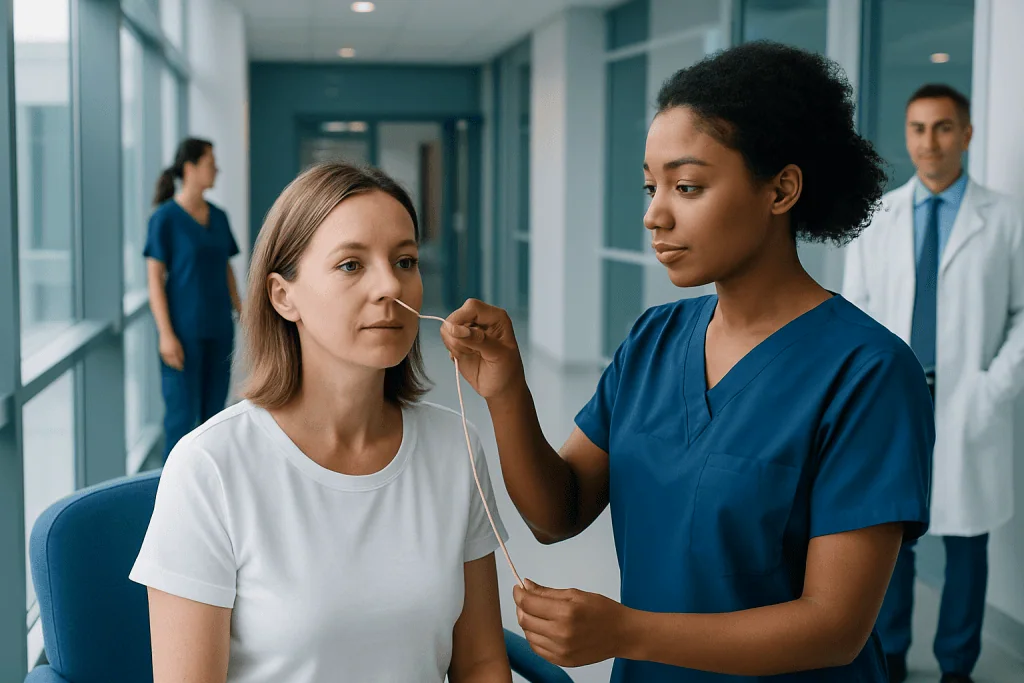
An NG tube is a temporary tube that reaches the stomach through the nose. Correct tube placement must be confirmed before feed, fluids or medicines are given.
Key Takeaways
- An NG tube is a temporary tube that reaches the stomach through the nose.
- Correct tube placement must be confirmed before feed, fluids or medicines are given.
- The procedure can be uncomfortable and may cause gagging or watery eyes, but it is usually brief.
- Chest or abdominal X-ray is used when needed to confirm placement, especially before initial use in higher-risk situations.
- New breathing difficulty, persistent coughing, severe pain or a tube that moves outward needs prompt medical assessment.
The insert NG tube procedure is a clinical method for passing a flexible nasogastric (NG) tube through the nose, down the throat and into the stomach. It may be used for short-term feeding, medicines, stomach drainage or diagnostic purposes, and should be performed and checked by trained healthcare professionals.
Overview: What Is the Insert NG Tube Procedure?
The insert NG tube procedure places a narrow, flexible nasogastric tube through one nostril, along the back of the throat and esophagus, and into the stomach. A trained clinician uses it when a person needs temporary nutritional support, medicines that cannot be taken by mouth, removal of stomach contents, or decompression of the stomach after surgery or during certain illnesses.
NG tubes are commonly used in hospitals, emergency departments and some home-care settings under clinical supervision. The tube is not intended to be inserted by an untrained person. Safe use depends on selecting the right tube, using appropriate insertion techniques, documenting the process and confirming that the tube is in the stomach before anything is delivered through it.
Depending on the reason for use, the tube may remain in place for hours, days or sometimes several weeks. If longer-term enteral feeding is expected, the medical team may discuss other options, such as a feeding tube placed directly through the abdominal wall.
How It Works and Who May Need an NG Tube
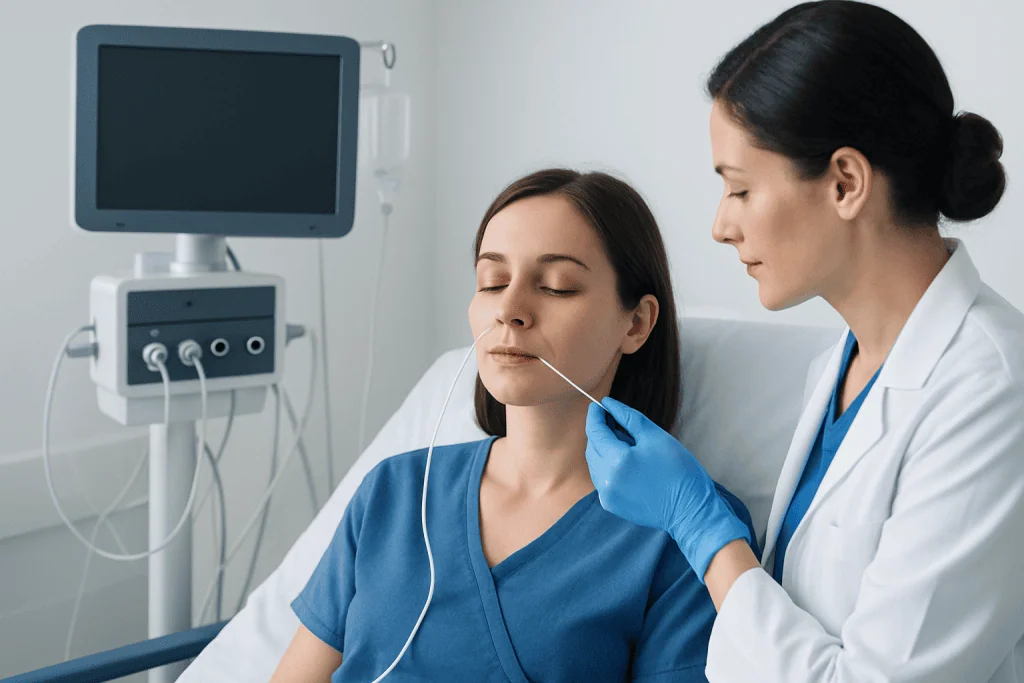
An NG tube can serve different purposes. A feeding tube may deliver liquid nutrition, water and prescribed medicines when swallowing is unsafe or not possible. A larger-bore tube may remove gas, fluid or blood from the stomach, helping relieve distension, vomiting or pressure in selected digestive conditions.
Clinicians may consider an NG tube for people recovering from major illness or surgery, those with swallowing difficulties, people who are temporarily unable to eat enough, or patients needing stomach decompression. The decision is individualized and considers the person’s overall health, expected duration of use and treatment goals.
Insertion may need modification or specialist input in people with significant facial trauma, suspected skull-base injury, known narrowing or blockage of the esophagus, recent surgery involving the nose, throat or esophagus, or certain bleeding risks. A clinician will also consider alertness, ability to cooperate, coughing and swallowing function, and the risk of aspiration.
- Feeding: short-term nutrition and hydration support.
- Medication delivery: when oral swallowing is not appropriate.
- Decompression: removal of stomach contents or air in selected situations.
- Sampling or testing: in limited diagnostic circumstances.
How Do You Insert an NG Tube Step by Step?

NG tube insertion is carried out using infection-control practices and local clinical protocols. The clinician explains the procedure, checks identity and consent as appropriate, reviews relevant medical history, and chooses the nostril that appears most suitable. The person is usually positioned sitting upright or with the head elevated, unless their condition requires another safe position.
The clinician measures an estimated insertion length using recognized anatomical landmarks, marks the tube, lubricates the tip with a water-soluble lubricant and gently advances it through the nostril. When the tube reaches the throat, the person may be asked to swallow small sips of water if it is safe for them to drink. Swallowing helps guide the tube into the esophagus rather than the airway.
The tube is advanced to the measured mark without force. If there is persistent coughing, choking, breathing difficulty, unexpected distress or resistance, advancement is stopped and the clinician assesses the situation. Once the tube is in place, it is secured to the nose or cheek with an appropriate fixation device to reduce movement and skin irritation.
These insert NG tube steps describe the general clinical process, not instructions for self-insertion. Training videos or an “insert NG tube video” may help healthcare professionals learn institutional techniques, but they do not replace supervised practical training, competency assessment and local policy.
What Are the Guidelines for Inserting a Nasogastric Tube?
NG tube evidence based practice prioritizes preventing placement in the airway and confirming gastric location before the tube is used. Professional guidance generally recommends trained staff, clear indication for the tube, appropriate patient positioning, careful advancement without force, and a documented method of placement confirmation.
For many adults, testing the acidity (pH) of aspirated fluid using validated pH paper is a recognized bedside method when an aspirate can be obtained and the result is consistent with gastric placement. However, some medicines, continuous feeding and certain medical conditions can affect gastric acidity. If aspirate cannot be obtained, pH is not suitable, or the result is uncertain, imaging may be required according to local protocol.
An X-ray interpreted by an appropriately trained professional is used when radiographic confirmation is indicated. The tube’s course should be assessed to ensure it passes down the esophagus and its tip is in the stomach before initial use. Air insufflation with listening over the stomach, checking for bubbles in water, or relying on the absence of coughing are not reliable confirmation methods and should not be used as the sole basis for feeding or medication administration.
Placement should also be reassessed before use and whenever there is concern that the tube has moved, such as after vomiting, coughing, retching, tube pulling, transfer between care areas or an unexplained change in the external tube length. Local policies may differ, so the treating team follows its approved protocol.
What Documentation Needs to Be Completed on Insertion of an NG Tube?
Complete documentation supports safe handover and ongoing tube care. The clinical record usually includes the reason for insertion, the tube type and size, the nostril used, the external length at the nostril, the date and time of insertion, and how well the person tolerated the procedure.
The record should also state the method used to confirm placement, the result obtained and, where relevant, details of imaging confirmation and the person who reviewed it. Clinicians document whether the tube is suitable for feeding, medication administration, drainage or another purpose, as well as the method used to secure it.
Ongoing records commonly include checks of the external tube length, assessment of nasal and oral skin, tube patency, feed or drainage details, and any symptoms or complications. In some healthcare systems, “insert NG tube CPT” refers to a billing or coding question rather than a clinical safety requirement. Coding is handled by qualified administrative or clinical coding teams and should reflect the applicable local rules and documented care.
Benefits, Discomforts and Possible Risks
The main benefit of an NG tube is that it can provide timely, temporary access to the stomach without surgery. It may support nutrition and medication needs while an underlying illness is treated, or reduce nausea, vomiting and abdominal pressure when stomach decompression is medically necessary.
Many people find insertion uncomfortable rather than painful. The tube can cause pressure or stinging in the nose, a gagging sensation in the throat, watering eyes, coughing and temporary nausea. Calm communication, an upright position when appropriate, pacing the procedure and swallowing can make it more manageable. It is reasonable to tell the clinician promptly if discomfort becomes severe.
Potential complications include nosebleeds, throat irritation, sinus discomfort, skin pressure injury, tube blockage, accidental removal and reflux. The most important serious risk is incorrect placement into the respiratory tract, which is why placement confirmation before use is essential. Aspiration, lung injury and infection can occur if feeds or medicines enter the airway.
Patients and families should not reposition, advance or use the tube independently unless they have been specifically trained and instructed by their healthcare team. If long-term feeding support is required, a clinician can explain alternatives and the benefits and limitations of each approach.
Recovery, Daily Care and When to Seek Medical Care
There is usually no recovery period after an uncomplicated insertion, although nasal and throat irritation often improves within a short time. While the tube remains in place, staff monitor comfort, securement, external length, skin condition and whether the tube is working as intended. Oral care, lip care and regular position changes can improve comfort for people who remain in bed.
A person should ask for clinical review if the tube feels different, appears to have moved, becomes blocked, causes persistent nausea, or leads to increasing pain in the nose, throat, chest or abdomen. Feeds and medicines should be paused until placement has been checked if tube movement is suspected.
When to seek medical care: urgent assessment is needed for trouble breathing, blue or gray lips, severe or ongoing coughing during feeding, choking, sudden chest pain, vomiting with a displaced tube, significant bleeding, confusion, or a tube that has come out. In a home setting, patients and caregivers should follow the contact plan provided by the treating team and seek emergency help for severe symptoms.
Acibadem International’s multidisciplinary specialists and JCI-accredited hospitals diagnose and treat conditions that may require NG tube support for international patients. The care team can explain why an NG tube is recommended, how placement is verified and what monitoring is needed.
Frequently asked questions
Is it painful to have an NG tube inserted?
NG tube insertion is often uncomfortable, especially as the tube passes through the nose and throat. People may experience pressure, gagging, watery eyes, coughing or brief nausea. Severe pain is not expected, and the clinician should be told immediately if it occurs.
How long does an NG tube insertion take?
The actual insertion often takes only a few minutes, but preparation and placement confirmation take longer. The time varies according to the person’s condition, the reason for the tube and whether imaging is needed to confirm location before use.
How is NG tube placement confirmed?
Placement is confirmed using an approved clinical method before the tube is used for feed, fluids or medicines. Testing the pH of aspirated fluid may be appropriate in some circumstances, while X-ray is used when required by the clinical situation or local protocol. Methods such as listening for injected air are not reliable enough on their own.
Can a person eat or drink with an NG tube in place?
This depends on why the tube was inserted and on the person’s swallowing safety. Some people can still eat and drink normally, while others need to avoid oral intake because of their illness, surgery or aspiration risk. The treating team provides individual instructions.
What should be done if an NG tube comes out?
Do not try to push the tube back in or use it. Stop feeds or medicines through the tube and contact the healthcare team for advice. If the person has breathing problems, choking, severe pain or other urgent symptoms, emergency medical care is needed.
How long can an NG tube stay in place?
The duration depends on the tube type, its purpose, the person’s condition and local policy. NG tubes are generally used for short-term support. If tube feeding is expected to continue for a longer period, the medical team may discuss other feeding-access options.
References
- National Institute for Health and Care Excellence
- National Patient Safety Agency
- American Society for Parenteral and Enteral Nutrition
- Royal College of Nursing
- World Health Organization
This article is for general information only and is not a substitute for professional medical advice. Please consult a qualified doctor about your individual situation.
Persistent digestive symptoms? Get evaluated in Turkey
JCI-accredited · board-certified surgeons · reply within 24h
Add us as a Preferred Source to see more of our trusted health content across Google Search, AI Overviews and Discover.