

Is Scoliosis Surgery Dangerous: Procedure, Recovery and Results
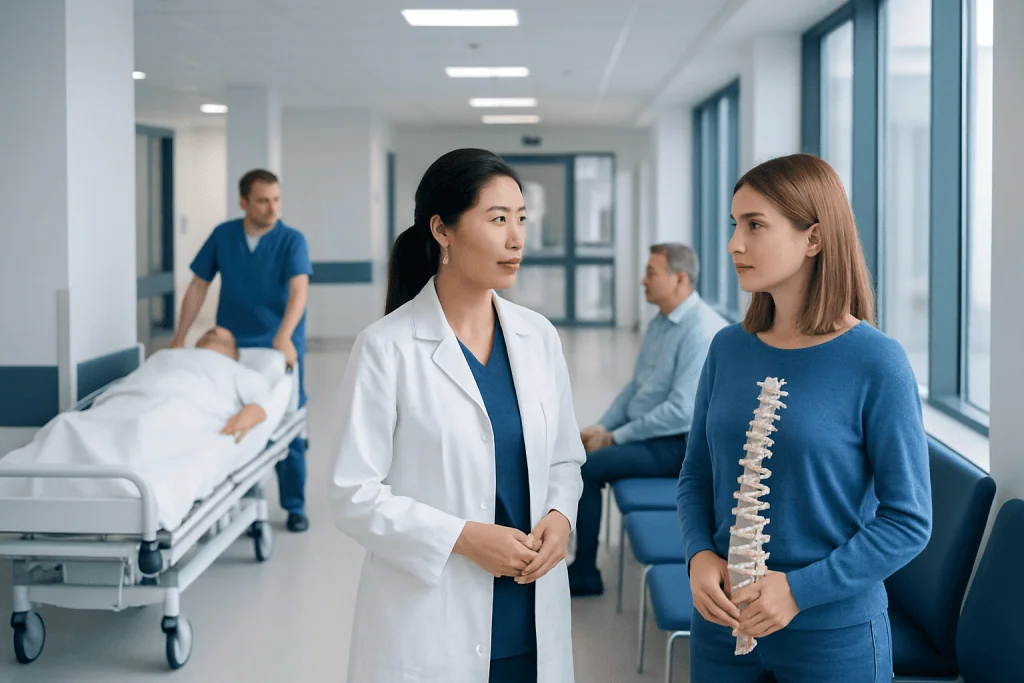
Scoliosis surgery is not risk-free, but serious complications are uncommon with thorough assessment, experienced surgical care, and careful follow-up. Most operations correct and stabilize the curve using spinal fusion, rods, screws, and bone graft material.
Key Takeaways
- Scoliosis surgery is not risk-free, but serious complications are uncommon with thorough assessment, experienced surgical care, and careful follow-up.
- Most operations correct and stabilize the curve using spinal fusion, rods, screws, and bone graft material.
- Recovery is gradual: early mobility begins in hospital, while return to full activities may take many months.
- Surgery may help prevent further curve progression and improve balance, appearance, function, or pain in selected patients.
- A specialist can explain individual risk based on age, curve type, health conditions, bone quality, and the planned procedure.
Scoliosis surgery is a major operation with meaningful risks, but it is generally considered safe when it is recommended for an appropriate patient and performed by an experienced spine team. The decision depends on curve progression, symptoms, overall health, expected benefits, and the person’s own goals.
Is scoliosis surgery dangerous?
Is scoliosis surgery dangerous? It is a major procedure, so it carries important risks such as bleeding, infection, blood clots, nerve injury, problems with bone healing, and the possibility of further surgery. However, for people who are carefully assessed and treated by an experienced multidisciplinary spine team, the operation is commonly performed with extensive safety planning and monitoring.
Whether surgery is appropriate depends on more than the curve measurement alone. Specialists consider whether the curve is progressing, causing imbalance or symptoms, affecting breathing in severe cases, or likely to create future problems. They also consider the person’s age, general health, bone strength, type of scoliosis, and expectations for daily life after treatment.
Modern scoliosis surgery uses detailed imaging, anesthesia planning, blood-conservation measures, and monitoring of spinal cord function during surgery. These measures cannot eliminate risk, but they help the team identify and reduce potential problems. A personalized discussion with a spine surgeon is the best way to understand the likely benefits and risks in an individual case.
How scoliosis surgery works and who may be a candidate
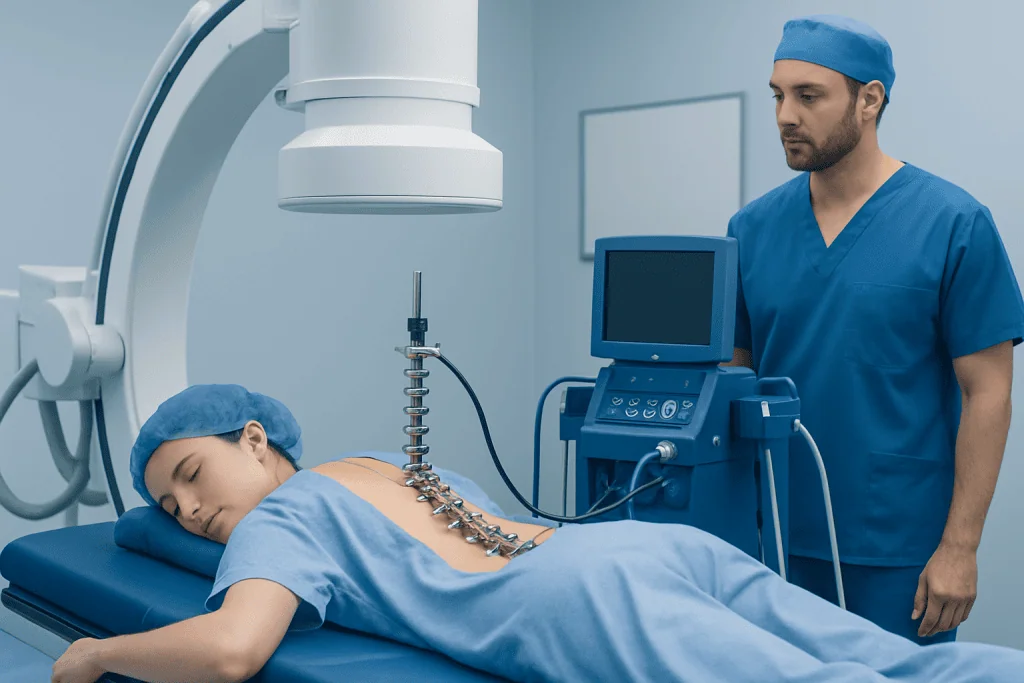
The most common operation for scoliosis is spinal fusion. The surgeon carefully straightens and stabilizes the spine using metal rods, screws, hooks, or wires, then places bone graft material so the selected vertebrae gradually grow together into one stable section. The aim is usually not to create a perfectly straight spine, but to achieve a safe correction and improve long-term balance.
Surgery may be considered when a curve is large, continues to worsen despite observation or bracing, or causes substantial functional, cosmetic, or quality-of-life concerns. In adolescents with idiopathic scoliosis, a progressing curve approaching or exceeding the range where progression is likely after growth may lead to a surgical consultation. In adults, pain, nerve compression, spinal imbalance, progressive deformity, or reduced function may also be important factors.
Not everyone with scoliosis needs surgery. Many smaller or stable curves can be monitored, managed with exercise-based rehabilitation, or treated with bracing during growth when appropriate. A full assessment may include standing spine X-rays, physical and neurological examination, and sometimes MRI or CT imaging. Readers can learn more about the condition through scoliosis information.
A surgical team also reviews medicines, allergies, nutrition, smoking status, anemia risk, heart or lung conditions, and previous spinal procedures. Improving general health before surgery, including stopping nicotine use where possible, can support healing and reduce avoidable complications.
Step by step: what happens during scoliosis surgery
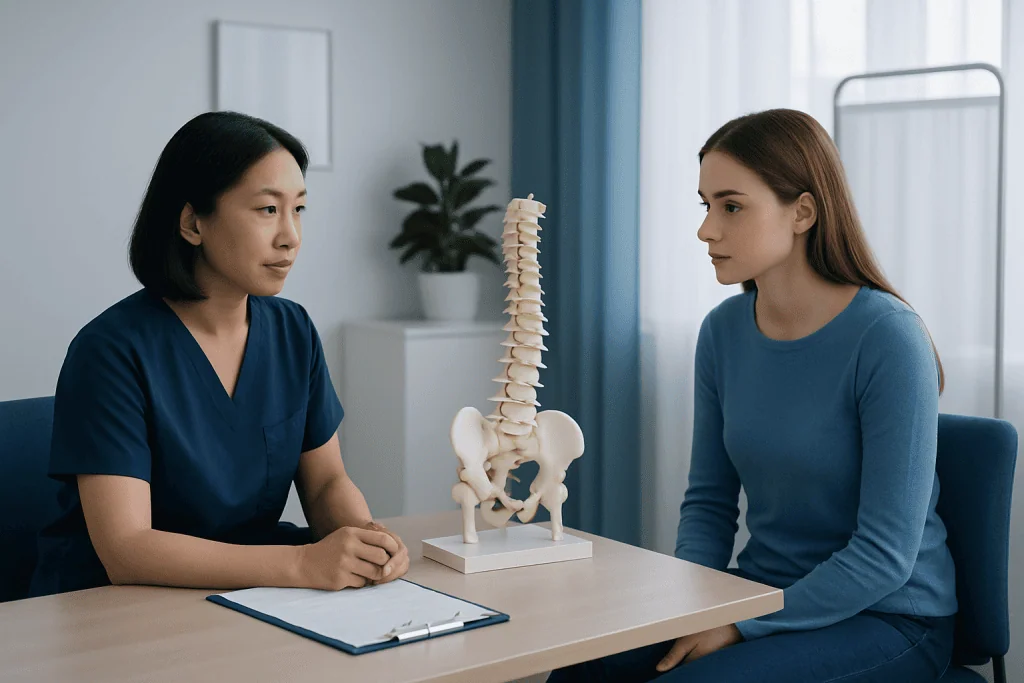
Before surgery, the patient meets the anesthesia and spine teams, has preoperative testing, and receives instructions about eating, drinking, medications, and hospital admission. During the operation, general anesthesia is used so the patient is asleep and does not feel pain. The procedure may be performed through the back of the spine, the front, or occasionally a combined approach, depending on the curve and surgical plan.
The surgeon exposes the relevant vertebrae and places implants under X-ray guidance or computer-assisted navigation. Rods are attached to the implants to gradually correct the curve and restore balanced alignment. Bone graft is then placed to support fusion. Throughout many procedures, intraoperative neuromonitoring checks signals traveling through the spinal cord and nerves.
Afterward, the patient is transferred to a recovery area and then to a hospital room or, when closer observation is needed, an intensive care setting. Pain control, breathing exercises, circulation support, wound checks, and early movement are important parts of immediate care. The exact length of surgery and hospital stay varies with the person’s age, curve complexity, number of spinal levels treated, and overall health.
For people considering operative care, scoliosis surgery should be discussed as an individualized treatment plan rather than as a single standard procedure. The surgical team can explain the planned approach, the part of the spine being fused, and alternatives that may be reasonable.
How bad is the recovery for scoliosis surgery?
Recovery can be challenging, especially during the first days and weeks, but it is usually managed with a structured plan. Pain, tiredness, stiffness, reduced appetite, and difficulty finding a comfortable sleeping position are common early experiences. Hospital teams use several approaches to pain control and encourage safe movement, breathing exercises, and gradual return to eating and walking.
Many patients begin standing and taking short walks soon after surgery, with support from nurses and physiotherapists. A hospital stay often lasts several days, although the timing varies. At home, help with meals, dressing, bathing, transport, school or work arrangements, and household tasks may be useful at first.
In the first few weeks, patients commonly increase their walking gradually while avoiding bending, twisting, heavy lifting, and high-impact activity. Follow-up appointments allow the team to assess the incision, review symptoms, and confirm that alignment and healing are progressing as expected. Returning to school or desk-based work may be possible after several weeks for some people, but the timeline is individual.
Fusion and full recovery take longer than the early return home. Activity restrictions are generally eased in stages over several months, guided by symptoms, examination findings, and imaging. Rehabilitation may help restore mobility, confidence, posture, endurance, and safe movement patterns.
Is scoliosis surgery worth the risk?
For the right patient, scoliosis surgery may be worth the risk because it can stop a curve from worsening, improve spinal balance, and reduce the physical or emotional burden of a significant deformity. Some people also experience improved function or less pain, particularly when symptoms are related to spinal imbalance or nerve pressure. Results differ, and surgery cannot promise complete pain relief or prevent every future spine problem.
The decision is most balanced when the expected benefits are compared with the consequences of not operating. A specialist may discuss the likelihood of curve progression, impact on daily activities, appearance concerns, lung function in very severe curves, and the limits of non-surgical treatment. The patient and, for children, their family should have enough time to ask questions and understand the recovery commitment.
It can help to ask the surgeon about the goals of surgery, the amount of correction expected, the levels likely to be fused, the most relevant complications, and the alternatives. A second opinion from a qualified spine specialist can also be appropriate when the decision feels uncertain. Shared decision-making is especially important because personal priorities may differ between patients.
Acibadem International’s multidisciplinary specialists and JCI-accredited hospitals assess and treat scoliosis for international patients, coordinating spinal surgery, anesthesia, rehabilitation, and follow-up planning when surgery is indicated.
Is scoliosis surgery one of the most painful surgeries?
Scoliosis surgery can cause substantial pain and discomfort in the early recovery period because it involves the spine, muscles, and soft tissues. However, pain is expected and actively treated. It is not useful to rank operations by pain because each person’s experience, procedure type, health, anxiety level, and response to medication are different.
Care teams commonly use multimodal pain management, meaning several complementary methods may be used rather than relying on one medicine alone. This may include anesthesia techniques, non-opioid pain medicines when suitable, short-term stronger pain relief where needed, ice or positioning strategies, and gentle movement. The goal is not only comfort but also safe breathing, walking, sleeping, and participation in recovery.
Pain should generally improve over time rather than steadily worsen. Patients should tell their care team if pain is severe, suddenly increasing, not controlled by the prescribed plan, or accompanied by fever, wound changes, weakness, numbness, or new difficulty with bladder or bowel control. Prompt assessment can identify whether additional support or treatment is needed.
What can you never do after scoliosis surgery?
Most people can return to a broad range of everyday activities after scoliosis surgery, including walking, work or school, travel, and many forms of exercise. There is no universal list of things a person can never do, because restrictions depend on the spinal levels fused, surgical technique, healing, age, and individual goals. A fusion does permanently reduce movement in the treated part of the spine, but other spinal segments and joints continue to move.
During the healing period, patients are usually asked to avoid activities that place high stress on the spine, such as heavy lifting, repeated bending or twisting, contact sports, and high-impact exercise. The surgeon provides a staged plan for resuming these activities. Following this advice matters because the bone fusion needs time to become solid.
Some people may be advised to avoid certain high-impact or collision activities in the long term, particularly if they involve a large fusion or carry a substantial risk of falls. Others can safely return to swimming, cycling, running, gym-based exercise, and selected sports after clearance. The appropriate question is not simply what is prohibited forever, but what activities are safe at each stage of recovery.
Good long-term habits include regular physical activity within medical guidance, maintaining a healthy body weight, avoiding nicotine, using safe lifting techniques, and seeking review for persistent new back or leg symptoms. Individual rehabilitation advice can help patients return to valued activities with confidence.
When to seek medical care
Anyone with a newly noticed spinal curve, uneven shoulders or hips, a prominent shoulder blade, or a rib prominence when bending forward should arrange a medical assessment. Children and teenagers who are still growing may need regular monitoring because some curves can progress during growth spurts. Adults should seek assessment for a changing posture, worsening imbalance, persistent back pain, or reduced ability to walk or stand comfortably.
Urgent medical attention is appropriate for new or rapidly worsening weakness, numbness in the legs, loss of coordination, new bowel or bladder control problems, severe unrelenting pain, fever with back pain, or concerns after surgery such as drainage, increasing redness, or swelling around the incision. These symptoms may have causes other than scoliosis, but they should not be ignored.
After scoliosis surgery, keeping scheduled follow-up visits is important even when recovery feels smooth. The team monitors the wound, spinal alignment, implants, and progress toward fusion. Patients should contact their surgical team if they are unsure whether a symptom is expected during recovery.
Frequently asked questions
Is scoliosis surgery dangerous for teenagers?
Scoliosis surgery in teenagers is a major operation, but it is performed regularly in specialized pediatric and spine centers. Risk depends on the curve, the planned fusion, overall health, and surgical factors. Careful imaging, anesthesia assessment, neuromonitoring, and follow-up are used to support safety.
What are the main risks of scoliosis surgery?
Possible risks include bleeding, infection, blood clots, anesthesia reactions, nerve or spinal cord injury, leakage of spinal fluid, implant problems, and incomplete fusion of the bones. Some risks are temporary and treatable, while others can be more serious. The surgeon should explain which risks are most relevant to the individual patient.
How long does it take to recover from scoliosis surgery?
Early recovery begins in hospital and continues at home over the first several weeks. Many patients gradually return to school, desk work, and routine daily activities during the following weeks or months. Complete fusion and return to unrestricted activity can take many months, depending on the surgical plan and healing.
Will scoliosis surgery make the spine completely straight?
The goal is usually to safely improve curve correction and spinal balance, not necessarily to make the spine perfectly straight. Trying to achieve excessive correction may not be appropriate or safe. The expected result depends on the shape, stiffness, and cause of the curve.
Can scoliosis come back after spinal fusion?
The fused part of the spine is intended to remain stable once healing is complete. However, changes can still occur in spinal areas above or below the fusion, and some people may develop pain or other spine concerns later in life. Regular follow-up and maintaining general musculoskeletal health can be helpful.
How should someone prepare for scoliosis surgery?
Preparation usually includes medical tests, medication review, imaging, and discussions with the surgical and anesthesia teams. Optimizing nutrition, treating anemia if present, avoiding nicotine, arranging help at home, and preparing questions for the surgeon can support a smoother recovery. The hospital will provide procedure-specific instructions before admission.
References
- Scoliosis Research Society
- American Academy of Orthopaedic Surgeons
- National Institute of Arthritis and Musculoskeletal and Skin Diseases
- National Health Service
- MedlinePlus
This article is for general information only and is not a substitute for professional medical advice. Please consult a qualified doctor about your individual situation.
Scoliosis Surgery in Turkey — costs, top hospitals & a free quote
JCI-accredited · board-certified surgeons · reply within 24h
Add us as a Preferred Source to see more of our trusted health content across Google Search, AI Overviews and Discover.

More from the Health Library
Related Specialists

Dr. Ahmet Hakan Eren
Pulmonology
Dr. Nıgar Alıyeva
Pediatric & Adolescent Psychiatry
Prof. Dr. Sema Aydoğdu
Pediatric Gastroenterology
Assoc. Prof. Dr. Emir Çapkınoğlu
General Surgery