Cochlear Implant Surgery for Children: Procedure, Recovery and Results

A cochlear implant does not restore natural hearing, but it can provide useful access to sound and spoken-language information. Children need detailed hearing, medical and developmental assessments before implantation.
Key Takeaways
- A cochlear implant does not restore natural hearing, but it can provide useful access to sound and spoken-language information.
- Children need detailed hearing, medical and developmental assessments before implantation.
- The operation is usually performed under general anesthesia, while the external sound processor is fitted several weeks later.
- Progress after activation varies and depends on factors such as age, hearing history, consistent device use and therapy.
- Families should follow wound-care, activity and device instructions carefully and contact the care team about concerning symptoms.
Cochlear implant surgery for children places an electronic device that bypasses damaged parts of the inner ear and sends sound information to the hearing nerve. It is a planned procedure followed by device activation, hearing rehabilitation and family-supported learning, which are essential parts of a child’s results.
Overview: how cochlear implants help children hear
Cochlear implant surgery for children is considered when a child has severe to profound sensorineural hearing loss and receives limited benefit from appropriately fitted hearing aids. A cochlear implant is not simply a stronger hearing aid. Hearing aids amplify sound, whereas an implant converts sound into electrical signals that can stimulate the auditory nerve directly.
The system has an internal part placed during surgery and an external sound processor worn after healing. The processor captures sound, and the internal implant sends coded signals to the cochlea. The brain must then learn to interpret this new sound information, so audiology follow-up and communication support are central to care.
For many children, early access to meaningful sound can support listening, spoken-language development and participation in daily activities. Outcomes are individual, however, and the device may be used alongside sign language, visual communication methods or other communication supports according to the child’s and family’s needs.
Candidacy and assessment before surgery
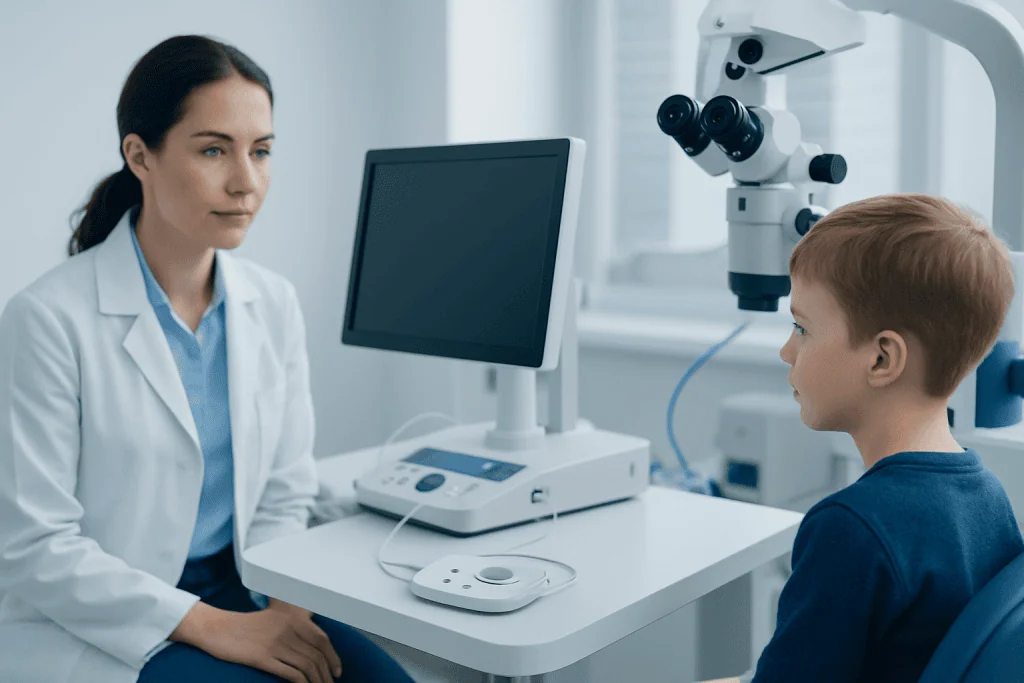
Children are assessed by a multidisciplinary cochlear implant team, commonly including an ear, nose and throat surgeon, pediatric audiologist, speech and language therapist and, when needed, pediatrician, radiologist, psychologist or genetic specialist. The team considers whether the child’s hearing loss is sensorineural, how much benefit hearing aids provide, and whether the hearing nerve and inner-ear anatomy can support implantation.
Assessment usually includes repeated age-appropriate hearing tests, hearing-aid verification, evaluation of communication and language development, and imaging such as MRI or CT scans. Medical history is also important, including causes of hearing loss, previous ear infections, developmental needs, vaccination history and any conditions affecting anesthesia or surgery.
There is no single test result that predicts every child’s experience. Age at onset of hearing loss, age at implantation, prior sound exposure, regular device use, access to therapy and family support can all influence progress. The care team discusses whether one ear or both ears may be considered, based on the child’s hearing profile and local clinical guidance.
- Parents or caregivers receive counseling about realistic expectations, follow-up and device care.
- Hearing aids are generally continued until surgery unless the clinical team advises otherwise.
- Vaccinations may be reviewed because people with cochlear implants have a small increased risk of certain forms of <a href="https://acibademinternational.com/diseases/bacterial-meningitis/”>bacterial meningitis.
What happens during cochlear implant surgery?
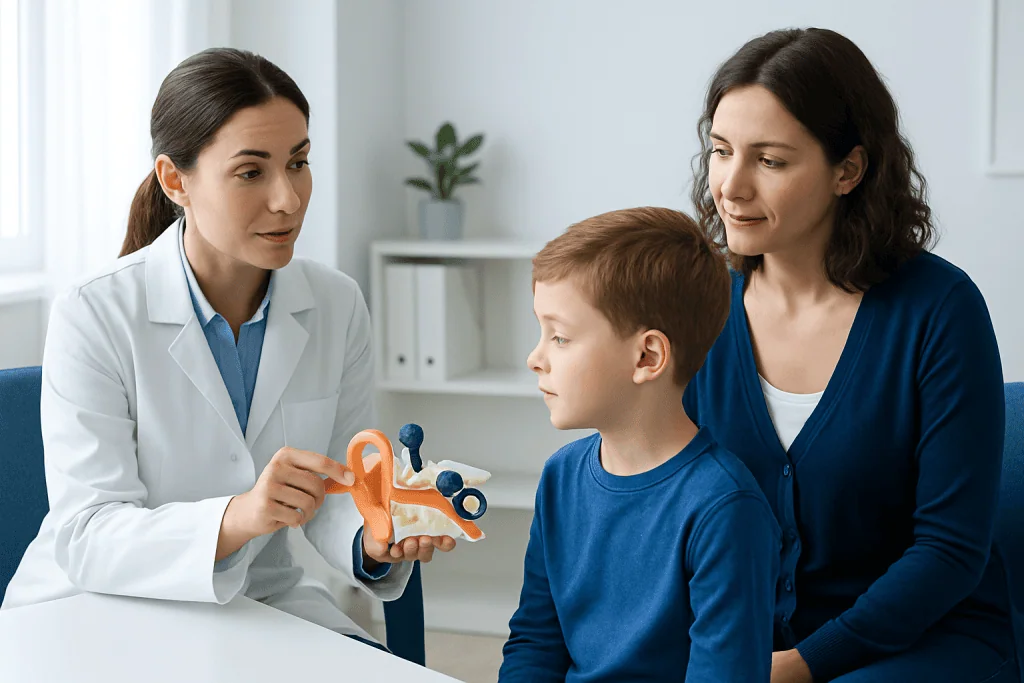
The procedure is performed in hospital under general anesthesia, meaning the child is asleep and does not feel the operation. The surgeon makes an incision behind the ear, creates a small space in the bone for the internal receiver-stimulator, and carefully inserts an electrode array into the cochlea. The incision is then closed and covered with a dressing.
During surgery, the team may check the device’s function and confirm that the electrodes are responding as expected. The approach can differ depending on cochlear anatomy, previous ear surgery or other individual medical considerations. Parents should ask the surgeon how long the procedure and expected hospital stay are likely to be for their child.
The internal device is not activated immediately. The surgical area needs time to heal before the external processor is fitted and programmed. This first programming appointment, often called activation or switch-on, is the beginning of the child’s hearing rehabilitation rather than the end of treatment.
Families considering this option can learn more about cochlear implant treatment and the assessment process with a specialist team.
Recovery timeline, activation and rehabilitation
After surgery, a child may be sleepy, temporarily unsteady, or uncomfortable around the incision site. Pain relief is provided according to the surgical team’s instructions. Some children go home the same day or after a short hospital stay, depending on their age, medical needs and recovery from anesthesia.
In the first days, caregivers should keep the incision clean and dry as directed, give prescribed medicines correctly, and attend the scheduled wound review. Mild swelling or bruising can occur. The surgical team will explain when bathing, hair washing, nursery or school attendance, sports and other activities can safely resume.
Activation usually occurs after the incision has healed, often a few weeks after surgery. Initial sounds may seem unfamiliar or different from natural hearing. Several mapping appointments are needed to adjust the processor settings as the child becomes accustomed to sound. Regular use during waking hours, when advised by the team, and structured listening or language therapy help the child make the most of the device.
Progress may be gradual over months and years. Families can support development by creating sound-rich routines, reading together, using communication strategies recommended by therapists, and maintaining follow-up appointments. Hearing assessments and educational support should continue as the child grows.
Benefits, limitations and possible risks
A cochlear implant may improve a child’s awareness of environmental sounds and ability to access speech information. Some children develop strong listening and spoken-language skills, while others use the implant mainly as one part of a broader communication approach. Results cannot be guaranteed, and benefit varies widely between children.
As with any operation, there are risks from anesthesia, bleeding, infection, wound problems, dizziness, altered taste, facial nerve injury and fluid leakage. Device-related concerns can include implant failure, the need for repeat surgery, or difficulty with the external equipment. The surgeon explains the risks that are most relevant to the individual child.
Implant surgery can also affect any remaining natural hearing in the implanted ear. In many cases, residual hearing may be reduced or lost, although hearing-preservation techniques may be considered for selected children. A cochlear implant also requires lifelong device maintenance, periodic programming and planning around certain scans, sports or activities.
Families should tell all healthcare professionals that a child has a cochlear implant. MRI safety depends on the specific implant model and scan conditions, so the implant team must be contacted before an MRI is arranged.
When to seek medical care
Parents and caregivers should contact the surgical team promptly if a child develops fever, increasing redness, swelling, warmth, discharge or worsening pain around the incision. They should also seek advice for persistent vomiting, severe dizziness, a new facial weakness, significant headache, neck stiffness, unusual sleepiness or a sudden change in the child’s condition.
Emergency medical care is appropriate for breathing difficulty, signs of a severe allergic reaction, loss of consciousness, seizures or other urgent symptoms. Although serious complications are uncommon, prompt assessment is important when a child appears acutely unwell after surgery.
After the wound has healed, families should also contact the implant center if the external processor stops working, the child reports discomfort with sound, or there is a noticeable change in responses to sound. The audiology team can assess the processor, mapping settings and the child’s hearing needs.
Acibadem International’s multidisciplinary specialists and JCI-accredited hospitals assess and treat hearing conditions for international patients, with coordinated surgical, audiology and rehabilitation care.
What is the success rate of cochlear implants in children?
There is no single success rate that accurately describes cochlear implants in children. Success can mean different things: detecting sounds, understanding speech, developing spoken language, using sound safely in daily life, or meeting an individual communication goal. These outcomes vary substantially.
Children implanted at a younger age after appropriate assessment often have more opportunity to use sound during key language-learning years, but age alone does not determine results. Hearing history, additional developmental needs, the health of the auditory nerve, consistent processor use, therapy and family support all matter.
The implant team can give the most useful outlook after reviewing the child’s tests and circumstances. Families are encouraged to set practical, individualized goals and to view progress over time rather than expecting immediate, uniform results.
Is a cochlear implant a difficult surgery?
Cochlear implantation is a specialized ear operation that requires an experienced surgical and audiology team. It is generally well established in pediatric centers, but it remains a real operation under general anesthesia and should be approached with careful preoperative assessment and informed discussion.
For the surgeon, the procedure requires precise work around delicate inner-ear and facial-nerve structures. For the child and family, the longer commitment is often the recovery, device programming and rehabilitation that follow. The team will explain the expected complexity for the child’s anatomy and medical history.
What not to do after cochlear implant surgery?
After surgery, caregivers should not remove or disturb dressings, get the incision wet, apply unapproved creams, or allow rough activity until the surgical team says it is safe. They should avoid giving medicines not approved by the child’s clinician, particularly if there are questions about interactions or recovery.
Children should not wear the external processor until the implant team fits and activates it. Once activated, the equipment should be kept dry unless it has approved water protection. Contact sports, head impacts, swimming and travel plans should be discussed with the care team, especially during the early healing period.
It is also important not to miss follow-up, mapping or therapy appointments. These visits help ensure the wound is healing, the device is functioning and the child is receiving appropriate support for listening and communication development.
Are you deaf after cochlear implant surgery?
A cochlear implant does not make a child completely deaf, but surgery can reduce or eliminate any remaining natural hearing in the implanted ear. Whether this happens depends on the child’s hearing before surgery, cochlear anatomy and surgical factors. The surgeon will discuss this possibility before consent is given.
When the external processor is off, the implant does not provide sound. When it is on and programmed, it delivers electrical sound information to the auditory nerve. This hearing experience is different from natural hearing, and the child needs time and support to learn how to use it.
Some children retain useful residual hearing, and selected cases may be managed with hearing-preservation strategies. The implant team can explain what is realistic for the individual child and whether hearing in the other ear may be supported with a hearing aid or another device.
Frequently asked questions
At what age can a child receive a cochlear implant?
Eligibility depends on the child’s hearing level, cause of hearing loss, medical condition and expected benefit from hearing aids. Implantation may be considered in infancy or later childhood after a specialist assessment. Earlier evaluation is important because access to sound and communication support can influence language development.
How long does cochlear implant surgery take in children?
The operation commonly takes a few hours, although the exact length varies with anatomy and surgical needs. Additional time is needed before and after surgery for anesthesia, recovery monitoring and preparation. The surgeon can provide a more individualized estimate.
When is the cochlear implant switched on after surgery?
The external processor is usually fitted after the incision has healed, often several weeks after surgery. This appointment includes activation and initial programming of the device. Further mapping visits are expected because settings are adjusted over time.
Will my child hear normally with a cochlear implant?
A cochlear implant provides a different type of hearing from natural hearing and does not restore hearing to normal. It can provide useful access to sound and speech information for many children. Outcomes depend on the child’s individual hearing history, rehabilitation and regular device use.
Can a child play sports with a cochlear implant?
Many children can return to sports after healing and with guidance from their implant team. Protective headgear may be recommended for activities with a risk of head injury, and the external processor is generally removed or protected for water activities. Families should ask for advice tailored to the child’s sport and implant model.
Does a cochlear implant require lifelong follow-up?
Yes. Children need regular audiology visits for programming, hearing checks and equipment support as they grow. They may also benefit from ongoing speech, language, educational and communication services. The internal and external parts may require monitoring or replacement over time.
References
- American Academy of Otolaryngology–Head and Neck Surgery
- National Institute on Deafness and Other Communication Disorders
- U.S. Food and Drug Administration
- World Health Organization
- American Speech-Language-Hearing Association
This article is for general information only and is not a substitute for professional medical advice. Please consult a qualified doctor about your individual situation.
Cochlear Implant in Turkey — costs, top hospitals & a free quote
JCI-accredited · board-certified surgeons · reply within 24h
Add us as a Preferred Source to see more of our trusted health content across Google Search, AI Overviews and Discover.

Otorhinolaryngology (ENT)
Care for ear, nose, throat and head-and-neck conditions, including hearing and balance disorders.
126 specialists in this unit