Pediatric Physical Therapy Continuing Education: How It Works, Results and What to Expect

Continuing education helps pediatric physical therapists maintain and develop skills after their initial professional qualification. Courses may cover developmental milestones, neurological conditions, orthopedic rehabilitation, respiratory care, assistive technology and family coaching.
Key Takeaways
- Continuing education helps pediatric physical therapists maintain and develop skills after their initial professional qualification.
- Courses may cover developmental milestones, neurological conditions, orthopedic rehabilitation, respiratory care, assistive technology and family coaching.
- A child’s therapy plan should always be individualized following a proper assessment by an appropriately licensed clinician.
- Families can ask therapists about their experience, continuing education and how goals will be measured.
- Pediatric rehabilitation usually works best when families, therapists, physicians and schools communicate clearly.
Pediatric physical therapy continuing education is professional learning for qualified clinicians who work with infants, children and adolescents with movement, strength, balance or developmental needs. It helps therapists apply current evidence, improve clinical reasoning and provide family-centred care, but it is not a treatment programme for a child by itself.
Overview: What Pediatric Physical Therapy Continuing Education Means
Pediatric physical therapy continuing education refers to structured learning that licensed physiotherapists or physical therapists undertake after qualifying. It is designed to keep clinical knowledge current and to build practical skills for supporting babies, children and teenagers with movement-related needs. Topics may range from typical motor development to rehabilitation after injury, surgery or illness.
For families, the term can be confusing because it describes the therapist’s professional education rather than a medical procedure delivered directly to a child. Its practical value is that a therapist who continues to learn may be better prepared to select safe, age-appropriate assessment methods and therapy activities for a child’s individual situation.
Pediatric physical therapy itself focuses on helping children participate in everyday activities. Depending on the child’s needs, this may include improving mobility, posture, balance, coordination, strength, endurance, confidence in movement or safe use of mobility equipment.
How It Works in Clinical Practice
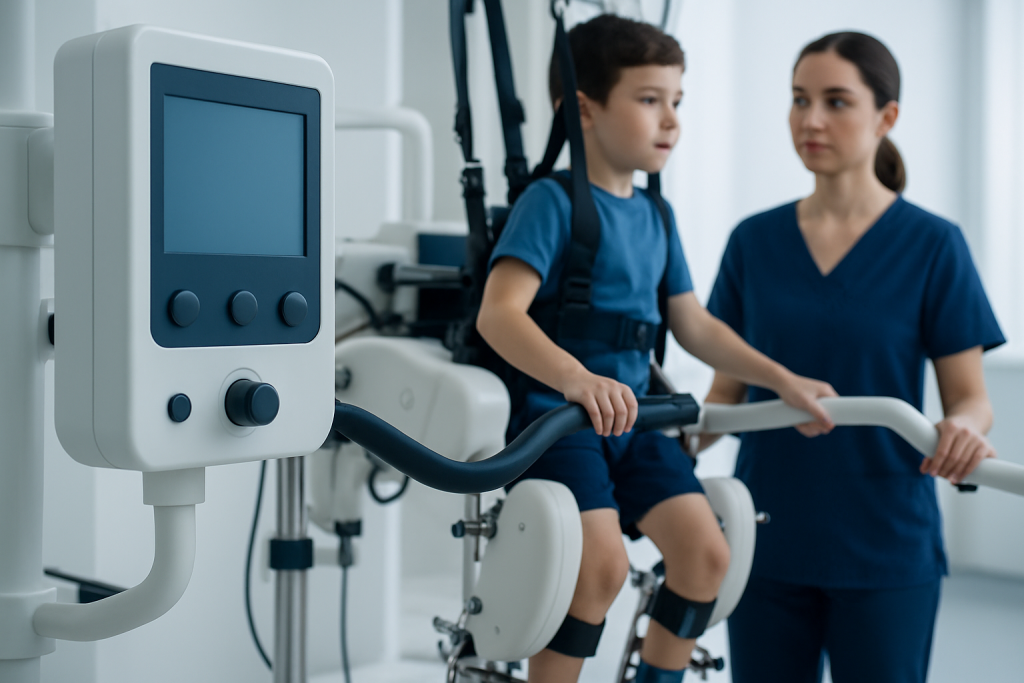
Continuing education may take the form of accredited courses, workshops, supervised practical training, professional conferences, case discussions, journal-based learning and competency assessments. A programme may teach a specific assessment approach or treatment framework, but training alone does not replace clinical judgment, local licensing requirements or individualized medical care.
Clinicians commonly use further education to strengthen skills in areas such as infant handling, gait assessment, neuromuscular conditions, developmental delay, sports injuries, pain management, orthotics and communication with families. Training may also address how to adapt therapy for a child’s age, sensory preferences, learning style and home environment.
In a well-coordinated service, the physical therapist shares relevant findings with the child’s pediatrician and other professionals. Depending on the diagnosis, care may also involve occupational therapists, speech and language therapists, orthopedic specialists, neurologists, rehabilitation physicians, nurses, psychologists and educators.
Who May Benefit From Pediatric Physical Therapy?

A child may be referred for pediatric physical therapy when there are concerns about gross motor development, walking, balance, muscle tone, joint movement, pain, weakness or recovery after an injury or operation. Therapy may also be recommended for children with a diagnosed neurological, developmental, orthopedic, cardiopulmonary or genetic condition.
Examples include delayed achievement of motor milestones, frequent falls, toe walking, reduced endurance, asymmetrical movement, difficulties using stairs, sports-related injuries, recovery after fractures or surgery, and movement challenges related to cerebral palsy. The appropriate therapy plan depends on the underlying cause, the child’s goals and their daily activities.
Not every child who develops at a different pace needs treatment. Children vary naturally, and a clinician considers the whole picture, including medical history, growth, play, school participation and functional abilities. An assessment can help distinguish normal variation from a concern that needs follow-up.
What to Expect: Assessment and Therapy Steps
The first appointment usually begins with a discussion of the child’s medical history, birth and developmental history, current symptoms, daily routines and the family’s priorities. Parents or caregivers may be asked about play, sleep, school, falls, fatigue, pain, mobility and activities that are difficult or important to the child.
The therapist then observes how the child moves during age-appropriate activities. Assessment may include posture, joint range of movement, muscle strength, balance, coordination, walking pattern, transfers, endurance and functional skills such as getting up from the floor or climbing stairs. The examination should be explained in a child-friendly way, with consent from the parent or guardian.
After assessment, the therapist and family set realistic, measurable goals. Sessions often use play, games and meaningful activities to practise specific skills. Care may include guided exercise, gait training, balance activities, advice on positioning, caregiver education, home activities or recommendations for equipment. When rehabilitation follows an operation or injury, a structured physical therapy programme may be adjusted as healing progresses.
Home practice is often an important part of care, but it should be manageable and should not cause persistent pain or distress. Families should ask for clear written or demonstrated instructions and should tell the therapist if an activity is not working at home.
Expected Results and Recovery Timeline
Results from pediatric physical therapy are highly individual. Some children make noticeable gains over weeks, particularly after a minor injury or short period of reduced activity. Children with long-term developmental or neurological conditions may benefit from ongoing support that focuses on function, participation, comfort, safety and independence rather than a fixed end point.
Progress is usually measured against practical goals rather than comparing a child with others. Examples include walking more safely at school, moving between positions with less help, managing stairs, taking part in play, improving confidence after an injury or reducing discomfort during daily activities.
Therapists may review progress regularly and change the plan as the child grows, gains skills or encounters new challenges. A slower-than-expected response does not necessarily mean therapy has failed; it may mean goals, intensity, technique or the need for further medical assessment should be reconsidered.
Continuing education can help therapists use updated methods to monitor outcomes and adjust care. However, families should be cautious of promises that a particular course, device or therapy approach will guarantee a specific result.
Benefits, Limitations and Possible Risks
Potential benefits of well-planned pediatric physical therapy include improved movement skills, greater confidence, better access to play and school activities, improved physical conditioning and practical support for caregivers. Education for families can also make it easier to incorporate therapeutic movement into everyday routines.
Therapy should be tailored to the child. Exercises or activities that are too difficult, poorly supervised or unsuitable for an underlying condition can lead to temporary soreness, frustration, fatigue or, less commonly, injury. A therapist should monitor the child’s response and modify activities when needed.
Physical therapy cannot treat every cause of movement difficulty on its own. Children may need medical investigation, medication, surgery, orthoses, psychological support or input from other rehabilitation professionals. For example, care after a musculoskeletal injury may involve assessment by an orthopedic team alongside rehabilitation.
Families can support safe care by sharing changes in symptoms, medications, diagnoses and activity tolerance. They should seek clarification before starting exercises found online, especially for infants, children with complex medical needs or children recovering from surgery.
Choosing Care and Supporting Your Child
Parents and caregivers can ask whether the clinician is licensed or registered according to local requirements, has experience with the child’s condition and participates in relevant continuing education. It is also reasonable to ask how goals will be agreed, how progress will be reviewed and how the therapist will communicate with the child’s doctor, school or other care providers.
Children usually engage best when therapy feels safe, respectful and achievable. Caregivers can help by bringing useful medical information, discussing the child’s interests and concerns, attending sessions when appropriate and encouraging regular practice without pressure or blame.
At Acibadem International, multidisciplinary specialists and JCI-accredited hospitals can assess and treat children who need coordinated rehabilitation care, including international patients. The care team can advise whether pediatric rehabilitation, orthopedic review, neurological assessment or another service is most appropriate.
When to Seek Medical Care
A parent or caregiver should arrange a medical review if a child loses skills they had already gained, has persistent pain, develops a new limp, repeatedly falls without a clear explanation, avoids using an arm or leg, or has ongoing difficulty with walking or age-appropriate movement. It is also appropriate to seek advice when developmental concerns are causing worry, even if symptoms seem mild.
Urgent medical assessment is important if a child has sudden weakness, severe pain after an injury, inability to bear weight, a visibly deformed limb, breathing difficulty, a seizure, loss of consciousness, fever with severe illness or rapidly worsening symptoms. These signs require prompt evaluation rather than waiting for a routine therapy appointment.
A pediatrician can determine whether referral to physical therapy is suitable and whether additional tests or specialist input are needed. Early assessment can provide reassurance when development is within expected variation and can help begin appropriate support when a condition is identified.
Frequently asked questions
Is pediatric physical therapy continuing education therapy for children?
No. Pediatric physical therapy continuing education is further professional learning for qualified clinicians. It supports their ability to provide informed, current and child-centred physical therapy, but it is not a treatment session or programme for a child.
What conditions can pediatric physical therapy help with?
Pediatric physical therapy may help children with developmental movement concerns, neurological conditions, orthopedic injuries, recovery after surgery, pain, balance difficulties and reduced endurance. The benefits and treatment approach depend on the child’s diagnosis, functional needs and medical assessment.
How long does pediatric physical therapy take to work?
There is no single timeline. A child recovering from a minor injury may improve within weeks, while a child with a lifelong condition may use therapy over a longer period to support participation, function and independence. Regular review helps ensure goals remain appropriate.
Will physical therapy be painful for my child?
Therapy should be planned to be safe and tolerable, often using play-based activities. Some temporary muscle fatigue or mild soreness can occur after new activities, but persistent pain, distress or worsening symptoms should be reported to the therapist or doctor.
Can parents do physical therapy exercises at home?
Home activities can be useful when they are prescribed and demonstrated by the child’s therapist. They should fit the child’s abilities and routine, and caregivers should ask for guidance if an activity causes pain, fear or difficulty.
When should a child see a doctor for movement concerns?
A medical review is advisable for loss of previously acquired skills, persistent pain, limping, unexplained frequent falls, weakness or ongoing difficulty with movement. Sudden weakness, severe injury, inability to bear weight or breathing problems need urgent medical assessment.
References
- American Physical Therapy Association
- World Physiotherapy
- American Academy of Pediatrics
- Centers for Disease Control and Prevention
- World Health Organization
This article is for general information only and is not a substitute for professional medical advice. Please consult a qualified doctor about your individual situation.
Explore treatments in Turkey — costs, top hospitals & a free quote
JCI-accredited · board-certified surgeons · reply within 24h
Add us as a Preferred Source to see more of our trusted health content across Google Search, AI Overviews and Discover.