Non Surgical Clavicle Fracture Rehabilitation Protocol: Procedure, Recovery and Results
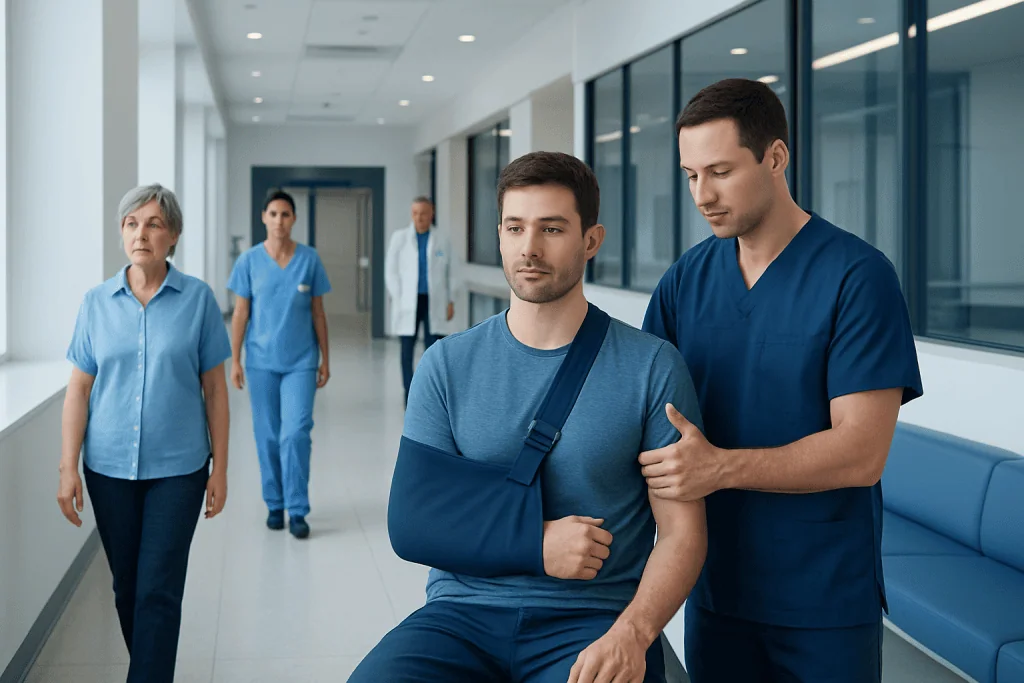
Many uncomplicated clavicle fractures can heal without surgery using a sling, pain management and planned rehabilitation. Early treatment focuses on comfort and protecting the fracture; shoulder exercises are introduced gradually when appropriate.
Key Takeaways
- Many uncomplicated clavicle fractures can heal without surgery using a sling, pain management and planned rehabilitation.
- Early treatment focuses on comfort and protecting the fracture; shoulder exercises are introduced gradually when appropriate.
- Bone healing often takes around 6 to 12 weeks in adults, while full strength and return to sport can take longer.
- Follow-up examinations and imaging help confirm that the fracture is healing in a good position.
- Worsening pain, numbness, breathing difficulty or skin pressure from the bone require prompt medical assessment.
A non surgical clavicle fracture rehabilitation protocol protects the healing collarbone while gradually restoring shoulder movement, strength and everyday function. The exact timing depends on fracture location, alignment, age, general health and follow-up X-rays, so rehabilitation should be individualized by an orthopedic clinician or physiotherapist.
Overview: How Non-Surgical Clavicle Fracture Rehabilitation Works
A clavicle fracture is a break in the collarbone, the curved bone that connects the breastbone to the shoulder. It commonly occurs after a fall onto the shoulder, a sports injury or a road traffic accident. Many fractures, especially those that remain reasonably aligned, can be managed without an operation.
The non surgical clavicle fracture rehabilitation protocol combines protection of the bone with carefully timed movement. A sling is usually used initially to reduce pain and limit stress on the fracture. As healing progresses, supervised exercises help prevent shoulder stiffness and gradually rebuild arm control, strength and confidence.
Nonoperative care is not simply “waiting for the bone to heal.” It includes clinical review, X-rays when needed, advice on safe activity and a staged return to work, driving, exercise and sport. The treating team adjusts the plan if pain, movement or imaging suggests that healing is slower than expected.
Candidacy, Assessment and the Step-by-Step Care Pathway
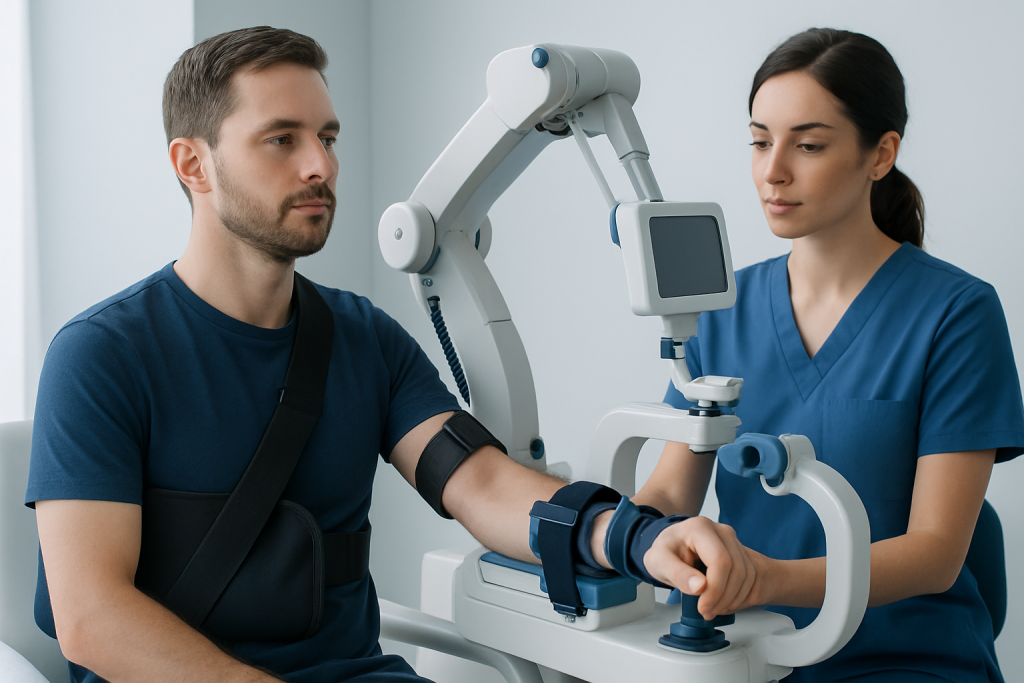
A clinician considers non-surgical treatment when the fracture is closed, the skin is intact, blood flow and nerve function in the arm are normal, and the broken ends are not markedly displaced or shortened. Fractures in children and many simple midshaft fractures in adults often heal well with this approach. However, each injury needs an individual assessment.
At the first appointment, the clinician asks how the injury occurred, checks the shoulder and arm, and examines circulation, sensation and movement in the hand. X-rays confirm the fracture pattern and alignment. Additional imaging is occasionally needed when the fracture involves the joint at either end of the clavicle or when other injuries are suspected.
The usual pathway begins with a sling for comfort, simple pain-relief advice and instructions to keep the hand, wrist and elbow moving. Follow-up reviews assess symptoms, fracture position and early healing. The sling is then reduced gradually, while rehabilitation moves from gentle mobility work to strengthening and functional activity.
Some fractures are more likely to benefit from surgery, including open fractures, fractures threatening the skin, injuries with blood vessel or nerve damage, and certain significantly displaced or unstable patterns. An orthopedic specialist can explain whether clavicle fracture treatment with nonoperative care or fixation is most appropriate.
Recommended Rehabilitation Protocol for a Non-Surgical Clavicle Fracture
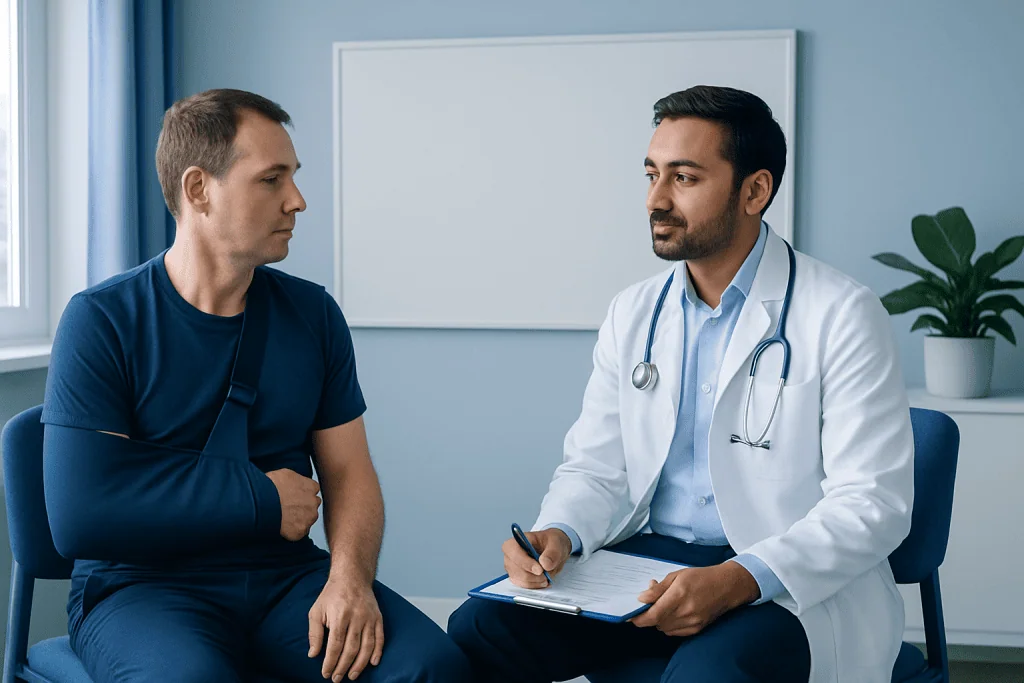
Rehabilitation is guided by pain, examination findings and evidence of healing rather than a fixed calendar alone. During the early protection phase, often the first one to two weeks, the priority is comfortable sling use and maintaining movement in the fingers, wrist and elbow. The shoulder should not be forced through painful movements, and lifting, pushing, pulling and weight-bearing through the injured arm are usually avoided.
As acute pain settles, a clinician or physiotherapist may introduce gentle pendulum movements and assisted shoulder motion within a comfortable range. This phase aims to reduce stiffness without placing excessive load across the healing bone. People should follow their own care plan, as the timing can differ for a child, an older adult or a fracture with more displacement.
Once tenderness has decreased and follow-up assessment indicates satisfactory progress, active shoulder movements are advanced. Light strengthening for the shoulder blade, rotator cuff and arm is commonly added later. Resistance, overhead loading, contact activity and heavy lifting should wait until the clinician considers the fracture sufficiently united and the shoulder is functioning well.
- Protection: use the sling as instructed and avoid activities that jar the shoulder.
- Mobility: begin only the range-of-motion exercises advised by the rehabilitation team.
- Strength: progress from low-load control exercises to functional strengthening after healing has advanced.
- Return to activity: build up work, exercise and sport gradually after medical clearance.
How Long Does It Take for a Clavicle Fracture to Heal Without Surgery?
In adults, a clavicle fracture commonly takes about 6 to 12 weeks to unite, although the timeline can be shorter in children and longer in some adults. Pain often improves before the bone has fully healed, so feeling better does not necessarily mean it is safe to resume lifting or sport.
Healing may take longer when the fracture is substantially displaced, involves several pieces, occurs near the shoulder or breastbone, or follows a high-energy injury. Smoking, poor nutrition, diabetes and some medicines or health conditions can also affect bone healing. Regular review allows the clinician to identify delayed union, meaning slower-than-expected healing.
Return to desk-based tasks may be possible earlier if pain is controlled and the arm can remain protected. Manual work, overhead activities and contact sports generally require more time. Clearance is based on comfort, shoulder function, examination and, when appropriate, imaging rather than on one universal date.
Can a Broken Clavicle Heal in 4 Weeks?
A broken clavicle may begin forming new bone within a few weeks, and some children can show substantial healing by around four weeks. In most adults, however, four weeks is usually too early to assume that the fracture is fully healed or ready for unrestricted activity.
At this stage, the area may still be tender and vulnerable to another fall, sudden pull or heavy load. An X-ray can show signs of healing, but it may not confirm complete union. Continuing the recommended precautions is important even if the person can use the arm more comfortably.
A visible or palpable bump may develop over the fracture as healing bone forms. This is common and often becomes less noticeable over time. Persistent deformity, worsening pain or loss of shoulder function should be reviewed by the treating clinician.
Benefits, Limitations and Possible Risks of Nonoperative Care
The main benefits of non-surgical management are avoiding an incision, anesthesia and implant-related issues. When a fracture is suitable for conservative care, the bone can often heal while the person gradually restores shoulder function through rehabilitation.
Possible limitations include several weeks of sling use, temporary restrictions on work or sport, and the need for follow-up appointments. Shoulder stiffness and weakness can occur, particularly if movement is avoided for too long. A structured rehabilitation plan can help address these issues safely.
Potential complications include delayed union, nonunion, healing in a shortened or altered position, ongoing prominence at the fracture site and persistent shoulder symptoms. These outcomes are not inevitable, but they are reasons to attend follow-up visits and discuss concerns early. Some people may later need surgical assessment if the fracture does not unite or remains significantly symptomatic.
Good general bone health supports recovery. Adequate nutrition, avoiding tobacco, following medical advice about alcohol, and managing long-term health conditions can all be helpful. A clinician can provide individualized guidance, especially for people with osteoporosis or a history of repeated fractures.
How Painful Is Clavicle Surgery Recovery?
Clavicle surgery recovery can be painful at first because the operation involves the bone, surrounding soft tissues and an incision near the shoulder. Pain is usually most noticeable in the early postoperative period and is managed with a personalized plan that may include prescribed or non-prescription medicines, ice when advised, sling support and gradual activity.
The intensity and duration of discomfort vary with the fracture, the surgical technique, an individual’s health and the extent of associated injury. Some people also notice tightness, numbness around the incision or irritation from the plate and screws. These concerns should be discussed at follow-up appointments rather than managed independently.
Surgery is not automatically needed for every clavicle fracture, and it does not remove the need for rehabilitation. Whether treatment is surgical or non-surgical, a phased program of protection, movement and strengthening is important for safe recovery. An orthopedic team can compare the expected benefits and risks for the specific fracture pattern.
When to Seek Medical Care
Urgent medical assessment is needed after a shoulder injury if there is severe deformity, an open wound, bone pressing against the skin, uncontrolled bleeding, a cold or pale hand, new numbness or weakness, or difficulty breathing. Chest pain or shortness of breath after a significant injury also requires urgent attention because injuries around the collarbone can occur alongside chest trauma.
During recovery, medical advice should be sought promptly for pain that is worsening rather than improving, new swelling or redness, fever, a sling that causes pressure injury, or a sudden loss of arm function. A new injury or fall onto the recovering shoulder should also be assessed before rehabilitation is resumed.
For planned follow-up, patients should contact their clinician if they remain very tender, cannot progress with gentle movement, or are unsure when to return to work, driving or sport. Acibadem International’s multidisciplinary specialists and JCI-accredited hospitals can assess clavicle injuries and coordinate orthopedic and rehabilitation care for international patients.
Frequently asked questions
What is the recommended rehabilitation protocol for a non-surgical clavicle fracture?
The usual protocol starts with sling support and protection, while keeping the hand, wrist and elbow moving. Gentle shoulder mobility is introduced when pain and clinical assessment allow, followed by active movement, gradual strengthening and a staged return to normal activities. The exact progression should be set by an orthopedic clinician or physiotherapist.
How long does it take for a clavicle fracture to heal without surgery?
Many adult clavicle fractures heal in approximately 6 to 12 weeks without surgery. Recovery can take longer when the fracture is displaced, complex or slow to unite, and full return to demanding sport or manual work may take additional time. Follow-up assessment helps determine when loading is safe.
Can a broken clavicle heal in 4 weeks?
A clavicle fracture can show early healing at four weeks, particularly in children, but most adult fractures are not fully healed at that point. Heavy lifting, contact sport and fall-risk activities are usually still restricted. A clinician should confirm progress before activity is advanced.
When can the sling be removed after a clavicle fracture?
The sling is commonly used mainly for comfort during the early phase of healing, but the duration varies by fracture pattern and symptoms. A clinician may advise gradually reducing sling use as pain improves and movement exercises begin. It should not be stopped or continued indefinitely without medical guidance.
What exercises should be avoided with a healing clavicle fracture?
Heavy lifting, pushing, pulling, overhead resistance work, contact sport and activities with a risk of falling are commonly avoided until the fracture has healed sufficiently. Painful stretching or forceful shoulder movements should also be avoided early on. A physiotherapist can identify safe exercises for each recovery stage.
How painful is clavicle surgery recovery?
Pain after clavicle surgery varies, but it is commonly greatest in the early recovery period and gradually improves with appropriate care. Incision discomfort, shoulder stiffness and temporary altered skin sensation can occur. The surgical team should be contacted if pain is uncontrolled or is getting worse rather than better.
References
- American Academy of Orthopaedic Surgeons
- National Health Service
- OrthoInfo – American Academy of Orthopaedic Surgeons
- Mayo Clinic
This article is for general information only and is not a substitute for professional medical advice. Please consult a qualified doctor about your individual situation.
Joint and spine care in Turkey — expert assessment & treatment
JCI-accredited · board-certified surgeons · reply within 24h
Add us as a Preferred Source to see more of our trusted health content across Google Search, AI Overviews and Discover.

More from the Health Library


Related Specialists

Dr. Türker Ertürk
General Surgery
Dr. Nargiz Ibrahimli
Aesthetic Plastic & Reconstructive Surgery
Assoc. Prof. Dr. Emel Ur Özçelik
Neurology
Dr. Nima Babavand Arablou
Emergency Service