Axium PET Scan: Preparation, Procedure and Results
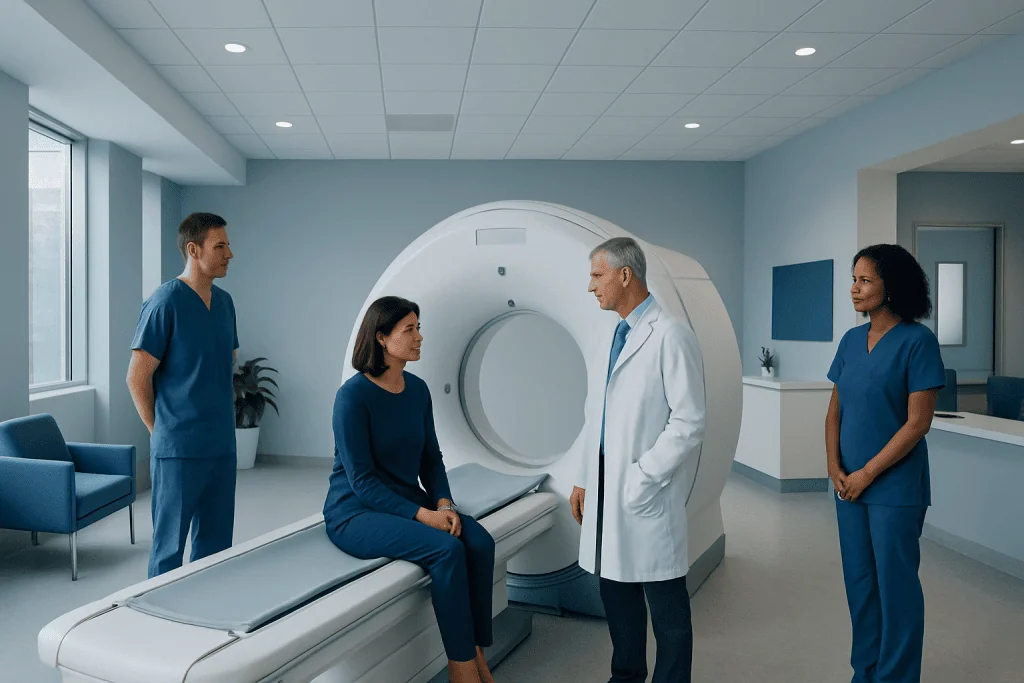
Axumin PET imaging is most often considered when prostate-specific antigen (PSA) rises after previous prostate cancer treatment. The scan uses fluciclovine F 18, a radiotracer that may collect in areas of prostate cancer activity.
Key Takeaways
- Axumin PET imaging is most often considered when prostate-specific antigen (PSA) rises after previous prostate cancer treatment.
- The scan uses fluciclovine F 18, a radiotracer that may collect in areas of prostate cancer activity.
- Preparation commonly includes avoiding strenuous exercise for at least 24 hours and fasting for several hours, following the imaging center’s instructions.
- A scan result is interpreted alongside PSA values, treatment history, symptoms and other imaging; it does not diagnose cancer by itself.
- Most people tolerate the procedure well, and side effects from the radiotracer are uncommon and usually mild.
- The term “Axium” may also refer to unrelated dental software or companies; it is not the standard name of the prostate PET radiotracer.
An “axium PET scan” commonly means an Axumin PET scan, a specialized PET/CT imaging examination used mainly to help identify suspected recurrent prostate cancer. It involves an injection of a small amount of radiotracer followed by imaging, and patients can usually return to normal activities soon afterward.
Overview: What Does an Axium PET Scan Mean?
The phrase axium PET scan is often a misspelling or informal reference to an Axumin PET scan. Axumin is the brand name for fluciclovine F 18, a radiotracer used with positron emission tomography (PET), usually combined with computed tomography (CT), to look for possible recurrence of prostate cancer. It is most often used when a person’s PSA level rises after surgery, radiation therapy or other treatment.
The examination is not the same as a routine CT or MRI scan. PET imaging shows where the radiotracer is taken up in the body, while CT provides anatomical detail. Together, these images may help the care team identify sites that need further assessment and plan the next steps in prostate cancer care.
An Axumin scan is one of several PET approaches that may be considered in prostate cancer. The most suitable imaging method depends on the PSA level and trend, previous treatment, access to imaging, and the clinical question. A specialist may discuss it alongside prostate cancer follow-up and other staging or restaging tests.
How It Works and Who May Be a Candidate
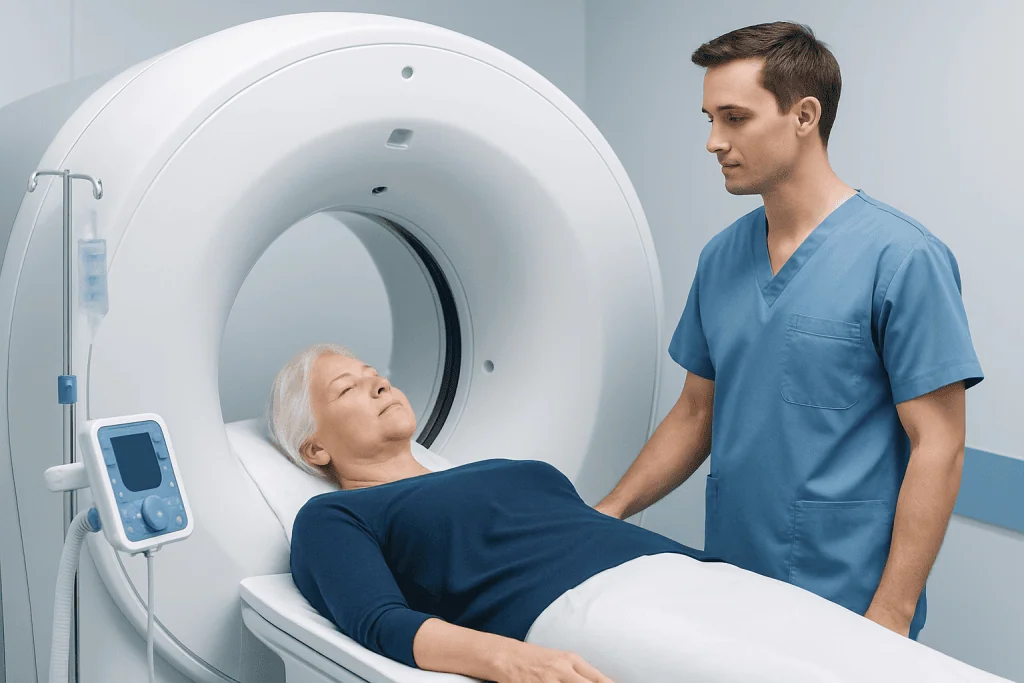
Before the scan, a clinician injects a very small amount of fluciclovine F 18 into a vein. Cancer cells can use amino acids to support growth and metabolism. Fluciclovine is an amino-acid analogue, and areas with increased uptake can appear as signals on PET images. However, uptake is not specific to cancer, so the findings must always be assessed by an experienced nuclear medicine physician in clinical context.
The axium PET scan for prostate cancer is generally considered for adults with a biochemical recurrence: a PSA rise after treatment that may suggest cancer has returned. It may help assess whether disease appears confined to the prostate bed, involves nearby lymph nodes, or may be present elsewhere. The scan can be particularly useful when conventional imaging has not clearly shown the source of a rising PSA.
It is not usually a first-line test for every person newly diagnosed with prostate cancer. A urologist, oncologist, radiation oncologist, or nuclear medicine specialist can explain whether the expected information is likely to influence treatment decisions. In some cases, prostate cancer treatment planning may include discussion of different imaging options before surgery, radiation, systemic treatment or active surveillance.
Axumin PET Scan Preparation and Protocol

Axumin PET scan preparation is usually straightforward, but patients should follow the instructions provided by their own imaging center. Common guidance includes avoiding strenuous exercise for at least 24 hours beforehand and not eating or drinking anything except water for several hours before the appointment. These steps may help produce clearer, more consistent images.
Patients should tell the team about all medicines, supplements, allergies, prior imaging tests, recent procedures and ongoing treatments. Regular medicines can often be taken with water, but the imaging center should confirm this in advance. People with diabetes, kidney disease, mobility limitations, claustrophobia, or a history of difficulty lying flat should discuss practical arrangements before the visit.
The precise Axumin PET scan protocol varies by facility. It commonly includes a check-in process, review of safety information, radiotracer injection, prompt PET/CT image acquisition, and image review afterward. Unlike some other PET studies, a long uptake period before imaging may not be required. Patients should wear comfortable clothes and may be asked to remove metal objects or change into a gown.
- Bring identification, referral documents and prior scan reports if requested.
- Arrive early enough for registration and safety screening.
- Ask in advance whether a support person may accompany the patient.
- Inform staff immediately about pregnancy, possible pregnancy or breastfeeding.
What Happens During the Procedure?
At the appointment, staff confirm the patient’s identity, medical history and preparation. A small intravenous line is placed, and the radiotracer is injected. The injection feels similar to a routine blood test or intravenous medication. Imaging begins according to the facility’s protocol, often soon after injection.
For the scan, the patient lies still on a padded table that moves slowly through the PET/CT scanner. The machine is open at both ends and does not normally touch the body. Remaining still is important because movement can reduce image quality. The scan itself often takes around 20 to 30 minutes, although the full appointment may take longer because of preparation and positioning.
The procedure is painless apart from the brief needle insertion. Staff monitor the patient and can communicate throughout the examination. If a person feels uncomfortable, anxious, dizzy or unable to remain still, they should tell the technologist. The imaging team can pause when necessary and provide appropriate support.
After the images are obtained, a nuclear medicine physician or radiologist reviews them. The report is sent to the referring clinician, who explains what the results mean in relation to PSA measurements, pathology results and the person’s previous prostate cancer treatment.
Results, Benefits and Limitations
Results may describe areas of increased fluciclovine uptake and whether they are suspicious for local recurrence, lymph-node involvement or distant disease. A positive finding does not automatically prove cancer, because inflammation, healing changes and some benign tissues can also show uptake. Likewise, a negative scan does not completely exclude very small-volume or low-activity disease.
The main potential benefit of an Axumin PET scan is that it may help localize suspected recurrence when PSA is rising, allowing the clinical team to tailor further testing or treatment. For example, it may support decisions about radiation fields, the need for a biopsy, monitoring, or systemic therapy. The scan is most useful when its outcome could change a management decision.
Results are generally available after specialist interpretation, which may take from the same day to several days depending on the center. It is helpful for patients to ask for a follow-up appointment to review the report, rather than trying to interpret technical wording alone. If an area is uncertain, the doctor may recommend comparison with MRI, CT, bone imaging, PSMA PET imaging, repeat PSA testing or tissue sampling.
Multidisciplinary review can be valuable where imaging findings are complex. At Acibadem International, multidisciplinary specialists in JCI-accredited hospitals can assess prostate cancer imaging and treatment needs for international patients.
Recovery Timeline, Safety and Possible Risks
Most people can leave shortly after the scan and return to usual daily activities the same day. There is no incision, anesthesia or recovery period in the usual sense. Drinking water after the examination and urinating regularly can help the body clear the tracer, unless a clinician has advised fluid restriction for another medical reason.
The radiation exposure from an Axumin PET/CT scan is limited and is considered in relation to the expected clinical benefit. The tracer loses radioactivity over time and is mainly eliminated through the body’s normal processes. Imaging staff may give temporary guidance about close contact with infants, young children or pregnant people; patients should follow the instructions specific to their examination.
Side effects related to fluciclovine are uncommon, but may include temporary injection-site discomfort, altered taste, headache, dizziness or nausea. Allergic reactions are rare. The CT portion may involve additional considerations if contrast material is used, although contrast is not needed for every examination. People should report any previous contrast reaction or kidney problem before the scan.
The most important limitation is interpretive rather than physical risk: no imaging test is perfect. Accurate decisions depend on combining the scan with the person’s PSA pattern, medical history, examination findings and other tests. A qualified doctor can explain the degree of certainty and the reasonable options after a result.
When to Seek Medical Care
A rising PSA after treatment for prostate cancer should be discussed with the treating urologist or oncologist, even when the person feels well. PSA changes do not always mean cancer has returned, but they should be evaluated in a timely, structured way. The clinician can determine whether repeat testing, imaging such as an Axumin PET scan, or another assessment is appropriate.
People should seek prompt medical advice for new or worsening symptoms such as persistent bone pain, unexplained weight loss, difficulty passing urine, blood in urine, leg swelling, new weakness or numbness, or severe pain. These symptoms can have many causes, including non-cancer conditions, but should not be ignored in someone with a history of prostate cancer.
Urgent medical care is appropriate for inability to urinate, severe back pain with leg weakness or loss of bowel or bladder control, chest pain, severe shortness of breath, or signs of a serious allergic reaction after any medical injection. These situations need prompt assessment and should not wait for a routine scan review.
Common Confusion About “Axium”
Is axium a scrabble word? “Axium” is not generally listed as a standard word in major English dictionaries or official Scrabble word lists. It is commonly encountered as a brand or product name. Word-game rules can vary by country and edition, so players should check the dictionary used by their game.
What company is Axium? The name Axium is used by more than one organization and product, including software and technology brands. In dental education, Axium has been used as the name of practice-management software. This is unrelated to Axumin, the radiotracer used for PET imaging in prostate cancer.
Which dental schools use axium? Dental schools and clinics may use different electronic health record, scheduling and practice-management systems, and their software can change over time. Some dental education programs have used Axium software, but an up-to-date list should be confirmed directly with each school. Dental Axium software has no connection to an Axumin PET scan.
What is the reputation of Axium? The reputation of “Axium” depends on which company or product is being discussed. For medical imaging, patients should focus on the qualifications of the imaging facility and interpreting clinicians, as well as the evidence supporting the specific tracer. For an Axumin PET examination, questions about accreditation, experience with prostate cancer imaging and how results will guide care are more useful than a general search for the term “Axium.”
Frequently asked questions
Is an axium PET scan the same as an Axumin PET scan?
In most health-related searches, “axium PET scan” is intended to mean an Axumin PET scan. Axumin is a radiotracer called fluciclovine F 18 that is used in PET/CT imaging, primarily to assess suspected recurrent prostate cancer. “Axium” can also refer to unrelated products or companies.
How long does an Axumin PET scan take?
The imaging portion often takes about 20 to 30 minutes, but the full appointment can take longer for check-in, intravenous access, injection and positioning. The exact timing varies by imaging center and protocol. Staff can provide an expected schedule when the examination is booked.
Do patients need to fast before an Axumin PET scan?
Many centers ask patients to avoid food and drink other than water for several hours before the scan. They may also advise avoiding strenuous exercise for at least 24 hours beforehand. Instructions can differ, so patients should follow the guidance from their own nuclear medicine department.
What can an Axumin PET scan show in prostate cancer?
The scan may identify areas that could represent recurrent prostate cancer in the prostate bed, lymph nodes or other parts of the body. It is generally used when PSA rises after earlier treatment. Findings are interpreted with PSA results, prior treatment history and other tests because uptake is not always caused by cancer.
Can patients drive and return to work after the scan?
Most patients can drive and resume normal activities shortly after an Axumin PET scan because sedation is not usually required. Drinking fluids and following the facility’s instructions about temporary radiation precautions is sensible. Anyone who receives a sedative for anxiety should arrange transport and follow the specific advice given.
Are there side effects from the Axumin tracer?
Most people do not experience significant side effects. Mild effects such as temporary injection-site discomfort, nausea, headache, dizziness or a changed taste are possible but uncommon. A patient should tell the imaging team about any symptoms that develop during or after the procedure, especially breathing difficulty, swelling or rash.
References
- National Cancer Institute
- U.S. Food and Drug Administration
- Society of Nuclear Medicine and Molecular Imaging
- American Urological Association
- European Association of Urology
This article is for general information only and is not a substitute for professional medical advice. Please consult a qualified doctor about your individual situation.
Oncology care in Turkey — second opinion and treatment plan
JCI-accredited · board-certified surgeons · reply within 24h
Add us as a Preferred Source to see more of our trusted health content across Google Search, AI Overviews and Discover.