Eye Tumour Treatment: How It Works, Results and What to Expect
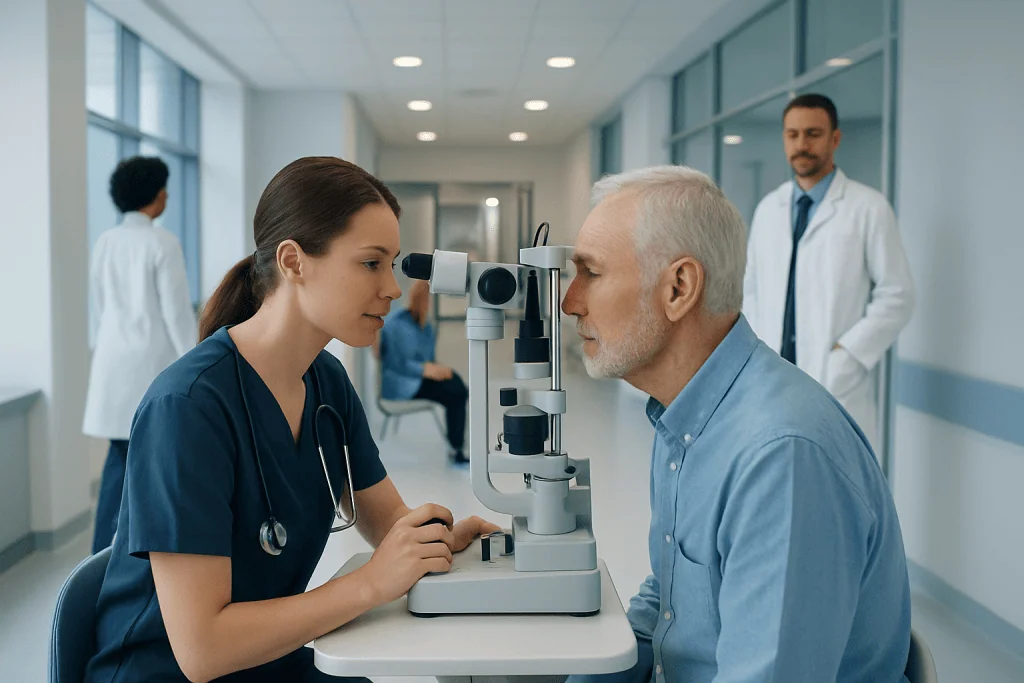
Eye tumours can be benign or cancerous, so a specialist assessment is important even when symptoms are mild or absent. Treatment is selected by tumour type, size, location, growth pattern, vision status and evidence of spread.
Key Takeaways
- Eye tumours can be benign or cancerous, so a specialist assessment is important even when symptoms are mild or absent.
- Treatment is selected by tumour type, size, location, growth pattern, vision status and evidence of spread.
- Common options include observation, laser or freezing treatments, radiation, surgery, and medicines such as chemotherapy or targeted therapies.
- Many eye tumours can be controlled or cured, particularly when found early, but outlook varies substantially between diagnoses.
- Follow-up imaging and eye examinations remain essential after treatment because recurrence or treatment-related changes can occur.
Eye tumour treatment is individualized according to whether a growth is benign or cancerous, its location in or around the eye, and whether it has spread. Care may include careful monitoring, laser treatment, radiation, surgery, or systemic medicines, with the goals of controlling the tumour, preserving vision when possible, and protecting overall health.
Eye Tumour Treatment: How It Works
Eye tumour treatment refers to the care used for abnormal growths that develop inside the eye, on its surface, in the eyelid, or in tissues around the eye socket. Some tumours are non-cancerous and may only need monitoring. Others are malignant, meaning they can damage vision or, in some cases, spread beyond the eye and require prompt specialist treatment.
The best treatment depends on the exact diagnosis. Ocular oncologists work with ophthalmologists, medical oncologists, radiation oncologists, pathologists and imaging specialists to create a plan. The main aims are to control or remove the tumour, preserve the eye and useful vision whenever safely possible, and reduce the risk of cancer spreading.
Options may include close observation, laser therapy, cryotherapy (freezing treatment), plaque brachytherapy, external-beam radiation, surgery, chemotherapy, immunotherapy or targeted medicines. A treatment plan may use one approach or combine therapies over time; it is not the same for every type of eye tumour.
Types of Eye Tumours and Who May Need Treatment
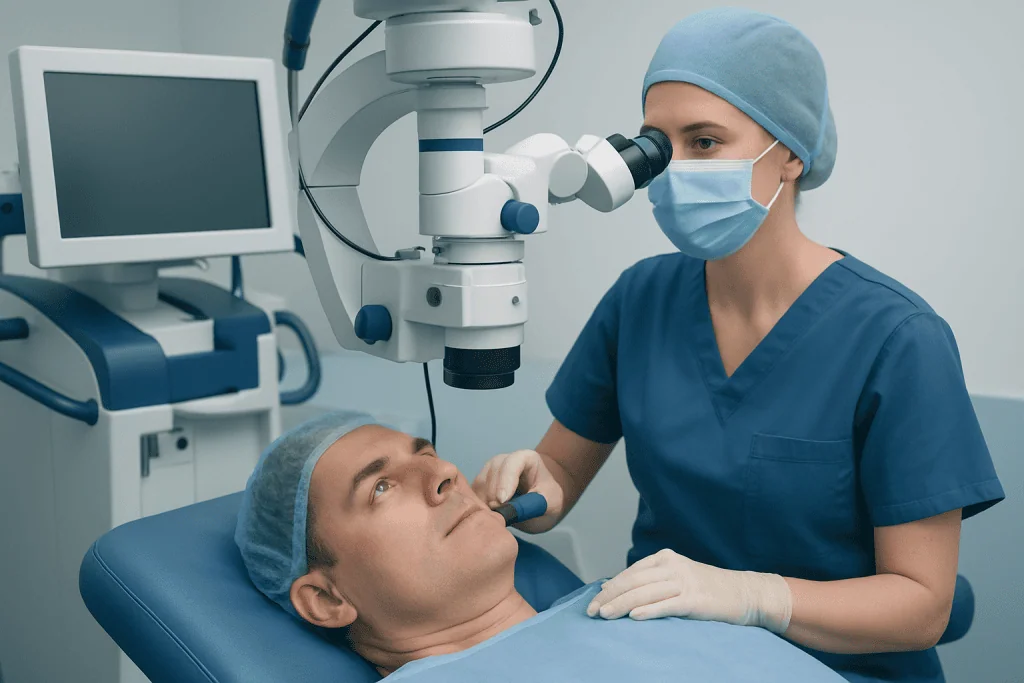
Eye tumours may arise from different structures. In adults, uveal melanoma is an important primary cancer that can develop in the iris, ciliary body or choroid. Other conditions include ocular surface squamous neoplasia, eyelid cancers, lymphoma involving the eye, and tumours that have spread to the eye from another part of the body. In children, retinoblastoma is the best-known eye cancer and needs urgent specialist care.
Not every lesion requires immediate intervention. A harmless-appearing nevus, often described as an eye freckle, may be photographed and monitored over time. Treatment is more likely to be advised if a lesion is growing, causing symptoms, threatening key visual structures, showing features of malignancy, or diagnosed as cancer.
Candidacy for a particular procedure is based on detailed factors: tumour dimensions, location, whether it involves the retina or optic nerve, the condition of the other eye, overall health, and whether scans suggest disease elsewhere. For a suspected malignant tumour, care should be coordinated by a team experienced in ocular oncology rather than based on appearance alone.
Assessment and Diagnosis Before Treatment
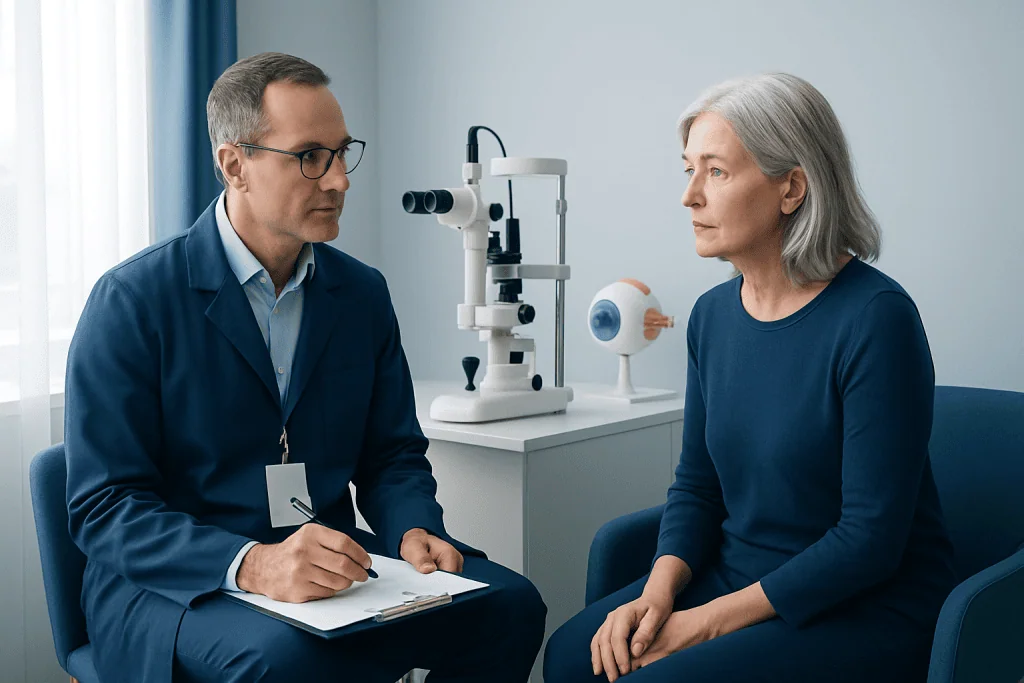
Evaluation usually begins with a complete eye examination. The specialist checks visual acuity, eye pressure, pupil responses and the front and back of the eye after dilating drops. High-quality photographs help document a lesion and identify changes during follow-up.
Imaging may include ocular ultrasound, optical coherence tomography, fluorescein angiography, fundus photography, ultrasound biomicroscopy, MRI or CT scans. The choice depends on where the tumour is located. Blood tests and body imaging may also be recommended for some cancers to check general health or look for disease outside the eye.
A biopsy is not always needed for an eye tumour. Some tumours have characteristic examination and imaging findings, while sampling may be useful when the diagnosis is uncertain or when tumour genetic testing could help estimate risk and guide surveillance. The team explains the purpose, limits and possible risks before recommending a biopsy.
Eye Tumour Treatment Options: Step by Step
For a small, stable lesion without concerning features, the first step may be active surveillance. This means scheduled examinations and repeat imaging rather than ignoring the lesion. If growth or high-risk changes are found, treatment can be reconsidered promptly.
Local therapies can be suitable for selected small or surface tumours. Laser treatment may seal blood vessels supplying a lesion or deliver heat to tumour tissue. Cryotherapy freezes targeted tissue and is sometimes used for retinal or ocular surface lesions. These procedures are generally performed with local or general anaesthesia depending on the patient, the tumour and the technique.
Radiation is commonly used for certain intraocular cancers. Plaque brachytherapy involves surgically placing a small radiation source on the outside wall of the eye for a planned period, then removing it in a second procedure. External-beam radiation, including highly focused techniques, may be used when plaque treatment is not suitable or for specific tumour types. Eye cancer treatment may also involve medicines delivered into the eye, given intravenously, taken by mouth, or used alongside local therapy.
Surgery may remove a surface tumour, part of the eye, or—when the tumour cannot be controlled safely while keeping the eye—the whole eye (enucleation). Enucleation is considered carefully and is usually reserved for advanced local disease, a painful eye with no useful vision, or cases in which eye-preserving treatment is unlikely to be safe. Reconstruction with an orbital implant and cosmetic prosthetic eye can often be planned as part of recovery.
Benefits, Risks and Recovery Timeline
The potential benefit of treatment is local tumour control and a lower likelihood of further eye damage or spread, depending on the diagnosis. In many cases, eye-preserving treatment can retain the eye itself and sometimes useful vision. However, visual outcome depends strongly on whether the tumour or treatment affects the macula, optic nerve, lens, retina or other delicate structures.
Recovery differs by treatment. After laser or cryotherapy, temporary redness, blurred vision, light sensitivity or discomfort may settle over days to weeks. Following plaque surgery or other eye operations, patients may need a protective shield, prescribed drops, activity restrictions and follow-up appointments over several weeks. Radiation-related effects can appear gradually months or years later, which is why long-term monitoring is needed.
Possible complications include inflammation, bleeding, retinal detachment, cataract, raised eye pressure, dry eye, scarring, loss of vision, radiation retinopathy and recurrence. Serious complications are not expected in every case, and the treating team discusses the individual balance of risks and benefits before care begins. New pain, sudden vision loss, flashes, a curtain-like shadow, significant discharge or increasing redness should be reported urgently.
How Serious Is an Eye Tumor?
An eye tumour can range from a harmless, stable growth to a potentially life-threatening cancer. Its seriousness cannot be determined from symptoms alone: some important tumours cause little discomfort early on, while benign lesions can occasionally affect vision because of their position.
Features that influence seriousness include the tumour type, its size, whether it is growing, involvement of the optic nerve or nearby structures, and whether cancer has spread beyond the eye. A timely assessment by an eye specialist is the most reliable way to clarify the diagnosis and determine whether observation or active treatment is appropriate.
Even after successful local treatment, some malignant eye tumours require regular eye and body surveillance. These appointments allow clinicians to monitor for local recurrence, treatment effects and, where relevant, signs of disease elsewhere in the body.
What Is the Life Expectancy of Someone With Eye Cancer?
Life expectancy with eye cancer varies widely and cannot be predicted accurately from a diagnosis name alone. It depends on the type of cancer, its stage, tumour biology, whether it has spread, response to treatment, age and other health conditions. Many people with localized eye cancer are treated successfully and continue with long-term follow-up.
For cancers that have spread beyond the eye, care may involve systemic treatment and close support from an oncology team. Prognostic testing may be offered for some diagnoses, but results estimate group-level risk and do not determine an individual person’s outcome with certainty.
It can be helpful for patients to ask their team about the purpose of each test, whether the cancer appears localized, and what follow-up plan is recommended. Clear discussion supports informed decisions without making assumptions based on another person’s experience.
How Fast Does Eye Cancer Progress and Is an Eye Tumor Curable?
Eye cancer does not progress at one fixed speed. Some lesions remain unchanged for years, while others grow over months or more quickly. The rate depends on the cancer type and its biological features, so comparison photographs and repeated scans are often more informative than symptoms alone.
Some eye tumours are curable, particularly when they are benign and removed completely or when a localized cancer is treated effectively before it spreads. For other tumours, the realistic goal may be durable local control, preservation of comfort and vision where possible, and careful monitoring for recurrence. Early assessment generally provides more treatment options.
Patients should not delay an evaluation because they feel well or because vision has not changed. A specialist can explain whether a finding is likely benign, needs monitoring, or requires treatment, including care for related eye cancer diagnoses.
When to Seek Medical Care
A person should arrange a prompt eye examination for a new dark spot in the eye, a visible growth on the eye or eyelid, persistent redness, unexplained blurred vision, new flashes or floaters, changes in the shape of the pupil, double vision, or a sensation of pressure around the eye. These symptoms are common in non-cancerous conditions as well, but they deserve assessment when persistent or unexplained.
Urgent medical assessment is appropriate for sudden or major loss of vision, severe eye pain, an abrupt increase in floaters or flashes, or a dark curtain or shadow across vision. Children should be assessed urgently if a white pupil reflex is noticed in photographs, an eye turns inward or outward, or there is persistent unexplained eye redness.
Acibadem International’s multidisciplinary specialists and JCI-accredited hospitals assess and treat eye tumours for international patients, coordinating ophthalmology, oncology, pathology and imaging when needed. Follow-up with a qualified eye specialist remains an important part of safe care before, during and after any treatment.
Frequently asked questions
What is the most common treatment for an eye tumour?
There is no single most common treatment because eye tumours differ greatly in type and location. Small benign lesions may be monitored, while cancerous tumours may be treated with radiation, laser or freezing treatments, surgery, or systemic medicines. The treatment choice is made after specialist examination and imaging.
Can vision return after eye tumour treatment?
Vision may improve if a tumour or related fluid was affecting sight and treatment controls the problem. However, recovery depends on the tumour’s location and whether the retina, macula, optic nerve or other visual structures were affected. Some treatments can also cause delayed changes that influence vision, making follow-up important.
Does eye tumour treatment always require removal of the eye?
No. Many tumours can be managed with eye-preserving approaches such as monitoring, laser therapy, cryotherapy, radiation or limited surgery. Removal of the eye is generally considered only when other options cannot control the tumour safely or when the eye is painful and has lost useful vision.
How long does recovery take after eye tumour treatment?
Recovery may take days to weeks after some laser-based treatments and several weeks after surgical procedures. Radiation effects and visual changes may develop gradually, sometimes over months or longer. The clinical team provides recovery advice based on the specific treatment and follow-up findings.
Can an eye tumour come back after treatment?
Yes, some tumours can recur locally even after apparently successful treatment. Regular eye examinations and imaging help detect recurrence or treatment-related complications at an early stage. The recommended follow-up schedule varies by tumour type and treatment used.
Are all eye tumours cancerous?
No. Many eye growths are benign, including some nevi and cysts, and may never require treatment. Because some malignant tumours can resemble benign lesions, an eye specialist should assess a new, changing or suspicious growth.
References
- American Academy of Ophthalmology
- National Cancer Institute
- American Cancer Society
- National Eye Institute
- World Health Organization
This article is for general information only and is not a substitute for professional medical advice. Please consult a qualified doctor about your individual situation.
Oncology care in Turkey — second opinion and treatment plan
JCI-accredited · board-certified surgeons · reply within 24h
Add us as a Preferred Source to see more of our trusted health content across Google Search, AI Overviews and Discover.

More from the Health Library



Related Specialists
Asst. Prof. Dr. M. Erkan Ekicibaşı
Cardiology
Asst. Prof. Dr. Sibel Yıldırım Moral
Otorhinolaryngology
Dr. Siyavuş Muhammedrezaï
Neurosurgery
Prof. Dr. Nefise Çağla Tarhan
Radiology