Dvt Treatment Leg: How It Works, Results and What to Expect

A suspected DVT needs prompt medical assessment because a clot can travel to the lungs and cause pulmonary embolism. Anticoagulants are the main treatment for most leg DVTs and commonly continue for at least several months.
Key Takeaways
- A suspected DVT needs prompt medical assessment because a clot can travel to the lungs and cause pulmonary embolism.
- Anticoagulants are the main treatment for most leg DVTs and commonly continue for at least several months.
- Walking is often encouraged once treatment has started and a clinician considers it safe, but strenuous activity should be discussed individually.
- Leg swelling and discomfort may improve over days to weeks, while complete clot resolution and vein recovery can take months.
- Catheter-directed treatments are reserved for selected extensive or severe clots, not for every person with DVT.
DVT treatment in the leg is designed to stop a blood clot from growing, lower the risk of a clot traveling to the lungs, and reduce long-term vein damage. Most people are treated with anticoagulant medicines and monitored over time; selected patients may also need catheter-based clot treatment or, rarely, surgery.
DVT Treatment in the Leg: How It Works
Deep vein thrombosis (DVT) is a blood clot in a deep vein, most often in the calf, thigh, or pelvis. DVT treatment in the leg usually begins promptly with an anticoagulant, commonly called a blood thinner. These medicines do not usually dissolve the clot immediately. Instead, they prevent it from enlarging and reduce the chance that new clots will form while the body gradually breaks down the existing clot.
The immediate goal is to prevent pulmonary embolism, a potentially serious complication in which part of a clot travels to the lungs. Treatment also aims to relieve symptoms and reduce the likelihood of post-thrombotic syndrome, a longer-term problem that can cause ongoing swelling, aching, skin changes, or ulcers in the affected leg.
Care is individualized. The treatment plan depends on the clot location and extent, symptom severity, bleeding risk, kidney and liver health, pregnancy status, cancer, recent surgery, and whether the DVT was linked to a temporary trigger such as travel or immobilization. A confirmed diagnosis should be managed with guidance from a qualified clinician.
Symptoms and When to Seek Medical Care
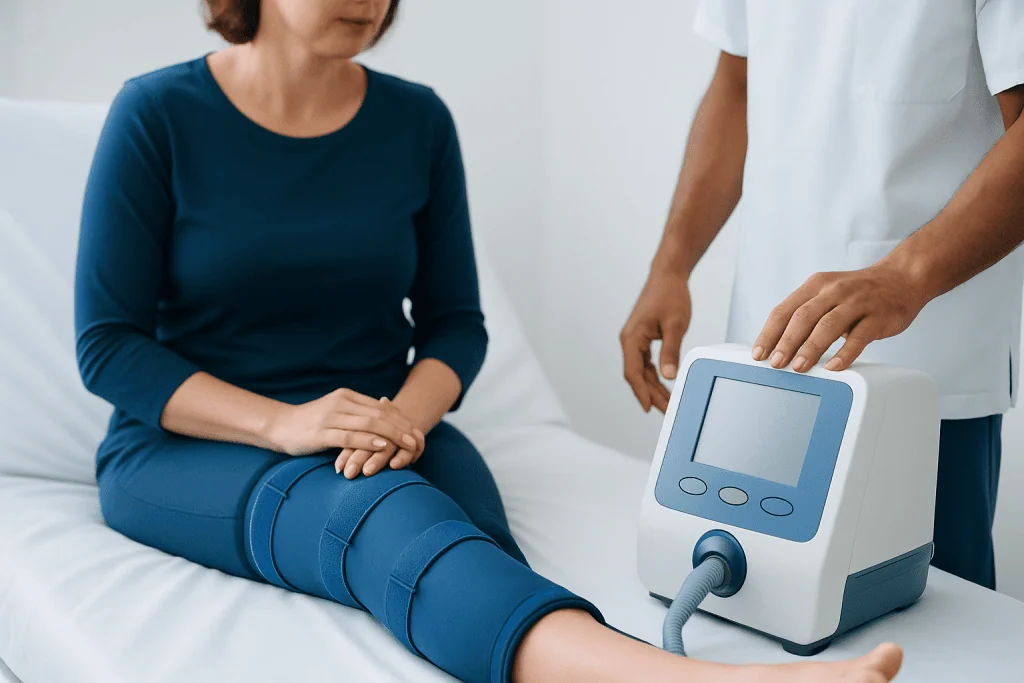
Leg DVT may cause swelling on one side, pain or tenderness, warmth, redness, or a feeling of heaviness. Symptoms can develop gradually and may be mild. However, not everyone with DVT has noticeable symptoms, and these signs can also occur with other conditions, so self-diagnosis is not reliable.
Urgent medical assessment is appropriate for new unexplained one-sided leg swelling or pain, particularly after a long journey, surgery, injury, illness requiring bed rest, pregnancy, or a period of reduced mobility. Contact a healthcare professional promptly rather than waiting to see whether symptoms settle.
Emergency care is needed for sudden shortness of breath, chest pain that worsens with breathing, coughing up blood, fainting, a very rapid heartbeat, or severe light-headedness. These symptoms may indicate pulmonary embolism and require immediate evaluation.
Who May Need More Than Anticoagulant Treatment?

Most people with DVT can be treated with anticoagulants alone. These may be tablets, injections, or a medicine initially given in hospital before switching to tablets. The choice is based on the person’s clinical circumstances, other medicines, pregnancy status, cancer treatment, organ function, and likelihood of taking medication consistently.
A smaller group may be considered for catheter-directed thrombolysis or thrombectomy. In these procedures, a specialist places a thin catheter through a vein to deliver clot-dissolving medicine directly into the clot, remove clot material, or both. They may be considered for selected people with a recent, extensive clot high in the thigh or pelvis, substantial symptoms, and a low risk of bleeding.
These procedures are not routinely suitable for calf DVT or for everyone with a more extensive clot. They can carry bleeding and procedure-related risks, and evidence does not support their use in all cases. A vascular specialist and interventional team can help weigh potential symptom relief and vein preservation against these risks.
In rare circumstances, such as when anticoagulation cannot be used or a person develops recurrent pulmonary embolism despite appropriate treatment, clinicians may discuss an inferior vena cava filter. This device is not a substitute for anticoagulants when anticoagulants can be given safely.
What Happens During DVT Treatment Procedures?
Before a catheter-based procedure, the care team confirms the clot with ultrasound and may use CT or MR venography when a clot higher in the pelvis is suspected. Blood tests, medication review, and an assessment of bleeding risk are also needed. The team explains whether sedation or anesthesia will be used and gives instructions about eating, drinking, and medicines beforehand.
During the procedure, a specialist inserts a catheter into a vein, often through a small puncture in the leg, groin, or neck, using imaging guidance. Depending on the treatment plan, the catheter may deliver thrombolytic medication, mechanically break up or remove clot material, or allow a narrowed vein to be treated. Some people with an underlying venous narrowing may require a stent.
Afterward, monitoring is important because bleeding is the principal risk of clot-dissolving treatment. Anticoagulants are still usually needed after a procedure. The length of observation varies with the procedure performed, the extent of clot, overall health, and whether thrombolytic medicine was used.
For international patients, Acibadem International’s multidisciplinary specialists and JCI-accredited hospitals assess and treat vascular conditions through coordinated diagnostic, medical, and interventional care.
Benefits, Risks and Expected Results
Anticoagulants are highly effective at reducing the risk of clot extension and pulmonary embolism when used as prescribed. They allow the body’s natural clot-clearing processes to work over time. Symptoms such as pain and swelling often begin to improve after treatment starts, although the pace of improvement differs between individuals.
The main risk of anticoagulants is bleeding. Signs that need prompt medical advice include unusual bruising, prolonged nosebleeds, blood in urine or stool, vomiting blood, severe headache, or a fall or injury involving the head. Patients should ask their clinician before starting non-prescription pain relievers, supplements, or herbal products, as some can increase bleeding risk or affect anticoagulant action.
Catheter-directed thrombolysis and thrombectomy may provide faster relief for selected patients with extensive symptomatic DVT. Their risks can include bleeding, bruising, blood-vessel injury, contrast-related reactions, kidney concerns in susceptible people, and incomplete clot removal. The decision should be made after an individualized discussion rather than based on symptoms alone.
Even after successful treatment, some people develop post-thrombotic symptoms because the clot and inflammation can damage vein valves. Follow-up helps clinicians address continuing swelling, pain, skin changes, recurrence risk, and questions about activity, work, travel, and compression therapy.
How Long Does It Take to Get Rid of DVT in the Leg?
DVT treatment how long depends on the cause, location, size of the clot, and a person’s risk of another clot. Anticoagulant treatment commonly continues for at least three months, but some people need a longer course or long-term treatment. A clinician reviews this decision regularly, especially when a DVT is unprovoked or linked to continuing risk factors.
There is no single DVT leg recovery time. Pain and swelling may improve over several days to weeks, but the body can take months to break down or organize the clot. In some cases, ultrasound may still show residual changes in the vein after symptoms have improved; this does not automatically mean treatment has failed or that a new clot is present.
Follow-up appointments are used to review symptoms, medication safety, and the planned duration of anticoagulation. Repeat imaging is not always necessary, but may be recommended if symptoms worsen, the diagnosis is uncertain, or the result would change management.
What Not to Do With DVT in Legs
People with suspected DVT should not massage the painful or swollen area, attempt to treat it with vigorous exercise, or delay assessment. A leg clot cannot be safely confirmed or excluded at home. Avoid starting aspirin, anticoagulants, or supplements marketed for circulation without medical guidance, because the right treatment and dose depend on the diagnosis and individual bleeding risk.
Once DVT treatment has started, patients should not stop anticoagulants early, skip doses, or make medication changes without speaking to the prescribing clinician. They should also avoid contact sports or activities with a high injury risk while taking anticoagulants unless their healthcare team says these are appropriate.
Long periods of immobility should generally be avoided when a clinician has advised that movement is safe. On journeys, regular leg movement and walking breaks may be helpful. A doctor can provide individualized advice for air travel, return to work, exercise, and use of compression stockings.
Is DVT 100% Curable?
DVT is treatable, and many people recover well with appropriate anticoagulation and follow-up. However, it is not possible to promise a 100% cure for every person. The clot may resolve fully, partly resolve, or leave changes in the vein, and some people remain at higher risk of another clot depending on their underlying circumstances.
A DVT caused by a temporary risk factor, such as surgery or a period of immobilization, may have a lower recurrence risk once that factor has passed and treatment is completed. A DVT without a clear trigger, or one associated with cancer, inherited clotting tendencies, or ongoing illness, may require longer-term prevention planning.
Patients can support recovery by taking medication reliably, attending follow-up, keeping their healthcare team informed about new medicines and procedures, and seeking advice promptly if symptoms return or change. These measures reduce preventable risk but cannot eliminate it completely.
Does DVT Go Away With Walking?
Walking does not dissolve a DVT by itself and is not a replacement for anticoagulant treatment. However, once a clinician has assessed the person and treatment has begun, gentle walking is commonly encouraged because it supports circulation, mobility, and general recovery. Bed rest is not routinely required for most stable patients receiving appropriate treatment.
The amount of activity should be guided by symptoms and medical advice. A person with severe pain, extensive clotting, a recent procedure, shortness of breath, chest pain, or other concerning symptoms should seek medical assessment rather than pushing through exercise. High-intensity exercise and activities with a substantial risk of injury may need to wait, especially while taking anticoagulants.
DVT treatment leg elevation can ease swelling and discomfort when resting. Raising the leg comfortably, avoiding prolonged sitting or standing, and following advice about compression stockings may help some people. Compression stockings are not appropriate for everyone, so they should be selected with a clinician’s guidance.
Frequently asked questions
What is the first-line treatment for DVT in the leg?
Anticoagulant medication is the first-line treatment for most people with DVT in the leg. It helps prevent the clot from growing and lowers the risk of pulmonary embolism while the body gradually clears the clot. The medication choice and treatment duration are individualized.
Can a leg DVT be treated at home?
Many stable patients take anticoagulant medication at home after a clinician has confirmed the diagnosis and created a treatment plan. However, suspected DVT should not be managed without medical assessment. Some people need hospital monitoring or a procedure, particularly when symptoms are severe or the clot is extensive.
How long will my leg stay swollen after DVT?
Swelling may begin to improve within days or weeks, but it can take months to settle fully. Some people have persistent swelling because of vein-valve damage or post-thrombotic syndrome. New or worsening swelling should be reviewed by a healthcare professional.
Should I keep my leg elevated with DVT?
Leg elevation while resting may help ease swelling and discomfort for some people. It does not replace anticoagulant treatment and does not remove the clot. A clinician can advise on suitable elevation, movement, and whether compression therapy is appropriate.
Can DVT return after treatment?
Yes, DVT can recur, although the risk varies widely. Recurrence is more likely in people with ongoing risk factors, certain medical conditions, or an unprovoked prior clot. Taking anticoagulants as prescribed and attending follow-up appointments can help reduce the risk.
When can I travel after a DVT?
Travel advice depends on the location and severity of the clot, symptoms, treatment stability, and the length of the journey. A clinician should provide individualized guidance before long-distance or air travel. During approved travel, regular movement and hydration may be recommended.
References
- Centers for Disease Control and Prevention
- National Heart, Lung, and Blood Institute
- American Society of Hematology
- National Institute for Health and Care Excellence
- Society for Vascular Surgery
This article is for general information only and is not a substitute for professional medical advice. Please consult a qualified doctor about your individual situation.
Explore treatments in Turkey — costs, top hospitals & a free quote
JCI-accredited · board-certified surgeons · reply within 24h
Add us as a Preferred Source to see more of our trusted health content across Google Search, AI Overviews and Discover.